
To build better schedule templates for busy weeks, analyze past sales data and identify peak times to prioritize staffing during those periods. Communicate with your team well in advance, using scheduling tools to make adjustments easily. Stay flexible by including buffer times and on-call staff to handle unexpected surges. Balance operational needs with staff well-being by planning for time off during quieter days. Keep these strategies in mind, and you’ll discover more ways to optimize your schedule effectively.

Get kitchen staples and gadgets delivered free with Prime
- Fast, free delivery on millions of items
- Prime Video, Amazon Music and more included
- Member-only deals all year
Key Takeaways
- Analyze past sales and booking data to identify peak hours and days for targeted staffing.
- Use flexible scheduling tools to quickly adjust shifts based on real-time demand.
- Allocate additional staff during busy periods while ensuring adequate rest for quieter times.
- Communicate schedule changes clearly and well in advance to minimize conflicts and enhance staff planning.
- Incorporate on-call or standby staff to handle unexpected rushes and maintain service quality.
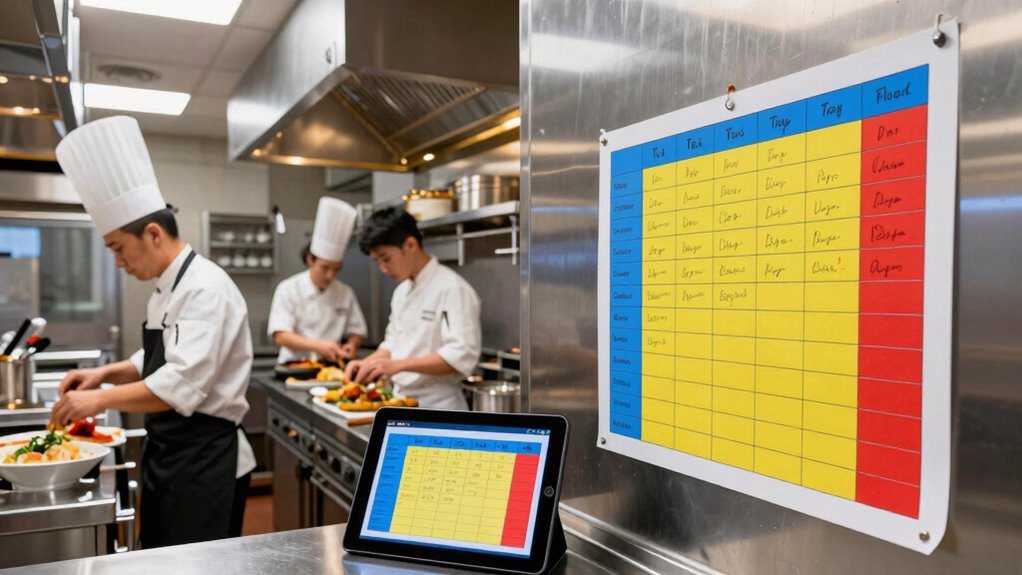
Creating an effective schedule template is vital for running a smooth restaurant operation. When you plan your schedules carefully, you can manage your inventory better, guaranteeing that you have just enough stock on hand without overordering. This balance helps reduce waste and keeps costs in check. A well-structured schedule also guarantees your team is adequately staffed during busy periods, which directly impacts customer service. When your staff is properly scheduled, your guests receive prompt attention, their orders are accurate, and their overall experience improves.
Effective scheduling ensures optimal inventory, staffing, and customer service for a smooth restaurant operation.
To build better schedule templates for busy weeks, start by analyzing your past sales data and booking patterns. Identify peak hours and days, so you can allocate more staff during those times. This proactive approach allows you to handle the increased customer flow without overburdening your team or risking burnout. When you understand your busy periods, you can plan shifts more efficiently, ensuring that everyone has enough time off during quieter days. This balance not only boosts morale but also keeps your staff energized and ready to deliver excellent customer service. Additionally, considering workforce management strategies can help optimize staffing levels and improve overall scheduling efficiency. Incorporating scheduling software can further streamline your planning process and reduce errors.
Effective communication is key when creating your schedules. Make sure your team knows about their shifts well in advance, which helps them plan their personal lives and reduces last-minute call-ins. When you keep your staff informed, it minimizes scheduling conflicts and keeps your restaurant running smoothly during hectic weeks. Additionally, consider using scheduling software that allows you to easily make adjustments, track hours, and communicate changes quickly. This technology can save you time and help you stay organized, especially when juggling multiple shifts. Incorporating real-time communication tools can further enhance responsiveness and coordination within your team.
Incorporating flexibility into your schedule template is also vital during busy weeks. Unexpected circumstances like staff emergencies or sudden rushes can disrupt your plans. By building in some buffer time and having on-call staff ready to step in, you can adapt quickly and maintain high standards of customer service. Remember, a flexible schedule keeps your team motivated and reduces stress, which translates into better performance and happier guests. Recognizing biodiversity in your community can also inspire sustainable practices that benefit everyone in the long run.
As an affiliate, we earn on qualifying purchases.
Frequently Asked Questions
How Often Should Restaurant Schedules Be Updated?
You should update restaurant schedules regularly, ideally weekly, to account for staff fatigue and peak hours. Monitoring busy periods helps you adjust shifts to prevent burnout and guarantee adequate coverage. Keep an eye on sales trends and employee feedback, especially during peak hours, to make timely changes. Frequent updates help maintain efficiency, boost morale, and improve customer service, making sure your team stays fresh and prepared for busy weeks.
What Tools Are Best for Creating Restaurant Schedules?
You should use scheduling tools like Deputy, When I Work, or HotSchedules, which excel in shift planning and staff flexibility. These platforms allow you to quickly create, modify, and communicate schedules, guaranteeing ideal coverage during busy weeks. They help you adapt to last-minute changes, improve staff satisfaction, and maximize efficiency. By leveraging these tools, you streamline your scheduling process and assure your restaurant runs smoothly even during peak times.
How Can Schedules Accommodate Last-Minute Staff Absences?
To handle last-minute staff absences, you should prioritize staff communication, encouraging quick updates from your team. Implement contingency planning by maintaining a list of on-call or part-time staff who can step in when needed. Use real-time scheduling tools to make swift adjustments, and notify your team promptly. This proactive approach guarantees your restaurant runs smoothly despite unexpected absences, keeping service quality high and stress low.
What Legal Requirements Influence Restaurant Scheduling?
You need to follow labor laws and overtime regulations when creating restaurant schedules. These laws set limits on work hours, mandatory rest periods, and required breaks to protect employees. Overtime regulations specify when you must pay extra for hours beyond a certain threshold. By understanding and complying with these legal requirements, you guarantee fair scheduling practices, avoid penalties, and foster a positive work environment.
How Do Schedules Impact Employee Satisfaction and Retention?
Your schedule can make or break employee satisfaction—it’s like the heartbeat of your team. When you create fair, predictable shifts, you boost employee morale and reduce staff turnover considerably. Conversely, unpredictable schedules cause frustration, leading to burnout and high attrition. By prioritizing transparent planning, you foster loyalty and a positive work environment. Happy employees stay longer, and your restaurant thrives with a dedicated, motivated team.
Conclusion
By crafting flexible, well-balanced schedule templates, you’re the captain steering your restaurant through stormy busy weeks to calmer waters. These templates act as your trusty compass, guiding your team smoothly amid the chaos, ensuring everyone’s workload is fair and manageable. With a little planning and a dash of adaptability, you transform potential chaos into a well-orchestrated symphony. So, embrace these strategies and watch your busy weeks sail by with grace, leaving your team confident and your customers satisfied.
Halloween Picks
halloween
As an affiliate, we earn on qualifying purchases.