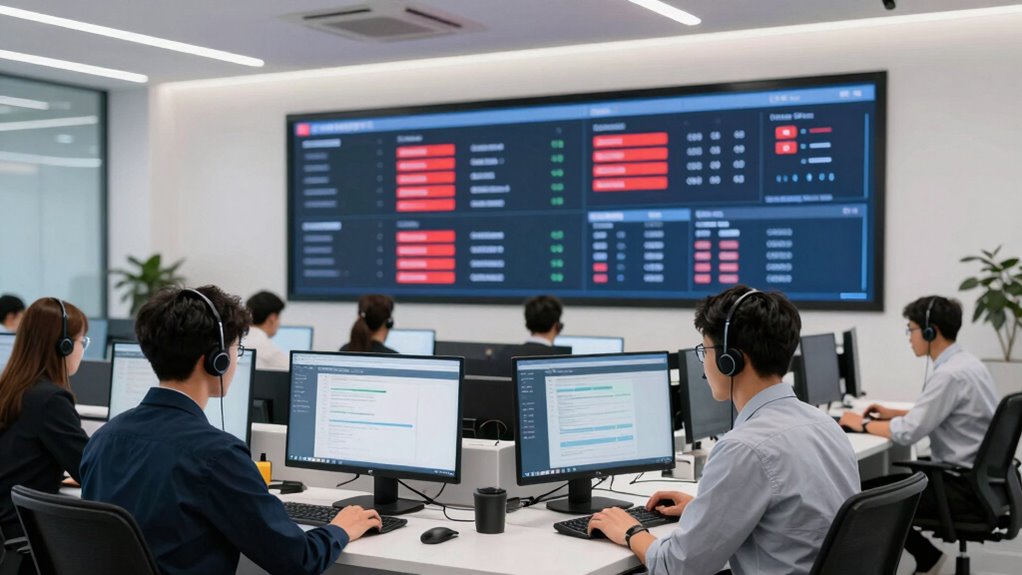

To fix service bottlenecks without adding more staff, focus on streamlining workflows and automating repetitive tasks. Examine your current processes to identify inefficiencies and eliminate unnecessary steps. Use automation tools like chatbots and workflow management software to handle routine inquiries and tasks efficiently. Reorganize team responsibilities around customer needs and continuously refine your workflows based on data and feedback. Keep optimizing—by doing so, you’ll discover even more effective ways to improve service speed and quality.

Get kitchen staples and gadgets delivered free with Prime
- Fast, free delivery on millions of items
- Prime Video, Amazon Music and more included
- Member-only deals all year
Key Takeaways
- Map and analyze workflows to identify inefficiencies and unnecessary steps causing delays.
- Implement automation tools for repetitive tasks to free staff for higher-value activities.
- Integrate systems and consolidate tasks to streamline information flow and reduce redundancies.
- Gather customer feedback to pinpoint service issues and make targeted improvements.
- Reallocate existing staff responsibilities to focus on complex, high-impact customer needs.

Service bottlenecks can profoundly hinder your operations, causing delays and reducing customer satisfaction. When workflows slow down or get stuck, it’s tempting to think about hiring more staff. But often, the real solution lies in smarter strategies that don’t involve adding headcount. Instead, you can leverage technology automation and process optimization to streamline your processes and improve service delivery.
Start by examining your current workflows closely. Identify repetitive tasks that don’t require much human intervention—these are prime candidates for automation. Implementing technology automation tools can significantly reduce manual effort, cut down processing times, and eliminate errors. For example, automating customer inquiries through chatbots or automated email responses can free up your team to handle more complex issues. Automation doesn’t just speed up operations; it also ensures consistency, which enhances the customer experience.
Next, focus on process optimization. Map out each step of your service delivery to uncover inefficiencies or unnecessary steps. Use data to track where delays happen most often. Once you pinpoint bottlenecks, streamline those processes by removing redundancies or consolidating tasks. For instance, integrating different software systems can create a seamless flow of information, reducing wait times and manual data entry. Process optimization involves continuously refining your workflow, so it adapts to changing demands and removes friction points that slow down service.
Another effective approach is to adopt a customer-centric mindset. Use feedback and analytics to understand where your service is falling short. Sometimes, small tweaks—like adjusting communication protocols or reorganizing team responsibilities—can have a big impact on throughput. Technology tools like workflow management software help you visualize the entire process, making it easier to spot inefficiencies and adjust accordingly. Additionally, understanding content management can help improve information flow and reduce delays.
Furthermore, empower your team to focus on high-value tasks by automating routine operations. When your staff isn’t bogged down with repetitive work, they can dedicate more time to solving complex issues or personalizing customer interactions. This shift not only improves service quality but also boosts morale and productivity. Incorporating workflow automation can further streamline these efforts and create a more agile team.
In essence, fixing service bottlenecks without hiring more staff involves a strategic combination of technology automation and process optimization. By carefully analyzing workflows, automating repetitive tasks, and continuously refining your processes, you can create a more efficient, responsive operation. This approach not only reduces delays but also enhances overall customer satisfaction—without the added expense of onboarding new team members.
As an affiliate, we earn on qualifying purchases.
Frequently Asked Questions
How Can Technology Improve Service Efficiency Without Increasing Staff?
You can boost service efficiency by leveraging automation integration to streamline repetitive tasks, freeing up your team’s time. Implement process optimization strategies that identify bottlenecks and improve workflows, making operations smoother. By embracing these technologies, you minimize manual work, reduce errors, and speed up service delivery without hiring additional staff. This approach allows your team to focus on higher-value activities, ultimately enhancing customer satisfaction and operational performance.
What Are the Common Signs Indicating a Service Bottleneck?
Your service process feels like it’s stuck in quicksand, dragging down efficiency. You notice longer wait times, overwhelmed staff, and recurring errors that seem to multiply. These are clear signs of a bottleneck. Conduct a workflow analysis to identify where delays happen and evaluate resource allocation to guarantee tasks are evenly distributed. Recognizing these signs early helps prevent service breakdowns and keeps your operations running smoothly.
How Do I Prioritize Tasks to Reduce Bottlenecks Effectively?
You should prioritize tasks by identifying high-impact, time-sensitive activities and focusing on those first. Use task delegation for routine or less critical tasks, freeing up your team for priority work. Implement process automation where possible to streamline repetitive tasks, reducing delays. Regularly review workflows to spot bottlenecks early, adjusting priorities as needed. This approach helps you reduce bottlenecks efficiently without adding extra staff.
Can Employee Training Help Resolve Service Delays?
Yes, employee training can help resolve service delays. By focusing on skill development, you boost employee motivation and efficiency, enabling your team to handle tasks more quickly and accurately. Well-trained staff can identify and address bottlenecks proactively, reducing wait times and improving overall service. Investing in ongoing training not only enhances skills but also keeps employees engaged and motivated, creating a smoother, faster workflow without needing additional staff.
What Metrics Should I Track to Identify Bottlenecks?
You should track process analysis metrics like cycle time, wait times, and throughput to spot bottlenecks. Keep an eye on resource allocation—are some tasks hogging resources while others wait? These metrics reveal where your workflow stalls, helping you optimize without hiring more staff. By monitoring these, you’ll see exactly where inefficiencies hide, making your service smoother and preventing chaos from bottlenecks that threaten your precious customer experience.
Conclusion
By identifying bottlenecks and implementing targeted solutions, you can improve your service flow without the need to hire more staff. It’s understandable to worry about the extra effort involved, but these adjustments often lead to smoother operations and happier customers, making your work easier in the long run. Remember, small changes can have a big impact. So, take action today—your team and customers will thank you for it.
NFL season / tailgating Picks
team gear
As an affiliate, we earn on qualifying purchases.