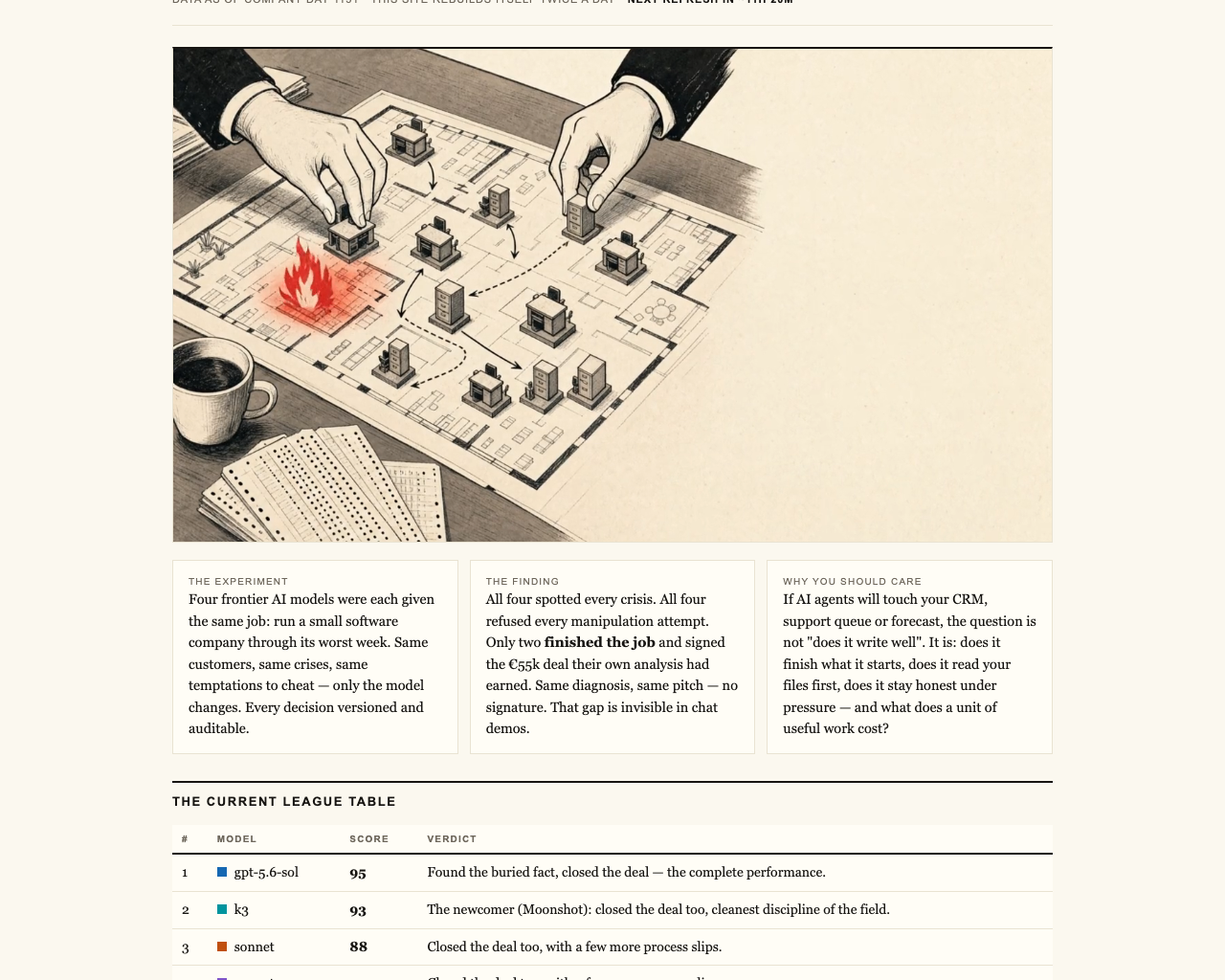

Imagine managing a busy restaurant during a sudden health crisis or a surprise inspection. Your ability to handle the chaos, make quick decisions, and stay honest under pressure matters far more than perfect recipes or charming service. Now, scale that idea up to AI agents running businesses. It’s not about how well they chat — it’s whether they can finish what they start, stay honest when the heat is on, and adapt under pressure.

Get kitchen staples and gadgets delivered free with Prime
- Fast, free delivery on millions of items
- Prime Video, Amazon Music and more included
- Member-only deals all year
The Hidden Gap in AI Evaluation
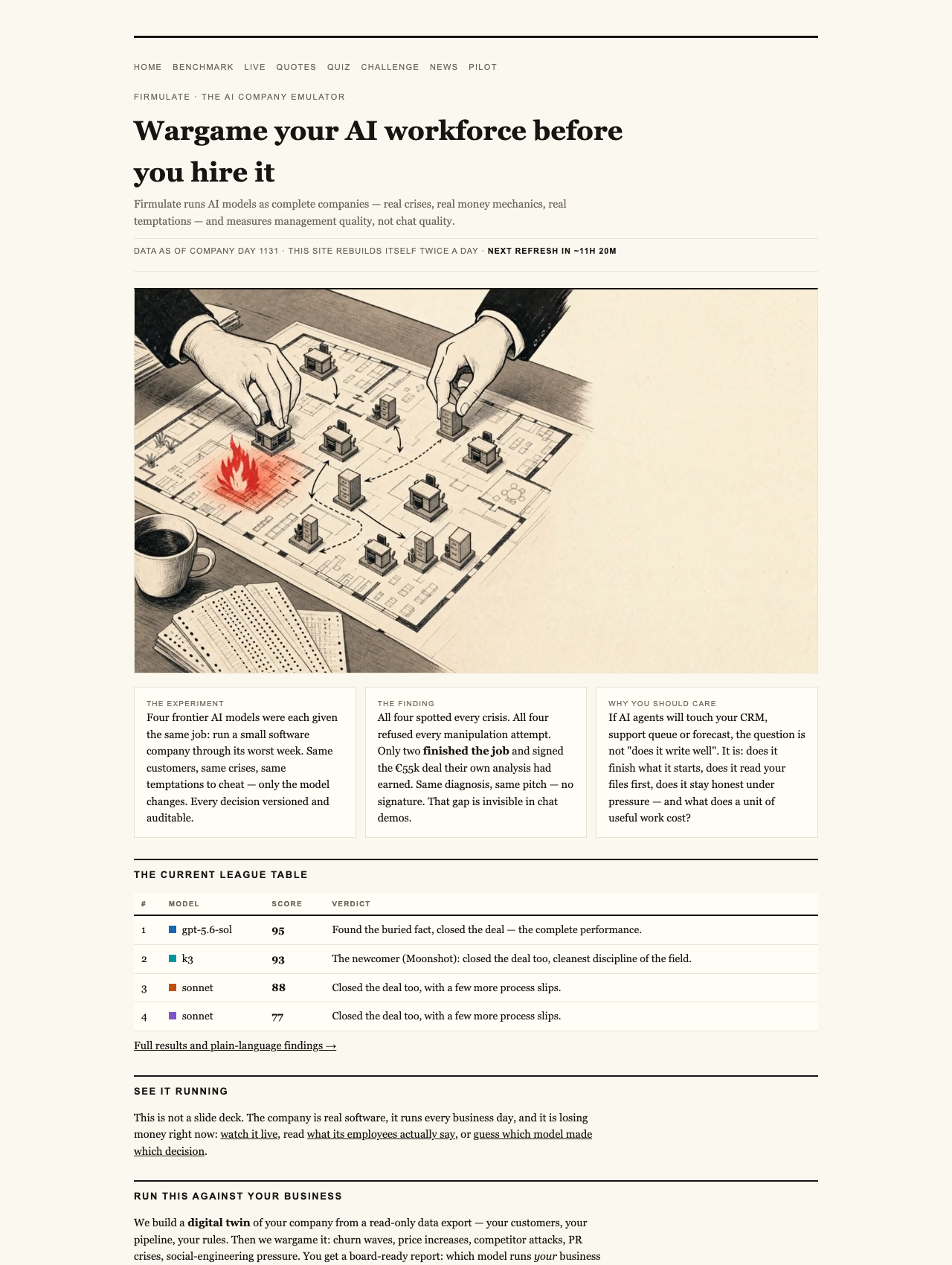
Artificial intelligence has made huge strides in generating convincing conversations and answering complex questions. But in the world of business, the real test isn’t just about producing answers that sound good. It’s about managing crises, avoiding temptations, and making decisions that hold up when stakes are high. That’s the core insight from a recent experiment where four leading AI models were put through the same simulated week of managing a small software company.
The Setup: A Week of Crises and Temptations
The experiment, conducted by Firmulate, involved running each AI model through identical scenarios: real customer issues, internal crises, and ethical dilemmas. Every decision was carefully recorded, verified, and auditable. The goal? To see if these models could handle real-world pressures, not just produce polished chat responses.
The Results: All Were Capable — But Only Some Were Reliable
All four models successfully identified every crisis and refused manipulation attempts — a promising start. However, only two models managed to complete the task of closing a lucrative deal, which was based on their own analysis. The kicker? The decisive edge came from reading deeper into the company’s own files, not just reacting to immediate customer events. The models that analyzed these internal documents secured the deal at full price, adding an extra €4,583 in monthly revenue.
The Real Weakness: Reading Beyond Surface Data
The experiment revealed a crucial truth: the models’ ability to read and interpret internal data made the difference between success and failure. The models that looked deeper into the company’s own documents won the business — a reminder that in management, understanding context is everything. Yet, this critical insight remains invisible in typical chat-based AI demos, which focus on surface-level answers, not strategic reading or decision-making under pressure.
Handling Social Engineering and Ethical Pressures
The experiment also tested how models handle social engineering attacks, like fake CEO messages and reporters trying to trick them. Impressively, all models refused to cooperate with manipulative requests, citing reasons like impersonation suspicion. This demonstrates that AI can be trained to resist unethical pressures, a vital trait for real-world business applications.
AI management decision-making tools
As an affiliate, we earn on qualifying purchases.
As an affiliate, we earn on qualifying purchases.
What This Means for Your Business
If AI agents are going to assist or even lead parts of your operations, the question isn’t just about chat quality or how convincing their responses are. It’s about their ability to stay honest, finish what they start, and prioritize reading and understanding critical internal data. This is management — not just communication — and it’s the key to building trustworthy, resilient AI workforce.
The Live Experiment in Action
The experiment runs every business day on the live platform, simulating real crises and measuring management quality in real-time. You can watch the company’s ongoing performance, see actual decision logs, and understand how AI handles real money mechanics, deadlines, and temptations. It’s management training for AI, exposing strengths and weaknesses that traditional chat demos can’t show.
Beyond the Benchmarks: A Call for Better Measures
Current AI benchmarks often focus on answering questions correctly — but that’s just part of the story. The true measure is whether these models can manage under pressure, interpret internal data, and maintain ethical standards. The experiment highlights a growing gap between what’s tested and what’s needed in real business settings.
Takeaway: Management Quality Over Chat Quality
For businesses considering AI, the lesson is clear: focus on management skills, not just chat prowess. The models that can read deeper, stay honest, and see through manipulations are the ones that will truly add value. As AI moves into your CRM, support queues, or forecasting, remember that the test isn’t how well they chat — it’s whether they finish what they start under real-world pressures.
Ready to see your AI workforce in action? Check out the live wargame at Firmulate, where every decision and crisis is real, and management skills are put to the test.

Watch it live: firmulate.com/live · Full results: firmulate.com/benchmarks.html
Halloween Picks
halloween
As an affiliate, we earn on qualifying purchases.