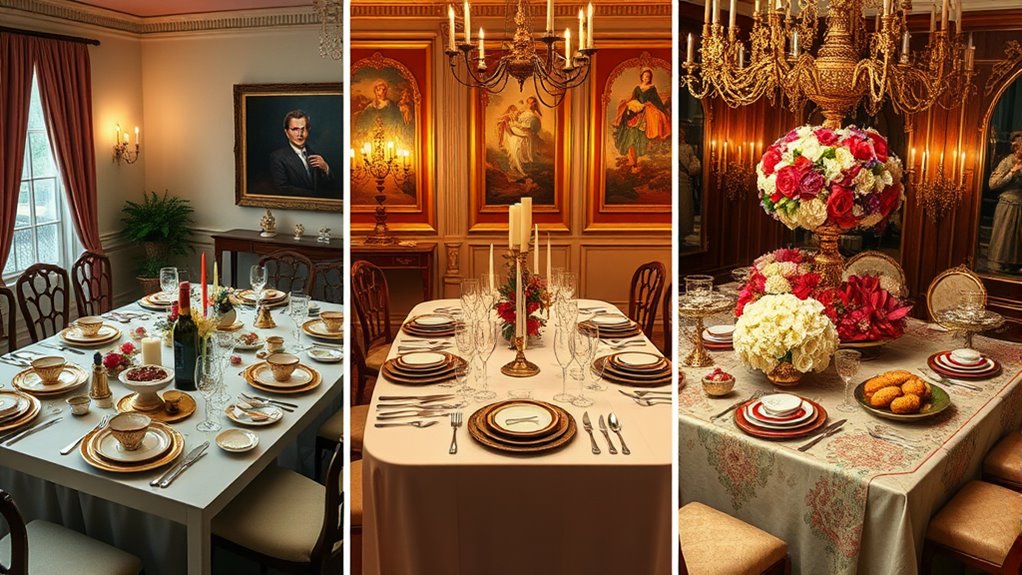

American, French, and Russian service styles each offer a unique dining experience. American service is casual and efficient, with servers serving from the left and clearing from the right for a relaxed atmosphere. French service emphasizes elegance, with meticulous table settings and tableside preparations like carving and flambéing. Russian service is formal and ceremonial, presenting dishes on platters for guests to serve themselves. Exploring these differences reveals how each style reflects cultural values and enhances your understanding of fine dining.

Get kitchen staples and gadgets delivered free with Prime
- Fast, free delivery on millions of items
- Prime Video, Amazon Music and more included
- Member-only deals all year
Key Takeaways
- American service is casual and efficient, serving from the left and clearing from the right, suitable for informal settings.
- French service emphasizes elegance with meticulous table settings and tableside preparations like carving and flambéing.
- Russian service is grand and ceremonial, with dishes presented to guests who serve themselves from large platters.
- French service involves multiple utensils and precise etiquette, while American service favors simplicity and ease of access.
- Russian service highlights formality and grandeur, often used in banquets, with a focus on ceremonial presentation.
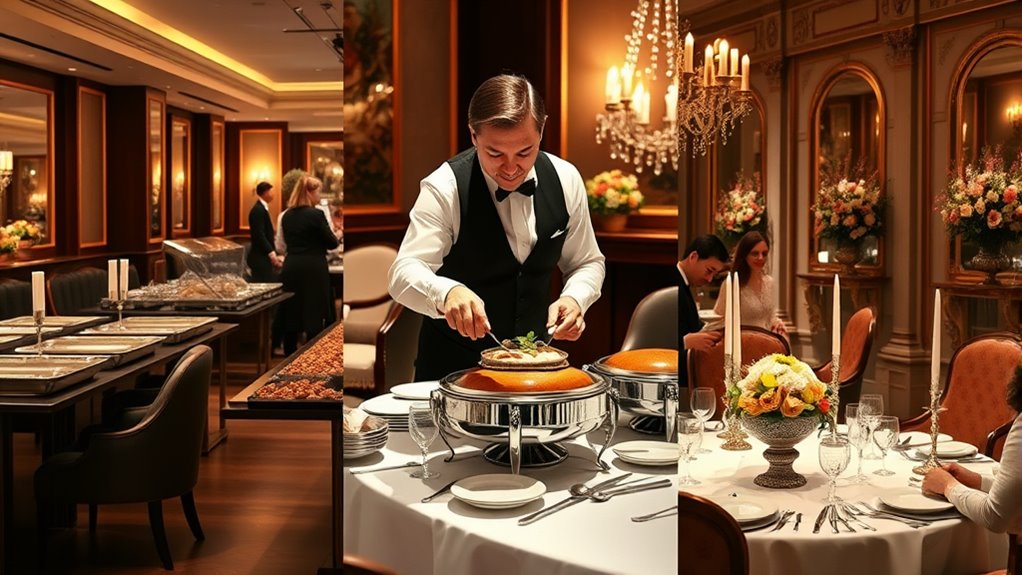
Have you ever wondered how different service methods can transform your dining or hospitality experience? It’s fascinating to see how the approach to serving food can influence the entire atmosphere, and understanding these styles starts with grasping the nuances of formal etiquette and table setting techniques. Whether you’re dining in a high-end restaurant or hosting a special event, knowing the differences can elevate your appreciation for the skill and tradition behind each service.
Discover how different service styles enhance dining experiences through etiquette and table setting mastery.
In the American style, service tends to be more casual and efficient. The focus is on providing a relaxed atmosphere, often with the server serving from the left and clearing from the right. This style emphasizes ease of access and quick turnaround, making it ideal for informal settings. The table setting techniques are straightforward, with neatly arranged utensils, glasses, and plates structured to facilitate smooth movement. Formal etiquette is maintained, but the approach is less rigid, allowing diners to feel comfortable while still observing proper manners.
French service, on the other hand, embodies elegance and tradition. It’s often characterized by meticulous table setting techniques, where every utensil has a specific place, and the presentation follows strict etiquette rules. Here, servers may perform tableside preparations, such as carving or flambéing, showcasing skill and artistry. This style demands a higher level of attentiveness to formal etiquette, with precise manners observed during each course. The table is set with multiple utensils and glassware, each designated for specific dishes and beverages, creating a sophisticated and precise dining experience. In this context, the service isn’t just about the food but about the ritual and artistry of presentation.
Russian service is more grandiose and ceremonial, often used for elaborate banquets or state dinners. It involves the server presenting the entire dish to the guest, who then takes what they want. This style combines elements of formality with a sense of theatre, emphasizing the host’s hospitality. The table setting techniques are elaborate, with multiple courses served sequentially from the platter, and the etiquette calls for a refined, formal manner. Here, the focus is on creating a sense of occasion, where every detail, from the arrangement of silverware to the host’s gestures, enhances the grandeur of the event.
Each of these service styles reflects a different approach to hospitality, influenced by cultural values and traditions. By understanding their differences in formal etiquette and table setting techniques, you gain a deeper appreciation for the skill involved and can better navigate diverse dining environments. Additionally, table setting techniques can vary significantly depending on the style, demonstrating the importance of proper arrangement and etiquette in creating the desired atmosphere. Whether you prefer the relaxed American style, the refined French tradition, or the ceremonial Russian approach, knowing the distinctions helps you enjoy every meal with confidence and respect.
Frequently Asked Questions
How Did These Service Styles Originate Historically?
You see, these service styles originated through the evolution of dining customs influenced by cultural traditions. The American style developed with a focus on efficiency and casual dining, reflecting American values of practicality. French service, with its elaborate rituals, stems from centuries of aristocratic elegance, while Russian service combines tradition and formality rooted in historical court customs. Each style showcases how culture shapes service practices over time.
Which Service Style Is Most Popular Globally Today?
You’ll find that the American service style is the most popular globally today, driven by its dynamic, customer-centric approach. This service culture emphasizes efficiency, ease, and engaging dining traditions, making it adaptable across diverse settings. Its flexible, friendly, and fast-paced nature appeals worldwide, transforming traditional dining into a tailored, timely experience that resonates with modern expectations. So, you’ll notice this style thriving across countless countries and cuisines.
Are There Regional Variations Within Each Service Style?
Yes, you’ll find regional differences within each service style, shaped by cultural adaptations. For example, American service often varies from casual to fine dining, depending on the region, while French service emphasizes formality and precision, especially in Paris. Russian service can include elaborate traditions, especially in formal settings. These regional variations reflect local customs and cultural preferences, making each experience unique even within the same service style.
How Do Service Styles Impact Dining Etiquette and Manners?
Think of service styles as your guide to mastering formal presentation and enhancing your customer experience. They influence manners by dictating how you serve, interact, and show attentiveness. For instance, a French style emphasizes sophistication and finesse, while an American approach favors friendliness and efficiency. Your awareness of these nuances helps you adapt seamlessly, ensuring guests feel valued and respected, ultimately elevating their overall dining experience.
Can These Service Styles Be Blended in Modern Restaurants?
Yes, you can blend service styles in modern restaurants to create a unique dining experience. By incorporating fusion dining, you cater to diverse customer preferences, offering elements from American, French, and Russian styles. This approach allows you to customize service, making guests feel valued and comfortable. Flexibility in service styles enhances customer satisfaction and sets your restaurant apart, showing that adapting traditional methods can meet modern expectations effectively.
Conclusion
No matter which style you prefer—American, French, or Russian—each offers a unique dining experience. Did you know that a recent survey found that 65% of diners enjoy the elegance of French service, while 40% appreciate the efficiency of American style? Ultimately, your choice depends on your mood and setting. So next time you dine out, consider trying a different service style—you might just discover your new favorite way to enjoy a meal.
NFL season / tailgating Picks
team gear
As an affiliate, we earn on qualifying purchases.