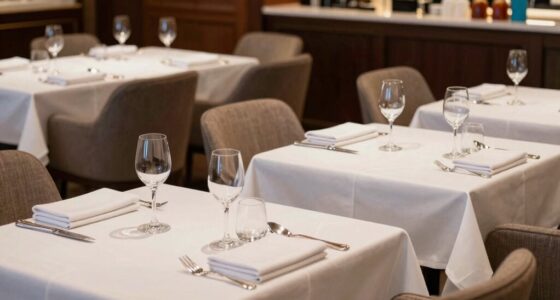

During rush hours, table pacing breaks down mainly because staff fail to recognize guest cues and communicate effectively. You might rush guests who want a relaxed experience or wait too long when they’re ready to move on, causing frustration. When team members don’t coordinate or share updates, service becomes uneven and chaotic. Mastering the art of observing cues and quick communication keeps the flow steady. Keep going to discover more about how these elements can improve your team’s rhythm.

Get kitchen staples and gadgets delivered free with Prime
- Fast, free delivery on millions of items
- Prime Video, Amazon Music and more included
- Member-only deals all year
Key Takeaways
- Misjudging guest cues leads to inconsistent pacing and service delays.
- Lack of effective staff communication causes timing errors during busy periods.
- Failure to recognize subtle guest signals results in uneven service flow.
- Relying solely on intuition hampers adaptability to changing customer behavior.
- Poor coordination between front-of-house and kitchen disrupts the overall service rhythm.
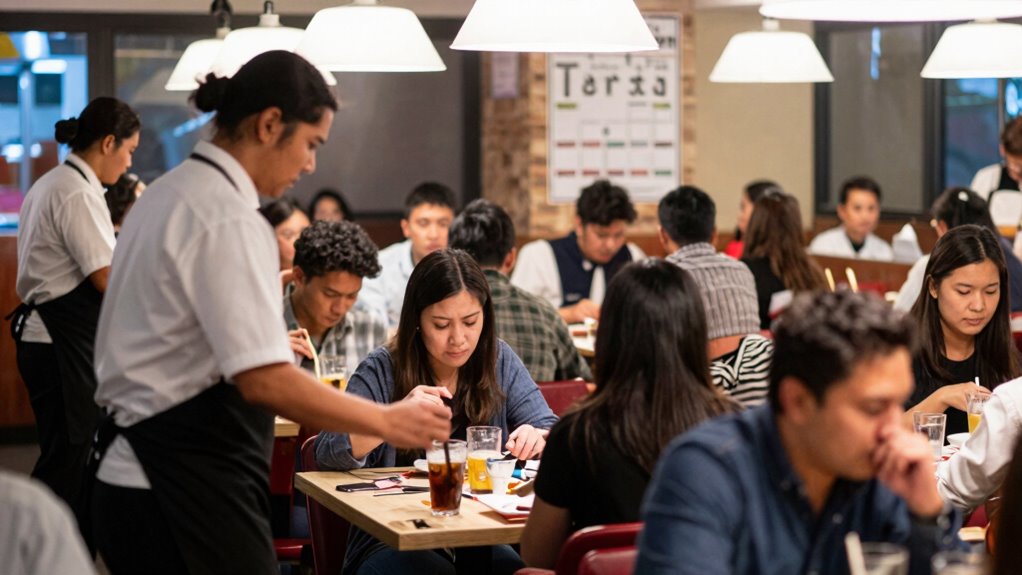
During rush hours, table pacing can suddenly break down, disrupting the flow of service and frustrating both staff and guests. You might notice that despite your best efforts, tables aren’t turning over as quickly as they should, or guests feel unfulfilled with the timing of their courses. The core issue often comes down to understanding customer behavior and how well your team coordinates to adapt to it. When the restaurant gets busy, each guest’s expectations and pace can vary wildly, making it challenging to keep everything flowing smoothly.
Customer behavior plays a pivotal role in pacing breakdowns. Some guests linger over their drinks, chatting or taking their time with each course, while others are eager to move on quickly. If staff members don’t recognize these cues or misjudge the appropriate timing, service can become uneven. For example, rushing a table expecting to stay longer can cause discomfort, while waiting too long to clear plates can lead to bottlenecks and impatience. When staff aren’t attuned to these subtle signals, the rhythm of service becomes inconsistent, leading to a breakdown in pacing.
Recognizing guest cues is key to maintaining a smooth, balanced service rhythm during busy hours.
Staff coordination becomes even more critical during these hectic times. If your team isn’t communicating effectively, it’s easy for the timing to go awry. For instance, servers might deliver the next course too early or too late, or the kitchen might prepare dishes without knowing the current pace of the table. Without a shared understanding of the flow, staff may step on each other’s toes, causing delays or confusion. Proper coordination requires continuous communication—servers updating each other on guest cues, the kitchen staying aware of current table statuses, and managers adjusting the flow as needed. Additionally, employing standardized communication protocols can significantly improve team synchronization. Recognizing and responding to customer cues in real-time is essential for maintaining a steady rhythm. Implementing a pacing strategy that guides staff on how to respond to varying guest behaviors can further enhance the flow.
Another factor is the lack of a clear pacing strategy. If your team relies solely on intuition without a structured plan, it’s harder to adapt as customer behavior varies. Implementing systems like standardized check-in points or verbal cues can help staff stay aligned. For example, training staff to observe guests’ body language or conversation cues can help them decide when to serve the next course or clear plates. When staff are proactive and in sync, they can better manage the ebb and flow of the rush, preventing pacing from breaking down.
Ultimately, the root cause of table pacing breakdowns during rush hours lies in the interplay between customer behavior and staff coordination. Recognizing individual guest cues and maintaining clear, real-time communication across the team allows you to keep the rhythm steady. When these elements work together seamlessly, service remains smooth, and both staff and guests enjoy a more satisfying experience.
restaurant staff communication tools
As an affiliate, we earn on qualifying purchases.
As an affiliate, we earn on qualifying purchases.
Frequently Asked Questions
How Can I Prevent Table Pacing From Breaking Down During Busy Hours?
To prevent table pacing from breaking down during busy hours, focus on effective table management and maintaining steady customer flow. Use reservation systems to plan seating, and keep close communication with your staff to adjust pacing as needed. Encourage prompt service without rushing, and monitor table turnover times. By balancing customer flow and managing tables efficiently, you guarantee a smooth experience even during peak times, preventing breakdowns in pacing.
What Are the Common Signs Indicating a Pacing Breakdown Is Imminent?
You’ll notice signs like declining customer engagement, longer wait times, or increased jackpot management issues, which indicate a pacing breakdown is near. When players seem less engaged or jackpots become difficult to manage, it’s a warning. Keep an eye on these signs during busy hours to address problems early, ensuring smooth operation and maintaining excitement. Recognizing these cues helps you intervene before the situation worsens.
Does Table Size Affect the Likelihood of Pacing Issues During Rush?
You might think larger tables cause pacing issues, but actually, table capacity directly influences pacing adjustments. Smaller tables often lead to quicker pacing changes, while bigger ones require more time to coordinate. During rush, staff must adapt pacing strategies based on table size, making larger tables potentially more prone to breakdowns if pacing adjustments aren’t carefully managed. Properly understanding capacity helps maintain smooth service, even during busy rush hours.
Are There Specific Game Types More Prone to Pacing Breakdowns?
Yes, certain game types are more prone to pacing breakdowns. Fast-paced games with complex mechanics, like real-time strategy or multiplayer shooters, challenge your ability to manage game mechanics smoothly and keep up with player behavior. When game mechanics demand quick reflexes and strategic decisions, and player behavior becomes unpredictable or aggressive, pacing can falter, leading to breaks during rush moments. Staying aware helps you adapt and maintain flow.
How Does Staff Training Impact Table Pacing Stability During Rush Periods?
You might not realize it, but staff training plays a vital role in table pacing stability during rush hours. Well-trained staff boosts efficiency, ensuring smooth game flow and quick decisions, which directly impacts customer satisfaction. Without proper training, chaos can erupt, causing pacing issues and frustration. When your team is prepared, they handle the pressure confidently, preserving the excitement and keeping players engaged, even during the busiest times.
Conclusion
So, next time table pacing fails during rush, ask yourself—are you truly considering the chaotic flow of the environment? Sometimes, it’s not just about the schedule but how you adapt to the unexpected. You can’t control everything, but can you control your response? Recognizing the real reasons behind pacing breakdowns helps you stay flexible and resilient. After all, isn’t the goal to keep moving forward, no matter how unpredictable the rush gets?
NFL season / tailgating Picks
team gear
As an affiliate, we earn on qualifying purchases.