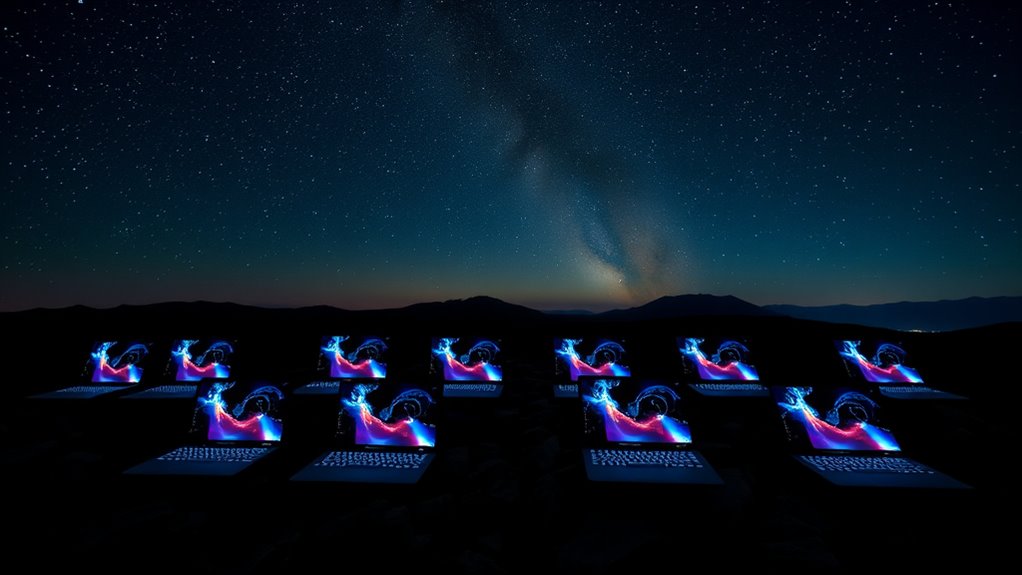

If you’re looking for the best astronomy laptops with long battery life, I recommend models with large screens, like 15.6 or 17.3 inches, and powerful hardware such as 16GB RAM and SSD storage. Many of these laptops feature latest processors like Intel N97 or quad-core options, ensuring smooth multitasking. Portability and durability are also key, with lightweight builds and good battery runtime over 5 hours. Keep in mind, if you continue exploring, you’ll find even more top options tailored for stargazing and space adventures.
Key Takeaways
- Prioritize laptops with 8+ hours of battery life, lightweight design, and efficient processors like Intel U-series or AMD Ryzen U-series for extended outdoor use.
- Look for high-resolution, anti-glare displays (FHD or higher) with wide viewing angles to enhance celestial observations.
- Choose models with durable, portable builds—metal shells and slim profiles—ideal for field stargazing and space exploration.
- Select laptops with versatile connectivity options (WiFi 6, Bluetooth 5.0, multiple USB ports) for seamless data transfer and device pairing outdoors.
- Opt for models featuring fast charging and energy-saving features to maximize runtime during long astronomy sessions.
17.3-inch Laptop with 16GB RAM, 512GB SSD, Intel N97, Windows 11 Pro

If you’re looking for a compact, powerful laptop to enhance your stargazing experience, this 3-inch model with 16GB RAM and a 512GB SSD is an excellent choice. Its 17.3-inch FHD IPS display with thin bezels offers immersive viewing, perfect for observing star maps or celestial videos. The slim, lightweight design (just 5.99 pounds) makes it easy to carry, while the flat hinge allows a 180° opening for flexible use. Powered by the latest Intel N97 processor and Windows 11 Pro, it delivers fast performance and multitasking. With ample storage and connectivity options, this laptop balances portability with high performance for space enthusiasts.
Best For: space enthusiasts, students, and professionals seeking a portable, high-performance laptop for immersive viewing and multitasking.
Pros:
- Large 17.3-inch FHD IPS display with thin bezels for an immersive viewing experience
- Lightweight and slim design (5.99 pounds) for easy portability and flexible use with 180° hinge
- Powered by latest Intel N97 processor and Windows 11 Pro for fast, efficient multitasking
Cons:
- Slightly heavier than ultra-portable laptops, which may impact all-day portability for some users
- Limited details on battery life beyond 5 hours, potentially a concern for extended use away from power sources
- Optical drive (BD-R) may be less relevant for modern digital needs and could be considered unnecessary for some users
Laptop Computer with 15.6″ FHD IPS Screen, Celeron N5095, 12GB RAM, 512GB SSD, Expandable up to 1TB, WiFi 2.4G+5G, 2-Year Warranty
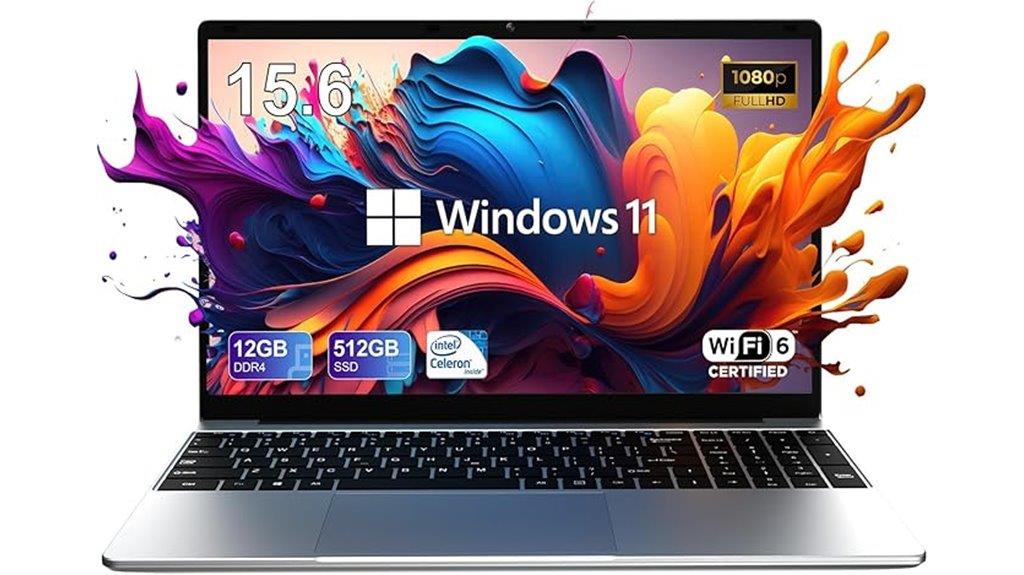
This 15.6-inch FHD IPS laptop is an excellent choice for stargazing enthusiasts who need a portable device for planning observations, reviewing star maps, or streaming astronomy content. Its sleek design in stardust gray weighs about 3 pounds, making it easy to carry on outdoor trips. The vivid full HD display reduces eye strain during long sessions. With an Intel Celeron N5095 processor and 12GB of RAM, multitasking is smooth. The 512GB SSD offers fast load times and plenty of storage, expandable up to 1TB. WiFi 2.4G+5G ensures reliable connectivity for remote star tracking and research. Plus, it comes with a 2-year warranty for peace of mind.
Best For: casual users, students, and professionals seeking an affordable, lightweight laptop for everyday tasks, entertainment, and light productivity.
Pros:
- Vivid 15.6″ FHD IPS display reduces eye strain during extended use.
- Lightweight design at approximately 3 pounds, ideal for portability.
- Ample 12GB RAM and fast 512GB SSD for smooth multitasking and quick load times.
Cons:
- Battery life averaging around 6 hours may be insufficient for longer outdoor use.
- Some users report concerns over hardware durability and long-term performance.
- Limited high-end performance options, suitable primarily for basic to moderate tasks.
15.6 Inch Laptop with 16GB RAM and 512GB SSD

A 6-inch laptop with 16GB of RAM and 512GB SSD offers exceptional portability and speed, making it ideal for stargazing enthusiasts who want to explore celestial data or run astronomy apps on the go. Its compact size easily fits into a pocket or small bag, so you can take it anywhere. Despite its tiny footprint, it delivers powerful performance thanks to ample RAM and fast SSD storage. Its lightweight design, combined with features like a backlit keyboard and fingerprint security, ensures convenience and security during field trips. This mini laptop is perfect for quick data access, star chart viewing, or controlling telescope equipment in remote locations.
Best For: students, professionals, and casual users seeking a portable, reliable, and feature-rich 15.6-inch laptop for everyday tasks, entertainment, and light creative work.
Pros:
- High-performance 16GB RAM and 512GB SSD ensure smooth multitasking and fast data access.
- Full HD IPS anti-glare display provides crisp visuals and reduces eye strain.
- Lightweight at 3.5 lbs with excellent portability and a durable build, ideal for on-the-go use.
Cons:
- Battery life averages around 5 hours, which may require frequent recharging during extended use.
- Limited to integrated graphics, so not suitable for heavy gaming or intensive graphic work.
- Slightly higher price point compared to basic laptops with similar specifications.
ACEMAGIC 2025 AX16 16.0-inch Laptop with 16GB RAM and 512GB SSD

The ACEMAGIC 2025 AX16 stands out for its vibrant 16-inch display, which offers sharp visuals and wide viewing angles—perfect for stargazing enthusiasts who want to enjoy celestial maps or astrophotography details in clarity. Its high-resolution 1920×1200 screen with a 16:10 aspect ratio delivers immersive visuals, enhancing your viewing experience. Powered by a robust Intel 12th Gen Alder Lake processor and 16GB of RAM, it handles multitasking smoothly. The 512GB SSD provides fast storage, while the long-lasting battery offers around 8 hours of use. Its sleek design and portability make it a reliable companion for space exploration on the go.
Best For: Stargazing enthusiasts and multitaskers seeking a portable, high-resolution display for celestial mapping, astrophotography, and general productivity.
Pros:
- Vibrant 16-inch high-resolution (1920×1200) display with wide viewing angles for immersive visuals
- Powerful Intel 12th Gen Alder Lake processor and 16GB RAM ensure smooth multitasking and performance
- Lightweight design with a long-lasting 8-hour battery and portable charger for on-the-go use
Cons:
- Customer reviews indicate some issues with WiFi connectivity and occasional lagging during gaming
- Graphics performance may be lower than expected for intensive gaming or high-end graphics tasks
- Limited warranty coverage (12 months) and potential for hardware or software support issues
ACEMAGIC 2024 17.3Inch Laptop with FHD Display and 16GB RAM
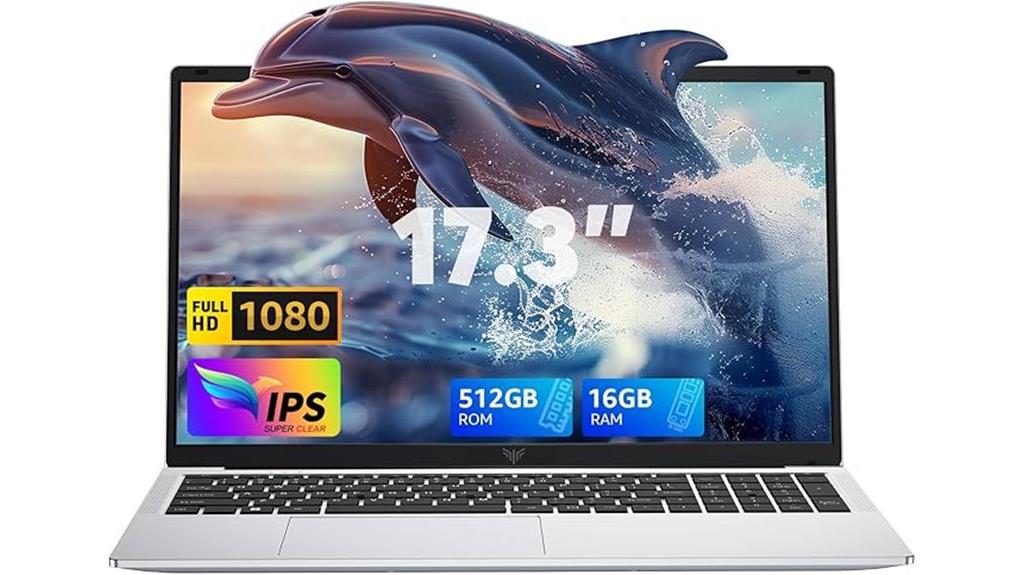
If you’re looking for a versatile laptop to enhance your stargazing sessions, the ACEMAGIC 2024 17.3-inch model stands out with its large FHD display and powerful performance. It features a 12th generation Alder Lake N97 processor up to 3.6GHz, 16GB DDR4 RAM, and a 512GB SSD, ensuring smooth multitasking and quick data access. The 17.3-inch FHD screen offers immersive visuals, while the long-lasting 6000mAh battery provides around five hours of use. With multiple USB ports, Bluetooth 5.0, and Wi-Fi support, it’s perfect for connecting accessories or internet access in the field. Despite some hinge concerns, it’s a solid choice for space enthusiasts.
Best For: space enthusiasts and outdoor adventurers seeking a powerful, large-screen laptop for stargazing, media consumption, and multitasking in portable settings.
Pros:
- Large 17.3-inch FHD display provides immersive visual experience.
- Powerful 12th generation Alder Lake N97 processor with 16GB RAM ensures smooth multitasking.
- Long-lasting 6000mAh battery offers around five hours of portable usage.
Cons:
- Hinge may weaken after six months of use, affecting durability.
- Some users report issues with trackpad failure and hardware malfunctions.
- Support experiences can be inconsistent, with reports of slow responses or product quality concerns.
Laptop Computer with 15.6-Inch HD Display, 12GB RAM, 512GB SSD

With its vibrant 15.6-inch FHD IPS display and powerful performance capabilities, this laptop is ideal for stargazing enthusiasts who want to explore astronomy apps or review celestial images in stunning detail. The Jasper Lake N5095 processor ensures smooth multitasking, while 12GB of RAM handles multiple applications effortlessly. The 512GB SSD offers fast data access and ample storage, expandable up to 1TB. Its slim, lightweight design makes it portable for on-the-go stargazing sessions. Plus, it features thorough connectivity options and a comfortable keyboard, making it a versatile choice for both hobbyists and serious space explorers alike.
Best For: astronomy enthusiasts, students, and professionals seeking a portable, high-performance laptop for stargazing, reviewing celestial images, or using astronomy apps on the go.
Pros:
- Vibrant 15.6-inch FHD IPS display provides clear, detailed visuals ideal for celestial viewing.
- Powerful Jasper Lake N5095 processor with 12GB RAM ensures smooth multitasking and application performance.
- Lightweight (~3 pounds) and slim profile for easy portability during outdoor stargazing sessions.
Cons:
- Limited to 512GB SSD storage, which may require expansion for extensive data collection.
- HD (not 4K) display resolution might not satisfy users seeking ultra-high-definition visuals.
- Battery life details are not specified; extended field use may require external power sources.
New 15.6-Inch Laptop with FHD Display, 8GB RAM, 256GB SSD, N5095 CPU, WiFi, Bluetooth, Type-C PD3.0 Fast Charging
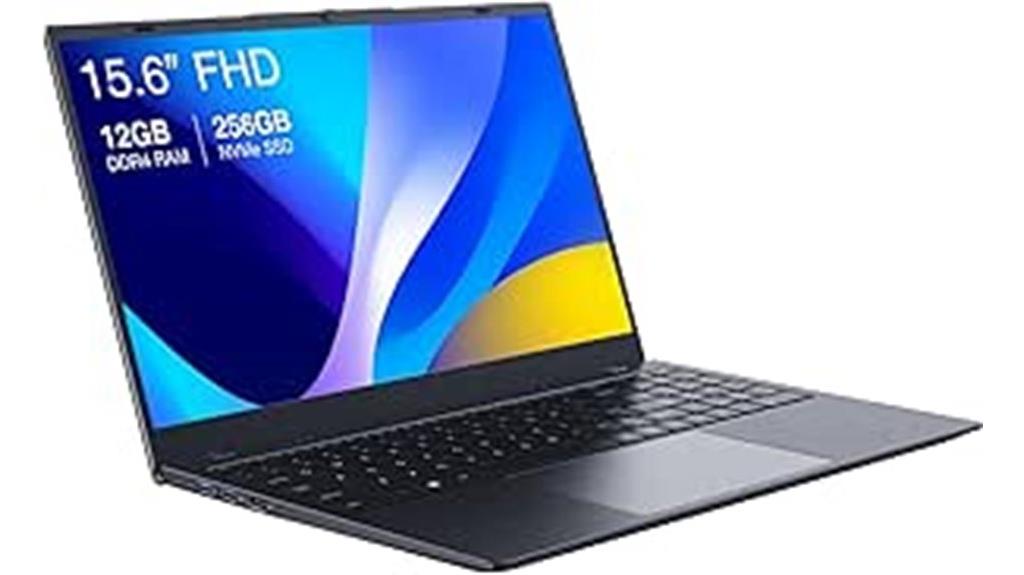
This 15.6-inch laptop stands out for its lightweight design and fast charging capabilities, making it ideal for stargazing enthusiasts who want a portable device to explore celestial maps or capture night sky images on the go. It features a sharp FHD IPS display with vivid colors, an 11th Gen N5095 quad-core processor, and 8GB RAM for smooth multitasking. With a 256GB NVMe SSD, it offers quick data access, and its WiFi and Bluetooth ensure reliable connectivity. The Type-C PD3.0 fast charging allows you to power up swiftly, while its compact, sleek build makes it perfect for travel or outdoor use during stargazing sessions.
Best For: outdoor enthusiasts and amateur astronomers seeking a lightweight, portable laptop with quick charging to explore celestial maps or capture night sky images during stargazing sessions.
Pros:
- Lightweight and sleek design ideal for portability during travel and outdoor activities
- Fast Type-C PD3.0 charging for quick power-ups in the field
- Vivid FHD IPS display provides detailed, colorful visuals perfect for celestial mapping
Cons:
- Limited storage capacity at 256GB, which may require external storage for large media files
- Integrated graphics may not support intensive gaming or high-end graphic editing
- Basic Bluetooth 4.2 and WiFi connectivity could be less robust compared to newer standards
HP Flagship Laptop with Windows 11 Pro and 32GB RAM
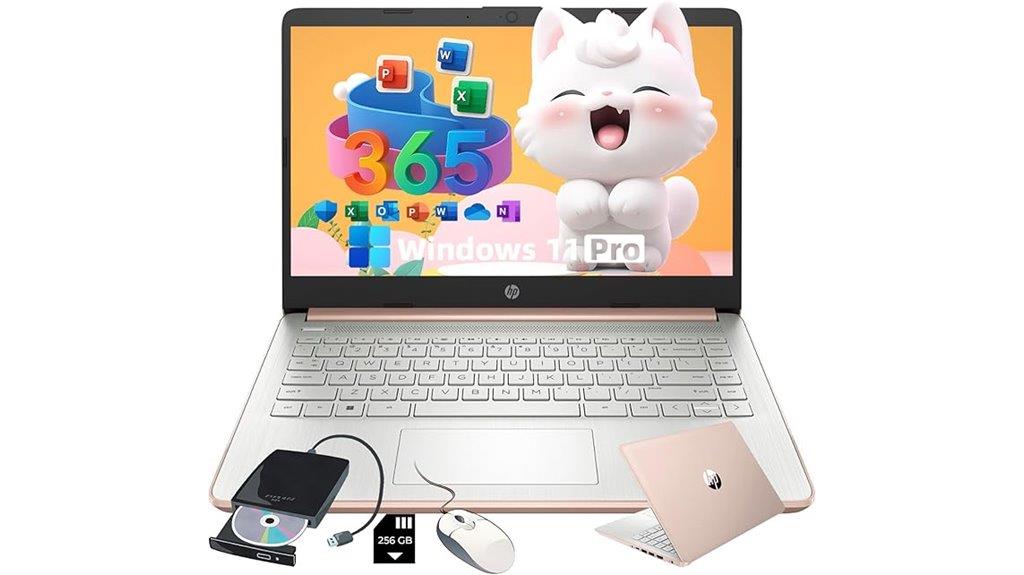
The HP Flagship Laptop with Windows 11 Pro and 32GB RAM stands out as an excellent choice for stargazing enthusiasts who need reliable performance and seamless multitasking. Its powerful Intel quad-core processor (up to 3.4GHz) and 32GB DDR4 RAM guarantee smooth handling of astronomy software, data analysis, and multitasking. The long-lasting battery (up to 11.5 hours) paired with fast HP Fast Charge assures you powered through long nights outside. Its lightweight, portable design makes it easy to carry to remote locations. Plus, the included optical drive, external SD card, and connectivity options make it versatile for both field observations and casual stargazing sessions.
Best For: remote workers, students, and professionals seeking a portable, high-performance laptop for multitasking and productivity.
Pros:
- Powerful Intel quad-core processor with up to 3.4GHz for smooth multitasking
- 32GB DDR4 RAM supports heavy data processing and multiple applications simultaneously
- Long-lasting battery (up to 11.5 hours) with fast HP Fast Charge for extended use on the go
Cons:
- Limited 128GB UFS storage may require external drives for large files
- Slightly bulky for ultra-lightweight portability despite its portable design
- Some users report occasional unintended sleep mode activation during prolonged use
NIMO 15.6″ FHD Laptop with 16GB RAM and 1TB SSD

If you’re looking for a portable, reliable laptop to enhance your stargazing experience, the NIMO 15.6″ FHD Laptop stands out with its vibrant display and powerful performance. Its 1920×1080 anti-glare screen offers sharp visuals with accurate colors, perfect for viewing star maps or space imagery. Powered by a 12th Gen Intel Alder Lake quad-core processor and 16GB RAM, it handles multitasking smoothly. The 1TB SSD ensures quick startups and ample storage for astronomy software and files. Its lightweight design, durable metal shell, backlit keyboard, and Wi-Fi 6 make it a versatile choice for both field observations and at-home use.
Best For: students, professionals, and hobbyists seeking a portable, reliable laptop with vibrant visuals and strong performance for work, entertainment, and field activities like stargazing.
Pros:
- Bright, vivid 15.6-inch FHD anti-glare display with accurate colors
- Powerful 12th Gen Intel Alder Lake-N100 processor with 16GB RAM for smooth multitasking
- Durable metal shell combined with lightweight design for portability and resilience
Cons:
- Battery life averages around 5 hours, which may be limited for extended use off-charger
- Speakers offer clear sound but tend to have low bass, affecting media immersion
- Some users might find the device slightly higher in price compared to entry-level laptops
2025 Laptop with N97 CPU, 8GB RAM, 256GB SSD, 15.6″ FHD IPS Display, 5000mAh Battery, Metal Body
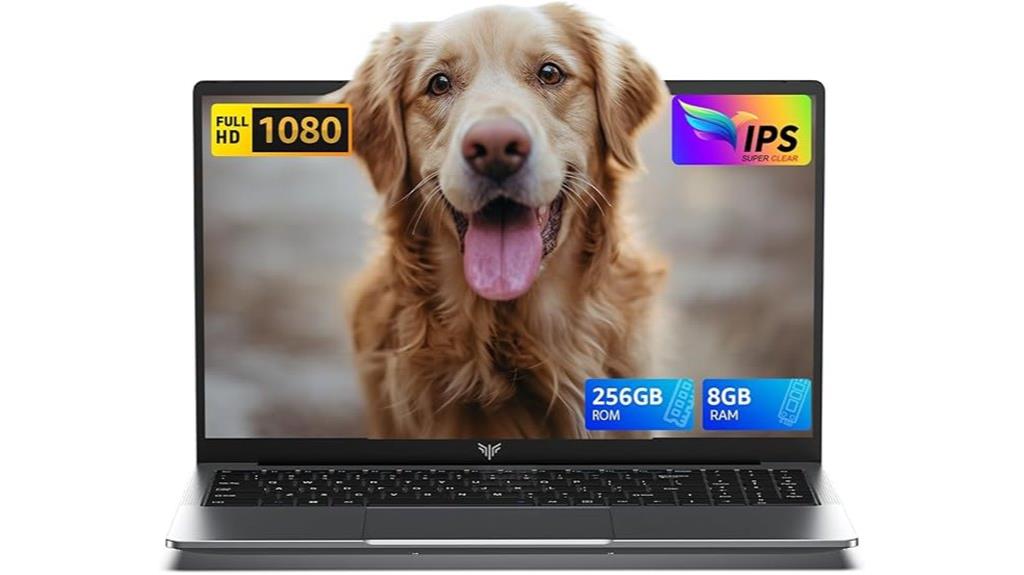
For anyone seeking a portable and reliable laptop to enhance their stargazing experience, this model’s slim metal body and long-lasting battery make it an excellent choice. Weighing only 1.6kg, it’s easy to carry on trips or outdoor nights under the stars. The 15.6-inch FHD IPS display delivers crisp, vibrant visuals from any angle, perfect for viewing celestial charts or media. Powered by the Intel N97 CPU and 8GB RAM, it offers smooth multitasking and quick performance. The 256GB SSD ensures fast load times, while the 5000mAh battery provides over four hours of use, making it a dependable companion for astronomy adventures.
Best For: students, casual users, and outdoor enthusiasts seeking a lightweight, reliable laptop for everyday tasks and leisure activities like stargazing or media consumption.
Pros:
- Slim, lightweight metal body weighing only 1.6kg for easy portability.
- Bright, crisp 15.6-inch FHD IPS display with wide viewing angles.
- Fast performance with Intel N97 CPU, 8GB RAM, and 256GB SSD.
Cons:
- Battery life of just over four hours may be limited for extended outdoor use.
- Minor ergonomic issues reported with keyboard button placement.
- Integrated graphics suitable for everyday tasks but not for heavy gaming or high-end multimedia editing.
ACEMAGIC 17.3-inch Laptop with 12th Gen Processor and 16GB RAM
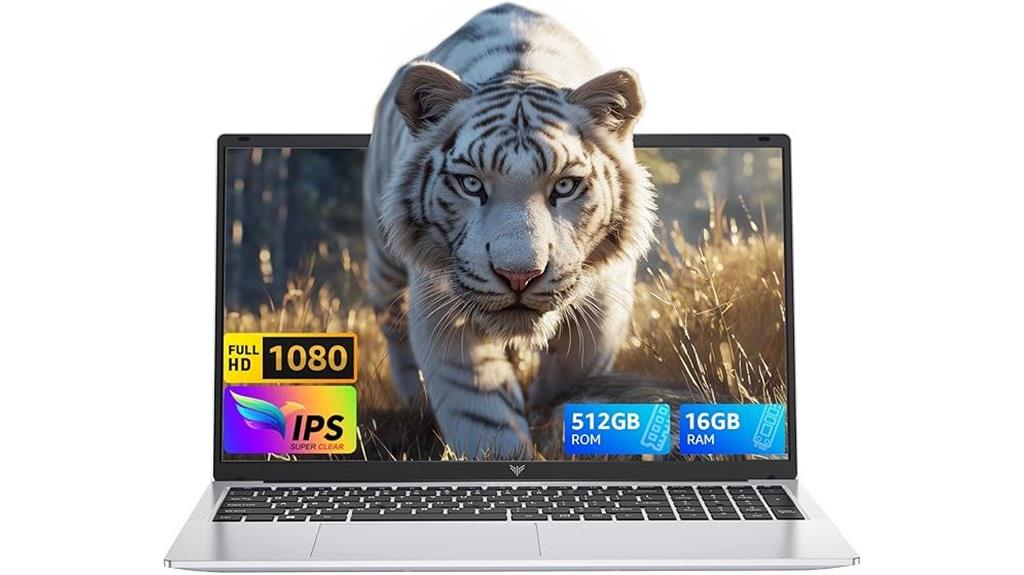
A 17.3-inch display with an immersive FHD IPS panel makes this ACEMAGIC laptop an excellent choice for stargazing enthusiasts who want a portable yet spacious screen for tracking celestial events or using astronomy software. Powered by a 12th Gen Intel Alder Lake N97 quad-core processor and 16GB DDR4 RAM, it delivers strong multitasking and responsiveness. The 512GB SSD ensures fast data access, while the integrated Intel UHD Graphics handles light gaming and everyday tasks. Its lightweight, slim design weighs around 3.5 pounds, making it easy to carry outdoors. Though battery life is about five hours, it’s a versatile, budget-friendly option for space lovers seeking performance and portability.
Best For: enthusiasts seeking a portable, budget-friendly laptop for astronomy, light gaming, and everyday multitasking with a large, immersive display.
Pros:
- Large 17.3-inch FHD IPS display provides an expansive viewing area ideal for space observation and multitasking
- Powered by 12th Gen Intel Alder Lake N97 quad-core processor with 16GB RAM ensures strong responsiveness and multitasking capability
- Lightweight design (~3.5 pounds) combined with a slim profile makes it highly portable for outdoor use
Cons:
- Battery life of approximately five hours may limit extended outdoor sessions without charging
- Lacks touchscreen and backlit keyboard features, which could enhance usability in various environments
- Some users report potential slowdowns over time and issues with charging port types, affecting long-term durability
ACEMAGIC 2024 17.3-Inch FHD Laptop with 12th Gen Quad Core, 16GB RAM, 512GB SSD, Silver
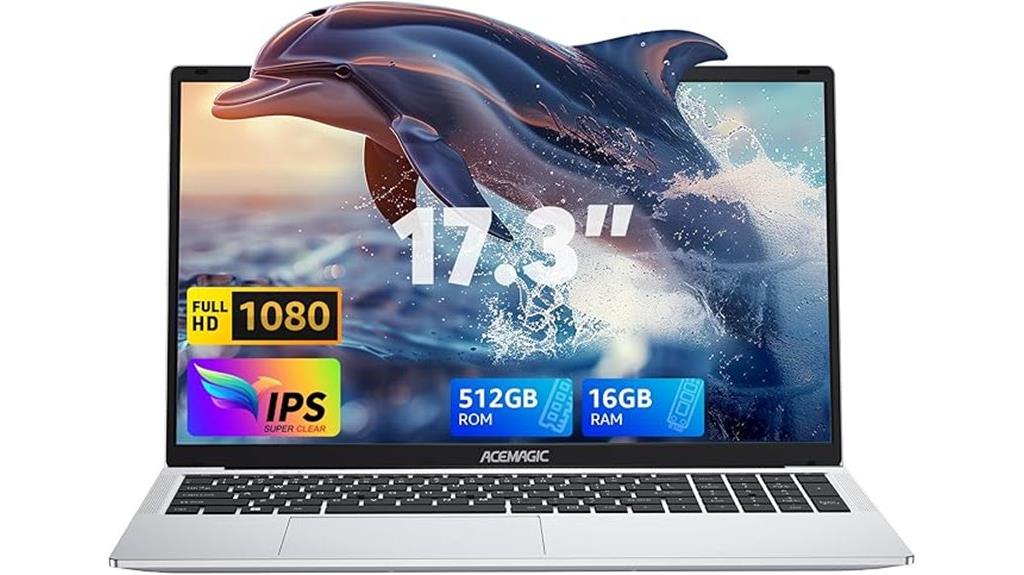
The ACEMAGIC 2024 17.3-Inch FHD Laptop stands out as a versatile choice for stargazing enthusiasts who need a reliable machine for both planning their observations and capturing astrophotography. Its large, vibrant display makes it easy to analyze star charts and celestial images. Powered by a 12th Gen Intel Quad Core processor and 16GB RAM, it handles multitasking smoothly. The 512GB SSD ensures quick data access, while the lightweight design enhances portability for field use. With all-day battery life and multiple connectivity options, this laptop is well-suited for outdoor stargazing sessions, whether at home or in remote locations.
Best For: Stargazing enthusiasts and amateur astronomers who need a portable, high-performance laptop for planning observations and capturing astrophotography in various outdoor settings.
Pros:
- Large, vibrant 17.3-inch FHD display ideal for analyzing star charts and celestial images
- Powerful 12th Gen Intel Quad Core processor combined with 16GB RAM for smooth multitasking and data processing
- Lightweight design with all-day battery life, making it suitable for field use and remote locations
Cons:
- Limited information on specialized features like outdoor display brightness or glare reduction for daytime stargazing
- Potential issues with support and warranty responsiveness as noted in some customer reviews
- Absence of dedicated features such as a fingerprint scanner or advanced security options
ACEMAGIC 2025 17.3-Inch Laptop with Quad Core Processor and 16GB RAM
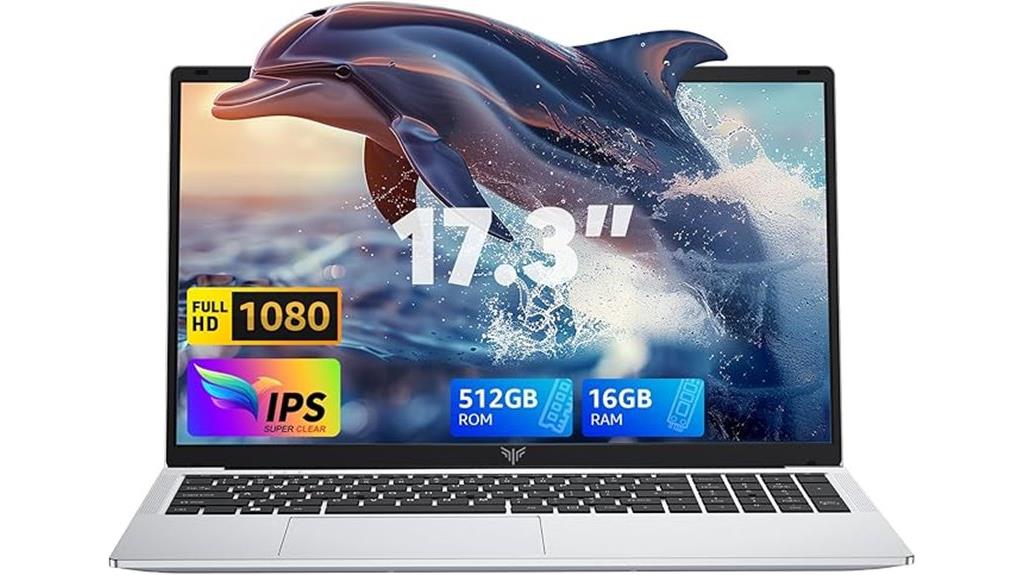
With its vibrant 17.3-inch FHD IPS display and slim-bezel design, the ACEMAGIC 2025 17.3-Inch Laptop offers an immersive viewing experience perfect for stargazing enthusiasts. Its compact, durable metal chassis weighs just 3.52 pounds, making it easy to carry on outdoor adventures. Powered by a 12th Gen Intel Alder Lake quad-core processor and 16GB DDR4 RAM, it handles multitasking smoothly. The 512GB SSD ensures quick data access, while the integrated Intel UHD graphics support vibrant visuals. Although the battery life supports around five hours of use, its portability and performance make it an excellent choice for on-the-go space exploration and stargazing.
Best For: portable users seeking a high-performance, immersive display for gaming, streaming, or outdoor activities such as stargazing and space exploration.
Pros:
- Vibrant 17.3-inch FHD IPS display with thin-bezel design for immersive visuals
- Lightweight and durable metal chassis weighing only 3.52 pounds for easy portability
- Powered by a 12th Gen Intel Alder Lake quad-core processor with 16GB RAM for smooth multitasking
Cons:
- Battery life of around five hours may be limited for extended use without charging
- Only supports data transfer via Type-C (data only), lacking full Thunderbolt compatibility
- No dedicated graphics card; relies on integrated Intel UHD graphics which may be less suitable for high-end gaming
NIMO 15.6″ IPS FHD Laptop with 16GB RAM and 1TB SSD

If you’re looking for a reliable laptop to enhance your stargazing experience, the NIMO 15.6″ IPS FHD Laptop stands out with its vibrant display and powerful performance. Its 15.6-inch anti-glare screen delivers accurate colors and reduces eye strain, perfect for long nights outdoors. Equipped with a 12th Gen Intel Alder Lake processor, 16GB RAM, and a 1TB SSD, it handles multitasking and data transfers effortlessly. The sturdy metal shell ensures durability, while features like Wi-Fi 6 and Bluetooth 5.2 keep you connected. Designed for portability, it’s ideal for on-the-go astronomy, offering a blend of reliability, speed, and sleek design.
Best For: astronomy enthusiasts and outdoor stargazers seeking a durable, high-performance laptop with a vibrant display for long nights under the stars.
Pros:
- Vibrant 15.6-inch IPS FHD anti-glare display reduces eye strain during extended use
- Powerful 12th Gen Intel Alder Lake processor combined with 16GB RAM and 1TB SSD for seamless multitasking and fast data transfer
- Durable metal shell and lightweight design make it ideal for portable outdoor use and travel
Cons:
- Limited to 4 cores and 4 threads, which may affect intensive multitasking or high-end gaming
- Slightly higher price point due to premium features and build quality
- Battery life specifications are not detailed, which could impact long outdoor sessions
Laptop 15.6in with Backlit Keyboard, 1TB SSD, 16GB RAM, Quad-Core N150, Webcam, Portable FHD Notebook
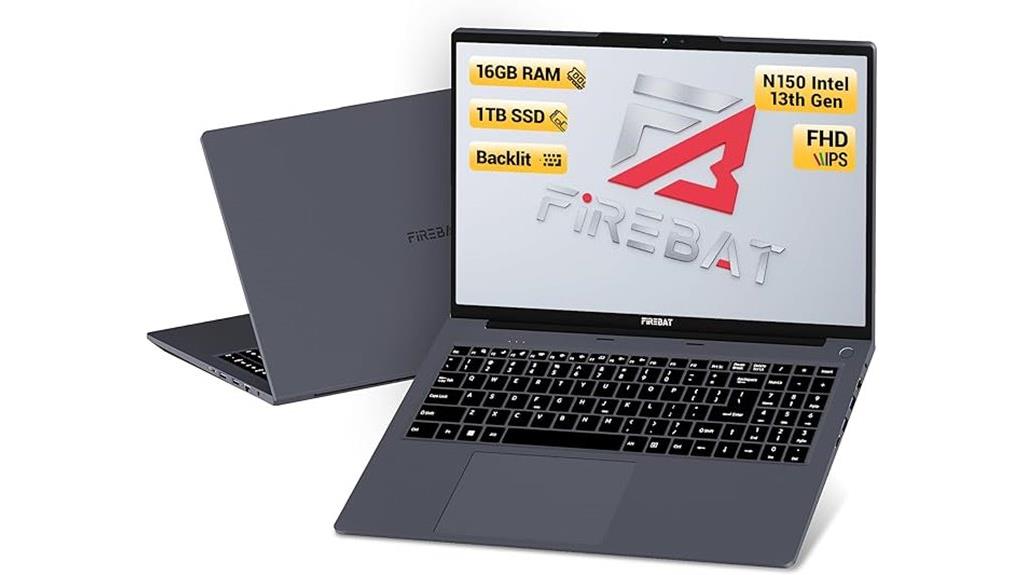
A 15.6-inch FHD display with slim bezels makes this laptop an excellent choice for stargazing enthusiasts who want to explore celestial maps or watch star documentaries in crisp detail, even in low-light conditions thanks to its backlit keyboard. Powered by the Intel 13th Gen Twin Lake N150 processor, it delivers a 30% performance boost over previous generations, ensuring smooth multitasking and light gaming. The 16GB RAM and 1TB SSD provide fast speed and ample storage. Its portable design, combined with long-lasting battery life and versatile connectivity options, makes it ideal for both field observations and cozy nights at home.
Best For: Astronomy enthusiasts, students, and professionals seeking a portable, high-performance laptop for celestial mapping, star documentaries, and nighttime use.
Pros:
- Powerful 13th Gen Twin Lake N150 processor offers a 30% performance boost for multitasking and light gaming
- Bright 15.6-inch FHD IPS display with slim bezels provides crisp visuals, ideal for detailed celestial observations
- Long-lasting 38Wh battery and portable design support use in the field or at home, with versatile connectivity options
Cons:
- Limited to Wi-Fi 5 and Bluetooth 4.2, which may be less future-proof compared to newer standards
- Upgradable RAM only to 32GB; might not suffice for intensive professional applications
- No dedicated graphics card, limiting performance for high-end gaming or advanced visualization tasks
Factors to Consider When Choosing Astronomy Laptops With High Battery Life
When choosing an astronomy laptop with long battery life, I focus on factors like how long the battery lasts and how efficiently the device uses power. Features like adjustable brightness and energy-saving processors help extend usage during long stargazing sessions. Additionally, considering portability and weight guarantees I can carry my gear comfortably without sacrificing performance.
Battery Duration Longevity
Choosing an astronomy laptop with high battery life is essential for uninterrupted stargazing sessions, especially when working outdoors where power sources are scarce. High-capacity lithium-ion batteries, typically 6000mAh or more, usually last between 5 to 8 hours of continuous use, supporting long observation periods. To maximize battery longevity, look for laptops with efficient power management features like adaptive brightness and optimized CPU performance, which help conserve energy. Keep in mind that batteries degrade over time, reducing overall lifespan, so selecting models with high-quality batteries or those that allow easy replacement is beneficial. Regular calibration and proper charging habits can also maintain battery health, ensuring your laptop remains operational through extended astronomical activities. Proper care extends your investment and enhances overall usability.
Power Efficiency Features
Optimizing power efficiency is key to extending your laptop’s battery life during long stargazing sessions. I look for laptops with low-voltage processors, like Intel’s U-series or AMD’s Ryzen U-series, which cut down energy use without sacrificing performance. Integrated graphics are preferable over dedicated GPUs, as they consume less power during routine tasks. Features like adaptive brightness and automatic sleep modes help conserve energy by adjusting settings based on activity. Technologies such as ARM-based architectures and efficient power delivery systems further extend battery life. Additionally, hardware components with high energy efficiency ratings—like LED backlit displays and low-power RAM—play a crucial role. Prioritizing these power efficiency features ensures I can enjoy extended stargazing without constantly searching for power outlets.
Display Brightness Settings
Adjusting your display brightness is one of the simplest yet most effective ways to extend your laptop’s battery life during long stargazing sessions. Lowering the brightness reduces power consumption from the backlit screen, which is often one of the biggest drains on battery life. Many laptops let you customize brightness levels, so you can find a balance between visibility and conservation. Using adaptive brightness features, which automatically adjust the screen based on ambient light, can further maximize efficiency without sacrificing usability. Even just lowering the brightness a few levels can lead to noticeable energy savings over extended periods. By managing your display brightness wisely, you can enjoy longer sessions under the stars without constantly worrying about running out of power.
Processor Energy Optimization
When selecting a laptop for stargazing, paying attention to processor energy efficiency can make a significant difference in battery life. Processors with lower TDP ratings, like Intel N100 or N5095, consume less power during intensive tasks, extending battery runtime. Modern architectures such as 12th and 13th generation Intel Alder Lake utilize hybrid core designs that balance performance with energy savings. Features like dynamic voltage and frequency scaling (DVFS) allow processors to adjust power usage based on workload, conserving energy when full power isn’t needed. Additionally, advanced power management states, including deep sleep modes, reduce energy consumption during inactivity. Choosing CPUs with integrated graphics also helps, as they eliminate the need for power-hungry discrete GPUs, further boosting battery efficiency during long stargazing sessions.
Portability and Weight
Choosing a lightweight, portable laptop considerably enhances your ability to enjoy stargazing on the go. Laptops under 3.5 pounds are easier to carry over long distances, making fieldwork or travel less cumbersome. Slim profiles with minimal bulk allow you to slip the device into backpacks or briefcases effortlessly, boosting mobility. Compact designs often feature smaller batteries, but many are optimized for high battery life, ensuring you stay unplugged longer. Features like foldable hinges and flat, lightweight chassis reduce physical strain and make transport more comfortable. Prioritizing high-capacity batteries, such as 6000mAh or more, guarantees extended usage without frequent recharging, which is essential when exploring remote areas or outdoor locations. Overall, portability greatly enhances your stargazing experience.
Screen Size Impact
While portability and weight are key factors, the size of your laptop’s screen also plays a significant role in battery life during stargazing sessions. Larger screens, like 17.3 inches, tend to consume more power, reducing overall battery life. Smaller screens, such as 15.6 inches, require less energy for backlighting and pixel rendering, which helps extend battery performance. The resolution and display technology further influence power consumption; high-resolution, larger screens often draw more energy. To maximize battery life, I recommend balancing screen size with energy-saving features like adaptive brightness and power modes. Choosing a moderate screen size, like 15.6 inches, offers a good compromise—providing a comfortable viewing experience without draining the battery too quickly during long stargazing adventures.
Software Power Management
Have you considered how software power management can extend your laptop’s battery life during long stargazing sessions? Properly optimized software settings can substantially reduce unnecessary background processes, conserving energy. Using built-in power profiles and energy-saving modes helps balance performance and efficiency, essential when you’re out in the field. Managing display brightness and disabling non-critical peripherals through software controls can also cut power usage without sacrificing necessary functions. Regular updates to your operating system and drivers ensure that power management algorithms are current, boosting battery longevity during intensive tasks. Additionally, implementing software-based scheduling and sleep modes minimizes power consumption during idle periods. By fine-tuning these software features, you can maximize your laptop’s battery life and enjoy uninterrupted stargazing adventures.
Frequently Asked Questions
Which Laptops Have the Longest Battery Life for Outdoor Stargazing?
If you’re looking for laptops with the longest battery life for outdoor stargazing, I recommend the MacBook Air M2 and Dell XPS 13. Both offer exceptional battery longevity, with up to 18 hours of use on a single charge. I personally find their portability and durability perfect for outdoor use. Keep in mind, turning down screen brightness and disabling unnecessary apps can extend your battery life even further.
Are There Lightweight Laptops Suitable for Extended Space Observations?
Think of these laptops as your trusty spaceship companions—light, yet powerful enough for extended space observations. I’ve found several lightweight models that pack impressive battery life, perfect for outdoor stargazing. They’re easy to carry, durable, and keep you connected for hours without plugging in. Whether hiking to a remote vista or setting up in your backyard, these laptops help you explore the cosmos without weighing you down.
How Does Display Brightness Impact Battery Life During Night Sky Viewing?
Display brightness considerably impacts battery life during night sky viewing. When I keep the screen brightness high, my laptop’s battery drains faster, which cuts into my observing time. To maximize battery life, I dim the display or use auto-brightness settings. This way, I can enjoy longer stargazing sessions without needing to recharge frequently. Managing brightness is a simple but effective way to extend my laptop’s usability during late-night astronomy sessions.
Can These Laptops Operate Effectively in Cold or Humid Outdoor Environments?
Like a hardy explorer in uncharted territory, I can tell you these laptops handle cold and humid outdoor environments surprisingly well, but they’re not invincible. Cold can slow down performance, and humidity might cause moisture issues. I recommend using protective cases and keeping the device as dry and warm as possible. With proper precautions, you’ll still get reliable use during your celestial adventures.
What Are the Best Storage Options for Large Astronomy Data Sets?
For large astronomy data sets, I recommend using high-capacity external SSDs or HDDs. External SSDs offer faster transfer speeds and durability, ideal for quick access and data integrity. For massive storage needs, HDDs are cost-effective and can hold terabytes of data. I also back up important data to cloud services for extra security. Combining these options guarantees I can store, access, and safeguard my astronomy data efficiently.
Conclusion
If you’re serious about stargazing or exploring space, choosing the right laptop makes all the difference. Did you know that some models can last over 10 hours on a single charge? That’s enough time to watch a night sky full of constellations or run detailed simulations without needing a recharge. So, pick a lightweight, long-lasting laptop, and you’ll be ready for cosmic adventures whenever the night sky calls.