
A biodegradable trash liner for a 13-gallon bin needs to fit your can and match how you dispose of waste; the label alone does not tell you whether a bag suits home composting or municipal collection. My best overall pick is the Simply Bio 13 Gallon Compostable Organic Bags for its stated ASTM D6400, BPI, and OK Compost Home certifications, plus a 1-mil thickness. For larger-count options, the 13 Gallon Compostable Trash Bags, 100 Count and Hippo Sak Plant-Based Tall Kitchen Garbage Bags stand out by pack size and plant-based positioning, though their listed details do not establish the same certification profile. Buyers face a tradeoff between verified compostability claims, bag strength, closure style, and the number of liners in a pack. Read on for the full comparison, selection criteria, and advice on matching a liner to your bin and waste routine.

Get kitchen staples and gadgets delivered free with Prime
- Fast, free delivery on millions of items
- Prime Video, Amazon Music and more included
- Member-only deals all year
Key Takeaways
- Certification claims separate the clearest composting choice: Simply Bio is the only listed option with named ASTM D6400, BPI, and OK Compost Home certifications, making its claims easier to evaluate than listings that only say biodegradable or compostable.
- Thickness is useful but not a guarantee: Emily’s Choice lists 1.2 mil and Simply Bio lists 1 mil, while UNNI lists 0.9 mil; those figures offer a comparison point, but bag material, seams, load, and moisture still affect performance.
- Pack size varies widely: the Earthsense liner pack has 150 bags, while several listings offer 100 or more; a larger count can reduce restocking but does not establish compostability or fit by itself.
- Closures and formats are not interchangeable: drawstrings, handles, and unspecified closures affect how easily a full liner can be gathered and carried, so match the closure to your disposal routine.
- Capacity labels need a fit check: most options are listed for 13 gallons, while Emily’s Choice covers 13–17 gallons and some listings span 13–15 gallons; compare the bag’s stated dimensions with your can, not capacity alone.




| biodegradable trash liner 13gal | Capacity | Item weight | Material | Pack count |
|---|---|---|---|---|
| 13 Gallon Biodegradable Trash | — | 3.58 lb | Biodegradable plastic | 75 bags |
| 13 Gallon Compostable Trash Ba | 13 gallons | 1.5 lb | Plant starch (corn) | 100 bags |
| Simply Bio 13 Gallon Compostab | 13 gallons (49.21 liters) | 2.1 lb | — | 30 bags |
| Earthsense Commercial Recycled | 13 gallons | — | Recycled low-density polyethylene | 150 liners |
| 13 Gallon Tall Kitchen Trash B | 13 gallons | 1.19 kg | — | 75 bags |
| Compostable Trash Bags | 15 gallons | 1.03 kg | Cornstarch | 75 bags |
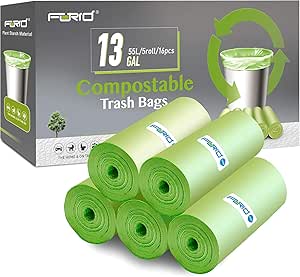
| Forid Compostable Trash Bags 1 | 55 liters | 3 pounds | — | 80 bags |
| UNNI Compostable Bags | 13 gallons | 2.6 pounds | — | 50 bags |
| 13 Gallon | 13 gallons | 1.5 pounds | Compostable corn starch | 50 bags |
| Reli. Biodegradable 13 Gallon | 13 gallons | 2.2 pounds | Green biodegradable plastic | 100 bags |
| Hippo Sak Plant-Based Tall Kit | 13 gallons | — | Plant-based material derived from sugar cane | — |
| ECOLipak 13 Gallon 100 Count C | 13 gallons | — | Polylactic acid (PLA), plant-based | — |
| Biodegradable 13 Gallon Trash | 13 gallons | 0.81 kg | Cornstarch | — |
| 13-15 Gallon Biodegradable Com | 15 gallons; listed for 13–15-gallon cans | 2.3 pounds | Plant-based, corn starches | — |
| Emily’s Choice Biodegradable T | 13–17 gallons; listed capacity is 17 gallons | 4 pounds | High-density polyethylene with D2W | — |
More Details on Our Top Picks
13 Gallon Biodegradable Trash Bags with Drawstring, 75 Count
For buyers who put wet or weighty kitchen waste in a 13-gallon can, this bag’s standout feature is its 1.4-mil thickness. That heavier construction may help resist leaks and tears better than the 0.85-mil Earthsense recycled liner, though Earthsense supplies twice as many bags. A drawstring closure gives you a practical way to lift and tie a full liner, while tear-free dispensing can make routine changes less fiddly. The main tradeoff is that the pack contains only 75 bags, and the extra thickness may be unnecessary for dry, lightweight rubbish. The listing describes the material as biodegradable plastic but does not provide the certification details found with the 13 Gallon Compostable Trash Bags, 100 Count, so buyers seeking verified compostability should compare labels carefully.
Pros:- 1.4-mil thickness is suited to heavier household waste
- Drawstring closure helps tie and lift a full bag
- Designed to fit standard 13-gallon kitchen bins
- Tear-free dispensing is intended to simplify bag changes
Cons:- The 75-count pack runs out sooner than the 100-count compostable option
- Extra thickness may be more than light, dry waste requires
- No compostability certification is specified in the provided product data
Best for: Households that regularly bag damp or heavier kitchen waste and want a thick liner with a drawstring closure.
Not ideal for: Buyers seeking certified compostable bags or a high-count pack for frequent changes; the listing gives no compostability certification and includes 75 bags.
- Listed capacity:15 gallons
- Pack count:75 bags
- Thickness:1.4 mil
- Material:Biodegradable plastic
- Closure style:Drawstring
- Color:Green
- Item weight:3.58 lb
- Item dimensions:31.5 x 24.8 x 31.5 in
Our verdict“Choose this for a thicker drawstring liner for heavier kitchen waste, but skip it if verified compostability or a larger count matters more.”
13 Gallon Compostable Trash Bags, 100 Count
This pack leads the group on count and certification detail: it provides 100 plant-starch bags and is listed as certified by BPI, OK COMPOST, and Seedling. That makes it a stronger fit for shoppers choosing specifically for composting than the 13 Gallon Biodegradable Trash Bags with Drawstring, 75 Count, whose supplied details do not name compostability certifications. The drawstrings and thickened construction also suit kitchen or garden scraps, while the compact two-roll format takes little storage space. There is a fit limitation: the listed can dimensions are under 15.3 inches in diameter or 48 inches in perimeter, so measure a round or wide bin before buying. These liners are intended for compostable waste, not every household rubbish stream, and their plant-based material may not suit buyers who need a liner for mixed, non-compostable trash.
Pros:- 100 bags per pack, more than the other biodegradable options reviewed here
- Plant-starch material is listed as compostable
- BPI, OK COMPOST, and Seedling certifications are specified
- Drawstrings support tying and carrying filled liners
Cons:- Fit is limited to cans under 15.3 inches in diameter or 48 inches in perimeter
- Designed for compostable waste rather than mixed household rubbish
- Plant-based compostable liners may not suit buyers prioritizing conventional heavy-duty bag performance
Best for: Households with a measured 13-gallon bin that separate compostable food or garden scraps and want certification information plus a 100-bag pack.
Not ideal for: People who dispose of mixed household rubbish in one liner or have a bin wider than the stated fit limits.
- Capacity:13 gallons
- Pack count:100 bags
- Roll format:2 rolls of 50
- Material:Plant starch (corn)
- Material feature:Compostable
- Certifications listed:BPI, OK COMPOST, and Seedling
- Color:Green
- Item weight:1.5 lb
Our verdict“Pick this for certified compostable waste and a 100-count pack if your bin fits the stated dimensions.”
Simply Bio 13 Gallon Compostable Organic Bags Liners Drawstring, Heavy Duty Extra Thick 1 Mil, 49.21 Liter, 30 Bags, Tall Kitchen Food Scrap Waste Bag, ASTM D6400, US BPI and OK Compost Home Certified
The Simply Bio option is the most certification-specific pick here, with ASTM D6400, US BPI, and OK Compost Home stated in its product title. Its 1-mil PLA and PBAT construction and drawstring closure make it a purpose-built liner for food scraps and other compostable waste, rather than a general-purpose replacement for every trash bag. Compared with the 13 Gallon Compostable Trash Bags, 100 Count, it offers a clearly stated thickness and home-compost certification but supplies only 30 bags. That smaller pack may appeal to buyers who want a defined composting use and do not need a large reserve; it is less practical for households that change liners often. The provided description calls the bags leak-resistant, but the limited count and focus on compostable waste are meaningful constraints for everyday mixed rubbish.
Pros:- PLA and PBAT plant-based material
- 1-mil thickness is specified
- Drawstring closure supports handling and tying
- ASTM D6400, BPI, and OK Compost Home are listed
Cons:- Only 30 bags per pack, substantially fewer than the 100-count alternative
- Compostable-waste focus limits its fit for mixed household trash
- The 13-gallon capacity will not suit larger bins
Best for: Food-scrap composters who want a 13-gallon drawstring liner with ASTM D6400, BPI, and home-compost certification details.
Not ideal for: Large households or anyone using liners for mixed rubbish; the pack has 30 bags and is positioned for compostable waste.
- Capacity:13 gallons (49.21 liters)
- Pack count:30 bags
- Thickness:1 mil
- Materials:PLA and PBAT
- Closure style:Drawstring
- Certifications listed:ASTM D6400, US BPI, and OK Compost Home
- Item weight:2.1 lb
- Item dimensions:9 x 3.25 x 3.25 in
Our verdict“Choose Simply Bio when certification detail for food-scrap composting matters more than pack size.”
Earthsense Commercial Recycled Can Liner, 13 gal, .85 mil, 24″ x 33″, White – Pack of 150
Earthsense earns a distinct place for buyers who prioritize recycled content and a large supply over compostability. The pack contains 150 liners made from recycled low-density polyethylene, compared with 75 bags in the 13 Gallon Biodegradable Trash Bags with Drawstring. Its star-bottom design is intended to distribute contents across the base, and the coreless roll makes dispensing straightforward in shared or high-use settings. The tradeoff is central to this roundup: recycled plastic is not the same material claim as biodegradable or compostable, so this is not the right choice for shoppers specifically seeking a liner that breaks down through composting. At 0.85 mil, it is also thinner than the drawstring option and may be a poor match for sharp or very heavy waste. It makes most sense for routine, lighter loads in offices or busy households.
Pros:- 150 liners per pack suit frequent changes and shared spaces
- Made from recycled low-density polyethylene
- Star-bottom construction is designed to distribute contents
- Coreless roll supports convenient dispensing
Cons:- Recycled plastic is not presented as biodegradable or compostable
- 0.85-mil thickness may be inadequate for sharp or very heavy rubbish
- White is the only listed color
Best for: Offices, shared kitchens, and high-use households seeking a 13-gallon liner with recycled content and a 150-bag pack.
Not ideal for: Buyers who require biodegradable or compostable liners, or who routinely bag sharp, wet, or very heavy waste.
- Capacity:13 gallons
- Pack count:150 liners
- Dimensions:24 x 33 in
- Thickness:0.85 mil
- Material:Recycled low-density polyethylene
- Bottom design:Star bottom
- Roll format:Coreless roll
- Color:White
Our verdict“Choose Earthsense for a high-count recycled-plastic liner, not when compostability is the deciding requirement.”
13 Gallon Tall Kitchen Trash Bags, Biodegradable, Unscented, Leak-Proof, 75 Count
For a kitchen where lingering bin smells are a concern, this liner’s odor-neutralizing feature gives it a different purpose from the simpler Simply Bio 13 Gallon Compostable Organic Bags, which emphasizes composting certifications and a defined 1-mil thickness. This 75-count option is described as biodegradable and compostable, with leak-proof and tear-resistant performance intended for heavier loads; it also lists cornstarch among its materials. That combination may suit households wanting one bag for kitchen and occasional outdoor use, though the product data does not provide certification names or a thickness measurement. Compared with the 13 Gallon Compostable Trash Bags, 100 Count, it supplies fewer liners and less verification detail, but adds the stated odor-control benefit. Buyers who need documented composting standards should check further before choosing it.
Pros:- Cornstarch is listed among the biodegradable and compostable materials
- Odor-neutralizing feature is aimed at reducing unpleasant bin smells
- Leak-proof and tear-resistant performance is described for heavier loads
- Suitable for indoor and outdoor household use
Cons:- Only 75 bags per pack, fewer than the 100-count compostable option
- No specific compostability certification is supplied in the product data
- Thickness is not listed, making direct durability comparisons harder
Best for: Households with odor-conscious kitchens that want a biodegradable tall-kitchen liner for routine or heavier waste.
Not ideal for: Buyers who need named compostability certifications, a specified thickness, or a larger pack than 75 bags.
- Capacity:13 gallons
- Pack count:75 bags
- Dimensions:23.6 x 31.5 in
- Materials:Cornstarch; biodegradable and compostable material
- Material features:Biodegradable and compostable
- Odor feature:Odor-neutralizing
- Color:Green
- Item weight:1.19 kg
Our verdict“Pick this for an odor-conscious kitchen if its stated compostable materials meet your needs and certification details are not your priority.”
Compostable Trash Bags, 13-15 Gallon Biodegradable Garbage Bags, 75 Count, Blue
For households with a bin that falls between standard 13- and 15-gallon sizes, this 75-count pack offers more sizing latitude than the specifically 13-gallon UNNI Compostable Bags. Its stated 15-gallon capacity can also help when a kitchen liner needs a little extra room, though buyers should check their can dimensions rather than rely on capacity alone. The bags use cornstarch material and are listed as 1.18 mil thick, making this a sturdier-feeling spec than the 0.9 mil UNNI option on paper. The tradeoff is that the listing provides no compostability certification details, so it is a weaker fit for shoppers who need documented composting standards. Its blue color can also be less discreet in open bins.
Pros:- 15-gallon stated capacity gives more room than strictly 13-gallon options.
- Cornstarch material is plant-based.
- Listed thickness of 1.18 mil is higher than the 0.9 mil UNNI bags.
- 75 bags per pack suit regular household or office use.
Cons:- No compostability certification is specified in the supplied product data.
- The 13-15-gallon fit range still requires checking the bin’s dimensions.
- Blue bags are less discreet than clear or neutral liners.
Best for: Households using 13- to 15-gallon bins that want a plant-based liner and a larger pack than many 50-count options.
Not ideal for: Shoppers who need independently specified compostability certifications or a clear liner for easy waste sorting.
- Capacity:15 gallons
- Pack count:75 bags
- Material:Cornstarch
- Thickness:1.18 mil
- Color:Blue
- Item weight:1.03 kg
- Material feature:Biodegradable
Our verdict“Choose this pack if your bin may need a 15-gallon liner, but pick a certified option if composting credentials are a priority.”
Forid Compostable Trash Bags 13 Gallon Garbage Bags, Unscented, 80 Count
For buyers who want composting credentials stated alongside the bag itself, Forid has the clearest documentation in this group: it lists ASTM D6400 and EN 13432 compliance. That makes it a more standards-focused choice than the cornstarch 13-15-gallon bags, whose supplied details do not name certifications. Its octagonal bottom is described as supporting loads up to 83 pounds, a useful design claim for heavier kitchen waste, while the clear green material can help distinguish contents during sorting. The pack also contains 80 bags, more than the 50-count UNNI and double-layer drawstring options. The limits are a fit aimed at 13-gallon bins and no scent to cover food odors; composting acceptance can also depend on local facilities and practices.
Pros:- Lists ASTM D6400 and EN 13432 compostability standards.
- 80 bags per pack exceeds the count in the 50-bag UNNI and double-layer packs.
- Octagonal-bottom design is specified to support loads up to 83 pounds.
- Clear green material can aid waste identification and sorting.
Cons:- Designed for 13-gallon bins, limiting use with larger cans.
- Unscented bags do not mask strong kitchen-waste odors.
- Local composting rules may not accept every certified liner.
Best for: Households that prioritize stated compostability standards and want a larger pack for routine 13-gallon kitchen-bin use.
Not ideal for: Owners of larger bins or shoppers who want scented liners to help mask strong food-waste odors.
- Capacity:55 liters
- Pack count:80 bags
- Material type:Plant-based bioplastic
- Material feature:Compostable
- Certifications:ASTM D6400 and EN 13432
- Scent:Unscented
- Item weight:3 pounds
- Net content weight:2.8 pounds
Our verdict“Pick Forid if named compostability standards and a higher bag count matter more than odor control or larger-bin flexibility.”
UNNI Compostable Bags, 13 Gallon, 50 Count, Extra Thick 0.9 Mil
UNNI is a focused choice for shoppers who want a 13-gallon kitchen-bin fit paired with multiple named compostability certifications: BPI, CMA, and TÜV AUSTRIA. Compared with Forid’s 80-count pack, this one supplies only 50 bags, but its certification list is broader in the provided data and its stated 0.9 mil thickness gives buyers a concrete spec to compare. Plant-based compostable liners can suit food scraps and everyday waste, though thickness alone does not guarantee a leak-free bag under every load. The main practical catch is disposal: the listing warns that commercial composting may not be available everywhere, and the bags are best used within nine months. Choose it for a measured rotation, not for long-term bulk storage.
Pros:- Lists BPI, CMA, and TÜV AUSTRIA compostability certifications.
- Sized for 13-gallon tall kitchen cans.
- 0.9 mil thickness is clearly stated for comparison.
- Unscented format suits buyers avoiding added fragrance.
Cons:- 50 bags per pack is fewer than Forid’s 80-count option.
- Commercial composting access may be limited in some areas.
- The listing recommends use within nine months for best performance.
Best for: 13-gallon kitchen-bin owners who want several named compostability certifications and can use a 50-bag pack within the recommended period.
Not ideal for: Bulk buyers who store liners for long periods or households without a suitable composting route.
- Capacity:13 gallons
- Pack count:50 bags
- Thickness:0.9 mil
- Material feature:Compostable
- Certifications:BPI, CMA, TÜV AUSTRIA
- Scent:Unscented
- Item weight:2.6 pounds
- Item dimensions:6.42 x 4.41 x 4.41 inches
Our verdict“Choose UNNI for a certified, standard-size 13-gallon liner when you can use the pack promptly and have a suitable composting option.”
13 Gallon, 50-Count Compostable Trash Bags
This 50-count option stands out for combining a drawstring closure with a thickened double-layer design, addressing two routine annoyances: tying off a full bag and handling it without relying on a plain open top. Its BPI, OK COMPOST, and Seedling certifications give it a stronger documented compostability profile than the 13-15-gallon cornstarch bags, while Forid offers a larger 80-bag pack and a stated heavy-load bottom design. The drawstring is the deciding feature for buyers who lift liners out of a kitchen can frequently. Fit is less forgiving, though: the listed limit is a can diameter under 15.3 inches or perimeter under 48 inches. Check the bin before ordering, and expect the same local composting restrictions that apply to certified liners.
Pros:- Drawstring closure helps tie and lift a filled liner.
- Thickened double-layer design is intended to reduce tears and leaks.
- Lists BPI, OK COMPOST, and Seedling certifications.
- Compact roll dimensions make storage easier.
Cons:- Fit is limited to cans under 15.3 inches in diameter or 48 inches in perimeter.
- 50 bags per pack is fewer than Forid’s 80-count offering.
- Certification does not guarantee acceptance by every local composting program.
Best for: People with a dimension-matched 13-gallon kitchen bin who want drawstrings for tying and carrying food-waste liners.
Not ideal for: Owners of wide or unusually shaped cans, or shoppers seeking a larger pack than 50 bags.
- Capacity:13 gallons
- Pack count:50 bags
- Material:Compostable corn starch
- Bag type:Drawstring
- Color:Green
- Certifications:BPI, OK COMPOST, Seedling (TÜV)
- Dimensions:3.5 x 3.5 x 6.2 inches
- Item weight:1.5 pounds
Our verdict“Choose this pack for the drawstring convenience if your can meets its size limits and you have an appropriate composting route.”
Reli. Biodegradable 13 Gallon Trash Bags – 100 Count, Green
Reli. is the straightforward pick for buyers who want 100 liners in one pack and do not need a drawstring or detailed composting certifications. Its stated 13-gallon capacity and 24-by-32-inch size offer a basic fit reference, while the 10-micron spec gives a thickness measurement that can help with comparisons. Unlike the 50-count drawstring bags, this option prioritizes quantity and a simple liner format; unlike Forid, the supplied data does not list ASTM or EN certification. That distinction matters: the product is described as biodegradable, but the details do not establish that it is compostable or suitable for a particular composting system. The green material also offers less discreet bin visibility than a clear liner, and the product data notes quality variability.
Pros:- 100 bags per pack is the highest count among these five products.
- 13-gallon capacity targets common kitchen bins.
- 24 x 32-inch dimensions provide a fit reference.
- Leak-proof and tear-resistant performance is claimed in the product description.
Cons:- No compostability certification is specified in the supplied data.
- No scent options are listed.
- The product details report some variability in quality.
Best for: Households that go through liners quickly and want a 100-count, standard 13-gallon biodegradable option.
Not ideal for: Buyers who require named compostability certifications, a drawstring closure, or a wider bin-size range.
- Capacity:13 gallons
- Pack count:100 bags
- Material:Green biodegradable plastic
- Size:24 x 32 inches
- Thickness:10 microns
- Color:Green
- Item weight:2.2 pounds
Our verdict“Choose Reli. if pack count is your priority, but select a certified compostable liner if you need documented composting compatibility.”
Hippo Sak Plant-Based Tall Kitchen Garbage Bags, 13 Gallon, 90 Count
Hippo Sak is the strongest fit for buyers who prioritize plant-based content without moving to a compostable liner. Its sugar-cane-derived material is USDA Certified Biobased, and the stated leak-proof, puncture-resistant construction speaks to routine kitchen waste rather than only food scraps. Compared with ECOLipak’s PLA compostable bags, Hippo Sak is positioned as recyclable, not compostable, so the disposal route is different; check local recycling guidance rather than assuming a used liner belongs in curbside recycling. The 90-count pack also sits between ECOLipak’s 100 bags and the 60-count cornstarch option. The tradeoff is limited detail: no thickness or dimensions are provided, and the product may cost more than conventional plastic while being harder to find in some areas.
Pros:- Made with plant-based material derived from sugar cane
- USDA Certified Biobased
- Described as leak-proof and puncture-resistant
- 90 bags provide a larger pack than the 60-count cornstarch option
Cons:- Recyclability does not make it interchangeable with compostable liners such as ECOLipak
- No thickness or bag dimensions are supplied
- Availability may be limited, and it may cost more than traditional plastic bags
Best for: Kitchen households seeking a USDA Certified Biobased, sugar-cane-derived 13-gallon liner for everyday waste and willing to verify local disposal options
Not ideal for: Shoppers who specifically need a certified compostable bag, published thickness measurements, or easy local availability
- Capacity:13 gallons
- Count:90 bags
- Material:Plant-based material derived from sugar cane
- Certification:USDA Certified Biobased
- Features:Leak-proof and puncture-resistant
- Disposal feature:Recyclable
Our verdict“Choose Hippo Sak if renewable sugar-cane content and everyday leak resistance matter more to you than compostability or detailed fit measurements.”
ECOLipak 13 Gallon 100 Count Compostable Kitchen Trash Bags with Handles
ECOLipak is the clearest match for buyers who want a compostable 13-gallon liner and value built-in handles for tying and carrying. Its PLA material is described as plant-based and certified for industrial and home composting, giving it a more specific disposal purpose than Hippo Sak’s recyclable, USDA Certified Biobased bags. The 100-count pack is the largest in this group, but that advantage comes with a storage constraint: the stated shelf life is only 10–12 months, so households that use bags slowly may not finish the pack in time. At 0.87 mil thick, it is also thinner by specification than the 1.18-mil plant-based option. A noticeable corn-like scent may bother buyers sensitive to odors, even though the bag is intended for waste.
Pros:- Certified for industrial and home composting
- Handles simplify tying and carrying
- 100 bags per pack
- Dimensions are provided for checking fit
Cons:- Stated shelf life is 10–12 months
- 0.87-mil thickness is less than the 1.18-mil plant-based alternative
- Corn-material scent may be noticeable
Best for: Households that regularly compost and want handled 13-gallon bags for tying and carrying kitchen waste
Not ideal for: Low-volume households that may store bags beyond the stated shelf life, or buyers who need a thicker liner or dislike corn-derived scents
- Capacity:13 gallons
- Count:100 bags
- Material:Polylactic acid (PLA), plant-based
- Composting:Certified for industrial and home composting
- Dimensions:24 x 32.28 x 0.87 inches
- Thickness:0.87 mil
- Shelf life:10–12 months
- Features:Handles for tying and carrying
Our verdict“Pick ECOLipak if composting certification and easy-to-tie handles outweigh shelf-life and thickness concerns.”
Biodegradable 13 Gallon Trash Bags, Strong and Eco-Friendly, Green
This cornstarch-based option puts odorless use and a stated load capacity ahead of extras. The product description says each bag can hold up to 20 kg and is tear- and puncture-resistant, a useful distinction for households that put heavier or irregular scraps in the kitchen bin. Unlike ECOLipak, which lists composting certifications and handles, this bag’s supplied details do not specify certification, handles, dimensions, or thickness. That makes it harder to compare fit and disposal requirements, even though its biodegradable cornstarch material may appeal to buyers seeking plant-based content. With 60 bags, it is a smaller pack than Hippo Sak’s 90-count supply and ECOLipak’s 100. The green color is another practical limitation for anyone who wants a neutral liner or needs to see waste through the bag.
Pros:- Made from biodegradable cornstarch
- Described as odorless
- Stated capacity of up to 20 kg
- Tear- and puncture-resistant according to the product description
Cons:- No composting certification or specific disposal standard is supplied
- No thickness or dimensions are provided to confirm fit
- Green color and 60-count pack may not suit all households
Best for: Households wanting an odorless, cornstarch-based 13-gallon bag with a stated load capacity for routine kitchen and organic waste
Not ideal for: Buyers who need composting certification, exact fit dimensions, handles, or a neutral-colored liner
- Capacity:13 gallons
- Count:60 bags
- Material:Cornstarch
- Material feature:Biodegradable
- Stated load capacity:Up to 20 kg
- Scent:Odorless
- Color:Green
- Item weight:0.81 kg
Our verdict“Choose this bag for odorless, plant-based daily waste handling if you can accept limited fit and certification details.”
13-15 Gallon Biodegradable Compostable Garbage Bags, Unscented, 75 Count
This is the fit-first pick for buyers whose kitchen can needs more room than a standard 13-gallon liner offers. Its 15-gallon stated capacity and 24.8 x 31.5-inch dimensions give it more coverage than the 13-gallon Hippo Sak and ECOLipak bags, which may help with taller or wider cans. The added room is not a universal benefit: excess length can bunch or sit awkwardly in a smaller bin, so measure before choosing it. At 1.18 mil thick, it is thicker by specification than ECOLipak’s 0.87-mil bag, but the product data does not provide a load rating or certification details to establish how it performs under heavy wet waste. Its unscented, white plant-based material suits buyers avoiding added fragrance, while the pack contains 75 bags.
Pros:- 15-gallon capacity can accommodate larger cans
- Stated 1.18-mil thickness
- Unscented plant-based material
- Dimensions help buyers check fit before purchase
Cons:- Longer, larger bag may bunch in standard 13-gallon cans
- No certification or load rating is supplied
- 75 bags per pack, fewer than ECOLipak’s 100
Best for: Households with a taller or wider 13–15-gallon kitchen bin that want an unscented plant-based liner with stated dimensions
Not ideal for: Owners of compact 13-gallon cans who need a close fit, or buyers requiring a named composting certification or load rating
- Capacity:15 gallons; listed for 13–15-gallon cans
- Count:75 bags
- Material:Plant-based, corn starches
- Dimensions:24.8 x 31.5 inches
- Thickness:1.18 mil
- Color:White
- Item weight:2.3 pounds
- Scent:Unscented
Our verdict“Choose this option when your bin needs extra liner room and its larger dimensions match your can.”
Emily’s Choice Biodegradable Trash Bags, Code Q, Heavy Duty, 50 Count, 13-17 Gallons, 1.2 Mil Thickness
Emily’s Choice is the specialized pick for Simplehuman Code Q can owners who want a thicker, larger liner rather than a conventional 13-gallon fit. The 1.2-mil construction and stated puncture resistance give it the strongest specified thickness in this group, slightly above the 1.18-mil 13–15-gallon bags. Its 13–17-gallon range can also suit a larger can, but that extra capacity may leave slack in a standard 13-gallon bin. The product uses high-density polyethylene with D2W technology and is described as biodegradable; that is not the same as the home and industrial composting certification listed for ECOLipak. The 50-count pack is the smallest here, and the product description cautions that biodegradable bags may lose durability over time.
Pros:- Compatible with Simplehuman Code Q cans
- 1.2-mil thickness and stated puncture resistance
- 13–17-gallon range suits some larger cans
- Easy-to-tie design
Cons:- 50 bags per pack, the smallest count in this group
- May be oversized for standard 13-gallon bins
- D2W biodegradable claim is not a substitute for composting certification, and durability may decline over time
Best for: Simplehuman Code Q can owners who need a 13–17-gallon liner with stated heavy-duty thickness and puncture resistance
Not ideal for: Buyers with a standard 13-gallon can who want a close-fitting bag, a compost-certified liner, or a larger pack
- Capacity:13–17 gallons; listed capacity is 17 gallons
- Count:50 bags
- Material:High-density polyethylene with D2W
- Thickness:1.2 mil / 30 microns
- Material feature:Biodegradable
- Compatibility:Simplehuman Code Q
- Color:White/clear
- Item weight:4 pounds
Our verdict“Choose Emily’s Choice for Code Q compatibility and a thicker liner, but skip it if you need a close fit for a standard 13-gallon can.”

How We Picked
I compared the 15 listings on the details buyers can use to make a practical choice: stated capacity, dimensions when supplied, thickness, closure style, count, scent information, and the specificity of compostability or biodegradability claims. A named certification provides more useful evidence for a composting decision than a broad environmental phrase, while thickness and construction details help readers judge whether a liner may suit heavier or wetter kitchen waste. I also treated product names and claims cautiously: a listing that says biodegradable is not automatically suitable for home composting or accepted by a local collection program.
The ranking favors products with clearer, more decision-relevant information and a defined use case, rather than treating every 13-gallon label as equal. Simply Bio leads for its listed certifications and stated thickness; other picks can make more sense for shoppers who prioritize pack count, handles, a specified heavy-duty build, or a larger capacity range. Where a listing gives little detail, I rank it as a less certain choice rather than filling gaps with assumptions. No product is presented as independently tested, and local composting rules can change whether a certified bag belongs in a particular waste stream.
Factors to Consider When Choosing Biodegradable Trash Liner 13gal
Before choosing a liner, I would settle two separate questions: what kind of waste it needs to hold and where the used bag will go. That prevents a common mismatch—buying a bag based on an environmental label that does not match local collection rules, or choosing a nominal 13-gallon size that slips off the rim.
Check what the environmental claim actually means
“Biodegradable” and “compostable” are not interchangeable promises about where or how quickly a bag will break down. Look for a named standard or certification when composting is the goal, then check whether it applies to home composting, industrial composting, or both. A certification does not mean your local organics service accepts the bag; collection programs set their own rules. If your waste goes to ordinary landfill or mixed trash, a compostable liner may not deliver the outcome you expect. Match the label to the disposal route before prioritizing it over fit or strength.
Measure the can rather than relying only on gallons
Gallons describe volume, but the liner also needs enough width to sit over the rim and enough length to cover the can’s depth. Measure the opening and height of your bin, especially if it has a broad rim, a tapered body, or a lid that traps the bag. Compare those measurements with a listing’s dimensions when available; products without dimensions leave more uncertainty. A bag marked 13 gallons can still fit differently from another 13-gallon bag. If your can is between sizes, prioritize a secure rim fit over a close capacity match.
Match thickness and material to the waste load
Thickness figures can help compare listings, but they do not describe the whole bag. Seams, film composition, puncture resistance, and how tightly you pack the can also affect leaks and tears. Wet food scraps, sharp packaging, or a heavy load call for more caution than dry paper waste; double-bagging may add cost and material without fixing a poor fit. When a listing gives no thickness or construction details, treat its strength as uncertain rather than assuming that “strong” in the name is a specification. Choose a liner for your usual contents, not only for the occasional worst-case load.
Choose a closure that suits how you carry waste
Drawstrings gather the opening and can make a full kitchen bag easier to lift, while handles may offer a simpler tie-off or carrying grip. Some listings do not specify a closure, so do not assume that every tall kitchen liner has one. Consider whether you take the bag to an outdoor cart, carry it down stairs, or empty it into a larger container. A closure that is easy to hold can matter more with damp or bulky waste, but it cannot compensate for a bag that is too small or overloaded. Check the product details and photos for the actual closure style before ordering.
Balance pack count against storage and use rate
Large packs can reduce how often you reorder, but only if the liner fits your bin and works with your disposal routine. A pack of 150 standard can liners may suit a busy household or shared space, while a smaller pack can be a sensible way to confirm fit before committing to a large quantity. Compare count alongside thickness, certification, and closure rather than treating the biggest pack as the best value automatically. Also think about storage: bulky packs can be inconvenient in a small kitchen. The right count is the one you can use before your needs or local waste rules change.
Verify acceptance before putting compostable bags in organics
Even a bag with a recognized compostability certification may be rejected by a municipal organics program. Some services accept only specific certified liners, while others require food scraps to be loose or use a designated bag. Check your local provider’s current instructions before buying a large supply for curbside collection. For home composting, confirm that the certification and product guidance match your compost setup and intended timeframe. When rules are unclear, use the collection provider’s guidance rather than relying on the package wording alone.
Frequently Asked Questions
Which option has the clearest compostability credentials?
The Simply Bio listing names ASTM D6400, BPI, and OK Compost Home, giving it the clearest stated certification profile among these 15 products. That makes it easier to compare against a composting program’s requirements than listings that use only broad biodegradable or compostable wording. Certification still does not guarantee local acceptance, so check your municipality or organics provider before putting the bag in a collection bin. If you do not compost, those credentials may matter less than fit, closure, and strength for your use.
Can I use any 13-gallon liner in a 13-gallon kitchen can?
No: gallon capacity does not confirm that the bag will cover the rim or reach the bottom of your specific can. Bin opening width, depth, and shape all affect how a liner sits, and two bags with the same capacity can fit differently. Compare stated dimensions with your can where possible, and pay special attention to wide or tapered bins. If a product gives no dimensions, consider starting with a smaller pack rather than buying a large quantity before checking fit.
Are thicker liners always better for food scraps?
Not always. A higher stated mil measurement can be a helpful comparison point, but material and seam construction also affect resistance to leaks and punctures. The listed thicknesses range from 0.9 mil for UNNI to 1.2 mil for Emily’s Choice, yet those numbers alone do not prove which will perform better with your particular waste. For wet scraps, avoid overfilling, keep sharp items away from the film, and check whether the liner is intended for your disposal method. A good fit and careful loading can matter as much as a thickness figure.
Should I buy a 100-count or larger pack before checking local compost rules?
I would check local rules first if composting is the main reason for buying these bags. Collection programs may reject liners that are not on their accepted list, even when a product uses compostable language or carries a certification. A large pack can leave you with unused bags if your service requires loose scraps or a different liner type. Once you confirm acceptance, compare the pack count with your household’s use rate and storage space. If the rules are unclear, contact the provider before stocking up.
Which bag style is easiest to carry when full?
Listings that specify drawstrings or handles give a clearer idea of how the opening can be gathered and carried. The Simply Bio and the first 13-gallon listing name drawstrings, while the ECOLipak listing specifies handles; many other titles do not identify a closure. Drawstrings may suit a quick tie-off, while handles can provide a direct grip, but the best choice depends on how you move waste from your kitchen to its next destination. Check the full listing details because the product title may not show every closure feature. Regardless of style, avoid lifting a liner by a thin section of film when it is heavily loaded.
Conclusion
For the best overall choice, I would start with Simply Bio because its listing pairs a 1-mil thickness with the clearest named compostability certifications in this group. For best value by pack size, compare the 100-count compostable options and Hippo Sak’s 90-count plant-based liners, but verify certification details and fit before treating count as the deciding factor. For a premium, heavier-duty direction, Emily’s Choice lists 1.2 mil thickness and a 13–17-gallon range, making it a candidate for buyers who need a broader size range, though its compostability credentials are not stated in the supplied product name. Beginners should choose a smaller pack with clear dimensions and a closure they recognize, then confirm local disposal rules before buying in bulk. For specific needs, choose Earthsense for a high-count commercial-style liner, ECOLipak if handles are the priority, or UNNI if a stated 0.9-mil compostable option fits your needs; none should replace a local acceptance check.
Evergreen bestsellers Picks
bestsellers
As an affiliate, we earn on qualifying purchases.