For 2026, I recommend contemplating chillers like the VEVOR Laboratory Chiller Circulator with LCD Display, known for precise temperature control and energy efficiency, and a glycol chiller with robust cooling capacity tailored to your system’s needs. These models balance performance and reliability, making them suitable for various industrial uses. If you want to make certain you choose the best fit, keep exploring the key factors to consider for seamless integration and long-term savings.
Key Takeaways
- Evaluate chillers’ cooling capacity to match current and future system heat load requirements.
- Prioritize units with high-precision digital temperature controls (±0.01°C).
- Ensure compatibility with existing system materials, glycol types, and automation interfaces.
- Consider maintenance ease, including microbial control, filter replacement, and system cleaning needs.
- Opt for energy-efficient models with variable-speed drives, high COP ratings, and smart monitoring features.
| Propylene Glycol Heat Transfer Fluid 100% Concentrate – 55 Gallon Drum |  | Industrial-Grade Reliability | Temperature Range: Not specified | Circulation Type: Not specified | Material: Not specified | VIEW LATEST PRICE | See Our Full Breakdown |
| VEVOR Laboratory Chiller Circulator with LCD Display | 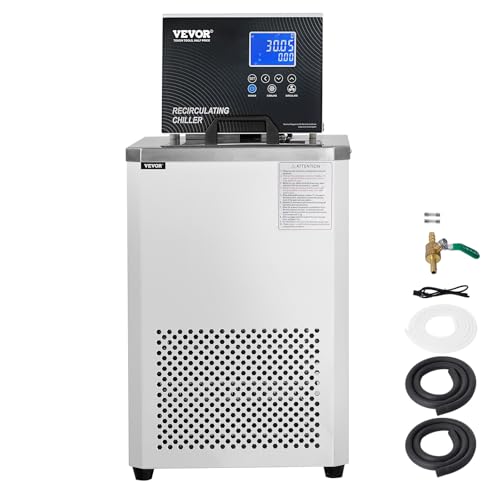 | Precise Laboratory Control | Temperature Range: -5°C to 100°C | Circulation Type: Internal and external circulation | Material: Corrosion-resistant stainless steel | VIEW LATEST PRICE | See Our Full Breakdown |
More Details on Our Top Picks
Propylene Glycol Heat Transfer Fluid 100% Concentrate – 55 Gallon Drum
If you’re looking for a reliable heat transfer fluid for large-scale industrial or commercial systems, the Propylene Glycol Heat Transfer Fluid 100% Concentrate in a 55-gallon drum is an excellent choice. It’s formulated with high-purity propylene glycol, ensuring efficient thermal transfer and consistent performance. This fluid is suitable for closed-loop systems like HVAC, process chillers, solar thermal setups, and industrial temperature controls. Its inhibitor system protects metal components from corrosion and scale buildup, extending system lifespan. Plus, the balanced additives promote fluid stability and cleanliness, reducing maintenance needs and improving long-term reliability. It’s a dependable solution for demanding thermal management needs.
- Temperature Range:Not specified
- Circulation Type:Not specified
- Material:Not specified
- Control Interface:Not specified
- Application Use:HVAC, process chillers, solar systems
- Power Source:Not specified
- Additional Feature:Corrosion and scale inhibitors
- Additional Feature:Extended fluid stability
- Additional Feature:Suitable for large volumes
VEVOR Laboratory Chiller Circulator with LCD Display
The VEVOR Laboratory Chiller Circulator with LCD Display stands out as an excellent choice for laboratories and industrial facilities that require precise temperature control. It operates within a broad range of -5°C to 100°C, offering accurate adjustments thanks to its high-definition LCD display with 0.01°C accuracy. The 6-liter water bath provides stable circulation for low-temperature cooling and experimental flexibility. Built with durable, corrosion-resistant materials like stainless steel and featuring efficient compressors and silent pumps, it ensures rapid cooling and reliable operation. Its dual circulation modes, safety alarms, and user-friendly interface make it versatile, safe, and easy to integrate into various chemical, biological, or industrial processes.
- Temperature Range:-5°C to 100°C
- Circulation Type:Internal and external circulation
- Material:Corrosion-resistant stainless steel
- Control Interface:High-definition LCD display
- Application Use:Laboratory, biotech, chemical, industrial
- Power Source:Plug-and-play (no voltage adjustment needed)
- Additional Feature:Precise 0.01°C control
- Additional Feature:Dual circulation modes
- Additional Feature:Corrosion-resistant stainless steel
Factors to Consider When Choosing a Commercial Glycol Chiller
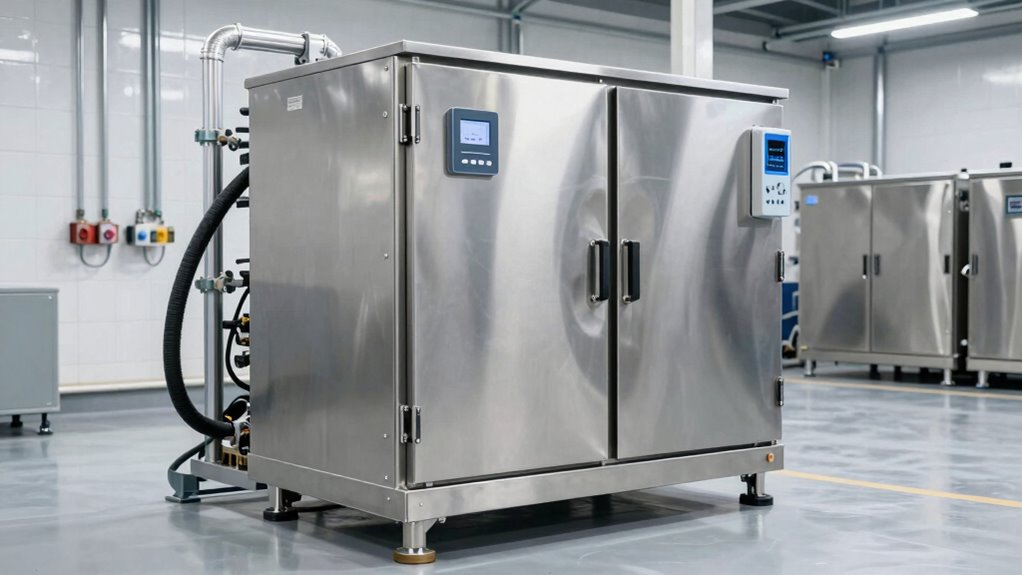
When selecting a commercial glycol chiller, I focus on the cooling capacity needed to handle my workload and ensure precise temperature control for consistent results. I also consider how well the system integrates with existing equipment, along with maintenance needs and energy efficiency benefits. These factors help me choose a chiller that’s reliable, cost-effective, and tailored to my specific requirements.
Cooling Capacity Needs
Choosing the right commercial glycol chiller starts with understanding your cooling capacity needs. To do this, I recommend determining the maximum heat load your system will generate. This involves measuring the fluid volume and temperature differential to accurately calculate the required tonnage or kilowatt rating. It’s also wise to contemplate future expansion or increased load to ensure the chiller can handle potential growth. Matching the chiller’s capacity to your specific temperature range and flow rate requirements is essential for peak performance. Additionally, I review manufacturer specifications carefully to verify that the cooling capacity aligns with your system’s operational conditions. Properly evaluating these factors helps prevent undersized or oversized units, ensuring efficiency, reliability, and cost-effectiveness in your cooling setup.
Temperature Control Precision
Accurate temperature control is vital for optimizing glycol chiller performance and guaranteeing your process stays consistent. To achieve this, look for chillers with digital displays that offer at least 0.01°C accuracy, enabling precise monitoring and adjustments. The chiller’s temperature range should align with your specific needs, typically from -5°C to 100°C for lab applications. Dual circulation systems can improve stability by managing internal and external fluid flow effectively. High-quality compressors and pumps are critical—they reduce fluctuations and maintain steady temperatures during operation. Additionally, built-in safety features like overheat and overcurrent alarms protect the system from failures and ensure reliable temperature regulation. Prioritizing these factors helps you select a chiller that provides consistent, precise temperature control for your application.
System Compatibility Factors
Ensuring system compatibility is essential to getting the most out of your glycol chiller. First, check that the chiller’s materials match your existing system’s metals and plastics to prevent corrosion or degradation over time. Next, verify the temperature control range aligns with your system’s required operating temperatures for ideal performance. It’s also important to confirm support for the type of glycol you’re using, whether propylene or ethylene, to maintain efficiency and safety. Additionally, review the circulation and flow rate specifications to guarantee smooth integration with your piping and pump setup. Lastly, make sure the chiller’s control and monitoring interfaces are compatible with your current automation and safety systems, facilitating seamless operation and easier management.
Maintenance Requirements
Maintaining your glycol chiller is vital for reliable performance and long-term durability. Regular inspections of the glycol solution prevent microbial growth and keep heat transfer efficient. Monitoring pH levels is essential to prevent corrosion, which can shorten the system’s lifespan. Periodic cleaning and flushing help reduce scale buildup, ensuring consistent operation. Checking and replacing filters as needed maintains fluid purity and avoids system blockages. Keeping detailed maintenance logs allows you to track performance trends and schedule preventive tasks proactively. Staying on top of these maintenance requirements not only extends your chiller’s lifespan but also minimizes downtime and costly repairs. Proper upkeep is a small investment that pays off through improved efficiency and reliability over time.
Energy Efficiency Benefits
Choosing an energy-efficient glycol chiller can substantially lower your facility’s operating costs by optimizing performance and reducing power consumption. These chillers use advanced control systems and variable-speed drives that adapt to real-time cooling needs, saving energy. Proper insulation and high-quality heat transfer fluids enhance thermal efficiency, minimizing energy loss during operation. Selecting chillers with high COP (Coefficient of Performance) ratings ensures you get maximum cooling output with less energy input. Additionally, features like automatic load adjustment and smart monitoring help identify inefficiencies and optimize energy use further. Investing in energy-efficient models not only reduces your immediate power bills but also contributes to a greener operation. Overall, these benefits make energy efficiency a vital factor when choosing the right glycol chiller for your facility.
Budget and Cost
When selecting a glycol chiller, understanding your budget is key to making a smart investment. I recommend determining your maximum upfront and ongoing costs, including the purchase price, installation, and maintenance expenses. Comparing different models’ energy consumption and operational efficiencies over their lifespan helps identify cost-effective options. It’s important to balance the initial investment with long-term savings from reduced energy use and lower maintenance needs. Also, consider the costs and availability of replacement glycol fluids and system parts to ensure ongoing affordability. Ultimately, evaluate whether the chiller’s performance fits your cooling requirements within your financial limits. Avoid overspending on capacity you don’t need by selecting a unit that meets your specific demands while remaining budget-conscious.
Frequently Asked Questions
How Energy-Efficient Are the Latest Glycol Chiller Models?
The latest glycol chiller models are impressively energy-efficient, often boasting advanced compressors and smart controls that optimize performance. I’ve noticed they use less power while maintaining excellent cooling, which helps reduce operational costs and environmental impact. Innovations like variable speed drives and improved insulation make these chillers more sustainable. If you’re considering an upgrade, these models can deliver significant energy savings without sacrificing reliability or cooling capacity.
What Maintenance Is Required for Long-Term Performance?
You want your glycol chiller to run smoothly for years, right? Regular maintenance is key. I check the refrigerant levels, clean the coils, and inspect the pumps monthly. I also monitor the temperature and pressure gauges to catch issues early. Changing filters and scheduling professional check-ups annually guarantee peak performance. Staying proactive like this keeps my system efficient and prevents costly breakdowns down the line.
Are There Eco-Friendly Refrigerant Options Available?
Yes, eco-friendly refrigerant options are available for glycol chillers. I recommend looking for models that use hydrofluoroolefins (HFOs) or natural refrigerants like CO2 and ammonia, which have lower global warming potential. These options are becoming more common as manufacturers prioritize sustainability. When choosing a chiller, I suggest verifying the refrigerant type and ensuring it meets environmental standards to reduce your carbon footprint effectively.
How Do Noise Levels Vary Among Different Units?
Noise levels among glycol chillers vary quite a bit. Some units operate quietly, making them ideal for noise-sensitive environments, while others can be louder due to their compressor type or design. I’ve found that inverter-driven compressors tend to be quieter and more efficient, whereas traditional models might generate more noise during operation. When choosing a chiller, I always consider noise levels to ensure it fits well within my space without causing disruptions.
What Safety Features Are Standard in Commercial Glycol Chillers?
I’ve found that standard safety features in commercial glycol chillers include automatic shut-off systems, high-pressure and high-temperature alarms, and emergency stop buttons. Many models also have leak detection sensors and insulated components to prevent accidents. These features give me peace of mind, knowing the equipment is designed to protect users and prevent damage. Ensuring these safety elements are in place is essential before installing any glycol chiller system.
Conclusion
Choosing the right glycol chiller can truly elevate your cooling process and streamline operations. By considering factors like capacity, precision, and efficiency, you’ll find a solution that fits seamlessly into your workflow. Remember, a well-chosen chiller isn’t just an investment—it’s a gentle nudge toward smoother, more reliable performance. With careful thought, you’ll enjoy the comfort of knowing your system supports your goals effortlessly. Here’s to cooler days ahead!