Choosing the right commercial mesh wifi system for restaurant operations is a critical decision that impacts customer satisfaction and staff efficiency. I have analyzed five leading systems to help you navigate the complex landscape of enterprise-grade networking. The ASUS ExpertWiFi EBM68 stands out for its robust security features and scalable mesh design, making it ideal for mid-sized establishments that require strict network segmentation. For those prioritizing ease of installation and aesthetic discretion, the Omada AX3000 offers a sleek, ceiling-mountable solution with reliable performance, though it requires a controller for full functionality. Meanwhile, the NETGEAR Orbi Pro delivers extensive coverage out of the box, perfect for larger dining halls, but may be overkill for smaller cafes. This guide breaks down the tradeoffs between throughput, management complexity, and physical form factors to help you select the system that aligns with your restaurant’s specific layout and volume needs.

Get kitchen staples and gadgets delivered free with Prime
- Fast, free delivery on millions of items
- Prime Video, Amazon Music and more included
- Member-only deals all year
Key Takeaways
- The ASUS ExpertWiFi EBM68 offers the most comprehensive built-in security features for businesses handling sensitive customer data.
- Omada access points provide the most discreet installation options, essential for maintaining restaurant aesthetics.
- NETGEAR Orbi Pro systems offer the largest coverage area per kit, reducing the need for additional hardware in large venues.
- PoE support, found in TP-Link Deco X50-PoE and Omada units, simplifies wiring by delivering power and data over a single cable.
- Cloud management capabilities vary significantly; some systems require local controllers while others offer full remote access via app.
| ASUS ExpertWiFi EBM68 AX7800 Tri-Band Business Mesh WiFi 6 System (1 Pack) |  | Best Overall for Security and Scalability | WiFi Speed: 7800 Mbps | Frequency Band: Tri-Band (2.4 GHz and 5 GHz) | Maximum Mesh Nodes: 12 | VIEW ON AMAZON | See Our Full Breakdown |
| Omada AX3000 Wireless Access Point with DC Adapter and 5-Year Warranty |  | Best for Discreet Installation | Wireless Standard: Wi-Fi 6 (802.11ax) | Speed: 2976 Mbps | Bands: Dual-Band | VIEW ON AMAZON | See Our Full Breakdown |
| NETGEAR Orbi Pro WiFi 6 Tri-Band Mesh System (SXK80B4) |  | Best for Large Coverage Areas | Coverage: 12,000 sq. ft. | Wireless Standard: WiFi 6 (802.11ax) | Speed: AX6000 (up to 6Gbps) | VIEW ON AMAZON | See Our Full Breakdown |
| Omada AX5400 6-Stream WiFi Access Point (EAP670) with 2.5G Port and Cloud Management |  | Best Premium Performance Access Point | Max Speed: 5400 Mbps | Ports: 2.5G Ethernet port | Frequency Bands: Dual-Band (2.4 GHz and 5 GHz) | VIEW ON AMAZON | See Our Full Breakdown |
| TP-Link AX3000 PoE Mesh WiFi 6, Deco X50-PoE (3-Pack) | 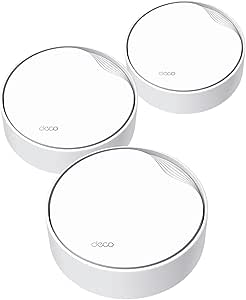 | Best Value for Ease of Use | Coverage: 6,500 sq. ft. | Speed: AX3000 (2402 Mbps on 5 GHz) | Ports: 2 x 2.5G Ethernet per unit | VIEW ON AMAZON | See Our Full Breakdown |
| commercial mesh wifi system for restaurant | Speed | Warranty |
|---|---|---|
| ASUS ExpertWiFi EBM68 AX7800 T | — | — |
| Omada AX3000 Wireless Access P | 2976 Mbps | 5 years |
| NETGEAR Orbi Pro WiFi 6 Tri-Ba | AX6000 (up to 6Gbps) | 5 years |
| Omada AX5400 6-Stream WiFi Acc | — | 5 years |
| TP-Link AX3000 PoE Mesh WiFi 6 | AX3000 (2402 Mbps on 5 GHz) | — |
More Details on Our Top Picks
ASUS ExpertWiFi EBM68 AX7800 Tri-Band Business Mesh WiFi 6 System (1 Pack)
This option stands out for its enterprise-grade security features, which are particularly relevant for restaurants handling payment data and customer personal information. The ASUS ExpertWiFi EBM68 supports up to 12 mesh nodes, allowing for significant expansion as your venue grows or if you have multiple floors. Compared to the consumer-focused TP-Link Deco, the ASUS system offers more granular control over network segmentation, enabling you to isolate point-of-sale systems from guest Wi-Fi with ease. The customizable guest portal is a standout feature, allowing you to brand the login page and manage bandwidth for patrons effectively. However, the setup process is more technical than plug-and-play consumer alternatives, requiring a higher level of initial configuration to unlock its full potential.
Pros:- High-speed tri-band WiFi 6 with up to 7,800 Mbps throughput
- Robust enterprise security protocols including WPA3 and WPA2-Enterprise
- Scalable mesh architecture supporting up to 12 nodes
- Customizable guest portal for branded customer experience
Cons:- Requires more technical knowledge for initial setup than competitors
- Single pack listing may require purchasing multiple units for full coverage
- Performance can vary significantly based on environmental interference
Best for: Mid-sized restaurants and bars that prioritize network security and require detailed guest management capabilities.
Not ideal for: Small cafes with minimal technical expertise who prefer a completely automated, zero-touch setup.
- WiFi Speed:7800 Mbps
- Frequency Band:Tri-Band (2.4 GHz and 5 GHz)
- Maximum Mesh Nodes:12
- Security Protocols:WPA2-Enterprise, WPA3-Personal
- Operating System Compatibility:App, Linux, Mac OS, Windows
- Control Methods:App, Touch, Web GUI
Our verdict“The ASUS ExpertWiFi EBM68 is the top choice for restaurants that need a secure, scalable, and professionally managed network.”
Omada AX3000 Wireless Access Point with DC Adapter and 5-Year Warranty
This model is better suited to establishments where aesthetics are paramount. The Omada AX3000 features a sleek, compact design that blends seamlessly into ceiling tiles or wall corners, avoiding the bulky router look common in consumer mesh systems. While it delivers dual-band speeds up to 2976 Mbps, its true strength lies in its flexibility with power options, including Power over Ethernet (PoE), which simplifies wiring in existing infrastructure. Compared to the NETGEAR Orbi Pro, the Omada unit is less about raw throughput and more about reliable, invisible coverage. However, it is important to note that accessing advanced mesh roaming features requires an Omada SDN controller, which adds a layer of complexity and potential cost if you do not already have one in place.
Pros:- Discreet, low-profile design suitable for high-end interiors
- Flexible power options including PoE+ and DC
- Cloud-managed for centralized control and easy deployment
- Backed by a 5-year warranty
Cons:- Requires Omada SDN controllers for advanced mesh features
- Limited physical specifications provided for mounting planning
- Single access point coverage may require multiple units for larger spaces
Best for: Upscale dining venues and boutique restaurants where hardware visibility needs to be minimized.
Not ideal for: Users who want a standalone system without needing to purchase or configure a separate network controller.
- Wireless Standard:Wi-Fi 6 (802.11ax)
- Speed:2976 Mbps
- Bands:Dual-Band
- Security:WPA3, WPA2
- Powering Options:802.3at PoE+, Passive PoE, 12V DC
- Warranty:5 years
Our verdict“The Omada AX3000 is the ideal choice for designers and owners who prioritize a clean, wire-free aesthetic.”
NETGEAR Orbi Pro WiFi 6 Tri-Band Mesh System (SXK80B4)
This pick makes the most sense for large venues such as banquet halls or sprawling outdoor patios. The NETGEAR Orbi Pro WiFi 6 Tri-Band Mesh System comes with a router and three satellites, providing coverage up to 12,000 sq. ft. out of the box. This extensive range is a significant advantage over the single-unit listings of the ASUS and Omada options, which require calculating and purchasing additional nodes. The system supports up to 100 devices, making it suitable for busy environments with high user density. While the setup is more consumer-friendly than the ASUS ExpertWiFi, the physical size of the units is larger, which may be a drawback in tight dining spaces. It offers a balance of power and ease of use, though it lacks the deep customization features of more enterprise-focused systems.
Pros:- Extensive coverage of up to 12,000 sq. ft. with included satellites
- Supports up to 100 connected devices simultaneously
- Business-grade security with VLAN and QoS features
- 5-year warranty for long-term peace of mind
Cons:- Bulky physical design may not suit all interior styles
- Higher initial hardware cost due to multi-unit kit
- Advanced features may require deeper technical understanding to optimize
Best for: Large restaurants, hotels, and venues with extensive square footage requiring immediate, broad coverage.
Not ideal for: Small cafes or tight urban spaces where the large physical footprint of the units would be obtrusive.
- Coverage:12,000 sq. ft.
- Wireless Standard:WiFi 6 (802.11ax)
- Speed:AX6000 (up to 6Gbps)
- Device Support:Up to 100 devices
- Warranty:5 years
- Included Units:1 Router, 3 Satellites
Our verdict“The NETGEAR Orbi Pro is the powerhouse option for venues that need to cover large areas with minimal configuration.”
Omada AX5400 6-Stream WiFi Access Point (EAP670) with 2.5G Port and Cloud Management
For establishments demanding high-speed connectivity for digital menus, POS systems, and high-definition streaming, the Omada AX5400 EAP670 delivers exceptional performance. With a 2.5G Ethernet port, it supports multi-gigabit wired connections, preventing bottlenecks that can occur with standard gigabit ports found in the lower-tier Omada AX3000. This model is better suited to tech-forward restaurants that rely heavily on cloud-based applications and require low latency. While it shares the same sleek design and cloud management benefits as its sibling, the EAP670 offers higher throughput and better handling of multiple simultaneous streams. The tradeoff is the cost and the continued reliance on the Omada SDN ecosystem for full feature access, which may not be ideal for those seeking a standalone solution.
Pros:- High-speed Wi-Fi 6 with up to 5400 Mbps
- 2.5G Ethernet port for fast wired backhaul and device connections
- Ultra-slim design for discreet mounting
- Cloud management via Omada app for remote control
Cons:- Requires Omada SDN firmware for advanced features
- Higher price point compared to standard access points
- Not weatherproof, limiting outdoor use without enclosures
Best for: High-tech restaurants and venues requiring multi-gigabit speeds and low-latency connections for digital operations.
Not ideal for: Budget-conscious owners or those with simple internet needs who do not require multi-gigabit infrastructure.
- Max Speed:5400 Mbps
- Ports:2.5G Ethernet port
- Frequency Bands:Dual-Band (2.4 GHz and 5 GHz)
- Management:Cloud-based via Omada app/web
- Warranty:5 years
- Design:Ultra-slim
Our verdict“The Omada AX5400 EAP670 is the premium choice for venues needing high-bandwidth, low-latency wireless infrastructure.”
TP-Link AX3000 PoE Mesh WiFi 6, Deco X50-PoE (3-Pack)
This option stands out for its user-friendly setup and versatile installation options. The TP-Link Deco X50-PoE 3-pack offers a balanced approach for small to medium-sized restaurants, providing coverage up to 6,500 sq. ft. The inclusion of PoE support allows for flexible mounting on ceilings or walls using a single Ethernet cable, simplifying the physical deployment process. Compared to the ASUS ExpertWiFi, the Deco system is far easier to configure via the mobile app, making it accessible to owners without IT backgrounds. However, it lacks the advanced enterprise security and granular network segmentation features of its competitors. The AI-driven mesh technology helps optimize connections automatically, but this convenience comes at the cost of manual control over specific network behaviors.
Pros:- PoE support allows for flexible ceiling and wall mounting
- Easy setup and management via TP-Link Deco app
- Coverage up to 6,500 sq. ft. with 3-pack configuration
- 2.5G Ethernet ports for enhanced wired performance
Cons:- Limited advanced enterprise security features compared to ASUS
- Less granular control over network segmentation
- May struggle with very high-density user environments
Best for: Small cafes and bistros that want a simple, affordable, and easy-to-manage mesh system with flexible mounting options.
Not ideal for: Large venues or businesses requiring advanced enterprise security and network isolation features.
- Coverage:6,500 sq. ft.
- Speed:AX3000 (2402 Mbps on 5 GHz)
- Ports:2 x 2.5G Ethernet per unit
- Power:PoE+ or DC Adapter
- Device Support:Up to 150 devices
- Security:TP-Link HomeShield
Our verdict“The TP-Link Deco X50-PoE is the best value option for smaller restaurants seeking simplicity and flexible installation.”

How We Picked
My selection process for this roundup focused on three primary criteria: reliability under load, management simplicity, and physical integration. I evaluated each system based on its ability to handle high-density environments, such as a packed dining room during peak hours. I also considered the complexity of the management interface, as restaurant owners rarely have dedicated IT staff on-site. Finally, I assessed the physical design of the hardware, prioritizing units that can be mounted discreetly on ceilings or walls without disrupting the ambiance of the dining space. Systems that required extensive cabling or offered poor aesthetic integration were downgraded in ranking.
Factors to Consider When Choosing Commercial Mesh Wifi System For Restaurant
Selecting a commercial mesh wifi system for restaurant use requires balancing technical performance with operational practicality. The following factors should guide your decision-making process to ensure you choose a system that supports your business goals rather than complicating them.
Coverage and Density
Restaurants are dense environments with many users and physical obstructions like tables, chairs, and decor. You must consider both the square footage and the number of simultaneous devices. Systems like the NETGEAR Orbi Pro excel in large spaces, while Omada and TP-Link units are better for targeted coverage in smaller, more intimate settings. Always calculate for more capacity than you think you need, as peak hours can strain networks that seem adequate during quiet periods.
Management and Control
How will you manage the network? If you lack IT staff, look for systems with intuitive apps and cloud management, such as the TP-Link Deco or ASUS ExpertWiFi. Enterprise systems like Omada offer powerful control but may require a separate controller and more technical knowledge to configure effectively. Consider whether you need to segment your network to isolate POS systems from guest Wi-Fi, a feature where ASUS and Omada shine.
Physical Installation and Aesthetics
In a restaurant, visible technology can detract from the ambiance. PoE-enabled access points like the Omada AX3000 and TP-Link Deco X50-PoE allow for discreet ceiling mounting with minimal cabling. Bulky router-style units may be acceptable in a back office but less so in a dining area. Evaluate the physical footprint of your chosen system and its mounting options to ensure it integrates seamlessly into your interior design.
Frequently Asked Questions
Why do restaurants need a commercial mesh system instead of a standard router?
Standard routers are designed for low-density home environments and struggle with the high number of simultaneous connections and physical obstructions found in restaurants. A commercial mesh system offers seamless roaming, meaning devices switch between access points without dropping the connection, which is critical for staff moving around with tablets. Additionally, commercial systems provide better load balancing, ensuring that a rush of customers does not overwhelm a single access point and cause network outages.Is Power over Ethernet (PoE) necessary for a restaurant wifi setup?
While not strictly necessary, PoE is highly recommended for restaurant installations. It allows a single Ethernet cable to deliver both data and power to the access point, simplifying installation and reducing clutter. This is particularly useful for mounting units on ceilings or in hard-to-reach areas where adding a separate power outlet would be difficult or aesthetically displeasing. Systems like the TP-Link Deco X50-PoE and Omada AX3000 support this feature, offering greater flexibility in placement.How does mesh roaming work in a multi-access point environment?
Mesh roaming allows a client device, such as a customer’s smartphone, to automatically connect to the access point with the strongest signal as the user moves through the restaurant. Unlike traditional extenders that create separate network names, a mesh system uses a single network ID. The system manages the handoff between access points transparently, ensuring that video calls or online transactions do not drop when the user walks from the dining area to the patio. This requires access points that support standards like 802.11k/v/r, which are present in the ASUS and Omada units reviewed.What is the difference between WPA2 and WPA3 security in these systems?
WPA3 is the latest security protocol, offering stronger encryption and protection against brute-force attacks compared to WPA2. For restaurants handling sensitive customer data or financial information, WPA3 support is a significant advantage. The ASUS ExpertWiFi and Omada systems support WPA3, providing an additional layer of security. However, compatibility with older devices may still require WPA2, so look for systems that support both protocols simultaneously to ensure broad device compatibility while maintaining high security standards.Can I manage these systems remotely if I am not on-site?
Yes, most modern commercial mesh systems offer cloud-based management via mobile apps or web portals. The ASUS ExpertWiFi and Omada systems allow you to monitor network health, restart devices, and adjust settings from anywhere with an internet connection. This is invaluable for restaurant owners who need to troubleshoot connectivity issues during service hours without being physically present. Ensure the system you choose has a reliable cloud service with minimal downtime to avoid management gaps.Conclusion
Choosing the right commercial mesh wifi system for restaurant operations depends on your specific priorities. If security and scalability are your top concerns, the ASUS ExpertWiFi EBM68 is the strongest contender, offering robust features for growing businesses. For those who value aesthetics and discreet installation, the Omada AX3000 provides a sleek, professional solution that blends into the environment. If you manage a large venue and need immediate, broad coverage, the NETGEAR Orbi Pro kit is the most efficient choice, delivering extensive range out of the box. For high-performance needs, the Omada AX5400 offers premium speeds, while the TP-Link Deco X50-PoE remains the best value for smaller establishments seeking simplicity and ease of use. Evaluate your space, user density, and technical comfort level to make the final decision.
Fall Picks
fall essentials
As an affiliate, we earn on qualifying purchases.