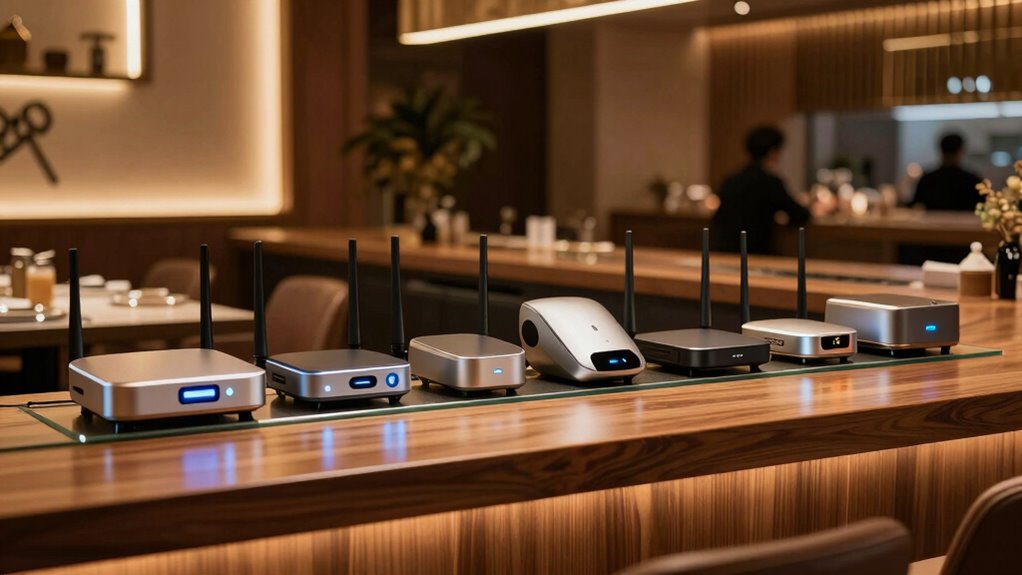

Choosing the right WiFi router for a restaurant means balancing speed, reliability, security, and ease of management. The ASUS ExpertWiFi AX3000 stands out as a versatile, scalable option perfect for busy, growing venues that need robust WiFi 6 capabilities. For those prioritizing wired stability and advanced security, the ASUS ExpertWiFi EBG15 offers a powerful, multi-WAN setup with enterprise-grade protection. Meanwhile, the TP-Link BE6500 WiFi 7 provides cutting-edge Wi-Fi 7 technology for large, tech-forward restaurants seeking ultra-fast, reliable connections across many devices. These choices highlight different strengths and tradeoffs, depending on your restaurant’s size, tech needs, and management preferences.

Get kitchen staples and gadgets delivered free — and shop member deals
- Fast, free delivery on millions of items
- Access to Prime Big Deal Days deals on October 6–7
- Prime Video, Amazon Music and more included
Key Takeaways
- WiFi 6 routers like ASUS ExpertWiFi AX3000 facilitate faster wireless speeds and are scalable for growing restaurant networks.
- Wired solutions such as ASUS ExpertWiFi EBG15 excel in security and stability, ideal for high-demand environments with complex network needs.
- Wi-Fi 7 models like TP-Link BE6500 offer future-proof technology with high speeds and extensive coverage but come at a premium price.
- Ease of setup and remote management are common features but may require technical knowledge or additional training.
- Choosing the right router depends on your restaurant’s size, device density, security requirements, and budget.
| ASUS ExpertWiFi AX3000 Business Router |  | Best Overall for Scalability and Security | Model: EBR63 | WiFi Standard: WiFi 6 (AX3000) | Features: Custom Guest Portal, SDN, Remote Management, Scalable with AiMesh, Security, VPN, VLAN | VIEW ON AMAZON | See Our Full Breakdown |
| ASUS ExpertWiFi EBG15 Gigabit VPN Wired Router |  | Best for Security and Wired Stability | WAN Ports: 3 (1 gigabit WAN + 2 gigabit WAN/LAN) | Security: IPS, VLAN, VPN | Management: Remote via app/web | VIEW ON AMAZON | See Our Full Breakdown |
| TP-Link BE6500 Dual-Band WiFi 7 Router |  | Best for Cutting-Edge Speed and Coverage | Wi-Fi Technology: Wi-Fi 7 | Max Speed: up to 5764 Mbps | Coverage: 2400 sq. ft. | VIEW ON AMAZON | See Our Full Breakdown |
| TP-Link AX5400 WiFi 6 Router (Archer AX73) |  | Best for High-Speed WiFi 6 Performance | Max Speed: 5400 Mbps | Coverage: 2000 sq. ft. | WiFi Technology: WiFi 6 | VIEW ON AMAZON | See Our Full Breakdown |
| TP-Link Dual-Band Wi-Fi 7 Router, Archer BE3600 |  | Best for Speed and Mesh Compatibility | Wi-Fi Technology: Wi-Fi 7 | Speed (5 GHz): 2882 Mbps | Coverage: 2000 sq. ft. | VIEW ON AMAZON | See Our Full Breakdown |
| commercial wifi router for restaurant | Coverage | Ports |
|---|---|---|
| ASUS ExpertWiFi AX3000 Busines | — | — |
| ASUS ExpertWiFi EBG15 Gigabit | — | — |
| TP-Link BE6500 Dual-Band WiFi | 2400 sq. ft. | 1x 2.5 Gbps WAN/LAN, 1x 2.5 Gbps LAN, 3x 1 Gbps LAN |
| TP-Link AX5400 WiFi 6 Router | 2000 sq. ft. | 1x USB 3.0 |
| TP-Link Dual-Band Wi-Fi 7 Rout | 2000 sq. ft. | 1x 2.5 Gbps WAN/LAN, 1x 2.5 Gbps LAN, 3x 1 Gbps LAN |
More Details on Our Top Picks
ASUS ExpertWiFi AX3000 Business Router
The ASUS ExpertWiFi AX3000 stands out for its support of WiFi 6, which ensures faster wireless speeds—a vital feature in busy restaurant settings with many devices. Its scalable design with AiMesh allows expanding coverage as your restaurant grows, making it an excellent choice for chains or multi-floor venues. The router’s advanced security features, including VPN and VLAN support, help keep your network secure from external threats. However, the complex feature set might be overkill for small, single-location restaurants, and a renewed product could have limited warranty coverage.
Pros:- Supports WiFi 6 for faster speeds
- Easy remote management
- Expandable with AiMesh
- Includes advanced security features
Cons:- Renewed product may have limited warranty
- Complex features may require technical knowledge
Best for: Medium to large restaurants seeking scalable, secure WiFi solutions
Not ideal for: Small restaurants or those with limited technical expertise
- Model:EBR63
- WiFi Standard:WiFi 6 (AX3000)
- Features:Custom Guest Portal, SDN, Remote Management, Scalable with AiMesh, Security, VPN, VLAN
Our verdict“A versatile, scalable router ideal for restaurant chains or venues needing both speed and security.”
ASUS ExpertWiFi EBG15 Gigabit VPN Wired Router
The ASUS ExpertWiFi EBG15 offers a dependable wired connection with up to 3 WAN ports, perfect for environments where stability is critical—like processing orders or payment systems. Its advanced security suite, including IPS, VLAN, and VPN, provides a secure environment against cyber threats. Setup is straightforward via web or mobile app, and load balancing across multiple broadband lines ensures continuous uptime. The main tradeoff is its complexity; configuring multiple WANs and security features might challenge less technical staff, and the premium price could be prohibitive for smaller venues.
Pros:- Supports load balancing across multiple WANs
- Strong security with IPS and VLAN
- Easy setup via app/web
- USB port for backup internet
Cons:- Complex configuration process
- Higher cost for feature set
Best for: Large restaurants or those requiring high security and wired connectivity
Not ideal for: Small restaurants with minimal IT resources
- WAN Ports:3 (1 gigabit WAN + 2 gigabit WAN/LAN)
- Security:IPS, VLAN, VPN
- Management:Remote via app/web
Our verdict“Ideal for tech-heavy restaurants needing stable, secure wired connections with multi-WAN support.”
TP-Link BE6500 Dual-Band WiFi 7 Router
The TP-Link BE6500 is a forward-looking Wi-Fi 7 router that offers blazing speeds up to 5764 Mbps on 5 GHz, making it perfect for high-volume, device-dense restaurants. Its multi-link operation (MLO) and beamforming technology ensure stable connections even in large spaces up to 2,400 sq. ft. The router supports a large number of devices, ideal for venues with many tablets, POS systems, and guest WiFi. However, Wi-Fi 7 is still emerging, and the high price might be a barrier. Compatibility with older devices is limited, and full benefits are only realized with Wi-Fi 7-compatible hardware.
Pros:- Supports Wi-Fi 7 for ultra-fast speeds
- Wide coverage suitable for large spaces
- Supports many devices simultaneously
- Advanced security features
Cons:- Premium cost
- Requires compatible devices to utilize full features
- Limited detailed specs available
Best for: Large, tech-forward restaurants seeking future-proof high-speed WiFi
Not ideal for: Small venues or those with budget constraints
- Wi-Fi Technology:Wi-Fi 7
- Max Speed:up to 5764 Mbps
- Coverage:2400 sq. ft.
- Ports:1x 2.5 Gbps WAN/LAN, 1x 2.5 Gbps LAN, 3x 1 Gbps LAN
Our verdict“A high-end, future-ready solution for large restaurants demanding maximum speed and coverage.”
TP-Link AX5400 WiFi 6 Router (Archer AX73)
The TP-Link AX5400 offers impressive speeds up to 5400 Mbps, making it suitable for busy restaurants with high device density. Its MU-MIMO and OFDMA technologies improve efficiency, allowing multiple devices to operate smoothly simultaneously. Covering up to 2,000 sq. ft., it’s a solid choice for mid-sized venues. The USB port adds media sharing or backup storage capabilities. However, it requires a separate modem for internet access, and actual performance can vary based on environment and obstacles, which means it might not deliver full speeds in all restaurant layouts.
Pros:- High-speed Wi-Fi 6 performance
- Supports many devices with MU-MIMO/OFDMA
- Includes USB for media sharing
- Good coverage for medium spaces
Cons:- Requires separate modem
- Performance varies by environment
Best for: Medium-sized restaurants needing reliable Wi-Fi 6 performance
Not ideal for: Very large venues or those seeking Wi-Fi 7 features
- Max Speed:5400 Mbps
- Coverage:2000 sq. ft.
- WiFi Technology:WiFi 6
- Ports:1x USB 3.0
Our verdict“A reliable, high-performance Wi-Fi 6 router suitable for most restaurant sizes.”
TP-Link Dual-Band Wi-Fi 7 Router, Archer BE3600
The TP-Link Archer BE3600 leverages Wi-Fi 7 technology to deliver speeds up to 2882 Mbps on 5 GHz, suitable for streaming and multiple device connections. Its support for Multi-Link Operation and EasyMesh allows seamless whole-home coverage, ideal for large, multi-room restaurant spaces or those integrating smart devices. Its setup via the Tether App is straightforward, and the security suite offers parental controls and IoT protections. The main drawback is its non-support for the 6 GHz band, which limits some of Wi-Fi 7’s full potential, and it still requires a separate modem for internet connectivity.
Pros:- Supports Wi-Fi 7 for fast speeds
- Supports mesh networking for coverage
- Easy setup via mobile app
- Enhanced security features
Cons:- Does not support 6 GHz band
- Requires separate modem
Best for: Large or smart restaurants aiming for fast, mesh-enabled Wi-Fi
Not ideal for: Small venues or those without a compatible internet plan
- Wi-Fi Technology:Wi-Fi 7
- Speed (5 GHz):2882 Mbps
- Coverage:2000 sq. ft.
- Ports:1x 2.5 Gbps WAN/LAN, 1x 2.5 Gbps LAN, 3x 1 Gbps LAN
Our verdict“An excellent choice for large, tech-savvy restaurants seeking future-proof mesh Wi-Fi.”

How We Picked
Our selection process focused on routers that are specifically designed or suitable for commercial restaurant environments. I prioritized models that offer reliable high-speed connectivity, robust security features, easy management, and scalability. We compared technical specifications such as WiFi standards (Wi-Fi 6 vs Wi-Fi 7), network security options, port configurations, and management tools. Cost was also considered, balancing premium features with affordability for small to large restaurants. Ultimately, the goal was to identify options that cater to various needs, from small venues to large chains, highlighting tradeoffs like complexity versus advanced features.
Factors to Consider When Choosing Commercial Wifi Router For Restaurant
When selecting a WiFi router for your restaurant, consider the size of your venue, the number of connected devices, security needs, and whether you prefer wired or wireless solutions. The right choice balances performance with ease of management, and future-proofing with current needs. Understanding these factors helps ensure your network remains fast, reliable, and secure as your business grows.
Size and Coverage Needs
Large restaurants with multiple floors or outdoor seating require routers with extensive coverage and possibly mesh capabilities. Smaller venues may do well with a single high-speed router, but always check the coverage specifications to avoid dead zones.
Device Density and Speed Requirements
If your restaurant has many tablets, POS systems, and guest WiFi devices, look for routers supporting MU-MIMO, OFDMA, or Wi-Fi 6/7 to handle multiple connections without slowdown. Speed demands also influence whether Wi-Fi 6 or Wi-Fi 7 is necessary.
Security and Management
Restaurants handling sensitive customer data should prioritize routers with advanced security features, VLAN support, and remote management. Simpler setups may suffice for smaller venues with less complex requirements.
Wired vs Wireless
Wired connections offer stability for critical systems like payment terminals, while wireless flexibility supports mobile ordering and guest WiFi. Many venues benefit from a mix, selecting wired for core operations and wireless for guest access.
Frequently Asked Questions
What is the main difference between Wi-Fi 6 and Wi-Fi 7 routers?
Wi-Fi 6 routers like the ASUS ExpertWiFi AX3000 focus on improving speed, capacity, and efficiency within existing Wi-Fi standards, supporting more devices with less congestion. Wi-Fi 7, exemplified by the TP-Link BE6500, introduces higher speeds, lower latency, and features like Multi-Link Operation, enabling even more reliable and faster connections across larger spaces. The choice depends on your need for future-proofing versus current performance requirements.
Are wired routers better for restaurant environments?
Wired routers like the ASUS ExpertWiFi EBG15 excel in providing stable, secure, and high-throughput connections, especially for critical systems such as POS and payment terminals. While wireless offers flexibility and ease of deployment, wired connections reduce interference and network downtime, making them a preferred choice for environments where reliability is paramount. However, they can be more complex to install and less flexible for mobile devices.
Is Wi-Fi 7 worth investing in now?
Wi-Fi 7 offers significant advancements in speed, coverage, and device capacity, making it appealing for large, high-tech restaurants. Yet, since Wi-Fi 7 hardware is still emerging and compatibility is limited, the investment might be better suited for future expansion or large venues planning long-term upgrades. For smaller or immediate needs, Wi-Fi 6 remains a highly capable and cost-effective choice.
What security features should I look for in a commercial restaurant router?
Prioritize routers that offer advanced security options such as VLAN support, VPN capabilities, firewall protections, and intrusion prevention systems. Features like ASUS AiProtection Pro or ASUS AiMesh can help safeguard sensitive customer and business data. Remote management tools are also beneficial for ongoing security updates and troubleshooting without physical access.
How important is ease of setup and management?
Ease of setup and management is crucial for busy restaurant environments, where downtime can impact operations. Routers with mobile app support or web-based management interfaces streamline deployment and ongoing adjustments. However, more complex setups, like multi-WAN configurations, may require technical expertise, so choose a solution that matches your available IT resources.
Conclusion
For small restaurants or those with minimal IT support, a high-speed Wi-Fi 6 router like the TP-Link AX5400 provides excellent value and performance. Larger venues or chains should consider scalable options like the ASUS ExpertWiFi AX3000 for security and flexibility, or the TP-Link Wi-Fi 7 router for future-proof technology. If security and wired stability are top priorities, the ASUS ExpertWiFi EBG15 is the best fit. Ultimately, your choice depends on your restaurant’s size, device needs, security concerns, and budget—each option offers a distinct set of advantages suited to different operational demands.
Halloween Picks
halloween
As an affiliate, we earn on qualifying purchases.