In 2025, I recommend the SVBONY SV605CC and the Astromania SGCMOS as the top cooled CMOS astro cameras for deep sky imaging. The SV605CC offers high-res imaging with excellent cooling, low noise, and remote operation—perfect for detailed nebulae and galaxy shots. The Astromania excels in sensitivity, robustness, and ease of use across multiple platforms. Both are reliable choices that will enhance your astrophotography; explore further to discover their full potential.
Key Takeaways
- The SVBONY SV605CC offers high-resolution imaging with effective cooling, ideal for detailed deep sky astrophotography.
- The Astromania SGCMOS provides high sensitivity and versatility, suitable for various astrophotography applications.
- Both cameras feature robust build quality, durable materials, and multi-platform support for long-term reliability.
- Cooling performance, noise reduction, and connectivity options are critical factors to ensure optimal imaging results.
- Expert picks favor the SV605CC for resolution and cooling efficiency, with the Astromania for versatility and affordability.
SVBONY SV605CC Cooled Camera, 9MP CMOS Color Telescope Camera
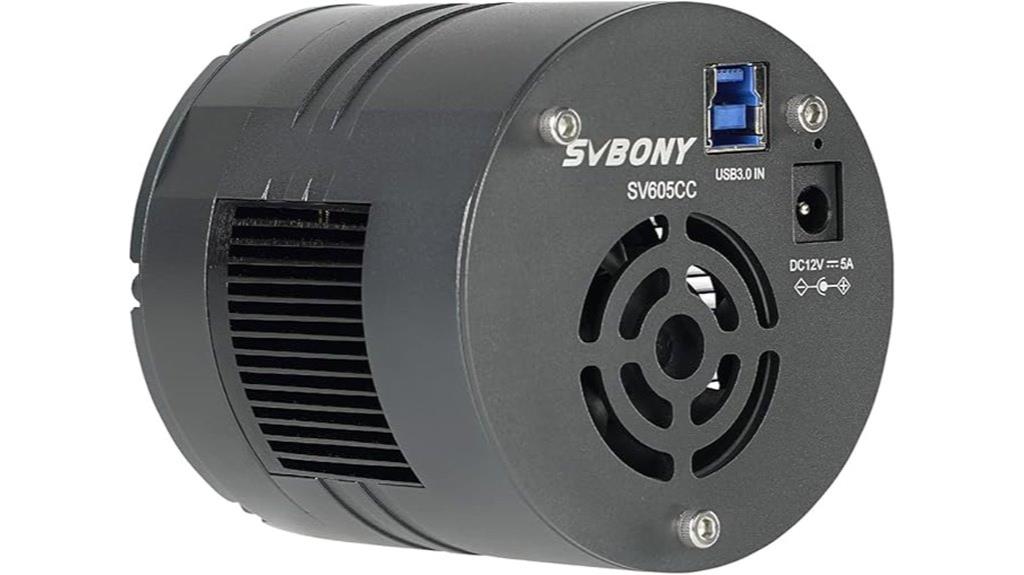
If you’re serious about capturing detailed deep sky images without breaking the bank, the SVBONY SV605CC cooled camera is a solid choice. It features a 9MP CMOS sensor with a 1-inch IMX533 chip, delivering high-resolution color images of nebulae, galaxies, and solar phenomena. The double-layer TEC cooling system reduces sensor temperature by up to 30°C, minimizing noise during long exposures. Its compatibility with Windows, Linux, Mac OS, Chrome OS, and Raspberry Pi makes it versatile for indoor or outdoor use. Plus, Wi-Fi connectivity and remote control simplify operation. While some users experience cooling inconsistencies, overall, it offers excellent value for astrophotographers looking for a budget-friendly, feature-rich cooled camera.
Best For: amateur astrophotographers and hobbyists seeking an affordable, feature-rich cooled camera for deep sky imaging and planetary photography.
Pros:
- High-resolution 9MP CMOS sensor with detailed image capture of nebulae and galaxies
- Effective double-layer TEC cooling system reduces sensor temperature by up to 30°C, minimizing noise during long exposures
- Compatibility across multiple operating systems (Windows, Linux, Mac OS, Chrome OS, Raspberry Pi) and Wi-Fi connectivity for flexible use
Cons:
- Inconsistent cooling performance and potential noise issues during extended sessions
- Loud fan noise and some reports of durability concerns in outdoor environments
- Slightly complex setup and calibration, which may present a learning curve for beginners
Astromania SGCMOS Series Telescope CMOS Camera
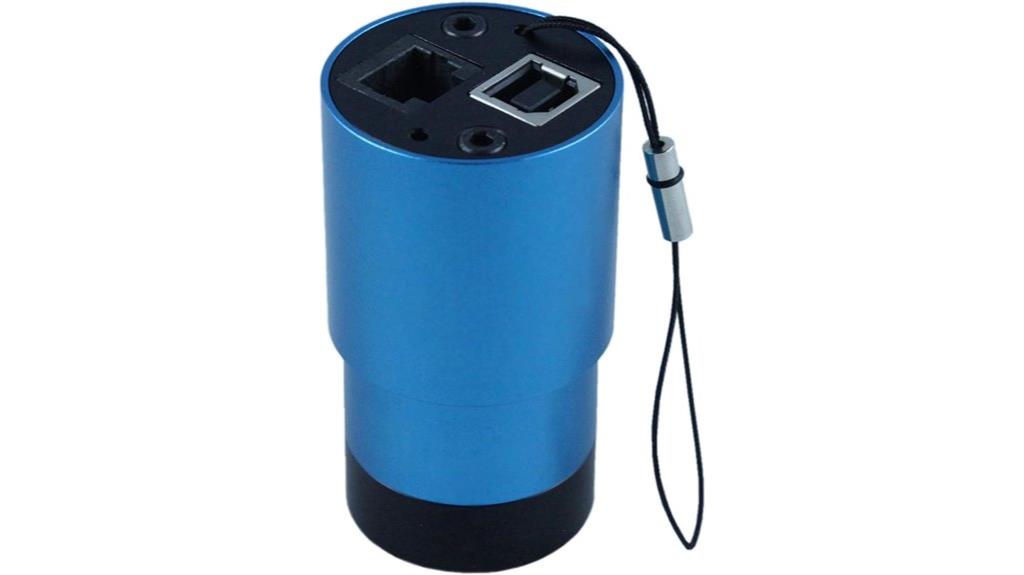
The Astromania SGCMOS Series Telescope CMOS Camera is an excellent choice for amateur astronomers and astrophotographers seeking versatile, high-performance imaging tools. It features a high-sensitivity sensor, fast frame rate, and long exposure capabilities, making it suitable for auto-guiding, astrophotography, and multicolour imaging. Its durable aluminum CNC housing and standard 1.25-inch interface ensure easy integration with existing equipment. The camera’s thermal design maintains *ideal* sensor performance by efficiently transferring heat. With built-in ST4 auto guider port, compatibility with ASCOM drivers, and dedicated imaging software, it simplifies workflows and enhances imaging quality for deep-sky astrophotography.
Best For: amateur astronomers and astrophotographers seeking a versatile, high-performance CMOS camera for auto-guiding, deep-sky imaging, and multicolour astrophotography.
Pros:
- High-sensitivity sensor with fast frame rate and long exposure capabilities for superior imaging quality.
- Durable aluminum CNC housing with standard 1.25-inch interface for seamless integration with existing equipment.
- Built-in ST4 auto guider port and compatibility with ASCOM drivers simplify workflow and enhance guiding accuracy.
Cons:
- May require additional accessories or adapters for specific filters or telescope setups.
- Slightly heavier than some compact imaging cameras, which could impact mounting options.
- Software compatibility might necessitate updates or specific system requirements for optimal performance.
Factors to Consider When Choosing Cooled CMOS Astro Cameras for Deep Sky Imaging

When selecting a cooled CMOS astro camera, I focus on sensor sensitivity and resolution to capture clear, detailed images. I also consider cooling efficiency to minimize noise and ensure stable performance during long exposures. Finally, I check compatibility, ease of installation, and power options to make sure the camera fits seamlessly into my setup.
Sensor Sensitivity and Resolution
Choosing the right cooled CMOS astro camera for deep sky imaging depends heavily on its sensor sensitivity and resolution. Sensor sensitivity, often measured by quantum efficiency, indicates how well the camera converts incoming photons into signals, which is essential for capturing faint objects. Higher quantum efficiency means better image quality in low-light conditions. Resolution depends on the number of pixels; more pixels, like a 9MP sensor with around 3000×3000 pixels, capture more detail. Pixel size also matters—larger pixels (e.g., 3.76μm) gather more light, boosting sensitivity and reducing noise. Combining high sensitivity with appropriate resolution ensures you get detailed, low-noise images of distant celestial objects. This balance is key to successful deep sky astrophotography.
Cooling Efficiency and Noise
Effective cooling in CMOS astro cameras is essential because it directly impacts sensor noise levels during long exposures. By reducing the sensor temperature by at least 30°C below ambient, cooling markedly lowers thermal noise, leading to clearer, more detailed images. Higher cooling efficiency results in a better signal-to-noise ratio, which is vital for capturing faint deep sky objects. However, cooling performance depends on factors like ambient temperature, cooling technology—such as TEC refrigeration—and system design. Poorly designed thermal management or insufficient cooling can leave residual thermal noise and hot pixels, which require calibration and post-processing. Notably, high cooling capacity alone doesn’t guarantee low noise; the system’s overall efficiency and noise control are equally important for optimal imaging results.
Compatibility and Software Support
Selecting a cooled CMOS astro camera that seamlessly integrates with your existing setup requires careful attention to compatibility and software support. First, confirm the camera works with your operating system—Windows, Linux, Mac OS, Chrome OS, or Raspberry Pi—to guarantee smooth operation. Confirm it supports popular astrophotography software like SharpCap, ASCOM, or INDI, which are essential for effective image capture and processing. Check for available drivers, firmware updates, and software support to keep your camera performing at its best and to troubleshoot issues easily. Additionally, verify that connectivity options—USB, Wi-Fi, or auto-guiding ports—match your setup and software needs. Finally, review user feedback and manufacturer documentation to gauge software stability and driver reliability, helping you avoid compatibility hiccups during imaging sessions.
Ease of Installation
When it comes to setting up a cooled CMOS astro camera for deep sky imaging, ease of installation is a key factor that can save you time and frustration. Most models feature plug-and-play USB connectivity, making initial setup quick and simple. Many cameras include standard mounting interfaces like 1.25-inch or C-mount, which easily attach to telescopes and accessories. The process usually involves installing compatible drivers and software, often provided on a CD or available online, ensuring a smooth start. Adjustable focus mechanisms and included adapters help align the camera perfectly with your telescope’s optical path. Additionally, clear manuals and online tutorials are readily available for most models, guiding you through setup and integration with your astrophotography software efficiently.
Power and Port Options
Have you considered how power and port options can impact your deep sky imaging experience? Choosing a cooled CMOS astro camera with versatile power inputs, like DC adapters and USB ports, offers flexibility for different setups. USB 2.0 and 3.0 ports are crucial for fast data transfer and sometimes supply power, reducing cable clutter. For longer imaging sessions, dedicated power supplies ensure stable operation and consistent cooling. Some cameras also feature wireless connectivity, like Wi-Fi, allowing remote control and data transfer, which minimizes physical connections. Multiple port options mean better compatibility with various telescopes and computers, and they make remote imaging more practical. Overall, selecting a camera with flexible power and port choices can markedly enhance your ease of use and reliability during your deep sky adventures.
Durability and Build Quality
Durability and build quality are essential considerations because your astro camera endures outdoor conditions and frequent handling. A rugged metal housing, like aluminum CNC, helps the camera withstand impacts and harsh environments. High-quality construction often includes sealed or weather-resistant seals, protecting internal components from dust, moisture, and debris. Reliable cooling systems with double-layer semiconductor refrigeration ensure consistent operation over long sessions without overheating or failure. Components such as fans and thermoelectric modules are engineered for longevity, with some models adding noise reduction features to extend lifespan and reduce disturbance. Ultimately, the build quality directly affects the camera’s resistance to thermal cycling, vibrations, and environmental stress, which are critical for maintaining optimal imaging performance and ensuring your investment lasts over time.
Frequently Asked Questions
How Does Cooling Efficiency Impact Image Quality in CMOS Astro Cameras?
Cooling efficiency directly impacts image quality by reducing thermal noise in CMOS astro cameras. When cooling is effective, it keeps the sensor at a stable, lower temperature, minimizing dark current and graininess. This results in clearer, more detailed images of deep sky objects. I’ve found that good cooling allows me to capture longer exposures without noise ruining my shots, ultimately producing sharper, more accurate astrophotographs.
Are Cooled CMOS Cameras Suitable for Beginner Astrophotographers?
Yes, cooled CMOS cameras are great for beginners because they reduce noise and improve image quality, making it easier to capture clear deep sky shots. I’ve found that their user-friendly features and affordability help newcomers learn astrophotography without feeling overwhelmed. While some setups can be complex, many models now come with straightforward controls, so I’d recommend starting with one to build your skills and enjoy stunning astrophotos early on.
What Maintenance Tips Ensure Optimal Performance of Cooled CMOS Cameras?
I regularly clean the lens and sensor, keep the camera in a dust-free environment, and guarantee proper cooling system maintenance. I also check connections for stability, update firmware, and store the camera in a dry, protected place when not in use. These habits help prevent buildup, overheating, and mechanical issues, ensuring my cooled CMOS camera performs at its best. Consistent care keeps my astrophotography sharp and reliable.
How Does Sensor Size Influence Deep Sky Imaging Capabilities?
Sensor size really impacts my deep sky imaging. Larger sensors capture more light, which means better detail and lower noise in my images. They also have a wider field of view, allowing me to frame bigger objects or capture more of a scene in a single shot. Smaller sensors are more compact and easier to handle, but they can limit the amount of data I gather, especially for expansive deep sky targets.
Can Cooled CMOS Cameras Be Used for Planetary Imaging as Well?
Yes, cooled CMOS cameras work great for planetary imaging too. They reduce noise, boost clarity, and capture fine details, making planets look sharp and vibrant. I use mine for planets and deep sky objects, and the results impress me every time. The cooling feature helps manage heat during long exposures, ensuring consistent quality. So, if you’re into both deep sky and planetary imaging, a cooled CMOS camera is a versatile, smart choice.
Conclusion
Choosing the right cooled CMOS astro camera is like finding the perfect telescope lens—your window to the universe. The SVBONY SV605CC and Astromania SGCMOS stand out as stellar options, each offering clear visions into the deep sky. Remember, your camera’s sensitivity and cooling prowess are the stars guiding your journey. With the right choice, you’ll discover celestial secrets, transforming your backyard into a gateway to the cosmos—where every snapshot is a star’s whisper.