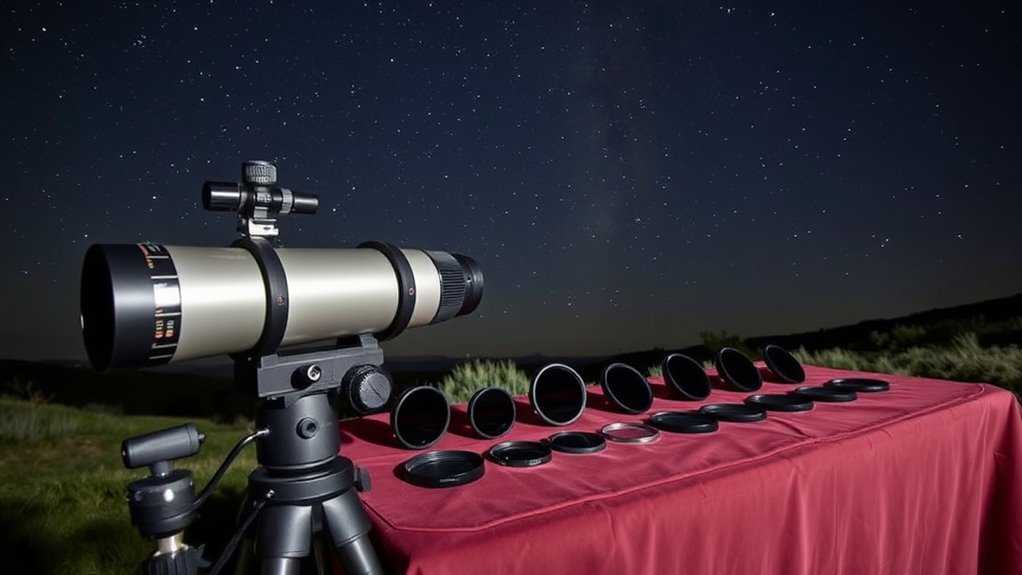

When selecting a field flattener for a refractor telescope, the goal is to produce sharp, distortion-free images across the entire field of view. The best options, like the Explore Scientific Field Flattener, excel at reducing edge coma and curvature, especially with faster focal ratios. However, tradeoffs often include compatibility issues or added complexity in setup. The top picks vary between dedicated, high-end models and more budget-friendly solutions, making it important to match your needs and scope specifications. Continue reading for a detailed comparison that clarifies which field flattener will work best for your astrophotography setup.

Get kitchen staples and gadgets delivered free with Prime
- Fast, free delivery on millions of items
- Prime Video, Amazon Music and more included
- Member-only deals all year
Key Takeaways
- The best field flatteners provide noticeable improvement in image edge sharpness and reduce distortions common in fast refractors.
- Compatibility with focal ratios from f/5 to f/7 is a key consideration, as some models are optimized for specific ranges.
- Premium options like the HOTECH SCA deliver superior optical performance but come at a higher cost and complexity.
- Budget-friendly models still offer good performance for beginners, but may lack some fine-tuning features of more expensive versions.
- Ease of installation and adjustability are often overlooked but crucial for achieving optimal image quality.
| SVBONY SV503 Upgraded ED Refractor Telescope, 80mm F7 with Field Flattener |  | Best Overall for Dedicated Astrophotographers | Aperture: 80mm | Focal Length: F7 | Focal Reducer: 0.8X | VIEW ON AMAZON | See Our Full Breakdown |
| Explore Scientific Field Flattener for Refractor Telescopes f/5 to f/7 |  | Best for Versatile Focal Ratio Compatibility | Focal Ratio Range: f/5 to f/7 | Spacing: 55mm (+/- 2mm) | Optics: Fully multi-coated | VIEW ON AMAZON | See Our Full Breakdown |
| SVBONY SV550 Telescope, 80ED F6 Triplet Apochromatic Refractor with Field Flattener and Camera Angle Adjuster |  | Best for High-Precision Astrophotography and Versatility | Apochromatic Refractor: Yes | Optics Design: Air-Spaced Triplet | Focal Length: 480mm (F6) | VIEW ON AMAZON | See Our Full Breakdown |
| SVBONY SV503 Refractor Telescope, 70mm ED with Field Flattener |  | Best for Beginners and Entry-Level Imaging | Aperture: 70mm | Focal Ratio: F/6.78 | Field Flattener: Built-in | VIEW ON AMAZON | See Our Full Breakdown |
| SVBONY SV209 Field Flattener for SV550 80mm APO Telescope |  | Best for Optimizing Specific 80mm APO Setups | Compatibility: SV550 80F6 OTA | Back focal length: 55mm | Target surface diameter: 45mm | VIEW ON AMAZON | See Our Full Breakdown |
| HOTECH SCA 2-Inch Field Flattener for Refractor Telescopes |  | Best Budget-Friendly Option for Basic Astrophotography | Type: 2-inch field flattener | Compatibility: Refractor telescopes | Condition: Like-new, perfect condition | VIEW ON AMAZON | See Our Full Breakdown |
More Details on Our Top Picks
SVBONY SV503 Upgraded ED Refractor Telescope, 80mm F7 with Field Flattener
This lightweight 80mm F7 ED refractor excels at astrophotography, offering a built-in 0.8X field flattener that ensures sharp, edge-to-edge star images, rivaling the more complex setup of the SV550. Its high-contrast, low-chroma images make it ideal for capturing deep-sky objects with clarity. While the integrated field flattener simplifies assembly compared to the SV209, it limits versatility for users wanting to swap accessories. The dual-speed focuser offers precise control, but the telescope’s primary focus is astrophotography, so terrestrial viewing is less practical without additional accessories.
Pros:- Integrated 0.8X field flattener simplifies setup and reduces need for extra accessories
- High-contrast, low-chroma images ideal for astrophotography
- Lightweight and portable for outdoor use
- Dual-speed focuser provides precise focusing control
Cons:- Limited to astrophotography, less suitable for casual or terrestrial observing
- Requires additional accessories for complete astrophotography setup
Best for: Amateur astrophotographers seeking a portable, high-quality imaging setup with integrated flattening.
Not ideal for: Beginners looking for a telescope primarily for visual observation, as it’s optimized for astro imaging, not terrestrial use.
- Aperture:80mm
- Focal Length:F7
- Focal Reducer:0.8X
- Focuser:Dual-speed 2-inch
- Weight:2.5kg / 5.51lb
- Glass Type:S-FPL51 ED
Our verdict“This telescope is best suited for dedicated astrophotographers who want a compact, integrated imaging solution.”
Explore Scientific Field Flattener for Refractor Telescopes f/5 to f/7
Compared with the SVBONY SV503, which has a built-in flattener, the Explore Scientific flattener offers flexible compatibility with refractors from f/5 to f/7, making it a versatile choice for a range of setups. Its fully multi-coated optics ensure high-contrast images, but the need for precise 55mm spacing can pose a challenge, especially for less experienced users. Since it’s sold without a T-ring, additional purchases are necessary, which can add to the overall cost. This model is better suited for users willing to fine-tune their setup for optimal results.
Pros:- Reduces star distortion across a wide focal ratio range (f/5 to f/7)
- High-contrast, multi-coated optics enhance image clarity
- Flexible compatibility with various refractor setups
Cons:- Requires exact 55mm spacing for optimal performance, which can be fiddly
- No included T-ring, adding extra cost and complexity
- Designed exclusively for refractors, limiting versatility
Best for: Intermediate astrophotographers who want a flexible, high-quality flattener compatible with multiple focal ratios.
Not ideal for: Beginners lacking experience with precise spacing requirements or those seeking a plug-and-play solution.
- Focal Ratio Range:f/5 to f/7
- Spacing:55mm (+/- 2mm)
- Optics:Fully multi-coated
Our verdict“This flattener makes sense for users comfortable with fine adjustments and seeking broad focal ratio support.”
SVBONY SV550 Telescope, 80ED F6 Triplet Apochromatic Refractor with Field Flattener and Camera Angle Adjuster
The SV550 combines high-end apochromatic optics with a dedicated field flattener (SV209), making it ideal for capturing sharp, chromatic aberration-free images across full-frame sensors—something the SV503 with its integrated flattener cannot match. Its dual-speed focus and adjustable camera angle provide fine control and flexibility during imaging sessions. However, the complexity of this setup means it’s better suited for experienced users who understand optical spacing and accessory integration. This model excels in delivering professional-quality images but requires a steeper learning curve.
Pros:- High-quality apochromatic optics for crisp, color-accurate images
- Includes a specialized field flattener for optimal edge-to-edge sharpness
- Adjustable camera angle for ergonomic imaging positions
- Supports full-frame and half-frame cameras
Cons:- Setup complexity may be intimidating for newcomers
- Additional accessories might be necessary to maximize functionality
- Higher cost compared to simpler models like the SV503
Best for: Experienced astrophotographers demanding precise control and top-tier image quality for deep-sky projects.
Not ideal for: Beginners or casual observers who prefer simpler, more straightforward telescopes without extensive accessory needs.
- Apochromatic Refractor:Yes
- Optics Design:Air-Spaced Triplet
- Focal Length:480mm (F6)
- Focus Mount:Dual-speed 2.5-inch
- Field Flattener:SV209
- Camera Compatibility:Supports half-frame and full-frame
Our verdict“This telescope is best for advanced users seeking ultimate image quality and customization options.”
SVBONY SV503 Refractor Telescope, 70mm ED with Field Flattener
The SV503 offers a compact, easy-to-transport 70mm ED refractor with a built-in field flattener, making it a practical choice for newcomers to astrophotography. Its high-quality ED glass reduces chromatic aberration, and the dual-speed focuser allows fine adjustments, but its smaller aperture limits deep-sky imaging compared to larger models like the SV550. Assembly can be tricky for beginners unfamiliar with optical alignment, and the all-in-one design may restrict future upgrades. Still, this telescope provides a straightforward route to capturing sharp images without overwhelming complexity.
Pros:- Built-in field flattener simplifies setup
- High-quality ED glass reduces chromatic aberration
- Dual-speed focuser offers precise focusing
- Compact, lightweight design for portability
Cons:- Limited aperture reduces deep-sky imaging potential
- Assembly may be challenging for absolute beginners
- Less flexible for future upgrades compared to modular setups
Best for: Beginners interested in astrophotography who want an all-in-one, portable package.
Not ideal for: Advanced astrophotographers or those aiming for deep-sky imaging with larger apertures, as it’s less capable in those areas.
- Aperture:70mm
- Focal Ratio:F/6.78
- Field Flattener:Built-in
- Focuser:Dual-speed
- Mounting Components:2-inch CNC aluminum
Our verdict“Ideal for newcomers seeking a simple, portable astro-imaging solution, but less suited for advanced deep-sky work.”
SVBONY SV209 Field Flattener for SV550 80mm APO Telescope
The SV209 flattener is tailored for the SV550 80F6 OTA, effectively reducing field curvature and supporting both half-frame and full-frame cameras. Its design preserves the telescope’s original focal length while improving image flatness, making it a valuable upgrade for those already invested in the SV550 system. Unlike the all-in-one models like the SV503 or SV550, this flattener requires additional accessories such as extension tubes and adapters, adding complexity. It’s a targeted solution for users who want to enhance specific setups rather than a universal flattening option for multiple telescopes.
Pros:- Reduces field curvature for sharper images across entire frame
- Supports full-frame camera compatibility
- Includes extension tube and adapter ring for flexible use
Cons:- Limited to the SV550 80F6 OTA, reducing versatility
- Requires additional accessories for proper setup
- Designed for specific optical configurations, not universal
Best for: Dedicated SV550 80F6 owners aiming to improve image quality for astrophotography with full-frame sensors.
Not ideal for: Owners of other telescopes or beginners unfamiliar with optical spacing adjustments, as it’s highly specialized.
- Compatibility:SV550 80F6 OTA
- Back focal length:55mm
- Target surface diameter:45mm
- Filter size support:2-inch
Our verdict“This flattener is perfect for dedicated SV550 users seeking a targeted solution to improve image edge sharpness.”
HOTECH SCA 2-Inch Field Flattener for Refractor Telescopes
The HOTECH SCA 2-Inch Field Flattener offers a straightforward solution for those starting with astrophotography on refractors, especially when compared to the more feature-rich SVBONY SV503. Its primary advantage lies in providing a flat field of view, which can significantly improve image clarity, making it suitable for amateur astrophotographers seeking better results without a hefty investment. However, this model’s lack of detailed specifications and compatibility info means users might face challenges integrating it with certain telescopes or achieving optimal results. Unlike the Explore Scientific option, which includes specific compatibility ranges, this flattener’s generic design could lead to mismatches, and its limited documentation may hinder setup. Tradeoffs include less guidance and narrower compatibility, but it remains an affordable entry point for users willing to experiment.
Pros:- Provides a flat field of view for clearer astrophotography images
- Compatible with a range of refractor telescopes
- Appears to be in like-new, perfect condition
Cons:- Limited product details and specifications available, making compatibility uncertain
- No clear information on supported focal ratios or telescope models
Best for: Beginners or budget-conscious astrophotographers seeking a simple, affordable flat field solution for refractors under F/7.
Not ideal for: Advanced users or those with complex setups requiring precise specifications and detailed compatibility info, who might find this product too generic.
- Type:2-inch field flattener
- Compatibility:Refractor telescopes
- Condition:Like-new, perfect condition
- Design:Unspecified
- Focal Ratio Range:Unspecified
- Material:Unspecified
Our verdict“This flatener suits entry-level users needing an inexpensive way to improve image flatness, but it might require trial and error to ensure compatibility.”

How We Picked
These products were evaluated based on optical performance, compatibility with common refractor scopes, build quality, ease of use, and overall value. We prioritized options that demonstrably improve image flatness across the entire field of view and considered user feedback and technical specifications. Products were ranked to reflect a balance between high-end performance and affordability, ensuring that both amateur astrophotographers and more advanced users find suitable choices. Our selection aims to highlight options that deliver consistent results with minimal hassle, while also recognizing premium models for those seeking the best possible quality.Factors to Consider When Choosing Field Flatteners For Refractor Telescopes
Choosing the right field flattener requires considering several factors that influence both image quality and usability. Beyond basic specifications, understanding how a flattener integrates with your scope and your photography goals can make a big difference. Here are key considerations to keep in mind:Optical Compatibility and Focal Ratio
Not all flatteners work equally well across all focal ratios. Many are optimized for ranges like f/5 to f/7, with some delivering better correction at specific speeds. Selecting a model designed for your scope’s focal length ensures optimal image flatness and minimizes distortions. Failing to match the flattener to your scope can result in vignetting or residual curvature, which defeats the purpose of using one.
Build Quality and Material
High-quality optical glass and precise construction are critical for achieving sharp, distortion-free images. Cheap or poorly manufactured flatteners may introduce aberrations or suffer from alignment issues over time. Investing in a well-made model can improve consistency and longevity, especially if you plan to use it regularly in astrophotography sessions.
Ease of Installation and Adjustability
A user-friendly design with straightforward mounting and fine-tuning features saves time and reduces frustration. Some flatteners include adjustable elements like camera angle correctors or spacing rings, which help optimize image quality across different setups. Be wary of models that require complex adjustments or lack clear instructions, as these can hinder your workflow.
Price and Value
While premium models like the HOTECH SCA offer superior correction, they also come with higher costs and more involved setups. Budget options can be sufficient for casual or beginner astrophotographers but may lack some fine-tuning features. Balancing price against expected performance and your specific needs will help you avoid overspending or underperforming equipment.
Compatibility with Accessories
Consider whether the flattener supports your existing accessories, such as camera adapters or focusers. Some models include additional features like camera angle adjustment, which can simplify framing your shots. Ensuring compatibility prevents the need for additional adapters or modifications, streamlining your imaging process.
Frequently Asked Questions
Can I use a standard field flattener with any refractor telescope?
Not all field flatteners are universal; they are often designed for specific focal ratios or telescope types. Using a flattener that isn’t matched to your scope’s specifications can result in suboptimal correction, residual distortions, or vignetting. Always verify compatibility with your particular refractor model and focal length before making a purchase to ensure the best results.
Are more expensive flatteners worth the investment?
Higher-priced flatteners generally offer better optical correction, build quality, and ease of adjustment, which can be beneficial for serious astrophotographers. However, for casual imaging or beginner setups, budget models can still significantly improve image flatness. Consider your goals and frequency of use before investing in premium options, balancing cost against the potential quality gains.
Do I need a field flattener if my images already look sharp in the center?
Sharp centers are common even without a flattener, but distortions tend to increase toward the edges. A good field flattener ensures uniform sharpness across the entire image, which is especially important for wide-field astrophotography. Using one reduces the need for post-processing corrections and improves overall image quality.
How do I install and adjust a field flattener properly?
Installation typically involves mounting the flattener between your telescope and camera or eyepiece, following manufacturer instructions. Fine adjustments may include changing spacing or camera angle to eliminate residual distortions. Patience and proper alignment are essential; some models include adjustable rings or tilt mechanisms to help optimize correction. Taking the time to set up correctly results in clearer, more consistent images.
Will a field flattener affect my telescope’s focal length or magnification?
Most flatteners are designed to be optically neutral, meaning they do not significantly alter focal length or magnification. However, some models include additional optics or spacing that could slightly change these parameters. Check the specifications and ensure your imaging setup is calibrated accordingly. Proper adjustment helps maintain your desired field of view and image scale.
Conclusion
For those seeking the best overall performance and ease of use, the Explore Scientific Field Flattener is a strong recommendation, especially for intermediate to advanced astrophotographers. Budget-conscious users or beginners might find the SVBONY SV503 Refractor Telescope with Field Flattener provides good value, while serious enthusiasts should consider premium options like the HOTECH SCA 2-Inch Field Flattener for ultimate correction. If you need a model tailored to specific focal ratios or a compact setup, the SVBONY SV550 Triplet Apochromatic Refractor with its integrated flattening features could be ideal. Your choice depends on your scope, budget, and imaging goals, but understanding these factors will lead to sharper, more consistent astrophotos.
As an affiliate, we earn on qualifying purchases.Halloween Picks
halloween