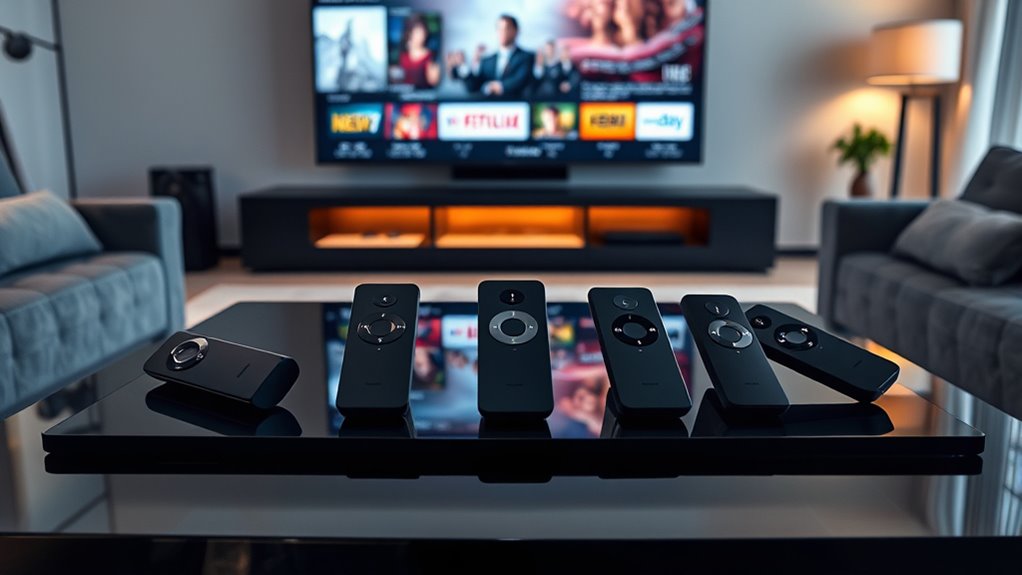

When it comes to high-end Fire TV streaming devices, the real question is not whether Amazon’s ecosystem works for you, but how much processing power, Wi-Fi headroom, and hands-free control you actually need. The Fire TV Cube (3rd Gen) stands out as the most powerful option here, pairing a fast processor with Wi-Fi 6E and built-in Alexa for a true living-room command center. Close behind, the Fire TV Stick 4K Max (2nd Gen) delivers nearly flagship performance in a compact stick format, while the Fire TV Stick 4K Plus hits a sweet spot for buyers who want strong 4K performance without paying for the Cube’s extras. The main tradeoffs come down to price versus speed, Wi-Fi 6 versus 6E for busy households, and whether hands-free voice control justifies a bigger box on your shelf. Continue reading for the full breakdown of all nine devices.

Get kitchen staples and gadgets delivered free with Prime
- Fast, free delivery on millions of items
- Prime Video, Amazon Music and more included
- Member-only deals all year
Key Takeaways
- The amazon.com/dp/B09TLFJ6JC?tag=theuglykitchen-20&ascsubtag=dc-627869″ target=”_blank” rel=”nofollow sponsored noopener”>amazon.com/dp/B09BZZ3MM7?tag=theuglykitchen-20&ascsubtag=dc-627869″ target=”_blank” rel=”nofollow sponsored noopener”>amazon.com/dp/B0BP9SNVH9?tag=theuglykitchen-20&ascsubtag=dc-627869″ target=”_blank” rel=”nofollow sponsored noopener”>Fire TV Cube (3rd Gen) is the only device in this lineup with hands-free Alexa and Wi-Fi 6E in a full-sized box, making it the clear flagship pick for home theater setups.
- The gap between the Fire TV Stick 4K Max (2nd Gen) and the standard Stick 4K is narrower than the naming suggests — the Max matters most for Wi-Fi 6E routers and heavy multitasking, not everyday 4K streaming.
- The two HD sticks in this roundup are outliers for a ‘high-end’ list; they only make sense as secondary-room devices or gifts for owners of older 1080p TVs.
- The refurbished Fire TV Cube undercuts the new 3rd Gen model on cost while offering identical hardware, making it the smart play for budget-conscious premium buyers willing to accept like-new condition.
- Alexa+ support is the quiet differentiator across this lineup — the newest Stick 4K, 4K Max, and 4K Plus all carry it, while older revisions do not, which affects long-term feature updates.
| Amazon Fire TV Stick 4K Select (Newest Model) |  | Best Value for 4K Households | Resolution: 4K Ultra HD (2160p, up to 60 fps) | HDR Support: HDR10, HDR10+, HLG | Processor: Quad-core 1.7 GHz | VIEW ON AMAZON | See Our Full Breakdown |
| Amazon Fire TV Stick 4K (Newest Model) with Alexa+ and Wi-Fi 6 |  | Best Picture Format Support for the Price | Resolution: 4K Ultra HD | HDR Support: Dolby Vision, HDR10+ | Audio: Dolby Atmos | VIEW ON AMAZON | See Our Full Breakdown |
| Amazon Fire TV Stick HD with Alexa Voice Remote |  | Best for Older 1080p TVs | Resolution: 1080p and 720p up to 60 fps | Processor: Quad-core 1.7 GHz | Storage: 8 GB | VIEW ON AMAZON | See Our Full Breakdown |
| Amazon Fire TV Stick 4K Max Streaming Device |  | Best for Gaming and Power Users | Resolution: 4K Ultra HD | HDR Support: Dolby Vision, HDR10+ | Audio: Dolby Atmos | VIEW ON AMAZON | See Our Full Breakdown |
| Amazon Fire TV Stick HD (newest model) with Alexa Voice Remote |  | Best Budget Starter Stick | Resolution: Full HD (1080p) | Connectivity: Wi-Fi 6 | Power: USB-C, powered directly by the TV | VIEW ON AMAZON | See Our Full Breakdown |
| Fire TV Stick 4K Max (2nd Gen) Streaming Device with Alexa+ and Wi-Fi 6E Support |  | Best Overall | Processor: Quad-core 2.0GHz | Resolution: 4K Ultra HD up to 2160p/60fps | Wi-Fi: Wi-Fi 6E tri-band (2.4/5/6GHz) | VIEW ON AMAZON | See Our Full Breakdown |
| Amazon Fire TV Cube (3rd Gen) with Alexa, 4K Ultra HD, Wi-Fi 6E, Hands-Free Streaming |  | Best Premium | Processor: Octa-core (4x 2.2GHz, 4x 2.0GHz) | Resolution: 4K Ultra HD with Dolby Vision, HDR10+, HLG | Wi-Fi: Wi-Fi 6E tri-band | VIEW ON AMAZON | See Our Full Breakdown |
| Amazon Fire TV Cube (Refurbished, Like-New) |  | Best Value Premium | Processor: Octa-core | Resolution: 4K Ultra HD | HDR: Supported | VIEW ON AMAZON | See Our Full Breakdown |
| Amazon Fire TV Stick 4K Plus with Alexa+ and Wi-Fi 6 |  | Best for Most 4K TVs | Processor: Quad-core 1.7GHz | Resolution: 4K Ultra HD up to 2160p/60fps | Wi-Fi: Wi-Fi 6 dual-band | VIEW ON AMAZON | See Our Full Breakdown |
| highend fire tv streaming device | Resolution | Audio | Processor | Storage |
|---|---|---|---|---|
| Amazon Fire TV Stick 4K Select | 4K Ultra HD (2160p, up to 60 fps) | — | Quad-core 1.7 GHz | 8 GB |
| Amazon Fire TV Stick 4K | 4K Ultra HD | Dolby Atmos | — | — |
| Amazon Fire TV Stick HD with A | 1080p and 720p up to 60 fps | HDMI pass-through of Dolby-encoded audio | Quad-core 1.7 GHz | 8 GB |
| Amazon Fire TV Stick 4K Max St | 4K Ultra HD | Dolby Atmos | — | 16 GB |
| Amazon Fire TV Stick HD | Full HD (1080p) | — | — | — |
| Fire TV Stick 4K Max | 4K Ultra HD up to 2160p/60fps | Dolby Atmos, 7.1 surround | Quad-core 2.0GHz | 16GB |
| Amazon Fire TV Cube | 4K Ultra HD with Dolby Vision, HDR10+, HLG | Dolby Atmos, 7.1 surround, HDMI pass-through | Octa-core (4x 2.2GHz, 4x 2.0GHz) | 16GB |
| Amazon Fire TV Cube | 4K Ultra HD | Dolby Atmos | Octa-core | — |
| Amazon Fire TV Stick 4K Plus w | 4K Ultra HD up to 2160p/60fps | Dolby Atmos, 7.1 surround | Quad-core 1.7GHz | 8GB |
More Details on Our Top Picks
Amazon Fire TV Stick 4K Select (Newest Model)
For most buyers who want genuine 4K quality without paying for extras they won’t use, the Fire TV Stick 4K Select hits a sweet spot. It delivers 4K Ultra HD with HDR10+, which handles highlights and contrast beautifully on compatible TVs, and its quad-core 1.7 GHz processor keeps navigation responsive. Compared with the pricier Fire TV Stick 4K Max, this model skips Dolby Vision, Wi-Fi 6E, and the larger 16 GB storage — but those omissions only matter to enthusiasts with crowded networks or high-end home theaters. The inclusion of Xbox cloud gaming support is a nice surprise at this tier, and Alexa+ recommendations keep content discovery simple. The tradeoff is a shorter 90-day warranty and older Wi-Fi standards, which can bottleneck streaming on busy networks.
Pros:- 4K Ultra HD with HDR10+ at an accessible price point
- Xbox cloud gaming support for big-screen play
- Alexa Voice Remote with smart home control
- Light 1.5 oz design hides neatly behind the TV
Cons:- No Dolby Vision or Dolby Atmos support
- Older dual-band Wi-Fi without Wi-Fi 6 can struggle on congested networks
- Only 90 days of limited warranty coverage
Best for: Budget-conscious buyers with a 4K HDR10+ TV who want core streaming quality plus casual cloud gaming
Not ideal for: Owners of Dolby Vision TVs or households with many simultaneous devices — the 4K Max or the 4K with Wi-Fi 6 covers both better
- Resolution:4K Ultra HD (2160p, up to 60 fps)
- HDR Support:HDR10, HDR10+, HLG
- Processor:Quad-core 1.7 GHz
- Storage:8 GB
- Wi-Fi:Dual-band MIMO (802.11a/b/g/n/ac)
- Gaming:Xbox cloud gaming compatible
- Size:3.9″ x 1.2″ x 0.6″
Our verdict“The smart pick if you want real 4K HDR picture quality and can live without Dolby Vision and cutting-edge Wi-Fi.”
Amazon Fire TV Stick 4K (Newest Model) with Alexa+ and Wi-Fi 6
This Fire TV Stick 4K stands out as the most format-complete option outside the Max tier: it pairs Dolby Vision and HDR10+ with Dolby Atmos audio, so movies look and sound the way directors intended on premium TVs. The step up from the 4K Select is real — Dolby Vision adapts scene-by-scene on supported panels, something HDR10+ alone can’t replicate — while Wi-Fi 6 keeps streams stable even when phones, laptops, and consoles compete for bandwidth. Access to over 1.8 million titles, including free ad-supported options, rounds out a well-rounded package. The catch: this listing is a refurbished unit that may arrive in generic packaging, and it can’t play physical media, so disc collectors should look elsewhere.
Pros:- Full Dolby Vision, HDR10+, and Dolby Atmos support
- Wi-Fi 6 keeps streaming smooth on multi-device networks
- Alexa Voice Remote with preset app and smart home buttons
- Huge content library including free ad-supported titles
Cons:- Refurbished unit may arrive in generic packaging
- No Wi-Fi 6E for the fastest wireless band
- Streaming only — no support for physical media
Best for: Movie lovers with Dolby Vision TVs and busy home networks who want top-tier formats without paying Max-tier prices
Not ideal for: Buyers who insist on brand-new retail packaging, or anyone wanting 6 GHz-band Wi-Fi 6E found on the 4K Max
- Resolution:4K Ultra HD
- HDR Support:Dolby Vision, HDR10+
- Audio:Dolby Atmos
- Connectivity:Wi-Fi 6
- Content Access:Over 1.8 million titles
- Remote:Alexa Voice Remote with presets and smart home controls
- Condition:Refurbished
Our verdict“The best format-per-dollar choice if a refurbished unit doesn’t bother you and your TV supports Dolby Vision.”
Amazon Fire TV Stick HD with Alexa Voice Remote
If your television tops out at 1080p, paying for 4K hardware is wasted money — and that’s exactly the problem the Fire TV Stick HD solves. It streams full HD at up to 60 fps with HDR10/HDR10+ pass-through, and its 1.1 oz frame makes it genuinely pocketable for travel or dorm use. Compared with the 4K Select, picture resolution is the entire difference; app selection, Alexa voice control, and smart home features are essentially identical here. Setup takes minutes on any TV with an HDMI port, and the same quad-core 1.7 GHz chip as pricier sticks keeps menus feeling quick. Be aware that 8 GB of storage fills up fast if you install many apps, and some IR functions may not work with every TV.
Pros:- Crisp 1080p streaming perfectly matched to HD televisions
- Ultra-light and portable for travel use
- Same quad-core processor as higher-tier Fire TV Sticks
- Alexa voice control and smart home features included
Cons:- No 4K output, so it underutilizes modern TVs
- 8 GB storage limits how many apps you can install
- Some IR remote functions may not work on all televisions
Best for: Owners of 1080p or 720p TVs, travelers, and secondary-screen setups like bedrooms or vacation rentals
Not ideal for: Anyone with a 4K TV — even the base 4K Select delivers a visibly sharper picture for a modest step up
- Resolution:1080p and 720p up to 60 fps
- Processor:Quad-core 1.7 GHz
- Storage:8 GB
- Wi-Fi:Dual-band MIMO (802.11a/b/g/n/ac)
- Bluetooth:Bluetooth 5.0 and BLE
- Audio:HDMI pass-through of Dolby-encoded audio
- Size:3.4″ x 1.2″ x 0.5″
Our verdict“The right-sized choice for HD televisions — everything that matters, nothing you’d pay extra for and never use.”
Amazon Fire TV Stick 4K Max Streaming Device
The Fire TV Stick 4K Max is where this lineup gets serious about performance. Its Wi-Fi 6E connection taps the uncrowded 6 GHz band, which matters if you’re streaming 4K while gaming online in a full household — a clear advantage over the standard 4K with Wi-Fi 6. Doubling storage to 16 GB alongside the fastest processor in the stick family means apps launch quickly and Xbox Game Pass cloud gaming feels responsive rather than laggy. Dolby Vision, HDR10+, and Dolby Atmos complete the premium picture and sound package. Two honest caveats: this is a refurbished unit, and gaming requires a separate Game Pass subscription plus a controller, so the true cost of the gaming angle adds up.
Pros:- Wi-Fi 6E access to the fast, uncrowded 6 GHz band
- 16 GB of storage — double the standard Fire TV Sticks
- Fastest app launches in the Fire TV Stick lineup
- Xbox Game Pass cloud gaming support
Cons:- Refurbished device may arrive in generic packaging
- Gaming requires separate Game Pass subscription and controller
- Premium features go unused on non-Dolby Vision TVs
Best for: Households that mix 4K movie nights with Xbox cloud gaming and need the extra storage and bandwidth headroom
Not ideal for: Casual streamers — if you don’t game or fill storage, the cheaper 4K with Wi-Fi 6 delivers nearly the same viewing experience
- Resolution:4K Ultra HD
- HDR Support:Dolby Vision, HDR10+
- Audio:Dolby Atmos
- Connectivity:Wi-Fi 6E
- Storage:16 GB
- Gaming:Xbox Game Pass cloud gaming
- Condition:Refurbished
Our verdict“The performance pick for gamers and heavy users who want Wi-Fi 6E and double the storage — as long as refurbished condition is acceptable.”
Amazon Fire TV Stick HD (newest model) with Alexa Voice Remote
As an entry point into streaming, the newest Fire TV Stick HD gets the fundamentals right. It adds Wi-Fi 6 — a genuine upgrade over the older Fire TV Stick HD‘s dual-band ac Wi-Fi — while keeping the same easy setup and compact footprint. The cleverest trick is power direct from the TV’s USB-C port, which eliminates a wall outlet and the cable clutter that comes with it. It also controls compatible TVs, soundbars, and receivers, so one remote can replace three. Resolution remains capped at Full HD, which is the correct tradeoff at this price for 1080p TV owners, but 4K shoppers should step up to the 4K Select instead. Subscription fees for premium services apply, and there’s no support for anything beyond streaming and smart home control.
Pros:- Wi-Fi 6 connectivity uncommon at this price level
- Powers directly from the TV’s USB-C port — no outlet needed
- Consolidates control of TV, soundbar, and receiver into one remote
- Compact, travel-friendly design
Cons:- Full HD ceiling wastes the potential of 4K televisions
- No Dolby Vision or Dolby Atmos support
- Functionality limited to streaming and basic smart home control
Best for: First-time cord-cutters with HD TVs who want the simplest, cleanest setup possible
Not ideal for: 4K TV owners or anyone wanting Dolby Vision — the 4K Select or 4K Max are better matched investments
- Resolution:Full HD (1080p)
- Connectivity:Wi-Fi 6
- Power:USB-C, powered directly by the TV
- Bluetooth:Yes
- Remote:Alexa Voice Remote with dedicated buttons
- Device Control:Compatible TV, soundbar, and receiver
Our verdict“The easiest, tidiest way to make an old HD TV smart — just don’t expect it to grow with you into 4K.”
Fire TV Stick 4K Max (2nd Gen) Streaming Device with Alexa+ and Wi-Fi 6E Support
For most buyers shopping the high end of the Fire TV range, this pick makes the most sense. The 2.0GHz quad-core processor is the fastest in any Stick form factor, which translates to noticeably quicker app launches and smoother menu scrolling compared with the Fire TV Stick 4K Plus, whose slower 1.7GHz chip and 650MHz GPU can feel less snappy in heavy apps. The Wi-Fi 6E tri-band connection opens the less-congested 6GHz band, a real advantage in households crowded with smart devices. Compared with the Fire TV Cube, you give up hands-free voice control and HDMI pass-through, but you gain a device that hides entirely behind the TV. The tradeoff is that peak performance still depends on your router supporting 6E, and cloud gaming requires a separate subscription.
Pros:- Fastest processor of any Fire TV Stick for quick app launches and navigation
- Wi-Fi 6E tri-band support keeps streaming stable on busy home networks
- Full 4K format coverage including Dolby Vision, HDR10+ and Dolby Atmos
- Alexa Voice Remote includes IR control for TVs and soundbars
Cons:- Wi-Fi 6E benefits only materialize with a compatible router
- Cloud gaming and many streaming services require separate subscriptions
- Dongle design can block adjacent HDMI ports on tight TV layouts
Best for: Streamers who want near-Cube performance in a discreet stick format and already own a Wi-Fi 6E router
Not ideal for: Buyers who want hands-free Alexa without picking up a remote, or those with older Wi-Fi 5 routers who won’t benefit from the 6E hardware
- Processor:Quad-core 2.0GHz
- Resolution:4K Ultra HD up to 2160p/60fps
- Wi-Fi:Wi-Fi 6E tri-band (2.4/5/6GHz)
- Storage:16GB
- HDR Formats:Dolby Vision, HDR10+, HLG
- Audio:Dolby Atmos, 7.1 surround
- Remote:Alexa Voice Remote Enhanced with IR
Our verdict“The sweet spot of the lineup: flagship-level speed and connectivity in a stick that suits almost any 4K household.”
Amazon Fire TV Cube (3rd Gen) with Alexa, 4K Ultra HD, Wi-Fi 6E, Hands-Free Streaming
This option stands out as the most capable device in the entire Fire TV family. Its octa-core processor outruns every stick in the lineup, including the Fire TV Stick 4K Max, making it the choice for demanding users who juggle gaming, live TV, and heavy multitasking. Unlike any Stick, the Cube offers hands-free Alexa — you can start a movie, adjust lights, or check a camera without touching a remote — plus an HDMI input that lets you route a cable box or console through it with voice control. Ethernet is built in, so wired reliability doesn’t require an adapter. The tradeoffs are real: it occupies shelf space instead of hiding behind the TV, and 16GB of storage fills quickly if you install many apps or games.
Pros:- Fastest processor in the Fire TV lineup for heavy apps and gaming
- Hands-free Alexa doubles as a smart home hub
- Built-in Ethernet port and HDMI 2.1 input with pass-through
- Wi-Fi 6E support for the fastest wireless speeds available
Cons:- Set-top box design requires shelf space and a visible placement
- 16GB storage limits how many apps and games you can install
- 4K and Dolby Vision output require a compatible television
Best for: Home theater enthusiasts and smart-home owners who want hands-free Alexa, Ethernet, and HDMI pass-through in one box
Not ideal for: Minimalists who want an invisible streaming solution behind the TV, or buyers without a 4K HDR set who won’t use its full capabilities
- Processor:Octa-core (4x 2.2GHz, 4x 2.0GHz)
- Resolution:4K Ultra HD with Dolby Vision, HDR10+, HLG
- Wi-Fi:Wi-Fi 6E tri-band
- Storage:16GB
- Memory:2GB
- Ports:HDMI 2.1 in/out, Ethernet, USB-A, IR extender
- Audio:Dolby Atmos, 7.1 surround, HDMI pass-through
Our verdict“The full-featured flagship for buyers who treat their streaming device as a home entertainment command center rather than a dongle.”
Amazon Fire TV Cube (Refurbished, Like-New)
This model is better suited to buyers who want flagship Cube performance without the flagship outlay. Functionally, it delivers the same experience as the new Fire TV Cube (3rd Gen): the octa-core processor, 4K HDR output, Dolby Atmos, Wi-Fi 6E, and hands-free Alexa are all intact, and for most users the day-to-day difference is imperceptible. Compared with buying a Fire TV Stick 4K Max at a similar budget, this route gets you Ethernet, HDMI pass-through, and far-field voice microphones — features no Stick offers. The tradeoffs come down to peace of mind: a shorter limited warranty than a new unit, generic packaging, and the small residual risk that comes with any refurbished electronics purchase. Cosmetically, minor blemishes are possible.
Pros:- Identical performance to the new Cube: octa-core speed, Wi-Fi 6E, hands-free Alexa
- Includes premium features no Stick offers, like Ethernet and HDMI pass-through
- Full 4K, HDR and Dolby Atmos support for high-end home theaters
- Backed by a limited warranty despite the refurbished status
Cons:- Limited warranty is shorter than coverage on a new device
- Ships in generic packaging with possible minor cosmetic wear
- Refurbished stock can be inconsistent in availability
Best for: Value-conscious buyers who want Cube-level features and are comfortable with refurbished hardware
Not ideal for: Gift-givers or buyers who prioritize a full-length warranty and pristine retail packaging
- Processor:Octa-core
- Resolution:4K Ultra HD
- HDR:Supported
- Audio:Dolby Atmos
- Wi-Fi:Wi-Fi 6E
- Warranty:Limited warranty
Our verdict“A smart way into the top of the Fire TV lineup for pragmatic buyers who care more about performance than packaging.”
Amazon Fire TV Stick 4K Plus with Alexa+ and Wi-Fi 6
This pick makes the most sense for buyers whose routers haven’t yet jumped to Wi-Fi 6E. Its Wi-Fi 6 dual-band radio is still excellent for smooth 4K streaming on typical home networks, and the full HDR suite — Dolby Vision, HDR10+, and Dolby Atmos — matches what the pricier Fire TV Stick 4K Max offers on screen. Where it steps back is horsepower: a 1.7GHz processor, slower GPU, and 8GB of storage mean slightly slower app loads and less room for large games compared with the Max. IR device control is a welcome inclusion, though compatibility with some older IR equipment can be hit-or-miss. For straightforward movie and show streaming, though, most viewers will struggle to spot the difference in daily use.
Pros:- Complete 4K format support with Dolby Vision, HDR10+ and Dolby Atmos
- Wi-Fi 6 handles smooth 4K streaming even with multiple connected devices
- Alexa Voice Remote with IR control manages TV and soundbar
- Xbox Cloud Gaming support for casual gaming sessions
Cons:- Slower processor and GPU than the Stick 4K Max for demanding apps
- 8GB storage fills quickly with apps and games
- IR control may not work with all legacy entertainment equipment
Best for: Households with Wi-Fi 6 routers who want full 4K HDR streaming and voice control without paying for 6E they can’t use
Not ideal for: Power users and cloud gamers who need the faster chip, larger storage, and Wi-Fi 6E of the Stick 4K Max
- Processor:Quad-core 1.7GHz
- Resolution:4K Ultra HD up to 2160p/60fps
- Wi-Fi:Wi-Fi 6 dual-band
- Storage:8GB
- HDR Formats:Dolby Vision, HDR10+, HLG
- Audio:Dolby Atmos, 7.1 surround
- Remote:Alexa Voice Remote with IR control
Our verdict“A well-balanced 4K streamer for typical households — buy the Max only if your network and habits demand it.”

How We Picked
I ranked these nine devices around four factors that actually change the streaming experience: processing power and interface speed, wireless capability (Wi-Fi 6 versus 6E versus older standards), picture and audio format support (4K, HDR formats, Dolby Vision, Atmos), and control features like hands-free Alexa and remote quality. A high-end device justifies its position through snappy navigation, stable 4K playback, and headroom for future smart-home features — so sticks with older Wi-Fi or slower processors ranked lower regardless of popularity.
The ranking logic is simple: the Cube (3rd Gen) leads because it wins on every axis, followed by the 4K Max (2nd Gen) and 4K Plus as near-flagship sticks. Mid-tier 4K sticks fill the value tier, HD models sit at the bottom because they fail the high-end bar on picture quality, and the refurbished Cube earns its slot as a value path to flagship hardware rather than a separate product class.
| highend fire tv streaming device | Processor | Wi-Fi | Audio |
|---|---|---|---|
| Amazon Fire TV Stick 4K Select | Quad-core 1.7 GHz | Dual-band MIMO (802.11a/b/g/n/ac) | — |
| Amazon Fire TV Stick 4K | — | — | Dolby Atmos |
| Amazon Fire TV Stick HD with A | Quad-core 1.7 GHz | Dual-band MIMO (802.11a/b/g/n/ac) | HDMI pass-through of Dolby-encoded audio |
| Amazon Fire TV Stick 4K Max St | — | — | Dolby Atmos |
| Amazon Fire TV Stick HD | — | — | — |
| Fire TV Stick 4K Max | Quad-core 2.0GHz | Wi-Fi 6E tri-band (2.4/5/6GHz) | Dolby Atmos, 7.1 surround |
| Amazon Fire TV Cube | Octa-core (4x 2.2GHz, 4x 2.0GHz) | Wi-Fi 6E tri-band | Dolby Atmos, 7.1 surround, HDMI pass-through |
| Amazon Fire TV Cube | Octa-core | Wi-Fi 6E | Dolby Atmos |
| Amazon Fire TV Stick 4K Plus w | Quad-core 1.7GHz | Wi-Fi 6 dual-band | Dolby Atmos, 7.1 surround |
Factors to Consider When Choosing Highend Fire Tv Streaming Devices
Choosing between high-end Fire TV devices comes down to matching the hardware to your TV, your router, and how you interact with your entertainment system. These are the factors that most often trip buyers up.Match the Device to Your TV’s Actual Capabilities
The most common mistake in this category is overbuying for the television on the other end of the HDMI cable. A 4K stick plugged into a 1080p panel delivers zero visible benefit over the HD model, and Dolby Vision support means nothing if your TV tops out at HDR10. Before choosing, check your TV’s resolution and HDR formats in its settings menu — that single step eliminates half the decision. Conversely, owners of OLED or mini-LED panels should skip anything below the 4K Max tier, because weaker processors produce slower interface navigation that becomes frustrating on a daily basis. The device should also outlive your current TV, so if an upgrade is coming, buy for the television you will own in two years, not the one you have today.
Wi-Fi 6 Versus Wi-Fi 6E: When It Actually Matters
Wireless capability is where manufacturers quietly segment their lineups. Wi-Fi 6 is now the sensible baseline for any high-end pick, but Wi-Fi 6E only pays off if your router broadcasts on the 6GHz band — plenty of households still run Wi-Fi 5 hardware, in which case the 6E premium is wasted money. Where 6E genuinely helps is dense environments: apartment buildings, smart homes with dozens of connected devices, and setups where 4K streams compete with gaming and video calls. If your router lives within a few feet of your TV, even standard Wi-Fi 6 handles 4K comfortably. The mistake to avoid is paying for wireless headroom you cannot use while ignoring the processor, which affects everything you do on the device.
Hands-Free Alexa: The Hidden Cost of Sticks
Every stick in this lineup requires picking up the remote to talk to Alexa; only the Cube listens continuously without a button press. That difference reshapes how the device fits into a household. If Alexa controls your lights, thermostat, or music, the Cube replaces an Echo device entirely, which changes its real cost equation. Sticks with Alexa+ still handle voice search and smart-home commands well, but the push-to-talk rhythm feels dated once you have lived with hands-free. Buyers who already own Echo speakers can skip the Cube and let their existing hardware cover ambient voice duties — this is one of the clearest cases where the ‘best’ device depends on what you already own.
New Versus Refurbished: Reading the Real Risk
A refurbished flagship like the like-new Cube offers identical internal hardware to the new model, and for sealed-electronics categories like streaming boxes, the practical failure risk is low. What you trade is warranty length in some cases and the certainty of untouched packaging. For buyers who keep devices for five-plus years, that saving can be redirected toward a better HDMI cable or a faster router — upgrades with more day-to-day impact than a factory seal. The one scenario where new makes more sense is a gift or a device destined for a guest room where presentation and full support matter. Refurbished stock also fluctuates, so if the model you want is unavailable, the value argument disappears rather than waiting indefinitely.
Watch for Duplicate Models in This Lineup
Amazon’s naming is genuinely confusing, and this roundup contains near-identical devices separated only by generation. The Fire TV Stick 4K, Stick 4K Plus, and Stick 4K Max overlap heavily, while two different HD sticks appear under slightly different names. The lesson: always confirm the generation and the feature line (Wi-Fi 6, Wi-Fi 6E, Alexa+ support) rather than trusting the product name, because retailers list multiple generations side by side. Alexa+ compatibility deserves special attention since older revisions may not receive the newest voice features over time. Comparing boxes on paper, the differentiators that matter are wireless standard, processor tier, and Alexa+ support — everything else is largely cosmetic.
Frequently Asked Questions
Is the Fire TV Cube worth it over the 4K Max if I only stream shows?
If streaming is genuinely your only use case, the 4K Max (2nd Gen) covers nearly everything the Cube does — 4K, Wi-Fi 6E, fast navigation, Alexa — at a lower tier of cost and with a smaller footprint. The Cube pulls ahead in three situations: you want hands-free Alexa without touching a remote, you want to control cable boxes or soundbars through HDMI-CEC and infrared blasting, or you want the fastest interface response because the Cube’s processor outmuscles any stick. Heavy smart-home households get the most value, since the Cube effectively replaces an Echo device. Pure streamers with a simple setup will notice the difference mainly in slightly snappier menus, which may not justify the step up.
Does Wi-Fi 6E make a real difference for 4K streaming?
For a single 4K stream in an average house, no — Wi-Fi 6 handles the bandwidth comfortably, and even older standards manage when the router is close. Wi-Fi 6E earns its keep in congested wireless environments: apartment buildings, households with 30-plus connected devices, or setups where gaming and video calls run alongside movie night. The 6GHz band is less crowded, so streams stay stable when the 2.4GHz and 5GHz bands are saturated. The catch is that your router must support 6E; pairing a 6E stick with a Wi-Fi 5 router gives you zero benefit. Buy the 6E tier for headroom and stability, not raw picture quality.
Why are HD sticks included in a high-end roundup at all?
They belong here as honest contrast — and because many buyers shopping this category need a secondary device rather than a flagship. An HD stick is the right call for a guest room, a kids’ room, or any television that maxes out at 1080p, where 4K hardware would sit idle. They also serve the Fire TV ecosystem fully, with the same app library, Alexa voice features, and interface. What they give up is resolution, HDR, and the faster processors that make navigation feel fluid on high-end TVs. If your main living-room screen is 4K, an HD stick should never be your primary device.
Is a refurbished Fire TV Cube a safe buy compared to new?
For a device with no moving parts and no battery, refurbishment risk is about as low as electronics get. Like-new units carry the same internal hardware as the fresh 3rd Gen Cube, so performance is identical — the variables are cosmetic condition, warranty terms, and packaging. Streaming boxes fail so rarely that the extended coverage on a new unit rarely comes into play. The sensible approach: confirm the seller’s return window and warranty length before ordering, and if either is thin, pay the difference for new. Buyers who keep devices long-term and redirect the saving elsewhere usually come out ahead.
What does Alexa+ support actually change day to day?
Alexa+ is Amazon’s newer, more conversational voice layer, and devices that ship with it — the newest Stick 4K, the 4K Plus, and the 2nd Gen 4K Max — are positioned to receive the most capable version of voice search and smart-home control over time. Day to day, that shows up as more natural requests, better contextual follow-ups, and more capable control of connected devices without rigid phrasing. Older-generation devices still function fully, but their voice features may plateau as Amazon invests in the newer platform. If voice is central to how you use your setup, prioritizing Alexa+-compatible models is a reasonable future-proofing move. If you mostly tap buttons on the remote, treat it as a bonus rather than a deciding factor.
Conclusion
The right pick here depends less on specs and more on how your household actually watches TV. For best overall, the Fire TV Cube (3rd Gen) wins with its faster processor, hands-free Alexa, and Wi-Fi 6E — it is the complete package for a main living room. Best value goes to the Fire TV Stick 4K Plus, which delivers flagship-tier streaming without the Cube premium, though the refurbished Cube is the smarter buy if you want premium hardware at a reduced cost and can accept like-new condition. The 4K Max (2nd Gen) is the best premium stick for buyers who refuse to put a box on the shelf but still want Wi-Fi 6E and Alexa+. For beginners and casual streamers, the newest Fire TV Stick 4K keeps things simple and capable. And for specific needs: HD sticks for secondary 1080p rooms, and the Cube specifically for smart-home-heavy households that will use its always-listening Alexa every day. Whatever you choose, match the device to your TV and router rather than the product name — that single discipline separates a satisfying purchase from an overpaid one.
Halloween Picks
halloween
As an affiliate, we earn on qualifying purchases.