High-end hunting binoculars live or die by three things: glass quality at first and last light, how the optic handles long glassing sessions, and whether it can do more than just magnify. The Vortex Razor HD takes my best overall spot because its alpha-tier glass and build quality beat everything else in this lineup for pure image clarity. If you want one tool instead of two, the Vortex Fury HD 5000 merges binoculars and a ballistic laser rangefinder, while the SIG SAUER Zulu6 with optical image stabilization solves the handshake problem that ruins high-magnification viewing. The core tradeoff you’ll face in this category is magnification and features versus weight and low-light performance — a 15×56 glass lets you scout ridgelines but tires your arms, while a 10×42 disappears on your chest. Keep reading for the full breakdown of all fifteen models.

Get kitchen staples and gadgets delivered free with Prime
- Fast, free delivery on millions of items
- Prime Video, Amazon Music and more included
- Member-only deals all year
Key Takeaways
- Glass-only models like the Vortex Razor HD and Steiner Predator outperformed feature-packed rivals on raw image quality, which matters most for low-light glassing when animals move.
- Rangefinding binoculars (Vortex Fury HD 5000, Leupold BX-4 Range HD, Halo K2000) make sense only if you hunt open country — treestand hunters are paying for laser power they’ll rarely use.
- The 15×56 class (SIG ZULU10, Steiner Predator, Vortex Diamondback HD) is effectively a tripod commitment; without one, the extra magnification works against you.
- Optical image stabilization on the SIG Zulu6 was the single biggest usability differentiator in the lineup, delivering steady 16x viewing handheld.
- Several mid-priced models (Vortex Diamondback HD, Nikon Monarch M7, Athlon Midas UHD) closed most of the gap to premium glass, making the top tier a question of marginal low-light gains per dollar.
| Leupold BX-3 Alpine HD Binoculars, 12x50mm |  | Best Lightweight All-Around Pick | Magnification: 12x | Objective Lens: 50mm | Chassis Material: Magnesium | VIEW ON AMAZON | See Our Full Breakdown |
| SIG SAUER ZULU10 HDX 15×56 Waterproof Hunting Binoculars (FDE) |  | Best Premium Long-Range Glassing Optic | Magnification: 15x | Objective Lens: 56mm | Prism Type: Abbe Koenig | VIEW ON AMAZON | See Our Full Breakdown |
| SIG SAUER Canyon HD 12x50mm Fogproof Hunting Binoculars |  | Best Complete Kit Value | Magnification: 12x | Objective Lens: 50mm | Prism Type: Schmidt-Pechan (roof) | VIEW ON AMAZON | See Our Full Breakdown |
| Steiner Predator 15×56 Binoculars |  | Best for Dawn-and-Dusk Open-Country Glassing | Magnification: 15x | Objective Lens: 56mm | Prism Type: Porro | VIEW ON AMAZON | See Our Full Breakdown |
| Vortex Diamondback HD 15×56 Binoculars | 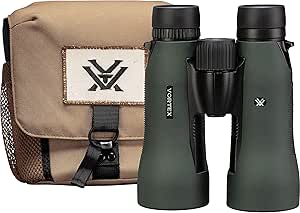 | Best Value Big-Glass Option | Magnification: 15x | Objective Lens: 56mm | Field of View: 230 feet @ 1000 yd | VIEW ON AMAZON | See Our Full Breakdown |
| Athlon Optics 8×42 Midas UHD Binoculars |  | Best Value ED Glass | Magnification: 8x | Objective Lens: 42mm | Angular Field of View: 8.1 degrees | VIEW ON AMAZON | See Our Full Breakdown |
| Vortex Ranger HD 3000 10×42 Laser Rangefinding Binoculars |  | Best for Extreme-Range Ranging | Magnification: 10x | Objective Lens: 42mm | Max Range (Reflective): 3,000 yards | VIEW ON AMAZON | See Our Full Breakdown |
| Vortex Razor HD 12×50 Roof Prism Binoculars |  | Best Premium Glass | Magnification: 12x | Objective Lens: 50mm | Field of View: 285 feet at 1000 yards | VIEW ON AMAZON | See Our Full Breakdown |
| Nikon Monarch M7 10×42 Binoculars |  | Best All-Around Balance | Magnification: 10x | Objective Lens: 42mm | Field of View: 357 feet at 1000 yards | VIEW ON AMAZON | See Our Full Breakdown |
| Vortex Fury HD 5000 10×42 Laser Rangefinding Binoculars |  | Best Rangefinding Value | Magnification: 10x | Objective Lens: 42mm | Ranging Modes: HCD (primary), LOS | VIEW ON AMAZON | See Our Full Breakdown |
| SIG SAUER Zulu6 FDE HDX OIS 16X42mm Roof Prism Binocular |  | Best Image Stabilization | Magnification: 16x | Objective Lens: 42mm | Prism Type: Roof Prism | VIEW ON AMAZON | See Our Full Breakdown |
| Halo Optics K2000 Rangefinder Binoculars 10x 42mm |  | Best Budget Rangefinding Binocular | Magnification: 10x | Objective Lens: 42mm | Rangefinder Range: Up to 2,000 yards (K2000) | VIEW ON AMAZON | See Our Full Breakdown |
| Leupold BX-4 Range HD TBR/W 10x42mm Range-Finding Binocular Shadow Gray (182883) |  | Best for Western Ballistic Shooting | Magnification: 10x | Objective Lens: 42mm | Rangefinding: Laser with TBR/W true ballistic range and wind | VIEW ON AMAZON | See Our Full Breakdown |
| Vortex Crossfire HD 10×42 Binoculars (Mossy Oak Bottomland) |  | Best Camo Pattern for Waterfowlers | Magnification: 10x | Objective Lens: 42mm | Prism Type: Roof prism | VIEW ON AMAZON | See Our Full Breakdown |
| Vortex Triumph HD 10×42 Binoculars |  | Best Kit Value with Harness Included | Magnification: 10x | Objective Lens: 42mm | Optical System: HD with fully multi-coated lenses | VIEW ON AMAZON | See Our Full Breakdown |
| highend hunting binocular | Magnification | Objective Lens |
|---|---|---|
| Leupold BX-3 Alpine HD Binocul | 12x | 50mm |
| SIG SAUER ZULU10 HDX 15×56 Wat | 15x | 56mm |
| SIG SAUER Canyon HD 12x50mm Fo | 12x | 50mm |
| Steiner Predator 15×56 Binocul | 15x | 56mm |
| Vortex Diamondback HD 15×56 Bi | 15x | 56mm |
| Athlon Optics 8×42 Midas UHD B | 8x | 42mm |
| Vortex Ranger HD 3000 10×42 La | 10x | 42mm |
| Vortex Razor HD 12×50 Roof Pri | 12x | 50mm |
| Nikon Monarch M7 10×42 Binocul | 10x | 42mm |
| Vortex Fury HD 5000 10×42 Lase | 10x | 42mm |
| SIG SAUER Zulu6 FDE HDX OIS 16 | 16x | 42mm |
| Halo Optics K2000 Rangefinder | 10x | 42mm |
| Leupold BX-4 Range HD TBR/W 10 | 10x | 42mm |
| Vortex Crossfire HD 10×42 Bino | 10x | 42mm |
| Vortex Triumph HD 10×42 Binocu | 10x | 42mm |
More Details on Our Top Picks
Leupold BX-3 Alpine HD Binoculars, 12x50mm
Among these 12x and 15x glassing optics, the Leupold BX-3 Alpine HD stands out as the one hunters can actually carry all day. The magnesium chassis shaves meaningful weight compared with the SIG SAUER ZULU10 HDX 15×56, and that difference shows up on mile-seven of a backcountry stalk. Leupold’s Elite Optical System prioritizes light transmission and field of view over raw magnification, which produces a brighter, steadier image at dawn and dusk than the higher-power options here. The interchangeable Form-Fit eyecups are a thoughtful touch for long glassing sessions — something neither the Vortex Diamondback HD nor the Steiner Predator offers. The honest tradeoff is that 12x still demands decent resting technique, and buyers chasing maximum detail at extreme range will want the 15×56 class instead.
Pros:- Magnesium chassis keeps weight down for an all-day-carry 12×50 platform
- Elite Optical System emphasizes light transmission and wide field of view for low-light glassing
- Interchangeable Form-Fit eyecups reduce glare and eye strain during long sessions
- Fully waterproof and fogproof with Leupold’s strong customer care reputation
Cons:- 12x magnification is harder to steady handheld than 10x options in this roundup
- Smaller 50mm objectives trail the 56mm models in pure light-gathering at legal shooting light
Best for: Backcountry spot-and-stalk hunters who want serious glassing power without full-size 15×56 weight on their harness
Not ideal for: Open-country hunters scoring animals across canyons at extreme distances — 12x gives up reach and detail versus 15x models like the Steiner Predator
- Magnification:12x
- Objective Lens:50mm
- Chassis Material:Magnesium
- Waterproof / Fogproof:Yes
- Eyecups:Interchangeable Form-Fit
- Color:Shadow Gray
- Model Number:187992
Our verdict“This pick makes the most sense for mobile hunters who value carry weight and low-light brightness over maximum magnification.”
SIG SAUER ZULU10 HDX 15×56 Waterproof Hunting Binoculars (FDE)
The SIG SAUER ZULU10 HDX 15×56 is the optical heavyweight of this batch, pairing Abbe Koenig prisms — a design prized for light efficiency — with SIG’s full stack of SpectraCoat, LensArmor, and LenShield treatments. Compared with the Vortex Diamondback HD 15×56, this model plays in a more premium tier: expect sharper edge-to-edge resolution and better glare control when the sun sits low over open country. The locking diopter ring is a genuinely useful detail that the Diamondback’s friction-style diopter can’t match, since it prevents your calibration from drifting during pack-out. The tradeoffs are real, though: this is a heavy, tripod-dependent instrument, and its 4.5-degree field of view feels narrow when trying to pick up movement in timber. Hunters who glass from a fixed vantage will love it; still-hunters will not.
Pros:- Abbe Koenig prism design with HDX glass delivers exceptional resolution and light transmission
- Triple coating stack (SpectraCoat, LensArmor, LenShield) resists scratches and glare
- Locking diopter holds calibration through rough handling
- IPX-7 waterproof, fog-proof metal chassis with rubberized armor and a molded EVA case
Cons:- Full-size 15×56 format is heavy for extended carry compared with the Leupold Alpine HD 12×50
- 15x magnification realistically requires tripod stabilization, and the 4.5-degree field of view is narrow for finding game quickly
Best for: Western open-country hunters who glass from tripod setups for hours and want reference-grade resolution for judging animals at long range
Not ideal for: Still-hunters and mobile whitetail hunters — the size, weight, and narrow field of view punish fast, close-quarters glassing
- Magnification:15x
- Objective Lens:56mm
- Prism Type:Abbe Koenig
- Field of View:4.5 degrees
- Eye Relief:15mm
- Water Resistance:IPX-7 Waterproof, Fog-proof
- Mount:1/4-20″ Tripod Mount
- Coatings:SpectraCoat, LensArmor, LenShield
Our verdict“This model is better suited to dedicated long-range glassers working from a tripod than to anyone covering miles on foot.”
SIG SAUER Canyon HD 12x50mm Fogproof Hunting Binoculars
Where the ZULU10 HDX is SIG’s flagship glassing instrument, the Canyon HD 12×50 is the pragmatic sibling — and that is its whole appeal. This option stands out for arriving as a turnkey kit: harness strap, covers, and case are all in the box, and the standard 1/4-20″ threaded insert means no extra purchases before mounting to a tripod or window mount. Its 5.0-degree field of view actually beats the ZULU10’s 4.5 degrees, which matters more than raw power when scanning brushy terrain for movement. The phase-coated roof prisms and SpectraCoat/LensArmor coatings deliver a bright, serviceable image, though glass quality sits a clear notch below the ZULU10’s Abbe Koenig system in dim light. The thermoplastic body is tough and IPX-7 rated, but it lacks the premium metal-chassis feel of its bigger brother — that is the corner cut to hit this tier.
Pros:- Complete package includes harness, covers, and case with no add-on purchases
- 5.0-degree field of view outclasses the 15×56 models for scanning and picking up movement
- IPX-7 waterproof and fog-proof with tripod and window-mount compatibility
- 3-position adjustable eyecups and over-molded focus dial improve long-session comfort
Cons:- Thermoplastic chassis feels less premium than the metal-framed ZULU10 HDX
- Schmidt-Pechan prism and HD glass trail flagship optics in true dawn-and-dusk resolution
Best for: Hunters upgrading from budget glass who want a tripod-ready 12×50 with every accessory included in one purchase
Not ideal for: Optics perfectionists who demand flagship low-light clarity — the Schmidt-Pechan prisms trail premium Abbe Koenig designs after sunset
- Magnification:12x
- Objective Lens:50mm
- Prism Type:Schmidt-Pechan (roof)
- Field of View:5.0 degrees
- Eye Relief:15mm
- Weight:28.14 oz
- Waterproofing:IPX-7
- Coatings:HD Glass, SpectraCoat, LensArmor
Our verdict“Compared with similar options, this is the smart buy for hunters who want a full, tripod-ready 12×50 kit without paying flagship glass prices.”
Steiner Predator 15×56 Binoculars
The Steiner Predator 15×56 earns its spot through one genuinely different feature: Diamond-Night coating, engineered to emphasize game-animal color tones while suppressing the greens of foliage. That translates to animals that visually separate from brush in a way generic optics — including the Vortex Diamondback HD 15×56 — do not replicate. Paired with 56mm objectives, the low-light performance targets the exact minutes around legal shooting time when most glass gives up. Steiner backs it with a transferable no-questions-asked Heritage Warranty, arguably the strongest coverage in this lineup alongside Vortex’s VIP warranty. The tradeoffs mirror the ZULU10’s: this is a tripod-required instrument with a modest 215-foot field of view, and the porro-prism body shape packs less conventionally than roof-prism rivals. It also carries a premium price justified only if the game-contrast coating matches your hunting style.
Pros:- Diamond-Night coating boosts contrast on game animals against foliage
- 56mm objectives with high light transmission excel in dawn and dusk conditions
- Makrolon housing with NBR rubber armor rated for 11G impacts
- Transferable lifetime Heritage Warranty with no-questions-asked repair or replacement
Cons:- 15x magnification demands tripod mounting for steady, fatigue-free viewing
- 215-foot field of view is the narrowest here, slowing target acquisition in cover
Best for: Open-country and plains hunters who glass hard during the first and last minutes of light and want game to pop against vegetation
Not ideal for: Dense-timber hunters or casual users — the narrow field of view and tripod dependence make it clumsy for close-range work
- Magnification:15x
- Objective Lens:56mm
- Prism Type:Porro
- Field of View:215 feet @ 1000 yd
- Exit Pupil:3.73mm
- Coating:Diamond-Night / Diamond Coating
- Waterproof / Fogproof:Yes, nitrogen-pressure sealed
- Mount:Tripod Mount
Our verdict“This pick makes the most sense for dedicated open-country hunters whose success hinges on separating game from cover in poor light.”
Vortex Diamondback HD 15×56 Binoculars
Within the 15×56 trio in this roundup, the Vortex Diamondback HD 15×56 is the value play, and Vortex is upfront about how to use it — the included tripod adapter acknowledges that 15x handheld is an exercise in frustration. Its 230-foot field of view edges out the Steiner Predator’s 215 feet, and the unconditional VIP warranty matches Steiner’s Heritage coverage with no receipt or ownership paperwork required. Compared with the SIG ZULU10 HDX, the Diamondback gives up some edge sharpness and overall resolution — the ZULU10’s Abbe Koenig prisms and HDX glass are simply a class above — but the dielectric-coated prisms and fully multi-coated lenses produce a bright, color-accurate image that satisfies most western glassers. The GlassPak harness in the box is a real inclusion, not filler. At 2.2 pounds, budget your harness and shoulders accordingly.
Pros:- Tripod adapter and GlassPak harness included out of the box
- Unlimited, unconditional, fully transferable lifetime VIP warranty
- Dielectric-coated prisms deliver bright, color-accurate images at a mid-tier price
- Argon purging and o-ring seals give reliable waterproof and fogproof performance
Cons:- Optical resolution and edge sharpness trail the premium SIG ZULU10 HDX
- 2.2-pound full-size body is a load for all-day carry, and 15x is unusable handheld for extended glassing
Best for: Western hunters entering the big-glass game who want 15×56 capability, a full accessory kit, and bulletproof warranty coverage at a mid-tier price
Not ideal for: Buyers wanting flagship-class resolution and edge clarity — the ZULU10 HDX and premium European glass pull ahead there
- Magnification:15x
- Objective Lens:56mm
- Field of View:230 feet @ 1000 yd
- Eye Relief:15.6mm
- Exit Pupil:3.7mm
- Weight:2.2 lbs
- Coating:Fully Multi-Coated, Dielectric, Armortek
- Waterproofing:Argon purged, o-ring sealed
- Included:GlassPak harness, tripod adapter
Our verdict“This option stands out as the most sensible entry into tripod-based 15×56 glassing when warranty strength and included accessories matter as much as raw optics.”
Athlon Optics 8×42 Midas UHD Binoculars
This option stands out as the most affordable way into true ED-glass optics in this lineup. While premium picks like the Vortex Razor HD push resolution even further, the Midas UHD closes most of the gap for hunters who glass mostly at dawn and dusk inside 300 yards. The 8x magnification trades reach for two things that matter in timber and thick cover: a wide 8.1-degree field of view and a steady, shake-free image without a tripod. Argon purging and dielectric prism coatings are features normally reserved for pricier models, and the long eye relief makes it genuinely usable with glasses. Compared with the Nikon Monarch M7 10×42, this model gives up magnification but delivers a brighter, easier view in dense woods.
Pros:- ED glass virtually eliminates chromatic fringing on edge targets
- 8x magnification delivers a shake-free, handheld image
- Argon purging with genuine waterproofing and thermal stability
- Long eye relief works well for eyeglass wearers
Cons:- Lower magnification limits long-range identification
- Build and coating quality trail the Vortex Razor HD at the edge of resolution
Best for: Whitetail and timber hunters who want ED-glass clarity and a wide, steady view without paying flagship prices
Not ideal for: Open-country hunters who need to judge animals at 600-plus yards — 8x simply lacks the reach of the 12x and 15x models here
- Magnification:8x
- Objective Lens:42mm
- Angular Field of View:8.1 degrees
- Field of View at 1000m:144m
- Glass Type:ED glass
- Prism Coating:ESP dielectric coating
- Waterproofing:Argon purged
- Lens Coating:Advanced fully multi-coated
Our verdict“Buy this if you hunt cover-heavy terrain and want the best optical performance per dollar in the roundup.”
Vortex Ranger HD 3000 10×42 Laser Rangefinding Binoculars
This model makes the most sense for hunters who need to range game at genuine mountain distances — up to 1,500 yards on animals and 3,000 on reflective targets. Compared with the Vortex Fury HD 5000, the Ranger HD 3000 prioritizes raw reach and a cleaner ranging interface over the Fury’s broader shooting solution, and it undercuts several rangefinding competitors in weight-focused ergonomics. The HCD angle-compensated mode translates flat-shooting rifle data instantly, while First/Last target logic lets you range through sagebrush or isolate a bedded buck. A red OLED display stays readable in the low light when elk actually move. The tradeoff is optical purity: the HD optical system is very good, but dedicated glassing binoculars like the Nikon Monarch M7 render finer detail at the edge.
Pros:- Ranges game to 1,500 yards and reflective targets to 3,000
- Angle-compensated HCD mode plus LOS, Scan, and three target modes
- Red OLED display readable at dawn and dusk
- Includes GlassPak harness and unlimited lifetime VIP warranty
Cons:- Optical resolution trails dedicated binoculars at this price split
- Rangefinder electronics add weight and battery dependence
Best for: Backcountry rifle hunters who glass and range across canyons and want one unit for both jobs
Not ideal for: Bowhunters and dense-woods hunters — 1,500-yard ranging capability is wasted money when shots are under 60 yards
- Magnification:10x
- Objective Lens:42mm
- Max Range (Reflective):3,000 yards
- Max Range (Game):1,500 yards
- Ranging Modes:LOS, HCD, Scan
- Target Modes:Normal, First, Last
- Display:Red OLED
- Weatherproofing:Waterproof, fogproof, shockproof
- Included Accessory:GlassPak harness
Our verdict“This is the pick for western hunters whose shot decisions depend on laser-confirmed distances at extreme range.”
Vortex Razor HD 12×50 Roof Prism Binoculars
This is the flagship-glass pick of the batch. Hand-selected prisms, high-density glass, and XR Plus plasma coatings produce the kind of resolution and low-light brightness that separates deer from sticks at closing time — a step the Athlon Midas UHD and even the excellent Nikon Monarch M7 approach but don’t fully match. The magnesium open-hinge chassis keeps the 12×50 platform lighter and better-balanced than it has any right to be, and ArmorTek lens protection shrugs off the abuse of a backpack hunt. The honest tradeoff: 12x on a 285-foot field of view demands steady hands or a tripod, and stacking magnification with premium glass puts this at the top of the spending curve. Anyone unwilling to glass from a rest should consider a 10×42 instead.
Pros:- Hand-selected prisms and HD glass deliver flagship-level resolution
- XR Plus coatings maximize brightness in critical low light
- Lightweight magnesium chassis with true open-hinge ergonomics
- ArmorTek scratch-resistant lens protection and lifetime VIP warranty
Cons:- 12x magnification with a 285-foot field of view requires tripod support for serious glassing
- Premium price that exceeds what most whitetail hunters need
Best for: Serious open-country hunters who want maximum resolution and low-light performance and will mount on a tripod for long glassing sessions
Not ideal for: Still-hunters and bowhunters — the narrow field of view and 12x shake make fast close-quarters glassing frustrating
- Magnification:12x
- Objective Lens:50mm
- Field of View:285 feet at 1000 yards
- Eye Relief:15.5mm
- Exit Pupil:4.17mm
- Prism Type:Roof prism
- Chassis:Magnesium, open hinge
- Weatherproofing:Argon purged, O-ring sealed
- Warranty:Unconditional lifetime VIP warranty
Our verdict“If glassing quality at distance is the single most important factor in your purchase, this is the ceiling of this lineup.”
Nikon Monarch M7 10×42 Binoculars
This model earns its spot as the do-everything middleweight — the 10×42 configuration that suits more hunting styles than any other in the roundup. Compared with the Vortex Razor HD 12×50, the M7 gives up raw reach and edge resolution but wins on handling: it is lighter, steadier off-hand, and far less fatiguing on an all-day carry. ED glass plus multilayer coatings deliver the low-light clarity that decides dawn and dusk hunts, and a generous 357-foot field of view makes it a genuine dual-purpose tool for birders in the offseason. Turn-and-slide eyecups and long eye relief mean glasses wearers get the full image. The tradeoff versus rangefinding models like the Vortex Fury HD 5000 is obvious: no laser, so you carry a separate unit or estimate.
Pros:- ED glass with multilayer coatings for vivid low-light performance
- 357-foot field of view at 1000 yards for versatile glassing
- Lightweight, balanced build comfortable for all-day carry
- Long eye relief with turn-and-slide eyecups for glasses wearers
Cons:- No rangefinding capability unlike the Fury HD 5000 or Ranger HD 3000
- Optical ceiling sits below the Vortex Razor HD for extreme-distance detail
Best for: Hunters who want one bright, comfortable 10×42 for everything from whitetail stands to western day hunts and off-season birding
Not ideal for: Long-range shooters who need built-in ranging — this is a pure binocular with no laser functionality
- Magnification:10x
- Objective Lens:42mm
- Field of View:357 feet at 1000 yards
- Glass Type:ED glass
- Coatings:Multilayer lens and prism coatings; oil- and water-repellent
- Eyecups:Turn-and-slide, high-eyepoint
- Weatherproofing:Waterproof, fogproof, rubber armored
Our verdict“This is the safest single purchase in the roundup — bright, comfortable, and genuinely useful across every hunting season.”
Vortex Fury HD 5000 10×42 Laser Rangefinding Binoculars
This pick makes the most sense for hunters who want full rangefinding binocular performance without the extreme-reach premium. Where the newer Vortex Ranger HD 3000 stretches maximum ranging distance, the Fury HD 5000 focuses on shooting solutions: an HCD angle-compensated primary mode for rifle and bow, plus a LOS mode for long, steep-angle shots. Best and Last target modes handle brush and obstruction exactly the way a whitetail or mule deer hunter needs. Optically, XR fully multi-coated lenses with phase-corrected prisms produce clean dawn-to-dusk images that hold their own against the Nikon Monarch M7, though a dedicated glassing binocular still wins on pure resolution. Tripod adaptability rounds out a package built to replace two devices in your pack — as long as you accept rangefinder weight and battery reliance.
Pros:- Angle-compensated HCD mode serves both archery and rifle shooting
- Best and Last target modes handle ranging through brush
- XR fully multi-coated HD lenses with phase-corrected prisms
- Tripod adaptable with unlimited lifetime VIP warranty
Cons:- Maximum ranging distance trails the Ranger HD 3000 at long range
- Heavier than a standard 10×42 like the Monarch M7 and depends on batteries
Best for: Bowhunters and rifle hunters who want one tripod-capable unit that glasses and ranges, and don’t need 2,000-plus-yard capability
Not ideal for: Weight-obsessed backcountry hunters counting ounces — rangefinder binoculars are heavier and bulkier than standard 10x42s
- Magnification:10x
- Objective Lens:42mm
- Ranging Modes:HCD (primary), LOS
- Target Modes:Best, Last
- Lens Coating:XR fully multi-coated
- Prism:Dielectric phase-corrected
- Weatherproofing:Nitrogen purged, waterproof, fogproof, rubber armored
- Mounting:Tripod adaptable
- Warranty:Unconditional lifetime VIP warranty
Our verdict“Choose this if you want to eliminate a separate rangefinder from your kit and value shooting-angle math over extreme distance.”
SIG SAUER Zulu6 FDE HDX OIS 16X42mm Roof Prism Binocular
Most binoculars in this roundup fight hand shake with brute physics — bigger objectives, heavier chassis, tripod mounts like the Steiner Predator 15×56. The Zulu6 HDX 16×42 takes a different route entirely, using optical image stabilization to electronically cancel shake, which means a true 16x view stays steady from your hands without any support. The dedicated Scan Mode handles wide-area gridding, while Target Mode boosts stability up to 50% more for locking onto a specific animal. HDX glass delivers strong light transmission and resolution, and the IPX-7 housing shrugs off weather.
The tradeoff is real, though: OIS electronics demand battery power, and stabilization adds cost and complexity that purists who prefer the simple, tripod-friendly approach of the ZULU10 HDX 15×56 won’t love. The 42mm objective also gathers less light than those big 56mm competitors once the sun drops.
Pros:- Two-mode OIS makes 16x usable without a tripod
- Target Mode dramatically steadies locked-on viewing
- HDX glass improves resolution and definition
- IPX-7 waterproofing for harsh field conditions
Cons:- Battery-dependent stabilization
- 42mm objective trails 56mm models at dawn and dusk
- Electronic complexity adds potential failure points
Best for: Western spot-and-stalk hunters who glass long distances off-hand and don’t want to carry a tripod
Not ideal for: Hunters who want simple, battery-free glass with maximum low-light reach from a 50mm+ objective
- Magnification:16x
- Objective Lens:42mm
- Prism Type:Roof Prism
- Stabilization:OIS with Scan and Target modes (up to 50% more stability)
- Glass:HDX high-definition lenses
- Finish:Flat Dark Earth (FDE)
Our verdict“If you glass big country handheld, this is the pick that removes the tripod from your kit — as long as you accept charging one more device.”
Halo Optics K2000 Rangefinder Binoculars 10x 42mm
Combining binoculars and a laser rangefinder usually costs serious money — see the Vortex Fury HD 5000 and Leupold BX-4 Range HD elsewhere in this roundup. The Halo K2000 makes that two-in-one formula attainable, pairing 10×42 glass with Angle Intelligence that calculates true horizontal distance on uphill and downhill shots, plus a Scan Mode for reading multiple targets quickly. The magnesium chassis keeps weight down while still feeling rigid, and IPX7 waterproof/fogproof sealing covers typical mountain weather.
Where it cuts corners is optical polish: image clarity and low-light performance sit a step below the Leupold’s Elite Optical System, and the ranging display is more basic than the red OLED Leupold uses. Compared with a dedicated unit like the Vortex Ranger HD 3000, it also trades some max ranging reach for convenience. Still, one optic on your chest instead of two is a genuinely lighter kit.
Pros:- Two tools in one optic saves pack weight
- Angle Intelligence gives true horizontal distance
- Durable magnesium chassis
- IPX7 waterproof and fogproof
Cons:- Glass clarity trails the Leupold BX-4 Range HD
- No true ballistic holdover solutions like TBR/W
- Display and ranging interface are more basic
Best for: Value-minded hunters who want ranging and glassing in one optic without premium pricing
Not ideal for: Long-range shooters who need ballistic drop data and top-tier glass at first and last light
- Magnification:10x
- Objective Lens:42mm
- Rangefinder Range:Up to 2,000 yards (K2000)
- Ranging Features:Angle Intelligence, Scan Mode
- Chassis:Magnesium
- Grip:Ergonomic no-slip design
Our verdict“A smart consolidation play for hunters who want distance numbers without paying flagship rangefinding-binocular prices.”
Leupold BX-4 Range HD TBR/W 10x42mm Range-Finding Binocular Shadow Gray (182883)
Where the Halo K2000 gives you a distance number, the Leupold BX-4 Range HD gives you an answer. Its TBR/W (True Ballistic Range/Wind) technology converts angled laser readings into ballistically calculated ranges and wind holds, so a 480-yard downhill shot at an elk comes with usable holdover data instead of raw line-of-sight math. The red OLED display stays readable against dark timber and bright snow alike — a genuine edge over dimmer gray readouts. Leupold’s Elite Optical System delivers the resolution and glare reduction the company’s hunting reputation is built on, and it’s backed by a lifetime guarantee.
The compromises: it’s strictly a 10×42, so open-country hunters who want to resolve animals past 1,000 yards may still reach for a 15×56 like the Vortex Diamondback HD 15×56 alongside it. And at this feature set, it costs noticeably more than the Halo.
Pros:- TBR/W provides ballistically corrected ranges and wind holds
- Bright red OLED display readable in all light
- Elite Optical System with excellent glare control
- Waterproof, fogproof, lifetime performance guarantee
Cons:- Only available in 10×42 — limited for extreme-distance glassing
- Pricier than value rangefinding binoculars
- Ballistic features go unused without a compatible rifle setup
Best for: Backcountry rifle hunters who shoot angled, long-range shots and need ballistic holdover data in the field
Not ideal for: Bowhunters and close-cover whitetail hunters who don’t need ballistic ranging and would rather spend the difference on pure glass
- Magnification:10x
- Objective Lens:42mm
- Rangefinding:Laser with TBR/W true ballistic range and wind
- Display:Red OLED
- Optical System:Leupold Elite Optical System
- Color:Shadow Gray
- Durability:100% waterproof and fogproof
- Warranty:Lifetime performance guarantee
- Model Number:182883
Our verdict“The rangefinding binocular for hunters who actually shoot long — TBR/W turns distance data into firing solutions.”
Vortex Crossfire HD 10×42 Binoculars (Mossy Oak Bottomland)
The Crossfire HD 10×42 won’t match the Vortex Razor HD or the Nikon Monarch M7 for optical refinement, but it doesn’t pretend to. What it does is deliver honest, fully multi-coated 10x glass with solid color fidelity, chromatic aberration control, and edge-to-edge sharpness — enough resolution to age deer and pick apart cover at typical hunting distances. The Mossy Oak Bottomland finish is the standout here, blending into flooded timber and marsh in a way no black or gray binocular does, which matters when ducks are circling overhead. Rubber armor, nitrogen purging, o-ring seals, and tripod adaptability round out a genuinely hunt-ready package.
Against its own sibling, the step up to the Vortex Triumph HD gets you a GlassPak harness in the box; the Crossfire counters with the camo option. Low-light performance and glass crispness trail the Alpine-class competition, so pick it for concealment and value, not twilight reach.
Pros:- Mossy Oak Bottomland camo blends into timber and marsh
- Fully multi-coated HD-selected glass elements
- Tripod adaptable with twist-up eyecups
- Unlimited, unconditional, transferable VIP lifetime warranty
Cons:- Optical performance trails Razor HD and Monarch M7 class glass
- No harness included unlike the Triumph HD
- Chassis and feel are more basic than premium roof-prism rivals
Best for: Waterfowl and turkey hunters who need concealment from above and reliable glass at a moderate price
Not ideal for: Open-country glassers who sit behind binoculars for hours and need elite resolution and low-light performance
- Magnification:10x
- Objective Lens:42mm
- Prism Type:Roof prism
- Coatings:Fully multi-coated on all air-to-glass surfaces
- Camo Finish:Mossy Oak Bottomland
- Weatherproofing:Nitrogen purged, o-ring sealed, waterproof and fogproof
- Mounting:Tripod adaptable
- Warranty:Vortex VIP unlimited lifetime warranty
Our verdict“The right 10×42 when camouflage matters as much as clarity — solid glass wrapped in waterfowl-country concealment.”
Vortex Triumph HD 10×42 Binoculars
Sitting between the budget Crossfire HD and the mid-tier Diamondback line, the Triumph HD 10×42 earns its place as the complete-out-of-the-box pick. The star inclusion is the adjustable GlassPak harness, which chest-carry glass for fast access on active hunts — something the Crossfire makes you buy separately, and something most competitors at any price don’t bundle at all. The HD optical system with fully multi-coated lenses keeps chromatic aberration in check and delivers respectable edge-to-edge sharpness, while the polycarbonate chassis under full rubber armor keeps the weight friendly for all-day wear. Waterproof, fogproof, tripod adaptable, and covered by Vortex’s transferable VIP warranty.
Be clear-eyed about the glass: a polycarbonate chassis and this price tier mean it won’t resolve detail like a Leupold BX-3 Alpine HD 12×50 at last light, and 10x limits extreme-distance work compared with 15x options. As a do-everything hunting binocular with nothing left to buy, though, it nails the brief.
Pros:- Adjustable GlassPak harness included
- HD optical system with strong color fidelity and sharpness
- Lightweight shockproof polycarbonate chassis with rubber armor
- Transferable unlimited VIP lifetime warranty
Cons:- Glass falls short of premium ED-glass competitors in low light
- Polycarbonate chassis feels less premium than magnesium builds
- Fixed 10×42 limits long-range western glassing
Best for: New hunters or anyone building a kit who wants quality glass plus a harness ready to hunt on day one
Not ideal for: Optics enthusiasts chasing maximum resolution and low-light clarity at the Alpine or Razor HD level
- Magnification:10x
- Objective Lens:42mm
- Optical System:HD with fully multi-coated lenses
- Chassis:Polycarbonate with full rubber armor
- Weatherproofing:Nitrogen purged, waterproof and fogproof
- Mounting:Tripod adaptable
- Included Accessories:Neck strap and adjustable GlassPak harness
- Warranty:Vortex VIP unlimited lifetime warranty
Our verdict“The best zero-extra-purchases entry into serious hunting glass — binoculars and harness, hunt-ready from the box.”

How We Picked
My ranking starts with image quality under hunting conditions — resolution, color fidelity, and how long the glass stays usable after sunset, since that ten-minute window at dawn and dusk is when binoculars earn their price. Next I weighed ergonomics for real hunting use: weight, balance, focus knob feel, eye relief with glasses, and whether high-magnification models are realistically usable handheld or demand a tripod. Feature integration was judged separately from glass — a rangefinder or stabilizer only helps if the underlying optics are worth augmenting.
Finally, I factored durability and long-term ownership: waterproofing, argon purging, armor, and warranty terms like Vortex’s lifetime guarantee and Steiner’s Heritage warranty, which change the math on an expensive purchase. Products are ordered so the top of the list covers the widest range of serious hunters, while lower-ranked picks still win for narrow, specific use cases. No model here is bad — the ranking reflects how well each one serves the largest group of high-end buyers relative to its tradeoffs.
Factors to Consider When Choosing Highend Hunting Binoculars
Before locking in a purchase at this price level, it helps to understand what actually separates a great hunting binocular from a merely expensive one — and which specs matter for your specific terrain and style.Objective Lens Size and the Low-Light Equation
The second number in a spec like 10×42 is the objective lens diameter, and it drives both light gathering and physical bulk. A 42mm objective keeps a binocular chest-friendly and bright enough for most whitetail and general big-game hunting, while 50mm and 56mm objectives pull in meaningfully more light for the first and last minutes of legal shooting time. The catch is that exit pupil — objective divided by magnification — is what your eye actually receives, so a 15×56 delivers roughly the same 3.7mm exit pupil as a 10×42. Buyers routinely overspend on huge objectives and then get a 10×50 that produces no brightness advantage at all. Match the objective to when you hunt: low-light specialists benefit from 50mm-plus, while midday spot-and-stalk hunters gain almost nothing from the extra weight.
Magnification: Where More Becomes Less
Magnification is the most misunderstood spec in this category because handheld shake scales with power. At 12x and above, the tiny vibrations in your hands begin to erase the extra detail you paid for — a steady 10x view often reveals more than a shaky 15x one. High-power models shine on wide-open western terrain where you’ll glass from a tripod or truck window for hours, and they pair naturally with a mounted rest. Eastern timber hunters almost always do better at 8x or 10x, where the wider field of view helps you find animals quickly in cover. If you want high magnification without a tripod, image-stabilized options change the calculus entirely.
Glass and Coatings: What You’re Actually Paying For
At the high end, price differences come down to prism type, extra-low-dispersion glass, and coating quality — not magnification. ED or HD glass reduces chromatic aberration, the color fringing that softens edges on antler tines against bright skies. Fully multi-coated lenses and phase-corrected roof prisms preserve contrast when light is flat and gray, which is precisely when game is moving. The honest reality is that premium glass yields its biggest advantage in the worst light; in midday sun, a mid-tier binocular gets you 90% of the way there. That’s why I recommend spending up only if you consistently hunt the edges of daylight.
Rangefinding Integration: One Tool or Two?
Combining binoculars and a laser rangefinder eliminates one device from your pack and one movement when a shot opportunity appears, which is genuinely valuable for mobile western hunters. The tradeoffs are weight, cost, and redundancy — if the electronics fail or the battery dies in cold weather, you’ve lost your binoculars too, not just a rangefinder. Rangefinding binoculars also lag slightly behind dedicated binoculars at the same price on pure glass quality, because some of your money buys circuitry instead of optics. Treestand bowhunters rarely need to range past 60 yards and are better served by glass-only binoculars plus a compact rangefinder. Open-country rifle hunters glassing and ranging to 800-plus yards get the most from the combo approach.
Durability, Weatherproofing, and Warranty
Hunting binoculars get dropped, rained on, and dragged through brush, so build quality is not a luxury at this price. Look for argon or nitrogen purging, O-ring sealing, and rubber armor that protects without turning slippery when wet. Warranty terms vary more here than almost any other category — transferable lifetime warranties mean your investment survives resale, while limited warranties quietly cap how long that premium price is justified. Consider how the manufacturer handles accidental damage, not just defects, because optics failure in the field usually isn’t a factory flaw. A slightly heavier model with bombproof construction beats a lighter one that fogs internally on day three of a backpack hunt.
Fit and Handling: The Spec Sheet Won’t Tell You
Eye relief, interpupillary distance range, and focus knob placement decide whether a binocular disappears in your hands or fights you all season. Glasses wearers need 15mm or more of eye relief with eyecups that hold their position, and the click-stops on cheaper eyecups tend to slip over time. Focus speed matters more than most buyers expect: a fast-focus knob lets you jump from a 30-yard buck to a 400-yard ridge quickly, while slow focus is a real liability on moving animals. Weight distribution also changes the experience — two binoculars with identical specs can feel completely different after an hour of glassing. If possible, handle a model in person before committing, because ergonomics are where ‘best’ becomes personal.
Frequently Asked Questions
Are 15×56 binoculars worth it without a tripod?
For most hunters, no — and this roundup made that pattern clear across the SIG ZULU10, Steiner Predator, and Vortex Diamondback HD 15×56 models. At 15x, normal handheld tremor magnifies enough to wash out fine detail, so you gain theoretical reach but lose practical resolution. If you glass from a vehicle, a window mount, or carry a tripod for spot-and-stalk hunting, the 15×56 class becomes one of the best long-range scouting tools available. Hunters who refuse to carry a support are better served by a stabilized option like the Zulu6 or a conventional 10×42.
Should I buy rangefinding binoculars or separate units?
Rangefinding binoculars make sense if you hunt open terrain and regularly range animals beyond 300 yards — one device, one motion, less weight overall. The Vortex Fury HD 5000 and Leupold BX-4 Range HD both deliver ballistic solutions that feed directly into a shot decision, which is faster than juggling two tools. Separate units win if you hunt thick cover where rangefinding is trivial, if you want a backup when batteries die, or if you’d rather put your whole budget into superior glass. A common mistake is buying the combo for features you’ll use twice a season while compromising on the image quality you use every single sit.
How much better is alpha-tier glass than something like the Vortex Diamondback HD?
In bright midday conditions, honestly not much — mid-tier ED glass like the Diamondback HD or Nikon Monarch M7 resolves plenty of detail for identifying game. The gap opens at the edges of daylight: premium glass like the Vortex Razor HD holds contrast, color accuracy, and shadow detail ten to fifteen minutes longer into dusk, which is often exactly when you need to count points or confirm a legal animal. Alpha glass also delivers better edge-to-edge sharpness and less eye strain during multi-hour glassing sessions. Whether that margin justifies the price depends entirely on whether your hunting happens in that low-light window.
Is image stabilization a gimmick for hunting binoculars?
Image stabilization is legitimately transformative, not a gimmick, but it solves one specific problem: handheld shake at high magnification. The SIG Zulu6 demonstrates the concept well — a stabilized 16x view held steady in your hands delivers detail that normally requires a tripod. The tradeoffs are batteries, added mechanical complexity, and a price premium that could otherwise buy better conventional glass. If your hunting style involves long stationary glassing sessions from a support, stabilization adds little. If you glass on the move, from awkward positions, or hate carrying a tripod, it’s one of the few features that changes how you actually hunt.
What magnification should a beginner choose for all-around hunting?
A 10×42 is the safest all-around configuration and the reason so many models in this lineup use it — enough reach for open fields, enough field of view for timber, and manageable shake for untrained hands. Beginners often overestimate how much magnification they need and end up with 12x or higher glass they can’t hold steady, which discourages use and slows skill development. An 8×42 is even friendlier for close-cover whitetail hunting, trading reach for a wider, brighter, steadier view. Start at 8x or 10x, develop glassing technique, and only move up in power once you know your terrain demands it.
Conclusion
The right pick here depends less on price and more on how you hunt. For the best overall choice, the Vortex Razor HD delivers the purest image in the lineup and suits hunters who glass hard in low light. The best value goes to the Vortex Diamondback HD 15×56 for tripod-based long-range scouting and the Nikon Monarch M7 10×42 for a do-everything all-rounder that punches well above its price. For best premium, the Steiner Predator 15×56 pairs serious glass with a lifetime Heritage warranty for hunters building a decades-long kit. Open-country hunters who want one tool should choose the Vortex Fury HD 5000 for its integrated ballistic rangefinder, while mobile hunters who hate tripods get more from the SIG Zulu6’s image stabilization. Beginners are best served by the Vortex Crossfire HD or Triumph HD 10×42 — capable enough to grow into, affordable enough to learn on. Choose based on terrain and hunting style, and any of these will serve you well for years.
Fall Picks
fall essentials
As an affiliate, we earn on qualifying purchases.