
If you’re looking for the best interactive STEM robots for kids that make learning fun and engaging, I’ve got you covered. From versatile coding robots like Dash and Cooper that introduce kids to programming concepts, to building kits like Sillbird’s solar models and Lucky Doug’s eco-friendly designs, there are options for various ages and interests. These robots encourage creativity, problem-solving, and hands-on learning. Keep going to discover more about these exciting options that can inspire the young scientist in your life.
Key Takeaways
- These robots promote hands-on STEM learning through building, coding, and interactive play for various age groups.
- They feature multiple control methods like apps, remote, voice, and sensors to enhance engagement.
- Many models support renewable energy concepts, problem-solving, creativity, and critical thinking skills.
- Safe, durable materials ensure suitability for kids, with features like smooth edges and eco-friendly power options.
- They offer diverse activities, from dancing and storytelling to obstacle navigation, making learning fun and immersive.
Dash Robot – Coding Robots for Kids 6

The Dash Robot stands out as an excellent choice for kids aged 6 to 11 who want to plunge into coding through hands-on play. I love how it comes ready to go right out of the box—no assembly needed—so kids can start exploring immediately. Dash can sing, dance, and navigate obstacles, making learning fun and interactive. It responds to voice commands and helps children grasp key coding concepts like sequencing and loops. With five compatible apps, it works on various devices, ensuring versatile learning. Plus, its long battery life and included accessories make it perfect for classrooms, families, and friends alike.
Best For: kids aged 6 to 11 interested in learning coding through interactive, hands-on play with a ready-to-use robot.
Pros:
- No assembly required, allowing immediate start to learning and play
- Features like singing, dancing, and obstacle navigation make learning engaging and fun
- Compatible with multiple apps and devices, supporting diverse learning environments
Cons:
- Does not include a camera, limiting certain types of interactions or projects
- Limited to basic coding concepts such as sequencing and loops, which may require upgrades for advanced learners
- Battery life of up to 5 hours may require frequent recharging during extended use
Learning Resources Cooper The STEM Robot – Coding for Kids

Are you searching for a beginner-friendly robot that introduces young children to coding without screens? Learning Resources Cooper The STEM Robot is perfect for kids aged five and up. It features simple command buttons, 40 coding cards, and four interactive modes like line tracking, obstacle avoidance, optical sensing, and robot-to-robot communication. Its durable, compact design makes it ideal for classrooms, homeschooling, or family fun. Cooper can talk, sing, dance, and sense light and objects, making learning engaging and hands-on. With included activities and challenges, it subtly builds early coding, problem-solving, and critical thinking skills while fostering creativity and exploration.
Best For: young children ages 5 and up, beginners in coding, and families or educators seeking a screen-free STEM learning toy.
Pros:
- Promotes early coding, problem-solving, and critical thinking skills through interactive play.
- Durable, compact, and easy for young children to operate, suitable for various learning environments.
- Offers multiple engaging modes like dancing, talking, sensing, and communication to keep children interested.
Cons:
- Some users find that interest may decrease after initial exploration and engagement.
- Might be more costly compared to similar simpler robots with fewer features.
- Mastery of features depends on understanding instructions and consistent interaction, which may require adult guidance.
Sillbird 12-in-1 Solar Robot Building Kit for Kids
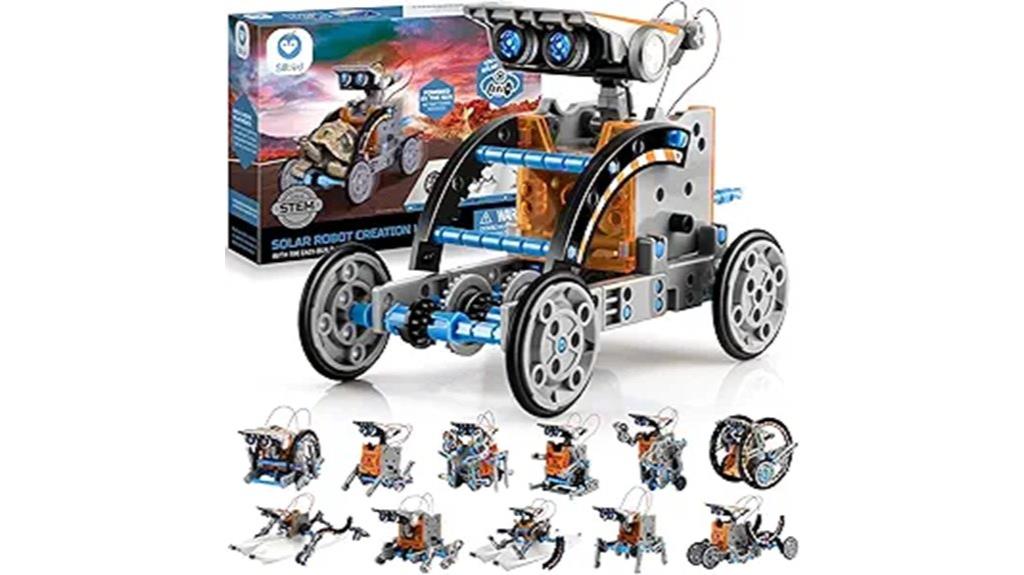
If you’re looking for a hands-on STEM activity that combines environmental awareness with creative building, the Sillbird 12-in-1 Solar Robot Building Kit is an excellent choice for kids aged 8 to 13. With 190 pieces, it allows children to construct 12 different models, from robots to cars, encouraging problem-solving and engineering skills. The kit promotes screen-free fun and introduces renewable energy concepts through its solar panel, which powers models outdoors or indoors with artificial light. While assembly can be challenging at times due to small parts and fit issues, kids will enjoy learning about solar power while developing patience and creativity.
Best For: kids aged 8 to 13 who enjoy hands-on STEM activities, creative building, and learning about renewable energy through fun, educational projects.
Pros:
- Promotes STEM learning, creativity, and problem-solving skills
- Includes 12 different models for varied building and play experiences
- Encourages outdoor and indoor play with solar-powered models
Cons:
- Assembly can be difficult due to small, sharp parts and fit issues
- Solar models may not work well indoors or on cloudy days
- Plastic components sometimes crack or don’t fit perfectly, affecting durability
Lucky Doug Solar Power Kits STEM Robot Kit for Kids 8-13

Designed specifically for kids aged 8 to 13, the Lucky Doug Solar Power Kits STEM Robot Kit offers an engaging way to explore renewable energy and engineering concepts. With 190 pieces, including gears, pistons, and tires, it allows children to build over 12 different robots, fostering creativity and problem-solving. Powered by solar energy, the robots can crawl and roll in sunlight, teaching environmental awareness. While assembly can be challenging and some parts are fragile, parental help enhances the experience. Overall, this kit combines fun with education, helping kids develop STEM skills while understanding how solar power works. It’s a great, hands-on introduction to engineering and sustainability.
Best For: children aged 8 to 13 who are interested in STEM learning, robotics, and renewable energy concepts.
Pros:
- Encourages creativity, problem-solving, and engineering skills through hands-on building.
- Promotes environmental awareness by using solar power for robot operation.
- Includes a variety of parts and multiple robot designs for versatile play and learning.
Cons:
- Assembly can be challenging for younger children and may require adult assistance.
- Some parts are fragile or small, potentially causing difficulty during construction.
- Limited solar power and motor strength may reduce robot performance in low sunlight conditions.
Ruko 1088 Smart Robot for Kids
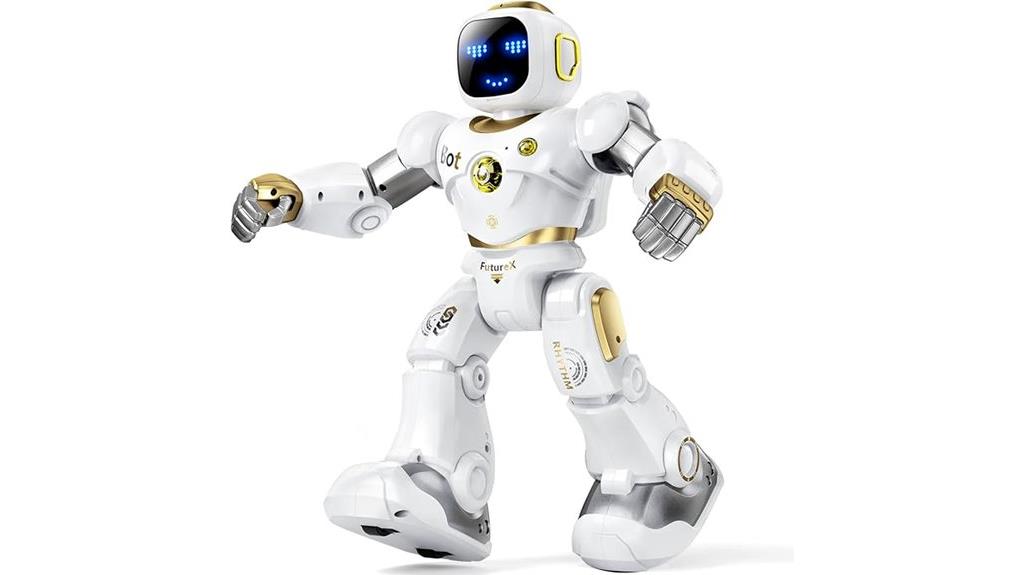
The Ruko 1088 Smart Robot for Kids stands out as a top choice for young learners aged 4 to 9 who want an engaging, programmable STEM robot. Its large size (15.8x11x4.7 inches), eye-catching gold packaging, and appealing design make it an instant hit as a gift. With four control options—APP, remote, voice, and gravity sensor—kids can interact in diverse ways. Carle, the robot’s name, can dance, follow commands, and even tell stories, while its Bluetooth speaker adds music for extra fun. Its programming features, including expressions and songs, promote creativity and learning, making STEM education both entertaining and effective.
Best For: young children aged 4 to 9 who want an engaging, programmable STEM robot that combines learning, creativity, and entertainment.
Pros:
- Multiple interactive control options (APP, remote, voice, gravity sensor) for versatile play
- Promotes STEM learning through programming, songs, stories, and expressive features
- Large, appealing design with Bluetooth speaker for added fun and social engagement
Cons:
- Requires use of the original USB-C to USB-C cable for charging; other cables are unsupported
- May be too large for very young children with limited space or handling ability
- Limited to children within the specified age range; less suitable for older kids or adults
Bottleboom STEM 13-in-1 Solar Power Robot Toys for Kids
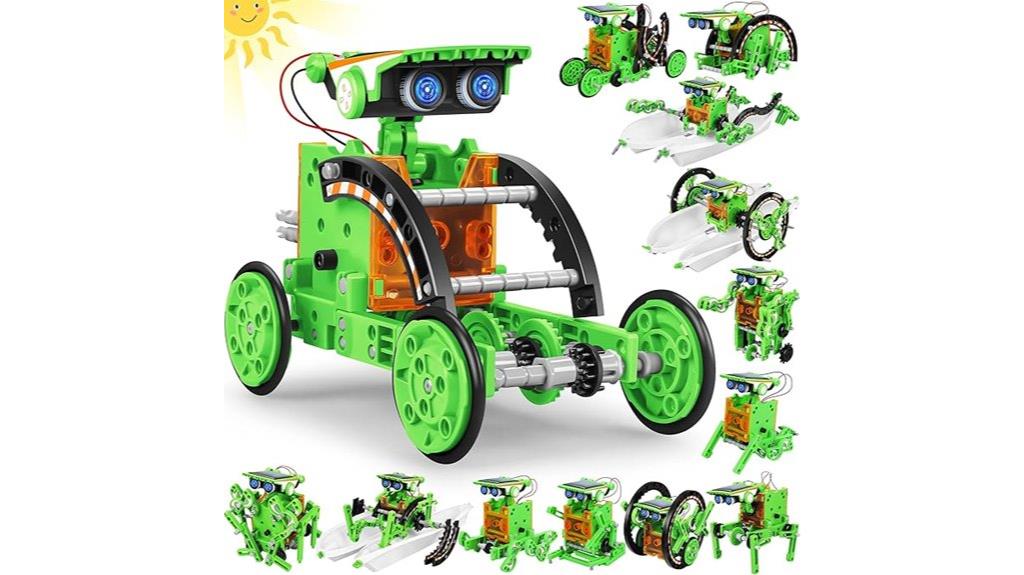
For parents seeking an engaging and educational STEM toy, Bottleboom STEM 13-in-1 Solar Power Robot Toys stands out as an excellent choice for children aged 8 to 12. This kit includes 13 different robot models built with easy-to-follow instructions, promoting hands-on learning and creativity. Made from safe, durable materials, it teaches kids about solar energy and engineering while supporting problem-solving skills. The solar-powered engines encourage eco-friendly thinking, and the parts are easily assembled and disassembled for multiple builds. Perfect for family activities and fostering curiosity, this set makes learning about science, mechanics, and renewable energy both fun and meaningful.
Best For: parents and educators seeking an engaging, educational STEM toy that promotes creativity, problem-solving, and renewable energy awareness for children aged 8-12.
Pros:
- Encourages hands-on learning and STEM education through multiple robot builds.
- Made from non-toxic, durable materials ensuring safety during play.
- Promotes eco-friendly thinking with solar-powered engines and renewable energy concepts.
Cons:
- Requires sunlight or strong light sources for optimal solar engine operation.
- Some children may find the assembly process challenging without adult supervision.
- Limited to children within the specified age range, which may not suit older or younger kids.
Drawing Robot for Kids with Learning Cards and Pens

If you’re seeking an engaging way to nurture your child’s artistic and STEM skills, the Drawing Robot for Kids with Learning Cards and Pens stands out. Made from safe ABS plastic, it’s designed for children aged 3+, with simple buttons and rechargeable USB-C power. The set includes themed learning cards, washable markers, and clear instructions. The robot guides kids step-by-step, drawing shapes and images while cheerful music plays, boosting confidence and creativity. Afterward, children can color their artwork freely. It’s an excellent tool for developing attention to detail, patience, and independence, making learning both fun and interactive for young artists.
Best For: young children aged 3 and above who are interested in developing their artistic skills and early STEM learning through interactive drawing activities.
Pros:
- Safe, child-friendly design made from durable ABS plastic with smooth edges.
- Supports early learning with guided drawing and cheerful music that boosts confidence.
- Rechargeable via USB-C, eliminating the need for batteries and ensuring easy use.
Cons:
- Slightly higher price point compared to basic drawing toys.
- Limited to the 150 learning cards included, which may require additional content for extended use.
- Some users report occasional functionality issues or the need for precise marker placement.
12-in-1 STEM Robot Kit for Kids Age 8-16

An in-1 STEM robot kit designed for kids ages 8-16 offers a versatile and engaging way to explore robotics and engineering concepts. With over 200 durable, non-toxic parts, it allows kids to build more than 12 different models, including walkers, tanks, and even a dog-bot. The kit promotes hands-on learning about gears, movement, and renewable energy through a solar panel. It encourages creativity, problem-solving, and fine motor skills while providing confidence with step-by-step instructions. Whether for fun or educational purposes, this kit makes STEM learning accessible and exciting, fostering curiosity and innovation in children.
Best For: children aged 8-16 who are interested in STEM, robotics, engineering, and hands-on learning experiences.
Pros:
- Offers over 200 durable, non-toxic parts for versatile building options.
- Promotes educational development in mechanics, renewable energy, and problem-solving.
- Encourages creativity and confidence with step-by-step instructions and reconfigurable designs.
Cons:
- Some mechanical fit issues like gearbox slipping or jamming may occur.
- Performance of solar-powered robots can vary depending on lighting conditions.
- Requires adult assistance for younger children or complex assembly steps.
LEXiBOOK Powerman Jr. Interactive Toy Robot for Kids
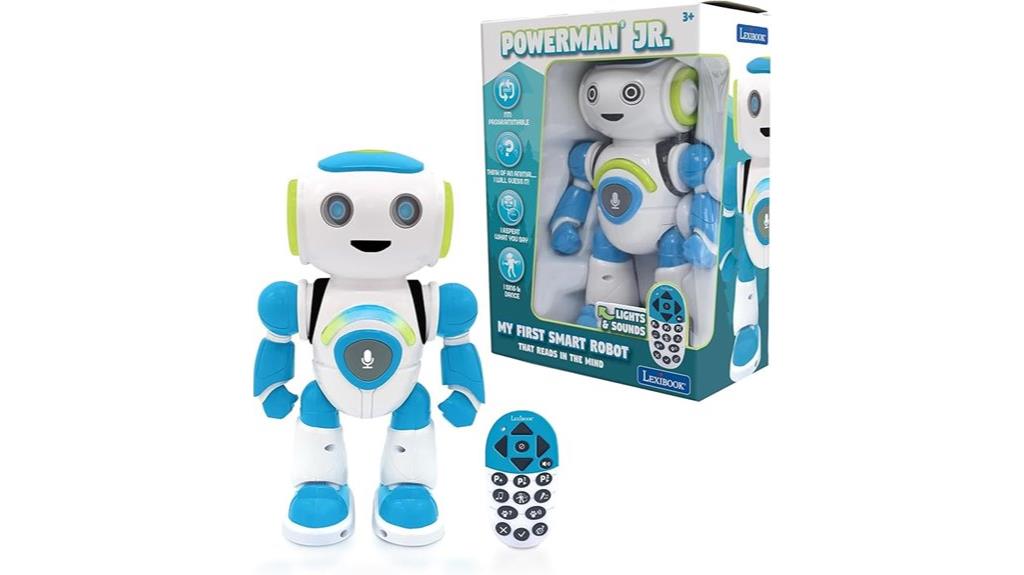
The LEXiBOOK Powerman Jr. stands out as a top choice for kids aged 3 and up who love interactive learning and fun. This engaging robot features dancing, music, animal sounds, light effects, and an explorer’s guide on planets and biodiversity. Its animal guessing game encourages critical thinking, while programmable actions and voice recording foster creativity. Kids can control it remotely, making play interactive and dynamic. With positive reviews for durability and educational value, Powerman Jr. combines entertainment with STEM learning. Although some features respond slowly and remote issues may arise, it remains a popular, versatile toy that sparks curiosity and learning in young children.
Best For: children aged 3 and above who enjoy interactive, educational, and entertaining toys that promote creativity, STEM skills, and biodiversity awareness.
Pros:
- Engaging features like animal guessing, dancing, music playback, and light effects enhance playtime fun.
- Promotes learning through an explorer’s guide about planets and biodiversity, encouraging curiosity and critical thinking.
- Durable design and positive customer reviews highlight its reliability and educational value.
Cons:
- Response speed and remote control functionality can be slow or inconsistent over time.
- Some features, such as singing and dancing, may not operate simultaneously as expected.
- Price may be a concern for some buyers if they feel features do not fully meet expectations.
Sillbird Robot Building Kit with Remote Control for Kids
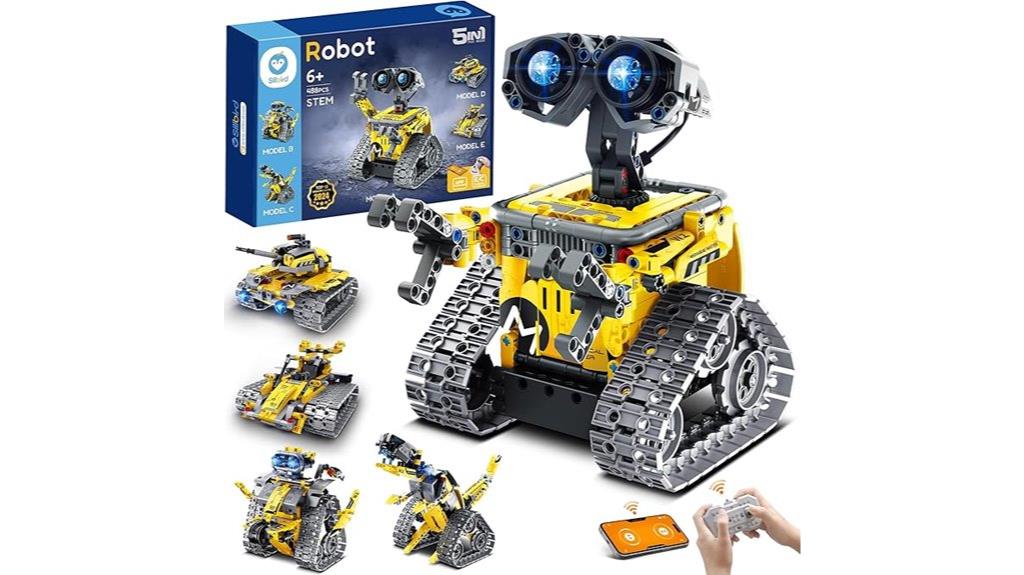
Designed for kids and teens aged 8-13, the Sillbird Robot Building Kit with Remote Control stands out as an engaging STEM toy that combines hands-on building with interactive tech features. With 488 pieces, it allows children to assemble five different models, including robots, dinosaurs, and cars, each with adjustable parts. The kit promotes critical thinking, problem-solving, and early programming skills through Bluetooth app control and remote operation. Recharging takes just a few moments, providing up to 40 minutes of play. Its clear instructions make independent or family building easy, fostering confidence and teamwork while sparking creativity and curiosity.
Best For: kids and teens aged 8-13 who enjoy hands-on building, STEM learning, and interactive tech play.
Pros:
- Promotes early programming, problem-solving, and engineering skills in a fun way
- Includes 488 pieces for building five different models with adjustable parts
- Offers Bluetooth app control and remote operation for interactive play and learning
Cons:
- Assembly may be challenging for younger children without adult help
- Requires recharging, so playtime can be limited between charges
- Some users may find the variety of models overwhelming or difficult to master all at once
Smart Robot Dog with Voice Control, Actions & App Programming for Kids

If you’re looking for a fun and educational robot that combines play with STEM learning, the Smart Robot Dog is an excellent choice for kids aged 6-12. It offers over 30 lifelike actions like kung fu moves, handshakes, and somersaults, all responding accurately to voice commands, touch screen app controls, and remote control. Kids can also program custom actions using an intuitive app, boosting creativity and logic skills. Made from safe, durable plastic, it withstands drops and provides around six hours of playtime. With features like voice recognition, app updates, and multiple control options, this robot dog makes learning engaging and interactive.
Best For: kids aged 6-12 who enjoy interactive, educational toys that combine fun with STEM learning and creative programming.
Pros:
- Offers over 30 lifelike actions and entertaining tricks, enhancing engagement.
- Supports multiple control methods including voice commands, app programming, and remote control for versatile play.
- Designed with durable, kid-safe materials and features like auto-shutdown for safety and long battery life of around 6 hours.
Cons:
- May require a smartphone or tablet for full programming features, which could be a barrier for some users.
- The app may need frequent updates, which could be inconvenient for some users.
- As an electronic toy, it might be more expensive compared to simpler plush or basic robotic toys.
Robot Building Blocks for Kids 8-16 with APP or Remote Control

For kids aged 8 to 16 who love building and programming, robot building blocks with app or remote control offer an engaging hands-on STEM experience. With over 468 colorful pieces, stickers, and a step-by-step manual, kids can create robots with glowing eyes, rotating joints, and transforming features. Controlled via Bluetooth app or remote, these robots provide multiple modes like path, voice, and gravity sensor, encouraging imagination and problem-solving. Made from safe, durable materials, they foster practical skills while promoting creativity. Despite some app connectivity issues, most kids enjoy assembling and playing with these robots, making them a fun educational gift for young STEM enthusiasts.
Best For: kids aged 8-16 who enjoy building, programming, and STEM activities with fun, interactive robot toys.
Pros:
- Encourages hands-on learning, creativity, and problem-solving skills through building and programming.
- Features multiple control modes including app Bluetooth, remote, voice, and gravity sensor for versatile play.
- Made from high-quality, durable, non-toxic materials ensuring safety and long-lasting use.
Cons:
- App connectivity issues and language compatibility problems can hinder full functionality.
- Limited movement, with some users noting that the robot’s hands do not move as expected.
- Assembly time of around 4 hours may be lengthy for some children, requiring patience and adult assistance.
Miko 3 AI-Powered Smart Robot for Kids

Miko 3 stands out as an ideal choice for parents seeking an engaging, educational companion for children aged 5-12. This AI-powered smart robot combines fun and learning with its touchscreen, supporting STEAM subjects like math, science, and storytelling. It offers personalized interactions through deep learning AI, adapting to each child’s interests to boost engagement and academic involvement. Miko 3 encourages active play with games like Freeze Dance and Hide and Seek, and its durable design guarantees safety. With extensive content from popular brands, it keeps kids motivated and curious, making education enjoyable while fostering social and emotional skills.
Best For: Parents seeking an engaging, educational, and emotionally supportive robot companion for children aged 5-12 to enhance learning, creativity, and social skills.
Pros:
- Offers personalized interactions using deep learning AI that adapt to each child’s interests, increasing engagement and academic involvement.
- Supports a wide range of STEAM subjects with interactive content from popular brands like Disney and Paramount, making learning fun.
- Encourages active play and physical movement through games such as Freeze Dance and Hide and Seek, promoting healthy activity.
Cons:
- Short battery life of around 30 minutes and slow charging can limit continuous use.
- Occasional software issues like spontaneous power-ons and waking up at night may disrupt the user experience.
- Some units have been received used with pre-existing data, indicating potential quality control concerns.
5-in-1 STEM Robot Building Toys for Boys 8-13

The 5-in-1 STEM Robot Building Toy is an excellent choice for boys ages 8 to 13 who enjoy hands-on learning and creative problem-solving. It transforms into five different characters, including a snail, engineer, snowplow, tank, and magician, sparking imagination. With 494 high-quality building blocks, kids can customize their robots, enhancing STEM skills like designing and programming. The robot features interactive lights, sounds, and AI-driven expressions, making play engaging and educational. Controlled via remote or smartphone app, it offers versatile, extended fun. This kit promotes critical thinking, creativity, and family bonding—perfect for curious minds enthusiastic to explore STEM concepts.
Best For: curious children aged 8 to 13 who enjoy building, coding, and engaging in STEM-based creative play.
Pros:
- Offers 5-in-1 transformation with engaging characters to inspire imagination.
- Includes 494 high-quality building blocks for extensive customization and hands-on learning.
- Features interactive lights, sounds, and AI expressions that enhance educational and play experiences.
Cons:
- Some small parts may be challenging for younger children; magnifying tools are recommended.
- The complexity of assembly and programming might be better suited for older children or adults.
- Requires charging and a battery, which may limit continuous play time before recharging.
Teach Tech Hydrobot Arm Kit, Hydraulic STEM Building Toy for Kids 12

If you’re looking for a hands-on robotics kit that combines engineering principles with eco-friendly power, the Teach Tech Hydrobot Arm Kit is an excellent choice for kids aged 12 and up. Powered by water, it eliminates batteries and motors, using hydraulics to operate a multi-axis robotic arm with 6 axes and 270-degree rotation. The kit promotes STEM learning by teaching mechanics, hydraulics, and problem-solving through assembly and operation. It’s sturdy, well-designed, and offers a rewarding, educational experience. While assembly can be time-consuming and requires patience, the kit’s interactive hydraulics and realistic mechanics make it a fun, eco-conscious way to explore robotics.
Best For: parents, educators, and young robotics enthusiasts aged 12 and up who want to explore STEM concepts through eco-friendly, hands-on engineering projects.
Pros:
- Promotes STEM learning by teaching hydraulics, mechanics, and problem-solving skills.
- Eco-friendly design powered solely by water, requiring no batteries or motors.
- Well-designed, sturdy construction with detailed instructions for engaging assembly.
Cons:
- Assembly can be time-consuming and may require adult supervision and patience.
- Hydraulic tubing and parts may loosen or wear over time, needing re-bleeding or repairs.
- Some users found the packaging and initial setup challenging or tedious.
Factors to Consider When Choosing Interactive STEM Robots for Kids

When selecting an interactive STEM robot for a kid, I always consider their age and skill level to guarantee the robot is appropriate and engaging. I also look at the control options and educational features to match their interests and learning needs. Finally, I check the power source flexibility to make sure it fits into your setup and usage preferences.
Age Appropriateness
Choosing the right interactive STEM robot depends heavily on the child’s age and developmental stage. It’s crucial to select a robot with a recommended age range that aligns with the child’s cognitive abilities to guarantee engagement and success. For young kids aged 3-5, look for simple, intuitive robots with basic controls and playful features to keep them interested without overwhelming them. Children aged 6-8 benefit from robots that introduce foundational coding concepts through user-friendly interfaces and manageable complexity. Older kids, between 9-12, can handle more advanced robots with programmable features, multiple control options, and detailed assembly instructions. Picking age-appropriate robots helps prevent frustration, boosts confidence, and supports steady skill development as they grow.
Skill Level Compatibility
Matching a robot’s complexity and features to a child’s skill level is vital for fostering both engagement and learning. I recommend considering the child’s previous experience with STEM toys to guarantee the robot presents a manageable challenge. For beginners, simple control options like buttons or basic programming may be ideal, while more advanced children might benefit from robots with expandable features or customizable coding interfaces. It’s also essential to check the manufacturer’s recommended age and skill level to avoid frustration. Adjustable difficulty settings can help the robot grow with the child, maintaining interest as their skills develop. By aligning the robot’s capabilities with your child’s abilities, you create a positive learning environment that’s both stimulating and achievable.
Control Options Variety
A wide range of control options can substantially enhance how kids interact with STEM robots, making the experience more engaging and adaptable to their learning styles. Different control methods, like remote controls, smartphone apps, voice commands, and sensors, cater to various preferences and skill levels. Multiple options allow children to develop a variety of skills, from fine motor coordination with remote controls to coding logic through app programming. They also increase the robot’s versatility, letting it perform different tasks or interact in unique ways. Ease of switching between control modes and compatibility across devices are key factors for a smooth user experience. Offering diverse control options encourages kids to experiment and get creative, fostering a deeper connection with their STEM robot.
Educational Features Focus
When selecting an interactive STEM robot for kids, focusing on its educational features is vital to guarantee meaningful learning. I look for robots that teach core concepts like coding, engineering, and problem-solving through engaging activities. Multiple learning modes, such as visual programming, sensor-based challenges, or step-by-step tutorials, help deepen understanding and cater to different learning styles. Guided challenges, quizzes, and STEM-focused missions reinforce key concepts while keeping kids motivated. It’s also important that the robot offers expandable features or software updates, ensuring ongoing educational value as skills develop. Ultimately, clear, age-appropriate instructions and support resources are essential so kids can learn independently or with guidance, making the experience both effective and enjoyable.
Power Source Flexibility
Choosing the right power source for an interactive STEM robot is essential because it affects how and where kids can use the device. I recommend considering whether the robot runs on batteries, solar energy, water, or a combination, to match your preferred energy source for convenience and sustainability. Power source flexibility impacts usability in various environments—indoor, outdoor, or off-grid. Robots with multiple power options can extend playtime and adapt to different situations, especially when one source runs out or isn’t available. The availability and durability of the power source, like rechargeable batteries or solar panels, also influence long-term costs and maintenance. Selecting a robot with versatile power options ensures continuous operation, keeping kids engaged and learning without interruptions.
Durability and Safety
Ensuring durability and safety is vital when selecting an interactive STEM robot for kids, as these features directly impact the device’s longevity and the child’s well-being. I look for robots made from non-toxic, BPA-free plastics with smooth edges to prevent injuries during play. A sturdy construction with reinforced joints and tough materials is essential to withstand drops and rough handling. Safety features like auto-shutdown during collisions or obstructions help protect internal components and guarantee safe operation. I also verify that the robot meets safety standards such as ASTM or CE certifications. Additionally, I prefer rechargeable power sources with overcurrent protection, which minimize risks of overheating or short circuits. Prioritizing these aspects ensures the robot is safe, durable, and built to last through active play.
Ease of Assembly
The ease of assembly plays a significant role in how much enjoyment and learning a child can get from an interactive STEM robot. If a robot comes pre-assembled, kids can start exploring right away, but kits that require building can boost hands-on skills. Look for sets with clear, step-by-step instructions and visual guides—these make independent assembly easier, especially for younger children. Parts designed with snap-fit or easy-to-connect mechanisms also reduce frustration and speed up the process. It’s important to match the complexity of assembly with the child’s age and skill level to prevent overwhelming them. Additionally, check whether adult help or tools like pliers are needed, as extra equipment can complicate setup and impact the overall experience.
Budget Considerations
Budget considerations are crucial when selecting an interactive STEM robot for kids, as prices can range widely from around $20 for basic models to over $200 for more advanced kits. It’s important to determine your budget upfront and consider whether additional accessories or expansion sets are necessary for a complete learning experience, as these can add to the total cost. When comparing options, evaluate if the robot’s features and educational value justify the higher price, especially versus entry-level models. Keep in mind that cheaper robots might have limited durability, fewer programming options, or shorter battery life, which could impact long-term use. Striking a balance between affordability, quality, and educational content helps ensure your investment supports both your child’s learning and entertainment.
Frequently Asked Questions
How Do Interactive STEM Robots Support Different Age Groups?
Interactive STEM robots support different age groups by offering tailored challenges and learning experiences. For younger kids, I find they focus on basic coding and simple tasks, sparking curiosity. For older children, these robots introduce more complex programming and problem-solving, keeping them engaged. I love how adaptable these robots are, growing with the child’s skills and interests, making learning fun and meaningful at every stage.
Are These Robots Suitable for Children With Special Needs?
Yes, many interactive STEM robots are suitable for children with special needs. I’ve seen how adjustable features, sensory-friendly designs, and customizable programming help children engage comfortably and build confidence. I recommend choosing robots with simple interfaces and sensory options. These tools can foster learning, improve motor skills, and boost social interaction, making STEM education accessible and enjoyable for children with diverse needs.
What Safety Features Are Included in These STEM Robots?
I’ve looked into these STEM robots, and I can tell you they prioritize safety with features like rounded edges, non-toxic materials, and sturdy construction to prevent injuries. Many also include automatic shut-off functions if they detect overheating or malfunction. Additionally, some have parental controls and secure charging ports. I believe these safety measures are designed to make learning fun without compromising your child’s well-being, giving you peace of mind.
Can These Robots Be Integrated Into Classroom Learning?
Absolutely, these robots can be integrated into classroom learning. I find that they enhance engagement and reinforce STEM concepts through hands-on activities. Teachers often use them for collaborative projects, coding exercises, and problem-solving challenges. Their versatility makes them suitable for various age groups and curriculum goals, fostering creativity and critical thinking. Incorporating these robots transforms traditional lessons into interactive, fun experiences that motivate students to learn more actively.
How Do I Update or Upgrade the Software of These Robots?
Updating the software on these robots is straightforward; I usually connect them via Bluetooth or Wi-Fi, then use the dedicated app or website. Interestingly, over 60% of parents update their robots regularly to open new features and guarantee smooth performance. I recommend checking the manufacturer’s instructions for specific steps, but generally, I just download the latest firmware, follow prompts, and enjoy the enhanced capabilities that keep learning fun and engaging.
Conclusion
So, there you have it—your ultimate lineup of robots ready to turn your kid into a future tech genius. Who knew learning could be this fun? Just remember, with these kits, your child might soon be outsmarting you, asking for a robot assistant for chores. But hey, at least you’ll have the coolest kid on the block, armed with gadgets that make homework feel more like play. Cheers to raising tiny tech wizards!