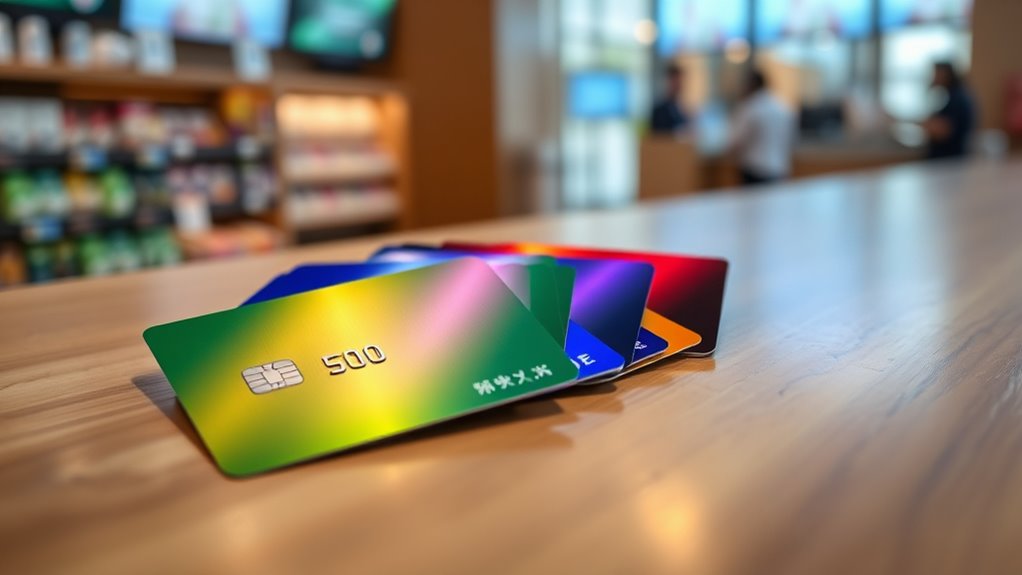

Loyalty program NFC cards let customers tap a physical card with a compatible phone to open a digital stamp card, rewards page, or signup link. From this lineup, I’d put the 20-piece waterproof NXP NTAG215 pack first for a small business that wants a defined chip and water-resistant cards; the 40-piece printable NTAG215 pack stands out for custom branding, while the 100-piece NTAG216 pack offers more card memory for data-heavy uses. The main tradeoffs are chip capacity, durability, printability, and how many cards you need before reordering. Blank NFC cards do not include a loyalty platform, so you’ll need to program each card and choose the destination customers tap to reach. Read on for the full breakdown and guidance on matching a card to your program.

Get kitchen staples and gadgets delivered free with Prime
- Fast, free delivery on millions of items
- Prime Video, Amazon Music and more included
- Member-only deals all year
Key Takeaways
- NTAG215 is the most represented chip in this lineup, with pack sizes ranging from 10 to 200 cards; that gives businesses room to start small or stock up without changing chip families.
- NTAG216 cards offer a capacity alternative: the 100-piece and 80-piece options suit setups needing more memory, though many basic loyalty links do not need that extra space.
- Pack size changes the buying decision more than the card format: 10- and 20-card packs help with pilots, while the 100- and 200-card packs fit established programs with a repeatable encoding process.
- Printing and waterproof claims are not consistent across listings: the 40-piece NTAG215 listing specifically says printable, while several other options call out waterproof PVC. Check the exact product details and your printer compatibility before committing.
- The Ultralight EV1 10-pack differs from the NTAG215 and NTAG216 choices; its stated 48-byte capacity makes it a more limited fit for simple tasks, not a like-for-like substitute for higher-memory cards.


| loyalty program nfc card | Material | Chip | Memory | Quantity |
|---|---|---|---|---|
| 50pcs NFC Cards NTAG215 NFC Ta | PVC | NTAG215 | 540 bytes | — |
| YARONGTECH NFC Ultralight EV1 | PVC | NFC Ultralight EV1 | — | — |
| 20pcs Rewritable NFC Cards NTA | PVC | NTAG215 | 504 bytes | — |
| NTAG215 NFC Cards | PVC | NTAG215 | — | — |
| 100pcs White NFC Cards Rewrita | PVC | NTAG215 | 504 bytes | — |
| 20pcs NXP NTAG215 NFC Cards | PVC | NXP NTAG215 | 540 bytes | 20 cards |
| LESSBLE 20-Pack NFC Cards | PVC | NTAG215 | 540 bytes | 20 cards |
| 30PCS NFC Cards NFC Tags Progr | PVC | 215 chip (manufacturer not specified) | 540 bytes | 30 cards |
| 10pcs NTAG215 NFC Tags | PVC | NTAG215 | 504 bytes | 10 tags |
| LESSBLE 10-Pack NFC Cards | PVC | NTAG215 | 540 bytes | 10 cards |
| 20 Pcs NFC Cards | PVC | NTAG215 | 540 bytes | 20 cards |
| 100pcs White NFC Cards Rewrita | PVC | NTAG216 | 888 bytes stated | 100 cards |
| 80 Pcs NTAG216 CR80 NFC Cards | PVC | NTAG216 | — | 80 cards |
| 200pcs White NFC Cards Rewrita | PVC | — | 504 bytes | 200 cards |
More Details on Our Top Picks
50pcs NFC Cards NTAG215 NFC Tags Blank Programmable NFC Business Cards Compatible with All NFC-Enabled Devices
For a small business setting up tap-to-open loyalty cards, I’d favor this 50-card pack for its balance of quantity and rewritable capacity. Its NTAG215 chip has 540 bytes of memory, slightly more than the 504-byte NTAG215 cards from 20pcs Rewritable NFC Cards NTAG 215 PVC Business Cards Black and the 40-piece white NTAG215 pack. That headroom can help when storing a longer URL or other compact customer-facing information, though the card itself does not provide a loyalty database or track visits. Waterproof PVC and a stated 10-year service life suit cards that customers carry regularly. The tradeoff is a larger initial batch than a very small pilot needs, and programming depends on compatible NFC hardware; some iPhone models may only read rather than write these cards.
Pros:- 50-card quantity suits a small customer rollout without committing to a bulk 100-card batch.
- 540-byte NTAG215 memory exceeds the 504-byte capacity listed for several competing cards here.
- PVC cards are described as waterproof and rated for a 10-year service life.
- Rewritable up to 100,000 times, allowing the encoded destination to be changed.
Cons:- Does not include loyalty software or a way to count customer visits.
- Some iPhone models may read NFC data but may not write it.
- Cannot be used by customers whose devices lack NFC.
Best for: Independent cafés, salons, and neighborhood shops preparing a first batch of reusable tap-to-open loyalty cards.
Not ideal for: Businesses that need built-in visit tracking, customer accounts, or a turnkey loyalty platform; these are programmable cards, not a complete loyalty system.
- Chip:NTAG215
- Memory:540 bytes
- Material:PVC
- Card size:54 × 85.5 × 0.8 mm
- Package quantity:50 cards
- Rewrites:Up to 100,000 times
- Stated service life:10 years
- Compatibility:NFC-enabled smartphones and devices
Our verdict“Choose this pack for a durable, programmable starting batch when your loyalty experience will be delivered through an NFC-linked page or app.”
YARONGTECH NFC Ultralight EV1 13.56MHz 48 Bytes Contactless PVC Key Card – 10 Pack
I’d assign this 10-card set to a deliberately simple loyalty setup: a card can carry a short identifier or compact instruction, but its 48-byte storage leaves little room for anything elaborate. That makes it a sharper contrast with the NTAG215 options in this roundup, including the 50pcs NFC Cards NTAG215, which lists 540 bytes and is better suited to storing a longer URL. The YARONGTECH uses a 7-byte manufacturer-programmed UID, which may be useful when a compatible reader-based system identifies cards by their unique IDs. It is a poor fit for casual phone-only programming, however: the product specifies a compatible NFC reader, and it lists no advanced encryption. I’d choose it only when the loyalty workflow already supports this chip type and its limited memory.
Pros:- 10-card pack is suited to a small, controlled deployment.
- 7-byte manufacturer-programmed UID can support systems that identify cards by UID.
- Lockable memory regions provide a way to protect selected stored data from changes.
- Credit-card-size PVC format is convenient to carry.
Cons:- 48-byte storage is far below the 504–540 bytes listed for the NTAG215 alternatives.
- Requires a compatible NFC reader, limiting straightforward phone-based setup.
- Product data does not list advanced security or encryption.
Best for: Operators with an existing reader-based loyalty or access system that can identify Ultralight EV1 cards by UID.
Not ideal for: Small shops wanting customers to tap a card with a phone to open a rich loyalty page; 48 bytes is restrictive and a compatible reader is required.
- Chip:NFC Ultralight EV1
- Storage:48 bytes
- Operating frequency:13.56 MHz
- Material:PVC
- Package quantity:10 cards
- UID:7-byte manufacturer-programmed UID
- Data transfer rate:106 kbit/s
- Data retention:10 years
- Write cycles:100,000 cycles
Our verdict“Pick this only for a compatible reader-based system that needs a small batch of simple identifier cards, not for flexible phone-programmed loyalty links.”
20pcs Rewritable NFC Cards NTAG 215 PVC Business Cards Black
The standout here is presentation: these black PVC cards offer a distinct base for a branded loyalty design, while the 40-piece white NTAG215 cards provide a more conventional printable surface and twice the quantity. For a boutique or barbershop that wants a compact batch with a recognizable look, the 20-card count can suit a trial or a limited membership group. The NTAG215 chip and read-write lock function support programmable use, but the listed memory is 504 bytes, so I’d keep the card’s encoded content focused on a loyalty URL or similarly compact payload. Printing needs attention too: these cards are not suitable for inkjet printers, and customizing them may take compatible equipment or outside printing. Compared with the 50-card NTAG215 pack, this set favors appearance over capacity.
Pros:- Black PVC provides a different visual starting point from the white cards elsewhere in this roundup.
- 20-card quantity works for a pilot or limited membership group.
- Rewritable NTAG215 cards include a read-write lock feature.
- Waterproof PVC is suited to cards carried in wallets or used at a counter.
Cons:- Not suitable for inkjet printers, which can complicate in-house customization.
- 504-byte memory is less than the 540 bytes listed for the 50-card NTAG215 pack.
- Programming and personalization may require some technical knowledge or suitable equipment.
Best for: Boutiques, salons, and membership businesses seeking a small, visually distinctive batch of programmable loyalty cards.
Not ideal for: Businesses relying on inkjet printing or needing a large, uniform batch without arranging compatible card customization.
- Chip:NTAG215
- Memory:504 bytes
- Material:PVC
- Color:Black
- Card size:8.55 × 5.4 cm
- Package quantity:20 cards
- Feature:Read-write lock functionality
Our verdict“Choose this set when a black branded card matters more than a larger batch or easy inkjet printing.”
NTAG215 NFC Cards, White, 40 pcs, Printable & Programmable
I’d put this white 40-card set near the top for businesses that want to print a consistent loyalty-card design and program each card. Its printable white PVC surface is a more natural fit for a standard branded campaign than the black cards from 20pcs Rewritable NFC Cards NTAG 215 PVC Business Cards Black, which are explicitly unsuitable for inkjet printers. The 504-byte NTAG215 memory is in line with that black set, but below the 540 bytes listed for the 50pcs NFC Cards NTAG215. A stated read distance of 0–8 cm describes close-range taps, not a way to reach customers from across a counter. I’d also check that your printer and NFC programming workflow are compatible before buying; the cards do not come with a loyalty platform or reader.
Pros:- White printable surface supports branded card designs.
- 40-card quantity suits a limited campaign or modest customer base.
- Waterproof PVC is practical for cards handled and carried regularly.
- 13.56 MHz NTAG215 format is compatible with NFC apps and devices.
Cons:- 504-byte storage is less than the 540 bytes listed for the 50-card NTAG215 pack.
- Programming requires an NFC-enabled phone or reader, which is not included.
- Printer compatibility and the actual printing method may need checking before customization.
Best for: Small businesses planning a coordinated printed loyalty-card campaign and able to program cards with an NFC-enabled device or reader.
Not ideal for: Buyers who need a complete loyalty system, lack compatible printing or programming equipment, or want a larger batch than 40 cards.
- Chip:NTAG215
- Usable storage:504 bytes
- Material:PVC
- Color:White
- Card size:85 × 54 × 0.8 mm
- Package quantity:40 cards
- Frequency:13.56 MHz
- Read distance:0–8 cm
Our verdict“Choose this pack for a modest branded loyalty run if you already have a compatible way to print and program the cards.”
100pcs White NFC Cards Rewritable NTAG215 Blank NFC Tags Programmable PVC Cards
When a loyalty program needs cards for a broad customer base, this 100-card batch avoids the smaller replenishment cycle of the 40-piece printable NTAG215 set. It uses a standard NTAG215 chip with 504 bytes of memory, matching the capacity listed for that 40-card option but falling short of the 540 bytes in the 50pcs NFC Cards NTAG215. The white glossy PVC cards are described as waterproof and rewritable, making them suitable for carrying a simple loyalty link or other compact NFC content. The tradeoff is that bulk quantity is only useful if you can issue and program the cards: no writing tools are included, and the product description does not identify a loyalty app, tracking system, or printing method. I’d favor it for established workflows, not a first-time setup.
Pros:- 100-card quantity suits a larger customer rollout.
- NTAG215 cards are rewritable for updating encoded content.
- Waterproof PVC and glossy finish suit regular handling.
- Standard 504-byte memory can hold a compact loyalty link or similar content.
Cons:- Writing tools are not included, so programming requires separate compatible equipment.
- 504-byte memory is below the 540 bytes listed for the 50-card NTAG215 pack.
- No loyalty software or visit-tracking function is specified.
Best for: Cafés, studios, and retail teams issuing cards to a large customer group through an existing NFC programming workflow.
Not ideal for: Businesses testing NFC for the first time or needing a ready-made loyalty platform, included writer, or confirmed printing setup.
- Chip:NTAG215
- Memory:504 bytes
- Material:PVC
- Color:White
- Finish:Glossy
- Card size:8.55 × 5.4 cm
- Package quantity:100 cards
Our verdict“Choose this bulk pack when you already have a way to program cards and need to issue a straightforward NFC-linked loyalty experience at scale.”
20pcs NXP NTAG215 NFC Cards, White, Programmable & Waterproof
For a loyalty program where the card’s chip identity matters as much as its capacity, this set specifies genuine NXP NTAG215 chips and 540 bytes of memory. That gives it a clearer hardware specification than the 10-pack NTAG215 cards from LESSBLE, whose listing names the chip family but does not explicitly state the manufacturer. Its waterproof PVC construction and standard card format suit wallets, counters, or handouts to regular customers. The tradeoff is quantity: the 20-card pack is less suited to a launch that needs broad distribution than the 30-card product in this group. You will also need an NFC-enabled device and programming app to set up the cards; they are blank NFC media, not a complete loyalty platform. Skip them if you need YOTO compatibility.
Pros:- Specifies genuine NXP NTAG215 chips
- 540 bytes of memory for NFC-recorded content
- Waterproof PVC is suited to frequent handling
- Standard wallet-card dimensions
Cons:- A 20-card pack may fall short for a broad customer rollout
- Requires compatible NFC hardware and an app to program
- Not compatible with YOTO devices
Best for: Small shops that want a 20-card loyalty pilot and prefer a listing that explicitly identifies the NXP chip manufacturer.
Not ideal for: Businesses distributing cards at high volume or buyers who need YOTO compatibility or a ready-made loyalty tracking system.
- Chip:NXP NTAG215
- Memory:540 bytes
- Material:PVC
- Size:3.37 x 2.12 inches
- Color:White
- Quantity:20 cards
Our verdict“Choose this 20-pack if explicit NXP chip identification matters more than having the larger card count offered by the 30-card option.”
LESSBLE 20-Pack NFC Cards, Rewritable NFC 215 Tags, CR80 Size, Waterproof PVC, White
Rewritable NTAG215 cards make this 20-pack a practical fit for loyalty schemes that may change their tap destination, such as a sign-up page or digital punch card. Its CR80 dimensions match the standard card format, while waterproof PVC is suitable for cards carried and handled daily. Compared with the 20-card NXP-branded set, LESSBLE emphasizes rewritability and common uses rather than explicitly naming NXP as the chip maker. That distinction may matter to buyers who prioritize a specified manufacturer. The cards still need an NFC-capable phone and programming app, and the listing does not describe a loyalty management service or automatic visit tracking. It also rules out Yoto devices, so treat these as programmable NFC carriers, not as a complete rewards system.
Pros:- Rewritable NTAG215 memory supports changing the stored NFC content
- Standard CR80 card dimensions fit wallets and card holders
- Waterproof PVC suits repeated customer handling
- 20 cards provide a manageable pilot quantity
Cons:- Programming requires a smartphone NFC app
- Does not include loyalty software or customer-visit tracking
- Not compatible with Yoto devices
Best for: Independent cafés or salons testing a small loyalty program with tap destinations that may need updating.
Not ideal for: Buyers who need a named NXP-manufactured chip, an included loyalty platform, or Yoto compatibility.
- Chip:NTAG215
- Memory:540 bytes
- Material:PVC
- Color:White
- Size:3.37 x 2.12 inches (CR80)
- Quantity:20 cards
- Item weight:6 g
Our verdict“Pick this set for a small loyalty trial where simple rewritable cards matter more than an explicitly identified chip manufacturer.”
30PCS NFC Cards NFC Tags Programmable NFC Business Cards 215 Chips Compatible with NFC Devices
With 30 cards in the pack, this option suits a small business that wants to issue cards across a wider customer base before restocking. The listing states 540 bytes of memory, PVC construction, and rewrites up to 100,000 times, giving buyers useful capacity and reuse details that the LESSBLE 20-pack listings do not provide. Its stated ten-year service life may also appeal for longer-running distribution, though actual use depends on handling and setup. The tradeoff is less certainty about chip branding: the title says “215 chips,” but unlike the NXP-branded 20-pack, it does not identify NXP as the manufacturer. Some iPhone models may read but not write NFC data, so check your programming device before buying. These cards also do not work for non-NFC RFID applications.
Pros:- 30-card pack supports a wider initial distribution
- 540 bytes of stated memory
- Listing specifies up to 100,000 rewrites
- Waterproof PVC and a stated ten-year service life
Cons:- Chip manufacturer is not identified as NXP
- Some iPhone models may read NFC but not write to cards
- Not suitable for non-NFC RFID applications or strong magnetic fields
Best for: Small businesses preparing a broader card handout and wanting stated rewrite and service-life figures.
Not ideal for: Buyers who require an explicitly NXP-branded chip or need to program cards with an iPhone model that cannot write NFC data.
- Chip:215 chip (manufacturer not specified)
- Memory:540 bytes
- Material:PVC
- Size:3.35 x 2.13 x 0.03 inches
- Quantity:30 cards
- Rewrites:Up to 100,000 times
- Stated service life:10 years
- Compatibility:NFC-enabled mobile phones and devices
Our verdict“Choose this 30-pack when distribution size and stated rewrite capacity matter more than a named chip manufacturer.”
10pcs NTAG215 NFC Tags – Programmable NFC Cards Compatible with NFC Mobile Devices
This 10-card black set makes sense for a limited trial: a shop can test a tap-to-join or digital loyalty link without handing out a large batch of cards. Its polished black PVC gives it a different appearance from the white 10-card LESSBLE set, while both use NTAG215 chips and standard card dimensions. One specification to check is memory: this listing states 504 bytes, less than the 540 bytes listed for the LESSBLE pack and the other NTAG215 options here. The cards are rewritable, but the listing warns that a card cannot be reset after it is set to read-only. They are also not suitable for use on metal surfaces. That makes this a modest, appearance-conscious test option, rather than my pick for a bigger rollout.
Pros:- 10-card quantity suits a limited trial
- Black polished finish offers an alternative to white cards
- Rewritable NTAG215 cards can store NFC content
- Waterproof PVC and standard card dimensions
Cons:- Lists 504 bytes of memory, less than the 540 bytes listed by other options
- A card cannot be reset once set to read-only
- Not suitable for use on metal surfaces
Best for: A small retailer testing a loyalty-card concept with a compact quantity and a black card finish.
Not ideal for: Businesses needing more than ten cards, the listed 540-byte capacity, or cards mounted directly on metal.
- Chip:NTAG215
- Memory:504 bytes
- Material:PVC
- Color:Black
- Finish:Polished
- Size:3.36 x 2.12 x 0.03 inches (85.5 x 54 x 0.86 mm)
- Waterproof:Yes
- Rewritable:Yes; cannot be reset after setting to read-only
- Quantity:10 tags
Our verdict“Pick this black 10-pack for a small loyalty test, but choose the LESSBLE 10-pack if listed memory capacity is your priority.”
LESSBLE 10-Pack NFC Cards, Rewritable NTAG215 Tags, CR80 Size, Waterproof PVC, White
For a business that wants to test a loyalty-card idea with only a few customers, this 10-pack of white, rewritable NTAG215 cards keeps the initial batch compact while retaining the 540-byte capacity listed for larger options. Its CR80 format fits standard card holders, and waterproof PVC is a sensible choice for cards that customers keep in a wallet. Compared with the black 10-card NTAG215 set, LESSBLE specifies 540 bytes rather than 504, but gives up the alternative finish. It also offers half the quantity of LESSBLE’s own 20-pack, which is a benefit for a small pilot but a limit if the program catches on. Programming requires a smartphone NFC app; the cards themselves do not track visits or administer rewards, and they are not Yoto-compatible.
Pros:- 10 cards suit a small pilot without a larger batch
- 540 bytes of rewritable NTAG215 memory
- Waterproof PVC and wallet-friendly CR80 dimensions
- White cards provide a simple, consistent surface
Cons:- Smaller quantity than the LESSBLE 20-pack
- Requires a smartphone NFC app for programming
- Does not provide loyalty tracking software and is not Yoto-compatible
Best for: A café, studio, or small shop trialing a digital loyalty link with a short run of white cards.
Not ideal for: Businesses ready to distribute cards widely or buyers who need a built-in rewards platform, Yoto compatibility, or non-NFC use.
- Chip:NTAG215
- Memory:540 bytes
- Material:PVC
- Color:White
- Size:3.37 x 2.12 inches (CR80)
- Rewritable:Yes
- Quantity:10 cards
- Weight:6 g
Our verdict“Choose this set to test a white-card NFC loyalty flow on a small scale before ordering a larger batch.”
20 Pcs NFC Cards – NTAG215 Programmable NFC Tags, Waterproof PVC, 540 Bytes, Compatible with NFC Devices
For a café or salon trialing tap-to-open loyalty links, this 20-card NTAG215 set keeps the initial batch manageable while providing more stated memory than the 504-byte NTAG215 cards in the 200-piece option. That extra room can help when encoding a longer link or additional card data, though usable space depends on the NFC app and formatting. Its waterproof PVC construction suits cards handled at a counter, and the cards can be rewritten up to 100,000 times according to the product data. Compared with the 80-piece NTAG216 set, this is a smaller, lower-capacity choice, not the pick for distributing cards across several locations. Also check phone support before rollout: some iPhone models may read but not write, and these cards need NFC-compatible devices.
Pros:- 20-card batch suits a limited pilot or single counter
- 540 bytes of stated memory, more than the 504-byte NTAG215 option in this group
- Waterproof PVC is suited to frequent handling
- Rated for up to 100,000 rewrites
Cons:- Smaller batch than the 80- and 100-card alternatives
- Some iPhone models may read data but not write it
- Requires NFC-capable devices and is not intended for strong magnetic fields
Best for: Independent cafés, salons, or pop-up shops testing a small NFC loyalty-card run before committing to a larger batch.
Not ideal for: Businesses issuing cards across multiple branches or encoding larger records; the 20-card quantity and lower memory than NTAG216 options may be limiting.
- Quantity:20 cards
- Chip:NTAG215
- Memory:540 bytes
- Dimensions:54 x 85.5 mm (3.35 x 2.13 inches)
- Material:PVC
- Rewrite cycles:Up to 100,000
- Service life:10 years
- Compatibility:NFC-enabled devices, including iPhone and Android phones
Our verdict“Choose this set for a small loyalty-card trial where waterproof construction and a modestly higher stated memory capacity matter more than bulk quantity.”
100pcs White NFC Cards Rewritable NTAG216 Blank NFC Tags Programmable PVC Cards
When a loyalty program needs a substantial card batch and room for more data, this 100-card NTAG216 set is a more natural fit than the 20-piece NTAG215 option. Its stated 888-byte memory gives more capacity for encoded content than the NTAG215 cards in this group, although system overhead can reduce the space available in practice. The standard wallet-card dimensions also make these straightforward to carry and distribute at checkout. Waterproof PVC supports everyday use, while the read/write lock feature can help keep a finished card’s contents from being altered. Compared with the 80-piece NTAG216 set, this offers more cards but less product detail about lifespan and rewrite durability. I’d choose it for quantity and capacity, not for a rollout that needs well-documented long-term performance.
Pros:- 100 cards support a larger distribution than the 20-piece options
- NTAG216 chip with 888 bytes of stated memory
- Waterproof PVC and standard wallet-card dimensions
- Read/write lock function is available
Cons:- Usable memory may be below the stated capacity because of system overhead
- Long-term durability details are limited
- Requires NFC-compatible devices and tools to program
Best for: Retailers, cafés, and event operators preparing a larger loyalty-card distribution with room for more encoded information per card.
Not ideal for: Small businesses issuing only a few dozen cards, or operators who need clearly stated lifespan and rewrite-cycle specifications before buying.
- Quantity:100 cards
- Chip:NTAG216
- Memory:888 bytes stated
- Dimensions:8.55 x 5.4 cm (3.36 x 2.12 inches)
- Material:PVC
- Lock function:Read/write lock supported
- Card format:Standard credit-card size
Our verdict“Pick this NTAG216 batch when card quantity and higher stated memory take priority over detailed durability information.”
80 Pcs NTAG216 CR80 NFC Cards, Printable Rewritable PVC Tags for Digital Business Cards & Smart Devices
This set is the clearest match for a loyalty program that needs cards to carry both a tap function and visible branding. Its printable CR80 PVC cards can be customized for a shop’s identity, while the NTAG216 chip and 888-byte capacity offer more stated storage than the NTAG215 sets in this lineup. Waterproof material and a listed 100,000 write/erase cycles suit repeated handling and edits during setup. Compared with the 100-piece NTAG216 option, it supplies fewer cards but provides more detail on lifespan, NFC standard, and rewrite cycles—useful when planning a defined rollout. The tradeoff is compatibility friction: iOS may require a specific app, and some readers may not read these cards reliably. They are also not intended for 125 kHz readers or Amiibo use.
Pros:- Printable CR80 format supports visible loyalty-program branding
- NTAG216 chip with 888 bytes of stated storage
- Waterproof PVC and listed 100,000 write/erase cycles
- Specifications include NFC Type 2 and ISO 14443 Type A
Cons:- Some iOS users may need a specific app to read or write cards
- Some card readers may have compatibility or read issues
- Not suitable for 125 kHz readers or Amiibo use
Best for: Small businesses that want branded, printable loyalty cards and need NTAG216 capacity for a tap-linked loyalty page or customer information.
Not ideal for: Teams using 125 kHz access readers, Amiibo systems, or a workflow that cannot accommodate app-dependent iOS writing and reader checks.
- Quantity:80 cards
- Chip:NTAG216
- Storage:888 bytes
- Dimensions:85.5 x 54 mm (3.35 x 2.13 inches)
- Material:PVC
- Frequency:13.56 MHz
- Standard:NFC Type 2, ISO 14443 Type A
- Lifespan and write cycles:10 years; 100,000 erase/write cycles
Our verdict“Choose this set when branded printability and documented NTAG216 specifications matter more than getting the largest card quantity.”
200pcs White NFC Cards Rewritable NTAG215 Blank NFC Tags Programmable PVC Cards
For operators who need to hand out cards at scale, the standout here is simple: 200 NTAG215 cards in one batch. That quantity exceeds the 100-piece NTAG216 set and can suit a busy venue or multi-location distribution, but each card has 504 bytes of memory, less than the 540-byte NTAG215 option and well below the 888-byte NTAG216 cards. For a basic loyalty setup that points to a short URL or landing page, the lower capacity may be enough; it is less appealing if the card needs to hold more data. Waterproof PVC and standard card sizing support everyday carrying, though the product data gives fewer durability and compatibility details than the 20-card set. Buyers also need their own compatible NFC writing tools.
Pros:- 200 cards suit broad distribution or multiple locations
- NTAG215 chip supports programmable NFC use
- Waterproof PVC construction
- Standard card size is portable and easy to carry
Cons:- 504 bytes of memory is below the listed capacity of the other NTAG215 and NTAG216 options
- Requires compatible NFC writing tools
- Product data provides limited detail on durability and device compatibility
Best for: High-volume cafés, venues, or multi-site operators encoding simple loyalty links on a large number of cards.
Not ideal for: Programs storing longer records or needing detailed write-cycle, lifespan, or device-compatibility specifications; its 504-byte memory and limited published details may fall short.
- Quantity:200 cards
- Chip type:NTAG215
- Memory:504 bytes
- Material:PVC
- Dimensions:8.55 x 5.4 cm
- Card type:Rewritable blank NFC card
Our verdict“Choose this bulk NTAG215 pack for simple tap-to-link loyalty cards distributed widely, but opt for an NTAG216 set if you need more memory per card.”

How We Picked
I ranked these cards around the needs of a business building a tap-to-open loyalty experience: chip type and stated capacity, pack size, material and durability claims, printability, and how clearly the listing identifies its intended use. I also looked at how easy it would be to start a small pilot, maintain a consistent card supply, and personalize cards for a storefront. A blank programmable card is only one part of the system, so I treated compatibility and encoding needs as purchase factors rather than assuming each item includes a loyalty app or reward service.
The higher-ranked picks offer a useful balance of identifiable chip specifications and practical fit, rather than winning on quantity alone. The waterproof NXP NTAG215 pack leads for a modest rollout with a named chip and durability claim; the printable 40-pack ranks strongly for branded cards, and larger NTAG215 or NTAG216 packs make more sense once a program’s workflow is settled. I placed the Ultralight EV1 lower because its limited stated memory narrows its role, and I distinguish between listings where printability, waterproofing, or chip details are not explicit. These rankings are based on the supplied product information, not hands-on testing.
Factors to Consider When Choosing Loyalty Program Nfc Cards
Choosing an NFC card is a technical decision only up to a point: the best setup depends just as much on what customers see after tapping and how your staff manages the cards. I’d decide the destination, encoding workflow, and card design before settling on a pack size. The following factors help avoid buying cards that work at the tap but create extra work for the business.
Choose the Loyalty Destination Before the Chip
Decide whether a tap should open a hosted digital punch card, a loyalty app, a signup form, or a webpage with reward details. Most simple programs only need the card to direct a phone to a stable URL; putting changing reward data directly on the card can make updates harder. If the destination changes, a link you control is easier to maintain than re-encoding every card. Check that the target page works on mobile and does not require customers to install an app unless that is part of your plan. A blank NFC card does not create a loyalty system, track visits, or apply rewards by itself. I’d map the customer journey first, then choose chip capacity to match the amount of information you actually plan to store.
Match Chip Capacity to the Data You Store
NTAG215 dominates this selection and is generally a practical fit for storing a short link or modest NDEF record. The NTAG216 options offer more memory, which can help with larger records or other use cases, but extra capacity does not automatically make a loyalty program easier to use. The Ultralight EV1 listing states 48 bytes, so I would reserve that option for a very simple task after checking the record format and encoding needs. Avoid choosing by chip number alone: confirm that your phone or encoder supports the chip and that the intended payload fits. For a basic loyalty URL, a higher-capacity card may add little customer-facing value. For data that may grow, extra capacity can give you more flexibility, provided your programming tools support it.
Treat the First Purchase as a Workflow Test
A small pack can reveal whether customers understand the tap action, whether the destination loads quickly, and whether staff can encode cards reliably. This is more useful than discovering workflow problems after encoding a large batch. For a trial, 10 or 20 cards can be enough to test placement, phone compatibility, and redemption steps. Once the process is stable, larger packs such as 100 or 200 cards can reduce reorder interruptions. Think about who will encode replacements and how you will keep card links or identifiers consistent. If every card needs a unique ID, plan a tracking sheet or software process before scaling up.
Check Printing and Branding Compatibility
A card described as printable may still require a specific printer type, compatible blank-card thickness, or suitable print settings. Confirm those details before buying a quantity intended for a branded campaign. If you do not have access to compatible printing, a plain card with a QR code or a professionally printed sticker may be more workable. A QR code can also help customers whose phones have NFC disabled or whose devices do not read the card easily. Keep instructions brief and visible: a tap symbol and a short prompt can reduce confusion without crowding the card. Branding matters, but a clear tap destination and an easy fallback often matter more to program participation.
Check Durability Against How Cards Will Be Used
Waterproof PVC claims are useful when cards may be carried loose, handled at a counter, or exposed to spills, but they do not describe every aspect of long-term wear. A card kept in a wallet faces different demands from one attached to a key ring or used outdoors. Confirm whether the card is a standard CR80 size if it needs to fit a wallet slot or a particular printer. Avoid storing cards against objects that can interfere with NFC reading, and test taps with the phones customers commonly use. Keep spare cards available if the program relies on a physical card rather than a customer’s own phone. A durability claim should guide the shortlist, not replace a check of dimensions and intended handling.
Compare Total Effort, Not Just the Number of Cards
Large packs can be convenient, but they only make sense if the cards will be used and stored properly. Account for encoding time, staff training, card replacement, and any platform or software fees alongside the physical cards. A low-complexity setup that points every card to one landing page may be easier to maintain than a system assigning each customer a unique encoded record. Unique cards can support more tailored tracking, but they call for a reliable way to connect each card to a customer account. Check whether cards can be rewritten if a link or process changes, and decide who is authorized to do that. I’d choose a pack size based on expected use during the time it takes to review the program, not on the assumption that every card will be needed.
Frequently Asked Questions
Do NFC loyalty cards track visits or rewards on their own?
No. These products are blank programmable cards, so they generally store information such as a link; they do not independently count visits or decide when a reward is earned. The loyalty platform or webpage customers reach after tapping must handle the program rules and customer records. Before buying, check whether that service supports your preferred redemption method and whether it requires an app or account. If you only need a tap to open a digital stamp card, a simple URL may be enough. If you want individual customer tracking, plan for the software and card-assignment process too.
Should I buy NTAG215 or NTAG216 for a basic digital punch card?
For a basic tap-to-open link, NTAG215 is likely to suit the job, and it appears across most of this roundup in several pack sizes. NTAG216 provides more memory, but that extra room may not change the customer experience if the card only points to a webpage. Consider NTAG216 if you have a specific larger payload or another planned use that needs its capacity. Also confirm that your encoder and destination format work with the chip you choose. Buying the larger-capacity option without a clear need can add complexity without helping customers earn rewards.
How can I tell whether a card will work with my printer?
Do not rely on the word “printable” alone. Check the card dimensions, thickness, printer type, and manufacturer guidance for compatible NFC cards, since card printers are not interchangeable with ordinary home printers. The 40-piece NTAG215 listing explicitly describes the cards as printable, but you should still verify that its format suits your equipment. If the printer compatibility is unclear, ask the seller or choose a separate printing method such as a professionally produced overlay after checking that it will not block NFC reading. Test one card before preparing a full batch.
Is it better to encode one shared link or give each customer a unique card?
A shared link is simpler to program and maintain, making it a sensible starting point for a small program that uses a common landing page. It will not identify a particular customer unless the page or loyalty service handles identification another way. Unique card links or IDs can support individual accounts and more tailored tracking, but they require a reliable assignment and replacement process. Decide how you will deactivate a lost card and connect a replacement to the correct account before encoding many cards. The right choice depends on the loyalty software, not just the NFC chip.
What should I test before ordering a large pack?
Test the complete customer journey with a small batch: tap the card using several common phones, load the destination on mobile data, and confirm that customers can understand the next step. Check that staff can encode or replace a card without exposing private account details. If you plan to print, test the card in your printer and confirm the finished design still allows reliable reading. Run a short pilot at the counter and note where customers hesitate or ask for help. Scaling up only after those checks can prevent wasted cards and staff time.
Conclusion
Best overall: I’d choose the 20-piece waterproof NXP NTAG215 pack for a small business seeking a specified chip and a durability claim without starting with a large stock. Best value for a settled program: the 100-piece white NTAG215 pack offers a larger supply, while the 200-piece version suits businesses with proven demand and a repeatable encoding routine. Best premium-style capacity pick: the 100-piece NTAG216 option is the better fit when extra memory has a clear role. Best for beginners: start with a 10- or 20-card NTAG215 pack and test a simple loyalty link before committing to a bigger rollout. Best for branded cards: the 40-piece printable NTAG215 option is the standout, subject to printer compatibility checks. For a basic tap-to-open rewards page, I’d favor a straightforward NTAG215 card; choose a different chip or larger pack only when your workflow gives that extra capacity or quantity a purpose.
NFL season / tailgating Picks
team gear
As an affiliate, we earn on qualifying purchases.