
Among these premium NAS storage solutions, I rank the UGREEN NAS DXP4800 GT as the best overall for buyers who want a capable four-bay system with room for demanding workloads. The Synology DS1825+ stands out for larger organizations that need eight bays, while the TerraMaster F8 SSD Plus is a compelling fit for fast, compact all-flash storage. The main tradeoffs are software and administration, drive capacity and expansion, and whether your work can benefit from faster networking or SSDs. Some options include drives for a simpler setup; others leave drive choice to you. Read on for the full comparison, buying advice, and recommendations by buyer type.

Get kitchen staples and gadgets delivered free with Prime
- Fast, free delivery on millions of items
- Prime Video, Amazon Music and more included
- Member-only deals all year
Key Takeaways
- The DXP4800 GT is my best overall pick: it offers a versatile four-bay format for creators, enthusiasts, and office teams without moving up to a larger chassis.
- More bays matter when capacity and growth come first: the Synology DS1825+ and UGREEN DXP6800 Pro offer six- or eight-bay paths that suit expanding teams better than four-bay systems.
- All-flash is a specialized choice, not an automatic upgrade: the UGREEN DXP480T Plus and TerraMaster F8 SSD Plus target fast, low-latency workloads, but SSD capacity and cost can make them a poor fit for bulk archives.
- Included-drive systems reduce setup work: the Buffalo LinkStation 720, TeraStation 5420DN, and Synology DS925+ bundle provide storage out of the box, while diskless models give buyers control over drive selection.
- Software fit separates the Synology options from hardware-focused alternatives: buyers should weigh management tools and day-to-day workflow alongside processor, bay count, and network ports.
| UGREEN NAS DXP4800 GT 4-Bay for Creators, Tech Enthusiasts, and Office Teams |  | Best for High-Speed Creator Workflows | Processor: AMD Ryzen Embedded R2514, 4 cores, up to 3.70GHz | Memory: 8GB DDR4, expandable to 64GB | Drive bays: 4 | VIEW ON AMAZON | See Our Full Breakdown |
| Synology 4-Bay DiskStation DS925+ (Diskless) |  | Best for Synology Software and Managed Backups | Drive bays: 4 | Network ports: 2 × 2.5GbE | Stated throughput: Up to 565 MB/s | VIEW ON AMAZON | See Our Full Breakdown |
| UGREEN DXP4800 Plus 4-Bay NAS for Families, Creators & Small Teams |  | Best for Flexible Home and Small-Team Storage | Processor: Intel five-core CPU | Memory: 8GB DDR5 | Drive bays: 4 | VIEW ON AMAZON | See Our Full Breakdown |
| Synology DS1825+ Enterprise NAS – 8-Bay Diskless Storage, 360TB Capacity, 25GbE Speed, Mission-Critical Reliability |  | Best for Large-Scale Business Storage | Model: Synology DS1825+ | Drive bays: 8 | Stated maximum capacity: Up to 360TB | VIEW ON AMAZON | See Our Full Breakdown |
| BUFFALO LinkStation 720 16TB 2-Bay Home Office Private Cloud Data Storage with Hard Drives Included |  | Best Ready-to-Run Home Office Bundle | Model: BUFFALO LS720D1602 | Drive bays: 2 | Included capacity: 16TB total | VIEW ON AMAZON | See Our Full Breakdown |
| Buffalo TeraStation 5420DN 4-Bay Business Desktop NAS 32TB (4x8TB) with Hard Drives Included |  | Best for Business-Ready 10GbE | Storage capacity: 32TB | Drive configuration: 4 x 8TB drives included | Drive bays: 4 | VIEW ON AMAZON | See Our Full Breakdown |
| Synology DS425+ Private Cloud Media Server – Stream, Back Up & Share Files (4-Bay Diskless NAS) |  | Best for Compact, Flexible Shared Storage | Model: DS425+ | Drive bays: 4, diskless | Network: Built-in 2.5GbE | VIEW ON AMAZON | See Our Full Breakdown |
| Synology DS925+ 4-Bay NAS with 2.5GbE Ports, Ryzen V1500B, 4GB RAM, 48TB Bundle with 4 Seagate Ironwolf 12TB HDDs |  | Best Expandable Performance Bundle | Processor: AMD Ryzen V1500B | Memory: 4GB DDR4 ECC, expandable to 32GB | Included storage: 48TB (4 x 12TB Seagate IronWolf HDDs) | VIEW ON AMAZON | See Our Full Breakdown |
| Synology 2-Bay DiskStation DS223j (Diskless) |  | Best Entry Point for Personal Backups | Model: DS223j | Drive bays: 2 | Drive configuration: Diskless | VIEW ON AMAZON | See Our Full Breakdown |
| BUFFALO TeraStation Essentials 2025 4-Bay Desktop NAS with 16TB Hard Drives | 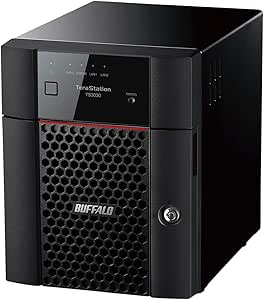 | Best Ready-to-Run Small-Office Bundle | Storage capacity: 16TB | Drive bays: 4 | Drive configuration: Hard drives included | VIEW ON AMAZON | See Our Full Breakdown |
| UGREEN NAS DXP6800 Pro 6-Bay File Server for Teams and Small Businesses |  | Best for High-Bandwidth Team Storage | Drive bays: 6 | Maximum stated capacity: 208TB | Processor: 12th Gen Intel Core i5 | VIEW ON AMAZON | See Our Full Breakdown |
| UGREEN NAS DXP480T Plus 4-Bay All-Flash SSD for Creators & Video Editors |  | Best Premium All-Flash NAS for Creators | Processor: Intel Core i5-1235U, 10-core, 12-thread | Memory: 8GB DDR5 | M.2 NVMe slots: 4 | VIEW ON AMAZON | See Our Full Breakdown |
| UGREEN NAS DXP4800 Pro 4-Bay for IT Professionals, Developers & Power Users |  | Best for Expandable Developer Workloads | Processor: Intel Core i3-1315U, 6 cores, 8 threads, up to 4.5GHz | Memory: 8GB DDR5, expandable to 96GB | Drive bays: 4 x HDD | VIEW ON AMAZON | See Our Full Breakdown |
| TerraMaster F8 SSD Plus NAS 8-Bay Intel Core i3, 16GB DDR5 (Diskless) |  | Best Compact High-Capacity NVMe NAS | Processor: Intel Core i3-N305, 8 cores, up to 3.4GHz | Memory: 16GB DDR5 4800MHz | Drive slots: 8 x M.2 2280 NVMe | VIEW ON AMAZON | See Our Full Breakdown |
| Yxk Zero1 Pro 4-Bay NAS, Intel N100, 8GB RAM, 2 x 2.5GbE, 4K HDMI, Diskless |  | Best Entry Point for Home NAS Beginners | Processor: Intel N100 | Memory: 8GB DDR4 | Drive bays: 4 x SATA 3.0 | VIEW ON AMAZON | See Our Full Breakdown |
| premium nas storage solution | Drive bays | Warranty | Processor |
|---|---|---|---|
| UGREEN NAS DXP4800 GT 4-Bay fo | 4 | — | AMD Ryzen Embedded R2514, 4 cores, up to 3.70GHz |
| Synology 4-Bay DiskStation DS9 | 4 | 3-year limited hardware warranty | — |
| UGREEN DXP4800 Plus 4-Bay NAS | 4 | 2 years | Intel five-core CPU |
| Synology DS1825+ Enterprise NA | 8 | 3 years | — |
| BUFFALO LinkStation 720 16TB 2 | 2 | 2-year manufacturer limited warranty | — |
| Buffalo TeraStation 5420DN 4-B | 4 | — | — |
| Synology DS425+ Private Cloud | 4, diskless | 3 years | — |
| Synology DS925+ 4-Bay NAS with | 4 hot-swappable 2.5-inch/3.5-inch bays | — | AMD Ryzen V1500B |
| Synology 2-Bay DiskStation DS2 | 2 | 2 years | — |
| BUFFALO TeraStation Essentials | 4 | 3 years, including hard drives | — |
| UGREEN NAS DXP6800 Pro 6-Bay F | 6 | — | 12th Gen Intel Core i5 |
| UGREEN NAS DXP480T Plus 4-Bay | — | — | Intel Core i5-1235U, 10-core, 12-thread |
| UGREEN NAS DXP4800 Pro 4-Bay f | 4 x HDD | 2 years | Intel Core i3-1315U, 6 cores, 8 threads, up to 4.5GHz |
| TerraMaster F8 SSD Plus NAS 8- | — | 2 years | Intel Core i3-N305, 8 cores, up to 3.4GHz |
| Yxk Zero1 Pro 4-Bay NAS | 4 x SATA 3.0 | 2 years | Intel N100 |
More Details on Our Top Picks
UGREEN NAS DXP4800 GT 4-Bay for Creators, Tech Enthusiasts, and Office Teams
The DXP4800 GT is the four-bay choice here for buyers who want to move large files across a fast local network and run several demanding tasks at once. Its dual 10GbE ports can support link aggregation up to 20Gbps, while the Ryzen Embedded processor and expansion to 64GB RAM give it more headroom than the UGREEN DXP4800 Plus for multitasking. Multiple SATA and SSD options also let creators shape storage around active projects and shared archives. That flexibility comes with a more involved setup: Docker, virtual machines, and surveillance features may take technical effort, and the included 8GB RAM is non-ECC. Drives are not included, so buyers need to plan the full storage build separately. I’d choose it over the Synology DS925+ when 10GbE and SSD flexibility matter more than a simpler, established software experience.
Pros:- Dual 10GbE ports with link aggregation support for demanding shared-file workflows
- Ryzen Embedded processor and RAM expansion up to 64GB suit heavier multitasking
- Supports SATA, U.2 NVMe, and M.2 SSD storage options
- Built-in surveillance management adds another use for the system
Cons:- Diskless configuration requires a separate drive purchase and storage setup
- Advanced Docker, virtual machine, and surveillance features can raise setup complexity
- Supplied RAM is non-ECC; ECC support requires compatible memory
Best for: Video editors and small creative teams with a 10GbE network who need fast shared storage, SSD options, and room to expand memory.
Not ideal for: First-time NAS buyers who want a simple setup, or users without 10GbE equipment who cannot make use of its headline networking advantage.
- Processor:AMD Ryzen Embedded R2514, 4 cores, up to 3.70GHz
- Memory:8GB DDR4, expandable to 64GB
- Drive bays:4
- Maximum stated capacity:Up to 144TB
- Networking:Dual 10GbE; link aggregation up to 20Gbps
- Drive support:SATA, U.2 NVMe, and M.2 SSDs; drives not included
- Connections:USB 3.0, USB-C, HDMI, and SD card slot
- Security:TLS/SSL, RSA, AES, SHA-512, and RAID support
Our verdict“Choose the DXP4800 GT if your creator or office workflow can use dual 10GbE and flexible SSD storage, and skip it if you want a low-effort first NAS.”
Synology 4-Bay DiskStation DS925+ (Diskless)
The DS925+ is the four-bay pick for buyers who value a broad set of file-management, data-protection, virtualization, and surveillance tools alongside their storage. Its dual 2.5GbE ports offer a useful step up from basic gigabit networking, though they do not match the DXP4800 GT’s dual 10GbE for large collaborative media projects. Synology’s range of built-in solutions is the stronger reason to choose this model: it suits a small office that wants storage and administration features in one system. The stated throughput reaches 565 MB/s, but actual results depend on the drives and network around it. Like the UGREEN DXP4800 Plus, this is a diskless four-bay unit, so drives are an extra part of the setup. Advanced features can also feel involved for a beginner.
Pros:- Four bays provide room for a multi-drive storage and protection setup
- Dual 2.5GbE ports support faster networking than a single gigabit connection
- Built-in tools cover file management, data protection, virtualization, and surveillance
- Three-year limited hardware warranty
Cons:- Diskless design means drives must be sourced and installed separately
- Its 2.5GbE networking is less suited to intensive shared editing than the DXP4800 GT’s 10GbE
- Advanced features may take time to configure for first-time NAS owners
Best for: Small offices and technically confident home users who want Synology’s bundled file, backup, virtualization, and surveillance tools in a four-bay system.
Not ideal for: Creators moving very large projects over 10GbE, or beginners seeking a drive-included NAS with minimal configuration.
- Drive bays:4
- Network ports:2 × 2.5GbE
- Stated throughput:Up to 565 MB/s
- Functions:File management, data protection, virtualization, and surveillance
- Drive configuration:Diskless; drives not included
- Warranty:3-year limited hardware warranty
Our verdict“Pick the DS925+ if Synology’s broad software toolkit matters more than 10GbE speed or an out-of-box drive bundle.”
UGREEN DXP4800 Plus 4-Bay NAS for Families, Creators & Small Teams
The DXP4800 Plus balances capable networking and advanced features for households or small teams that want one place for files, backups, and media. Its 10GbE plus 2.5GbE ports give it a faster network option than the Synology DS925+, while the Intel five-core processor, 8GB DDR5, and support for Docker and virtual machines broaden its role beyond file storage. The stated capacity reaches 144TB, and the included 128GB SSD is listed alongside the four-bay storage design. Compared with the more performance-focused DXP4800 GT, this model has one 10GbE port rather than two, so it is less flexible for a demanding multi-user editing network. It is also diskless for the main drive bays, and the wired-only connection plus setup demands make it a poor fit for buyers expecting a plug-and-play wireless appliance.
Pros:- 10GbE and 2.5GbE ports offer a flexible mix of network speeds
- Intel five-core processor and 8GB DDR5 support multitasking
- Docker and virtual-machine support extend its use beyond file storage
- Stated capacity of up to 144TB for large libraries and shared archives
Cons:- Main drive bays are diskless, adding a separate drive-purchase and setup step
- Wired Ethernet only; no Wi-Fi support
- One 10GbE port offers less network flexibility than the DXP4800 GT’s dual 10GbE
Best for: Tech-comfortable families, creators, and small teams seeking shared storage with Docker or virtual-machine options and a mix of 10GbE and 2.5GbE networking.
Not ideal for: Wireless-first households, buyers who need dual 10GbE, or NAS newcomers who want a ready-to-use system with main storage drives included.
- Processor:Intel five-core CPU
- Memory:8GB DDR5
- Drive bays:4
- Stated maximum capacity:Up to 144TB
- Networking:1 × 10GbE and 1 × 2.5GbE
- Included SSD:128GB SSD
- Stated transfer speed:Up to 1250 MB/s
- Warranty:2 years
Our verdict“Choose the DXP4800 Plus for versatile home or small-team storage with one 10GbE connection, but favor the GT for dual-10GbE workflows.”
Synology DS1825+ Enterprise NAS – 8-Bay Diskless Storage, 360TB Capacity, 25GbE Speed, Mission-Critical Reliability
The DS1825+ is the clear capacity pick in this group: its eight bays and stated support for up to 360TB give growing production teams more room than any of the four-bay systems here. The 25GbE networking is aimed at moving large datasets across a suitably equipped business network, while high-availability clustering and expansion-unit support target organizations that need more than a shared folder. That scale also makes it a different class of purchase from the Synology DS925+: the smaller unit is a more natural fit for a modest office, while the DS1825+ is built for larger storage plans and more demanding operations. Its diskless design leaves drive selection to the buyer, and the enterprise-oriented feature set brings added setup and management work. I would not choose it for a household or a small archive that will never use its capacity.
Pros:- Eight bays and stated capacity up to 360TB support large storage pools
- 25GbE networking targets demanding, high-volume data workflows
- High-availability clustering supports business continuity planning
- Expansion-unit support provides a path to larger storage deployments
Cons:- Diskless configuration requires a separate investment in compatible drives
- Enterprise-focused features can add setup and ongoing management complexity
- Its capacity and networking are excessive for many home and small-office users
Best for: Video-production teams and businesses managing large datasets that need eight bays, high-speed networking, and an expansion path.
Not ideal for: Home users and small offices with modest storage needs, or anyone looking for a simple, drive-included NAS without enterprise-style administration.
- Model:Synology DS1825+
- Drive bays:8
- Stated maximum capacity:Up to 360TB
- Network speed:25GbE
- Expansion:Supports expansion units
- Data protection:High-availability clustering
- Warranty:3 years
- Dimensions:9.57 × 13.5 × 6.54 inches
Our verdict“Choose the DS1825+ when an organization can use eight bays, 25GbE, and expansion support; smaller teams are better served by the DS925+.”
BUFFALO LinkStation 720 16TB 2-Bay Home Office Private Cloud Data Storage with Hard Drives Included
The LinkStation 720 takes a simpler route than the diskless UGREEN and Synology models: it includes two drives, so a home office can start with storage in place rather than choosing components first. Its 16TB installed capacity can be configured as RAID 0 for the full stated capacity or RAID 1 for 8TB usable with a mirrored copy. That makes it easier to understand than a four-bay build, but it also leaves less room to grow than the DXP4800 Plus or DS925+. Dropbox, Azure, and OneDrive integration gives it a hybrid-storage option, and included PC backup utilities suit routine household or office protection. The tradeoff is a more modest two-bay design and less flexibility for advanced workloads. I’d favor this over the diskless models when convenience matters more than network performance or expansion.
Pros:- Ships with 16TB of installed drives for a quicker start than diskless alternatives
- RAID 1 provides 8TB usable capacity with mirrored drive protection
- Cloud integration includes Dropbox, Azure, and OneDrive
- Includes PC backup utilities, an Ethernet cable, and a two-year limited warranty
Cons:- Two bays offer less expansion flexibility than the four-bay DXP4800 Plus or DS925+
- RAID 1 reduces usable capacity to 8TB from the stated 16TB total
- Listed compatibility is limited to Windows and macOS 26
Best for: Home-office users who want a drive-included NAS for file sharing and routine backups, with the option to mirror data in RAID 1.
Not ideal for: Growing teams that need four or more bays, high-speed networking, or advanced virtualization and media workloads.
- Model:BUFFALO LS720D1602
- Drive bays:2
- Included capacity:16TB total
- Usable capacity in RAID 1:8TB
- RAID modes:RAID 0 and RAID 1
- Cloud integration:Dropbox, Azure, and OneDrive
- Listed compatibility:Windows and macOS 26
- Warranty:2-year manufacturer limited warranty
Our verdict“Choose the LinkStation 720 if you want included drives and straightforward home-office backups, but pick a four-bay model for room to grow.”
Buffalo TeraStation 5420DN 4-Bay Business Desktop NAS 32TB (4x8TB) with Hard Drives Included
I’d choose the Buffalo TeraStation 5420DN when a small business needs a large, ready-to-use storage pool and a faster network connection than the 2.5GbE options in this lineup. Its 32TB of included drives avoids the separate drive purchase required by the diskless Synology DS425+, while 10GbE can better serve teams moving large files across a suitably equipped network. Encryption, two-factor authentication, and snapshots add layers of protection, and cloud integration supports an off-site backup plan. The tradeoff is its bulky desktop enclosure and a setup that may suit an administrator better than a first-time NAS owner. Unlike the expandable DS925+ bundle, the supplied information does not describe a drive expansion path, so buyers should plan around four bays.
Pros:- Includes four drives for 32TB of stated storage capacity.
- 10GbE port supports fast transfers on a compatible network.
- Encryption, two-factor authentication, and snapshots strengthen data protection.
- Cloud integration supports a hybrid backup workflow.
Cons:- Large desktop footprint may need dedicated placement.
- Configuration may be challenging for buyers without NAS experience.
- Expansion beyond the four included drives is not specified.
Best for: Small businesses that want four preloaded drives, snapshot recovery, and 10GbE for frequent large-file transfers.
Not ideal for: Home users with limited space or buyers who need a clearly documented expansion path beyond the four installed drives.
- Storage capacity:32TB
- Drive configuration:4 x 8TB drives included
- Drive bays:4
- Network:10GbE
- Drive interface:Serial ATA-600
- Drive form factor:3.5 inches
- Data protection:256-bit drive encryption and snapshot-based recovery
- Form factor:Desktop
Our verdict“Choose the 5420DN for a business that values included capacity and 10GbE more than a compact chassis or a stated expansion route.”
Synology DS425+ Private Cloud Media Server – Stream, Back Up & Share Files (4-Bay Diskless NAS)
The Synology DS425+ is the more compact four-bay choice for buyers who want a shared file and media hub but prefer to select their own drives. Its 2.5GbE networking and stated transfer speeds of up to 278MB/s suit common office sharing and home media tasks, while support for 10+ concurrent users makes it more team-oriented than the two-bay DS223j. RAID, automated backups, and snapshots provide several recovery tools; surveillance support is another draw for a small office. Compared with the bundled Buffalo TeraStation Essentials 2025, though, this is diskless, so drive selection and setup are part of the purchase. Four bays also set a firm limit unless a compatible expansion option is added, which the supplied product details do not specify.
Pros:- Compact four-bay enclosure for a tabletop setup.
- Built-in 2.5GbE and stated speeds up to 278MB/s support responsive file sharing.
- RAID, automated backups, and snapshots offer layered data protection.
- Supports 10+ users and surveillance for up to 30 IP cameras.
Cons:- Diskless configuration requires separate compatible drive purchases.
- Initial setup may be difficult for less technical users.
- Four bays limit capacity growth unless a compatible expansion route is confirmed.
Best for: Home media organizers and small teams who want a compact four-bay Synology system and already have a drive plan.
Not ideal for: Buyers who want a complete storage package out of the box or need more than four bays without an established expansion option.
- Model:DS425+
- Drive bays:4, diskless
- Network:Built-in 2.5GbE
- Maximum stated transfer speed:Up to 278MB/s
- Stated storage volume:Up to 80TB
- Dimensions:8.78 x 7.83 x 6.54 inches
- Weight:2.18kg
- Warranty:3 years
Our verdict“Pick the DS425+ if you want compact four-bay Synology storage with flexible drive selection, not an all-in-one bundle.”
Synology DS925+ 4-Bay NAS with 2.5GbE Ports, Ryzen V1500B, 4GB RAM, 48TB Bundle with 4 Seagate Ironwolf 12TB HDDs
For buyers who need more than a straightforward file server, the Synology DS925+ bundle combines a Ryzen V1500B processor with four included 12TB IronWolf drives and room to grow. Its dual 2.5GbE ports, ECC memory, and two NVMe slots make it a stronger fit for demanding small-office workloads than the more compact DS425+, while an expansion unit can raise drive support to nine. That matters when a business would rather extend an existing storage system than replace it as capacity needs rise. The tradeoffs are practical: 4GB of RAM may call for an upgrade on intensive workloads, and expansion adds configuration work. The Buffalo 5420DN offers faster 10GbE on paper, but this Synology bundle distinguishes itself with its stated expansion capacity and more capable processor platform.
Pros:- Includes four 12TB Seagate IronWolf hard drives for 48TB stated capacity.
- Ryzen V1500B processor and ECC memory suit more demanding workloads.
- Expansion support raises the stated maximum to nine drives.
- Two 2.5GbE ports and two NVMe slots provide useful connectivity and storage options.
Cons:- The supplied 4GB RAM may be limiting for intensive workloads.
- Drive expansion requires an additional unit and technical setup.
- The performance-focused feature set may exceed the needs of basic home backup users.
Best for: Small-business administrators who want included high-capacity drives, ECC memory, and a stated route to expand up to nine drives.
Not ideal for: Buyers seeking a simple, low-configuration home NAS or those who need higher memory capacity without an upgrade.
- Processor:AMD Ryzen V1500B
- Memory:4GB DDR4 ECC, expandable to 32GB
- Included storage:48TB (4 x 12TB Seagate IronWolf HDDs)
- Drive bays:4 hot-swappable 2.5-inch/3.5-inch bays
- Maximum drive support:Up to 9 drives with DX515 expansion
- Network ports:2 x 2.5GbE LAN
- M.2 slots:2 NVMe
- USB ports:2 x USB 3.2 Gen 1
Our verdict“Choose this DS925+ bundle when you need included drives now and a specified expansion path for a growing small-business NAS.”
Synology 2-Bay DiskStation DS223j (Diskless)
The Synology DS223j is the simplest fit here for a buyer who wants private-cloud access and automated backups without committing to a four-bay system. Its two bays can support a modest home archive or shared household files, while multi-platform access and remote monitoring help connect computers and mobile devices. Compared with the DS425+, it gives up two drive bays and the more office-focused user and surveillance capacity, but its narrower scope can suit a personal setup that does not need a large storage pool. It is also diskless, so the actual capacity and drive cost depend on what you add. I would not choose it for a growing team or a media library expected to expand substantially; the Buffalo Essentials 2025 starts with included drives and four bays, making it a more ready-made small-office option.
Pros:- Two bays provide a straightforward starting point for personal NAS storage.
- Supports private-cloud access and file sharing across platforms.
- Automated backups help centralize protection for multiple devices.
- Remote IP-camera monitoring adds a surveillance use case.
Cons:- Diskless unit requires separate drive purchases.
- Two bays offer less capacity and growth room than the four-bay options.
- The supplied details do not specify networking speed or processor capability.
Best for: Individuals or households setting up private cloud access and automated backups across a few devices.
Not ideal for: Small teams, large media libraries, or buyers who want multiple bays for future capacity growth and included drives.
- Model:DS223j
- Drive bays:2
- Drive configuration:Diskless
- Type:Network-attached storage
- Remote access:Supported
- Backup features:Automated backups
- Surveillance:IP-camera monitoring supported
- Warranty:2 years
Our verdict“Choose the DS223j for personal backups and private-cloud use if two bays meet your foreseeable storage needs.”
BUFFALO TeraStation Essentials 2025 4-Bay Desktop NAS with 16TB Hard Drives
The BUFFALO TeraStation Essentials 2025 is the practical pick for a small office that wants four installed drives and a simpler route to shared storage. With 16TB included, a stated 2.5GbE connection, encryption, backup features, and cloud integration, it covers core office storage needs without asking buyers to source disks as they would with the Synology DS425+. Its stated three-year warranty includes the hard drives, which adds a defined support period for the bundled storage. This model gives up the 5420DN’s 10GbE connection and 32TB capacity, so it is less suited to teams moving large projects or needing a larger starting pool. The listed 5400rpm drives also favor practical capacity over rotational speed. Choose it for routine office files and backups, not demanding enterprise workloads.
Pros:- Four-bay enclosure includes 16TB of hard-drive storage.
- 2.5GbE supports faster transfers than standard gigabit networking when the network supports it.
- Encryption, backup features, and cloud integration support a layered storage plan.
- Three-year warranty includes the hard drives.
Cons:- 16TB starting capacity is below the 32TB Buffalo TeraStation 5420DN.
- 5400rpm drives may not suit workloads prioritizing drive rotational speed.
- Designed for small-office use rather than high-performance enterprise workloads.
Best for: Small offices that want pre-installed drives, straightforward RAID setup, and a 2.5GbE connection for shared files and backups.
Not ideal for: Businesses with large-file workloads that need 10GbE or buyers seeking a higher-capacity starting configuration than 16TB.
- Storage capacity:16TB
- Drive bays:4
- Drive configuration:Hard drives included
- Network:2.5GbE
- Drive interface:Serial ATA-600
- Drive form factor:3.5 inches
- Drive rotational speed:5400rpm
- Warranty:3 years, including hard drives
Our verdict“Choose the TeraStation Essentials 2025 for a ready-to-run small office setup if 16TB and 2.5GbE meet your needs.”
UGREEN NAS DXP6800 Pro 6-Bay File Server for Teams and Small Businesses
I’d rank the DXP6800 Pro highest for teams that need fast shared storage and room to grow. Its 12th Gen Intel Core i5 and dual 10GbE ports suit busy file servers and workloads involving Docker or virtual machines; link aggregation can provide up to 20Gbps of network bandwidth when the rest of the setup supports it. The advertised 208TB capacity also gives it more raw expansion headroom than the four-bay UGREEN DXP4800 Pro. That extra scale comes with added drive costs and a bigger commitment to a wired network. It ships diskless, and actual throughput depends on the drives, network, and workload. I’d choose it over the DXP4800 Pro for more bays and network capacity, but skip it if a smaller, simpler NAS will do.
Pros:- 12th Gen Intel Core i5 supports demanding file-server and virtualization workloads.
- Dual 10GbE ports can be aggregated for up to 20Gbps bandwidth in a compatible setup.
- Six drive bays and stated capacity of up to 208TB offer more expansion room than four-bay options.
- Management app brings file, photo, and media access together.
Cons:- Diskless configuration means compatible drives are a separate purchase.
- No built-in Wi-Fi; the NAS depends on a wired Ethernet connection.
- Advertised transfer rates rely on drive, network, and system performance.
Best for: Small-business teams and technical users who need a six-drive shared pool, high-speed wired networking, and capacity for Docker or virtual machines.
Not ideal for: Home users who want Wi-Fi, included drives, or a simple plug-and-play setup; this diskless, wired-only system needs a capable network to make use of its performance.
- Drive bays:6
- Maximum stated capacity:208TB
- Processor:12th Gen Intel Core i5
- Network:Dual 10GbE ports; aggregatable to 20Gbps
- Drive interface:SATA 6.0Gb/s
- Drive form factor:3.5-inch
- Hardware platform:x86
- Enclosure material:Aluminum
Our verdict“Choose the DXP6800 Pro if your team needs six-bay capacity and high-speed wired sharing; choose a smaller model if you don’t need its expansion headroom.”
UGREEN NAS DXP480T Plus 4-Bay All-Flash SSD for Creators & Video Editors
The DXP480T Plus is the specialist pick here: it trades the high capacity of a hard-drive NAS for four M.2 NVMe slots aimed at responsive project storage and editing workflows. Its 12th-gen Core i5, 8GB of DDR5, 10GbE, and two Thunderbolt 4 ports give creators several ways to connect fast workstations and move large files. Compared with the TerraMaster F8 SSD Plus, this UGREEN adds Wi-Fi 6, HDMI output, and Thunderbolt connections, while the TerraMaster offers twice as many NVMe slots and higher stated capacity. The DXP480T Plus is capped at 32TB, and its SSDs are not included, so rapid access comes at the cost of less storage per drive bay. I’d favor it for an editing desk, not a bulk archive.
Pros:- Four M.2 NVMe slots provide all-flash storage for active editing projects.
- 12th-gen Intel Core i5 and 8GB DDR5 support demanding creative workflows.
- 10GbE and two Thunderbolt 4 ports offer fast wired connections to compatible systems.
- Wi-Fi 6 and 8K HDMI add flexibility beyond the TerraMaster F8 SSD Plus.
Cons:- Maximum stated capacity is 32TB, below the TerraMaster F8 SSD Plus’s stated 64TB.
- NVMe drives are not included and must be purchased separately.
- Only the listed HDMI output is provided for display connections.
Best for: Video editors and creative teams who want NVMe project storage, Thunderbolt workstation connections, and fast access to active media files.
Not ideal for: Buyers building a large, low-cost archive or needing conventional hard-drive bays; its four NVMe slots cap capacity at 32TB and SSDs are sold separately.
- Processor:Intel Core i5-1235U, 10-core, 12-thread
- Memory:8GB DDR5
- M.2 NVMe slots:4
- Maximum stated capacity:32TB
- Network:10GbE, up to 1250MB/s peak
- Wireless:Wi-Fi 6
- Thunderbolt:2 x Thunderbolt 4
- Video output:8K HDMI
- RAID levels:JBOD, Basic, RAID 0, 1, 5, 6, 10
Our verdict“Pick the DXP480T Plus for a fast, workstation-friendly editing pool, but choose a higher-capacity NAS for large archives.”
UGREEN NAS DXP4800 Pro 4-Bay for IT Professionals, Developers & Power Users
I’d place the DXP4800 Pro between a conventional four-bay NAS and the more specialized DXP480T Plus. Its Intel Core i3-1315U, support for Docker and virtual machines, and memory expansion up to 96GB make it a flexible base for developers who expect their workloads to grow. The two M.2 slots can supplement the four HDD bays, while 10GbE and 2.5GbE allow fast access alongside a secondary network connection. Compared with the six-bay DXP6800 Pro, it gives up drive-bay capacity and dual 10GbE, but its stated 144TB capacity and memory ceiling may be plenty for a smaller lab. The tradeoff is setup complexity: RAID, containers, and virtual machines suit technically confident owners better than casual home users.
Pros:- Memory can expand from 8GB DDR5 to 96GB for heavier workloads.
- Four HDD bays plus two M.2 slots combine bulk storage and SSD options.
- 10GbE and 2.5GbE ports provide more network flexibility than a single-port setup.
- Supports Docker, virtual machines, and AI applications.
Cons:- Advanced features and RAID choices can make setup more involved for newcomers.
- Four HDD bays provide less expansion than the six-bay DXP6800 Pro.
- Drives are not listed as included, so storage needs to be configured separately.
Best for: IT professionals, developers, and home-lab builders who want HDD capacity, M.2 caching or storage, and room to expand memory for containers or virtual machines.
Not ideal for: Casual users seeking an uncomplicated media backup device, or teams that need six bays and dual 10GbE like the DXP6800 Pro.
- Processor:Intel Core i3-1315U, 6 cores, 8 threads, up to 4.5GHz
- Memory:8GB DDR5, expandable to 96GB
- Drive bays:4 x HDD
- M.2 slots:2
- Stated capacity:Up to 144TB
- Network ports:10GbE + 2.5GbE
- Read speed:Up to 1.25GB/s
- Warranty:2 years
Our verdict“Choose the DXP4800 Pro for a customizable developer or home-lab NAS, and step up to the DXP6800 Pro if you need more bays and dual 10GbE.”
TerraMaster F8 SSD Plus NAS 8-Bay Intel Core i3, 16GB DDR5 (Diskless)
The F8 SSD Plus is the unusual choice for buyers who want eight NVMe drives without a full-size NAS chassis. Its palm-sized design, 16GB DDR5, and 10GbE are a strong match for quiet desks or compact workspaces where fast shared storage matters. The stated 64TB capacity is double the DXP480T Plus’s 32TB ceiling, and the extra slots give more room to divide projects or configure storage. But the two models serve different editing setups: UGREEN supplies Thunderbolt 4 and Wi-Fi 6, while TerraMaster prioritizes more NVMe slots in a very small enclosure. This NAS accepts only M.2 NVMe drives, not SATA SSDs or hard drives, and filling all eight slots requires a separate investment in drives. Its compactness doesn’t make it a budget bulk-storage option.
Pros:- Eight M.2 NVMe slots support up to 64TB of stated capacity.
- Compact, paperback-sized chassis suits crowded desks and shelves.
- 16GB DDR5 and 10GbE fit fast shared-storage workloads.
- Cooling design uses heat sinks and silent fans for near-silent operation.
Cons:- M.2 NVMe only; there are no SATA or hard-drive bays.
- Diskless configuration requires separate SSD purchases, and eight drives can add substantial capacity cost.
- Does not list the DXP480T Plus’s Thunderbolt 4 or Wi-Fi 6 connections.
Best for: Creators and small teams needing quiet, compact NVMe storage with more drive slots than the UGREEN DXP480T Plus.
Not ideal for: Buyers who want inexpensive HDD capacity, SATA compatibility, or Thunderbolt workstation connections; this model is limited to M.2 NVMe drives and 10GbE.
- Processor:Intel Core i3-N305, 8 cores, up to 3.4GHz
- Memory:16GB DDR5 4800MHz
- Drive slots:8 x M.2 2280 NVMe
- Maximum drive capacity:Up to 8TB per SSD
- Maximum stated total capacity:64TB
- Network:10GbE Ethernet
- Cooling:Convection design, SSD heat sinks, and silent fans
- Warranty:2 years
Our verdict“Choose the F8 SSD Plus for compact, quiet NVMe capacity, but favor the DXP480T Plus if Thunderbolt and Wi-Fi matter more than extra drive slots.”
Yxk Zero1 Pro 4-Bay NAS, Intel N100, 8GB RAM, 2 x 2.5GbE, 4K HDMI, Diskless
The Zero1 Pro is the approachable home option in this group: it pairs an Intel N100 and guided mobile-app setup with four SATA bays, so a first-time NAS owner can begin with a modest drive set and expand later. Two 2.5GbE ports offer more network bandwidth than the TerraMaster F8 SSD Plus’s single 10GbE port may provide on a network without 10GbE equipment, while 4K HDMI supports a direct media-center setup. Its stated maximum of 144TB raw is before RAID reduces usable capacity. Compared with the more professional UGREEN DXP4800 Pro, the Zero1 Pro has less memory and a simpler hardware profile; it’s better for backups and media than demanding virtual-machine workloads. It remains diskless, and the 8GB RAM limit narrows its room for heavier multitasking.
Pros:- Mobile-app guidance makes setup more approachable for first-time NAS owners.
- Four SATA bays support flexible RAID configurations and gradual drive expansion.
- Dual 2.5GbE ports provide faster wired networking than a single gigabit connection.
- 4K HDMI and media-server features support a living-room or home-office media setup.
Cons:- Diskless configuration requires separate hard drive or SSD purchases.
- 8GB RAM may constrain heavy multitasking and demanding virtual-machine workloads.
- 144TB is raw capacity before RAID reduces the space available for files.
Best for: First-time home NAS owners and small offices seeking guided setup, expandable SATA storage, backups, and a direct 4K media connection.
Not ideal for: Developers running several virtual machines or businesses needing high-speed 10GbE; its 8GB RAM and dual 2.5GbE are less suited to heavier workloads than the DXP4800 Pro.
- Processor:Intel N100
- Memory:8GB DDR4
- Drive bays:4 x SATA 3.0
- Maximum raw capacity:Up to 144TB before RAID
- M.2 NVMe slots:2
- Network ports:2 x 2.5GbE
- Video output:4K HDMI
- Cooling:Dual-fan aluminum housing
- Warranty:2 years
Our verdict“Pick the Zero1 Pro for guided home backups and media storage, but choose the DXP4800 Pro for expandable memory and more demanding technical workloads.”

How We Picked
I compared the 15 systems by the jobs premium NAS buyers actually need them to do: central file storage, backup, media delivery, creative work, and business collaboration. I weighed bay count and expansion potential against processor and memory details, network connectivity, drive inclusion, and whether an all-flash design fits the likely workload. I also considered setup effort, ongoing administration, and how much flexibility a buyer gets when choosing drives.
The ranking favors systems with a strong balance of capability and practical use, not simply the largest specifications. That puts the UGREEN DXP4800 GT first as a broadly useful four-bay choice, while the Synology DS1825+ ranks higher for organizations that need more bays and the TerraMaster F8 SSD Plus earns a distinct role for all-flash work. Bundled-drive models can be more convenient, but diskless options rank well when drive choice and future changes matter more. I treat each model’s intended buyer as part of its value: a two-bay entry system is not a substitute for an eight-bay business NAS.
Factors to Consider When Choosing Premium Nas Storage Solutions
Choosing a premium NAS is less about selecting the biggest number on a spec sheet and more about matching storage architecture to the work, the people using it, and the cost of maintaining it. I would settle the following questions before choosing a model or buying drives.
How Much Capacity and Growth Do You Actually Need?
Start with the amount of usable space you need, then account for redundancy, snapshots, and future growth rather than treating the sum of drive capacities as available storage. More bays can provide a longer upgrade path because you may be able to add drives over time, but only if the model and storage setup support the way you plan to expand. A four-bay unit can be a sensible fit for a household or small team; an eight-bay system is easier to justify when many users, large media libraries, or business data need room to grow. Avoid buying solely for a headline capacity claim without checking how that capacity is configured and what drive sizes the system supports. If your storage needs are modest and stable, a larger chassis may add expense and administration without solving a real problem.
Choose HDD, SSD, or a Mix Based on Workload
Hard drives generally make more sense for large media libraries, archives, and backup targets where capacity matters more than low latency. SSD-based systems can better suit active editing, virtual machines, and workloads that generate frequent small reads and writes, but they may limit affordable bulk capacity. Faster storage cannot compensate for a slow client connection, congested network, or workflow bottleneck elsewhere. Buyers should also check whether the NAS supports the drives and storage layout they intend to use, rather than assuming every drive combination is interchangeable. A common mistake is paying for all-flash storage when the actual task is simply keeping and serving large files.
Match Network Speed to the Devices That Will Use the NAS
A fast Ethernet port only helps when the rest of the path can use it: the switch, router, client adapter, cabling, and NAS workload all matter. Before paying for higher-speed networking, identify which computers will transfer large files and whether multiple users will access the system at once. A modest connection may be adequate for scheduled backups and household sharing, while creative teams can benefit from faster links when moving large project files. Check whether the model offers useful networking options for your existing setup, and factor in any switch or adapter purchases needed to take advantage of them. Network speed is a system decision, not a NAS-only feature.
Decide Whether Bundled Drives or Diskless Flexibility Fits Better
Bundled-drive systems can simplify deployment because storage is included, making them appealing to buyers who want a ready-to-configure setup. Their tradeoff is less freedom over drive brand, capacity, and timing of upgrades, and the bundle may not match your desired redundancy or workload. A diskless NAS lets you choose drives and replace or expand them according to your plan, but you must research compatibility and budget for the complete system. Compare the drive configuration—not just the total capacity—before deciding that a bundle is the easier choice. For a business deployment, also plan how replacement drives will be sourced if one fails later.
Account for Software, Security, and Ongoing Administration
A NAS is a small server that needs updates, access controls, backup planning, and occasional troubleshooting, so ease of management can matter as much as processor performance. Consider who will set up shared folders, manage user permissions, apply updates, and restore data when something goes wrong. A polished management environment may save time for a household or small office, while experienced administrators may value hardware flexibility and control. Do not treat RAID or drive redundancy as a replacement for a separate backup: it can help with drive failure, but it does not protect every file from accidental deletion, malware, or site damage. Plan remote access carefully and limit it to the services and users who need it.
Pay for Headroom Only When Your Work Can Use It
Premium processors, extra memory, and more bays can extend a NAS’s useful life, but they also bring higher system demands and more configuration choices. They make the most sense when several users run services at once, when the NAS supports active creative work, or when business growth is likely. For straightforward file sharing and backups, a less elaborate system may be easier to operate and more than capable of the job. Think about the next few years of workload rather than buying for a hypothetical future that may never arrive. The best upgrade is the one that removes a real limit in capacity, access speed, or administration.
Frequently Asked Questions
Should I choose a four-bay NAS or move up to a six- or eight-bay model?
I would choose four bays when the expected workload is clear and the capacity plan is unlikely to change quickly. More bays can offer greater expansion flexibility and make sense for a growing team or a large shared media collection, as shown by the Synology DS1825+ and UGREEN DXP6800 Pro. Extra bays do not automatically mean better performance, and they can add drive and administration costs. Estimate usable capacity after redundancy and leave room for growth before deciding. If a four-bay system already covers that plan, the larger model may not deliver a practical benefit.
Is an all-flash NAS worth choosing over a hard-drive NAS?
An all-flash NAS is most compelling when low latency and frequent access to active files are central to the work, such as certain editing or development tasks. The UGREEN DXP480T Plus and TerraMaster F8 SSD Plus are the specialist options in this lineup, rather than general replacements for every HDD system. SSD storage can make large-capacity archives harder to justify, and clients and network links can still limit the speed users experience. For backups, media libraries, and other bulk storage, hard drives may offer a more practical capacity path. Match the drive type to the workload instead of assuming flash is always the better choice.
Is a NAS with drives included a better choice for a first-time buyer?
A drive bundle can remove a compatibility and purchasing step, which can make setup feel more straightforward. The Buffalo LinkStation 720 and TeraStation 5420DN include drives, while the Synology DS925+ bundle also pairs the NAS with hard drives. A first-time buyer should still check how the drives are configured, what usable capacity remains after protection, and how replacements will be handled. Diskless systems offer more control over drive selection but ask the buyer to make those decisions separately. A bundle is convenient when its included configuration matches the actual storage plan.
Will a NAS with faster Ethernet speed up every computer on my network?
No. The NAS connection is only one part of the transfer path, and the client computer, network equipment, cabling, and file workload can all limit throughput. A faster port can be valuable when several users share the NAS or when supported workstations move large files, but it may not change routine backups or media streaming. Check what ports your existing switch and computers support before choosing a model for networking alone. If an upgrade requires extra adapters or network equipment, include those in the decision. For many homes and small offices, a balanced setup is more useful than paying for unused link speed.
Can I rely on NAS drive redundancy instead of keeping a separate backup?
No. Drive redundancy can keep a NAS available after certain drive failures, but it is not a complete backup strategy. It may not recover files deleted by mistake, undo unwanted changes, or protect data if the device is damaged, stolen, or affected by malicious software. Keep another copy on a separate device or in a suitable off-site service, and test that files can be restored. The NAS can be a useful central storage and backup target, but it should not be the only place important data exists. Plan backup frequency around how much recent work you can afford to lose.
Conclusion
For most buyers seeking a capable balance of flexibility and everyday usefulness, I recommend the UGREEN NAS DXP4800 GT as best overall. For a lower-complexity home or small-office setup, the Buffalo LinkStation 720 is my best value-oriented option among the included-drive choices; buyers who want a diskless system with a software-focused approach should compare the Synology DS425+. The Synology DS1825+ is my best premium pick for organizations that need eight bays and substantial room to scale. The Synology DS223j is the best fit for beginners with basic storage needs, though its two-bay design is not aimed at demanding team workloads. For fast all-flash work, choose the TerraMaster F8 SSD Plus or UGREEN DXP480T Plus; for a six-bay small-business file server, look at the UGREEN DXP6800 Pro. Match the number of bays, drive type, and network setup to your actual workload, then keep a separate backup of important files.
Halloween Picks
halloween
As an affiliate, we earn on qualifying purchases.