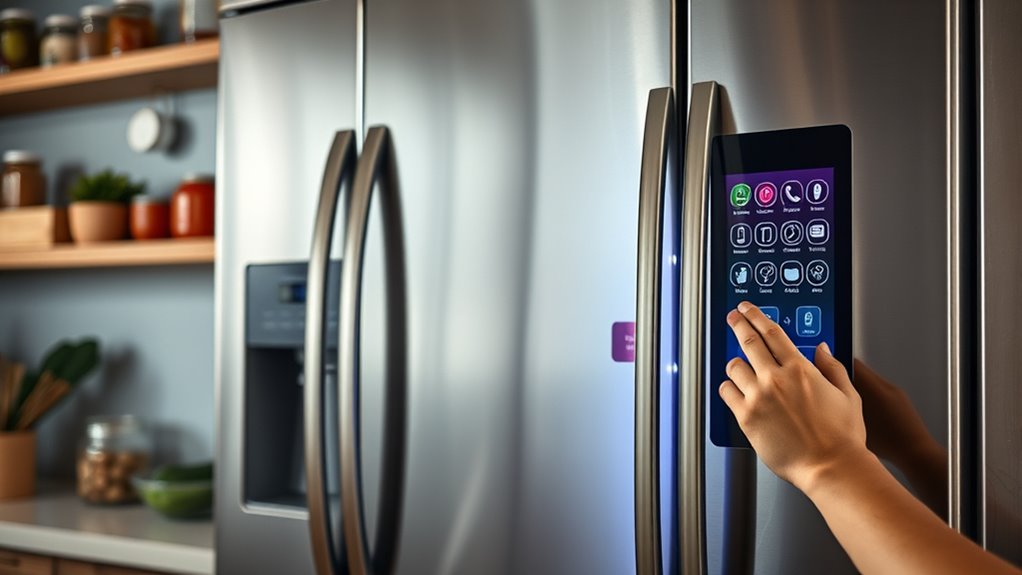

When it comes to maintaining optimal fridge conditions, a reliable smart fridge IoT monitor can make all the difference. The WiFi Freezer Thermometer with App Alarm stands out as the best overall choice for its balance of accuracy and ease of use. For those seeking budget-friendly options, the GoveeLife WiFi Refrigerator Thermometer offers solid performance at a lower price point. Meanwhile, the Frigga 4G Cellular Temperature & Humidity Monitor appeals to users needing remote monitoring even without local WiFi. Readers face the challenge of balancing features like long-range connectivity, data logging, and alert customization. Keep reading for a detailed breakdown of these options and how to choose the right monitor for your needs.

Get kitchen staples and gadgets delivered free with Prime
- Fast, free delivery on millions of items
- Prime Video, Amazon Music and more included
- Member-only deals all year
Key Takeaways
- Top-performing monitors combine WiFi connectivity with reliable alerts and long battery life.
- Many affordable options lack advanced features like remote data access or multi-sensor support.
- Choosing between WiFi and cellular options depends on your home setup and need for remote monitoring.
- Higher-end models tend to offer more comprehensive data logging and customizable notifications.
- Compatibility with existing smart home systems can significantly enhance usability and integration.
| WiFi Freezer Thermometer with App Alarm and Wireless Sensors |  | Best for Long-Range Wireless Monitoring in Freezers | Temperature Range: -4°F to 140°F (-20°C to 60°C) | Humidity Range: 0% to 99% RH | Wireless Range: 492 ft (150 m) | VIEW ON AMAZON | See Our Full Breakdown |
| SensorPush HT1 Smart Temperature and Humidity Sensor |  | Best for Versatile Indoor and Outdoor Monitoring with Bluetooth | Battery Life: 1-2 years | Bluetooth Range: 100 meters | Data Logging: 20 days onboard, unlimited in-app | VIEW ON AMAZON | See Our Full Breakdown |
| YoLink Smart Wireless Thermometer Hygrometer, 3-Pack | 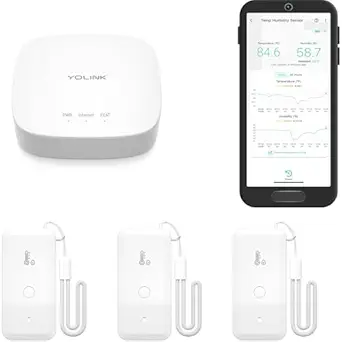 | Best for Long-Range, Multi-Environment Monitoring with Minimal Maintenance | Temperature Range: -4°F to 129°F | Humidity Range: 0% to 100% | Temperature Accuracy: ±0.36°F (0°C to 54°C) | VIEW ON AMAZON | See Our Full Breakdown |
| MOCREO WiFi Remote Thermometer with Freezer Alarm and Long-Range Sensors |  | Best for Ultra-Long-Range Indoor and Outdoor Monitoring | Temperature Range: -4°F to 131°F | Accuracy: ±0.9°F | Wireless Range: up to 1640 ft (1/3 mile) | VIEW ON AMAZON | See Our Full Breakdown |
| GoveeLife WiFi Refrigerator Thermometer with Alarm (2 Pack) |  | Best for High-Precision, Multi-Sensor Monitoring at Home | Temperature Range: -40°F to 158°F (-40°C to 70°C) | Sensor Precision: ±0.9°F/±0.5°C | Alarm Volume: 80dB | VIEW ON AMAZON | See Our Full Breakdown |
| GoveeLife WiFi Refrigerator Thermometer with Alarm, Wireless Digital Freezer Temperature Gauge with App Control, LCD Display, 2 Years Free Data Export, 2 Pack | 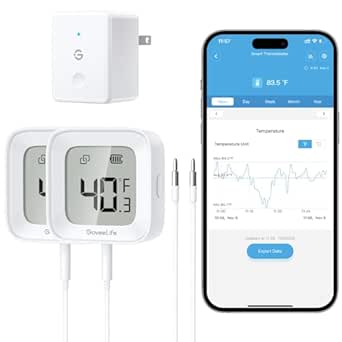 | Best Overall Smart Fridge IoT Monitor | Temperature Range: -40°F to 158°F | Accuracy: ±0.9°F | Display Type: Digital | VIEW ON AMAZON | See Our Full Breakdown |
| YoLink Smart Freezer Thermometer, LoRa Wireless Refrigerator and Environment Sensor, 3-Pack |  | Best for Long-Range, Hard-to-Reach Environments | Wireless Protocol: LoRa | Temperature Range: -4°F to 122°F | Temperature Accuracy: ±0.36°F | VIEW ON AMAZON | See Our Full Breakdown |
| Fridge-tag 2 L Freezer Version Temperature Data Logger with Sensor and Alarm |  | Best for Medical and Precise Cold Storage | Measurement Range: -20°C to +50°C | Sensor Type: External removable sensor | Alarm Limits: Individually programmable | VIEW ON AMAZON | See Our Full Breakdown |
| Govee WiFi Thermometer Hygrometer H5103 |  | Best for Environment and Humidity Monitoring | Connectivity: Wi-Fi (2.4G) & Bluetooth | Display: Electronic ink | Temperature Accuracy: ±0.54℉ | VIEW ON AMAZON | See Our Full Breakdown |
| Frigga 4G Cellular Temperature & Humidity Monitor with App Alerts |  | Best for Remote and Off-Grid Monitoring | Connectivity: 4G cellular + optional Wi-Fi | SIM: Pre-installed global SIM | Battery Life: Up to 7 days | VIEW ON AMAZON | See Our Full Breakdown |
| Wi-Fi Refrigerator & Freezer Monitor with Power Outage and No-Cooling Alerts |  | Best Overall for Reliable, Long-Term Refrigerator Monitoring | Connectivity: Wi-Fi | Monitoring Duration: 5 years | Installation: Plug and play | VIEW ON AMAZON | See Our Full Breakdown |
| WS1 WiFi Environmental Sensor: Temperature, Humidity, Light Monitoring with External Probes |  | Best for Versatile Environmental Monitoring with External Probes | Battery: 2 AA or USB-C | Mounting Type: Tabletop | Operating Humidity: 90% | VIEW ON AMAZON | See Our Full Breakdown |
| smart fridge iot monitor | Battery Life | Connectivity | Temperature Range |
|---|---|---|---|
| WiFi Freezer Thermometer with | Up to 2 years | 2.4GHz Wi-Fi | -4°F to 140°F (-20°C to 60°C) |
| SensorPush HT1 Smart Temperatu | 1-2 years | — | — |
| YoLink Smart Wireless Thermome | Up to 5 years | LoRa, WiFi (via hub) | -4°F to 129°F |
| MOCREO WiFi Remote Thermometer | Up to 2 years | — | -4°F to 131°F |
| GoveeLife WiFi Refrigerator Th | — | Wi-Fi 2.4G | -40°F to 158°F (-40°C to 70°C) |
| GoveeLife WiFi Refrigerator Th | — | WiFi & Bluetooth | -40°F to 158°F |
| YoLink Smart Freezer Thermomet | Up to 5 years | — | -4°F to 122°F |
| Fridge-tag 2 L Freezer Version | Up to 3 years | USB | — |
| Govee WiFi Thermometer Hygrome | Approximately 6 months | Wi-Fi (2.4G) & Bluetooth | — |
| Frigga 4G Cellular Temperature | Up to 7 days | 4G cellular + optional Wi-Fi | — |
| Wi-Fi Refrigerator & Freezer M | — | Wi-Fi | — |
| WS1 WiFi Environmental Sensor: | — | — | — |
More Details on Our Top Picks
WiFi Freezer Thermometer with App Alarm and Wireless Sensors
This WiFi thermometer stands out for its ability to monitor multiple freezers or cold storage areas over a long distance, thanks to its 492 ft wireless range. Unlike the SensorPush HT1, which relies on Bluetooth and a separate gateway, this model offers direct Wi-Fi connectivity for real-time alerts, making it more straightforward for large facilities. Its waterproof sensors are easy to install, and data export options support historical analysis without subscription fees. However, its temperature range is limited to -4°F to 140°F, which might exclude some extreme environments, and it depends heavily on Wi-Fi stability for alerts. Compared to the YoLink sensors, it’s less suited for very remote outdoor locations without Wi-Fi coverage.
Pros:- Real-time app alerts prevent food spoilage
- Wireless, waterproof sensors are easy to install
- Supports multiple sensors and long-range monitoring
- Data export capability for detailed analysis
Cons:- Requires Wi-Fi connection for alerts
- Limited to -4°F to 140°F temperature range
Best for: Facilities needing reliable, long-distance monitoring of multiple freezers or cold storage units with Wi-Fi access.
Not ideal for: Small kitchens or environments without stable Wi-Fi, where simpler or Bluetooth-based sensors suffice.
- Temperature Range:-4°F to 140°F (-20°C to 60°C)
- Humidity Range:0% to 99% RH
- Wireless Range:492 ft (150 m)
- Sensors Included:2
- Battery Life:Up to 2 years
- Connectivity:2.4GHz Wi-Fi
Our verdict“This pick is ideal for large-scale cold storage environments where long-range, Wi-Fi-enabled monitoring is essential.”
SensorPush HT1 Smart Temperature and Humidity Sensor
The SensorPush HT1 excels in its ease of setup and versatility, making it a strong choice for users who want reliable Bluetooth monitoring that can be extended with a WiFi Gateway. Unlike the WiFi Freezer Thermometer, it relies on Bluetooth, which limits its remote access unless paired with the optional Gateway, adding extra cost. Its long Bluetooth range of 100 meters allows flexible placement, and its onboard data logging supports 20 days of storage. However, for remote fridge monitoring, the need for a separate Gateway complicates setup and increases costs. This sensor is better suited to indoor environments or outdoor spaces like greenhouses, rather than standalone IoT refrigerator setups that demand direct Wi-Fi.
Pros:- Easy and quick setup process
- Reliable hardware with long battery life
- Versatile for indoor and outdoor environments
- Includes heat index monitoring for comfort assessment
Cons:- Requires separate WiFi Gateway for remote access
- Bluetooth range limited to line of sight
Best for: Home users or small business owners seeking easy, reliable Bluetooth sensors with optional remote access capabilities.
Not ideal for: Large facilities requiring straightforward Wi-Fi monitoring without additional accessories or for outdoor use without a Gateway.
- Battery Life:1-2 years
- Bluetooth Range:100 meters
- Data Logging:20 days onboard, unlimited in-app
- App Languages:6
- Heat Index Monitoring:Yes
Our verdict“This sensor suits those who prioritize simplicity and flexibility, especially when combined with a WiFi Gateway for remote monitoring.”
YoLink Smart Wireless Thermometer Hygrometer, 3-Pack
The YoLink 3-pack leverages LoRa technology, providing unmatched wireless range that easily surpasses Wi-Fi-based options like the GoveeLife. Compared to the Wi-Fi GoveeLife sensors, this system excels in remote outdoor or warehouse settings where Wi-Fi coverage is unreliable. Its long battery life of up to 5 years and high precision make it suitable for critical applications like greenhouses or pet enclosures. However, the need for a hub and limited SMS alerts—restricted to 5 per month—may hinder immediate notification needs. It’s less ideal for environments where instant alerts via app or email are sufficient and where Wi-Fi connectivity is readily available.
Pros:- Long-range LoRa connectivity allows placement far from Wi-Fi
- High-precision temperature and humidity monitoring
- Battery life up to 5 years reduces maintenance
- Customizable alerts via app, email, or SMS
Cons:- SMS alerts limited to 5 messages/month
- Requires a hub for Wi-Fi connectivity
Best for: Farmers, greenhouse operators, or pet owners needing long-range, low-maintenance sensors across large or remote areas.
Not ideal for: Urban indoor environments where Wi-Fi is strong, and high-frequency alerts are necessary without a hub dependency.
- Temperature Range:-4°F to 129°F
- Humidity Range:0% to 100%
- Temperature Accuracy:±0.36°F (0°C to 54°C)
- Battery Life:Up to 5 years
- Connectivity:LoRa, WiFi (via hub)
- Sensor Quantity:3
Our verdict“This system is perfect for remote locations where long-range, low-maintenance sensors are needed with minimal daily management.”
MOCREO WiFi Remote Thermometer with Freezer Alarm and Long-Range Sensors
The MOCREO model shines with its impressive wireless range of up to 1/3 mile, making it a standout choice for large outdoor areas or greenhouses, unlike the shorter-range Wi-Fi sensors like GoveeLife. It offers high accuracy and supports multiple sensor types, including LoRa and BLE, providing flexibility for different environments. Its real-time alerts via app and email, along with a digital hub, allow comprehensive temperature tracking. However, reliance on AAA batteries, which need replacement every two years, can be inconvenient, and potential signal interference inside metal enclosures could compromise data accuracy. Compared to the Wi-Fi-based systems, it’s more suited for outdoor or challenging environments where long-distance monitoring outweighs ease of setup.
Pros:- Wireless range up to 1/3 mile for outdoor use
- High-accuracy temperature measurement
- Supports multiple sensor types and alerts
- Suitable for humid and outdoor environments
Cons:- Requires AAA batteries, which need regular replacement
- Signal interference possible inside metal enclosures
Best for: Outdoor farmers, greenhouses, or RV owners needing long-range, high-accuracy temperature sensors with robust connectivity.
Not ideal for: Indoor kitchens or small spaces where Wi-Fi is stable and short-range sensors suffice, or users seeking minimal maintenance.
- Temperature Range:-4°F to 131°F
- Accuracy:±0.9°F
- Wireless Range:up to 1640 ft (1/3 mile)
- Battery Life:Up to 2 years
- Waterproof Rating:IP66
- Sensor Compatibility:BLE, LoRa sensors
Our verdict“This product is best for users who need ultra-long-range monitoring in outdoor or large-scale environments with high accuracy demands.”
GoveeLife WiFi Refrigerator Thermometer with Alarm (2 Pack)
The GoveeLife 2-pack offers precise temperature monitoring for refrigerators and freezers, with instant app notifications and buzzer alarms, making it suitable for household use. Compared to the Wi-Fi Freezer Thermometer, it provides a broader temperature range, from -40°F to 158°F, suitable for both refrigeration and freezing. Its easy installation with magnetic or hanging options simplifies setup, and supporting up to 10 sensors allows centralized control of multiple units. However, it only works on 2.4GHz Wi-Fi, limiting compatibility with some networks, and the buzzer requires manual turning off, which may be inconvenient during frequent alerts. It’s best for homeowners wanting a straightforward, multi-sensor system for kitchen monitoring, rather than complex outdoor setups.
Pros:- High-precision temperature monitoring
- Supports multiple sensors for whole-home management
- Easy to install with magnetic/hanging options
- Real-time app and email alerts
Cons:- Limited to 2.4GHz Wi-Fi networks
- Manual buzzer turn-off required
Best for: Homeowners who want precise, multi-sensor refrigerator and freezer monitoring with remote alerts and simple installation.
Not ideal for: Large commercial facilities or outdoor environments where longer-range or cellular monitoring is needed.
- Temperature Range:-40°F to 158°F (-40°C to 70°C)
- Sensor Precision:±0.9°F/±0.5°C
- Alarm Volume:80dB
- Connectivity:Wi-Fi 2.4G
- Range:Up to 230 ft (70 m)
- Number of Sensors:Up to 10
Our verdict“This system suits households seeking reliable, multi-sensor temperature monitoring with easy setup and instant alerts.”
GoveeLife WiFi Refrigerator Thermometer with Alarm, Wireless Digital Freezer Temperature Gauge with App Control, LCD Display, 2 Years Free Data Export, 2 Pack
This GoveeLife WiFi thermometer stands out for its combination of accurate, real-time temperature monitoring and long-term data storage, making it ideal for both home and commercial use. Its fast 2-second refresh rate and anti-false alarm technology provide reliability that surpasses entry-level options like the Govee WiFi Thermometer Hygrometer H5103, which lacks alarms and long-term data export. The need for a stable 2.4 GHz WiFi network and the absence of audible alarms are tradeoffs that might matter for users seeking seamless alerts or outdoor compatibility. Compared with the YoLink Smart Freezer Thermometer, it offers easier setup but less range and connectivity flexibility. Overall, this model suits those who want detailed, app-based temperature logs and reliable alerts without complex infrastructure.
Pros:- Accurate temperature readings with fast 2-second refresh
- Long-term data storage of 2 years accessible via app
- Smart alarms with anti-false alert technology
- Flexible placement options with magnet and lanyard
Cons:- Does not produce audible alarms, limiting immediate alerts
- Requires 2.4 GHz WiFi network for remote access
- Sensors need pairing with WiFi gateway for full functionality
Best for: Home cooks or small-scale commercial operators who prioritize accuracy, long-term data, and easy app access.
Not ideal for: Users needing audible alarms or outdoor monitoring, as this device lacks sound alerts and outdoor compatibility.
- Temperature Range:-40°F to 158°F
- Accuracy:±0.9°F
- Display Type:Digital
- Connectivity:WiFi & Bluetooth
- Power Source:4 AAA batteries (included)
- Response Time:2 seconds
- Data Storage:2 years free
- Wireless Frequency:2.4 GHz WiFi only
- Material:Plastic
Our verdict“Ideal for users seeking reliable, detailed WiFi-enabled temperature tracking with long-term data storage, but not for those needing audible alerts or outdoor use.”
YoLink Smart Freezer Thermometer, LoRa Wireless Refrigerator and Environment Sensor, 3-Pack
This trio of YoLink sensors excels in environments where WiFi congestion or connectivity issues are common, thanks to its LoRa wireless protocol that provides a range of up to ¼ mile in open air. Compared to the Govee options, which rely solely on WiFi, these sensors can operate in remote locations like greenhouses or large storage rooms without requiring WiFi infrastructure. Their accuracy, with ±0.36°F for typical ranges, and battery life up to five years make them cost-effective and low-maintenance. However, they require a hub for operation and lack direct Alexa routines, which could be a drawback for smart home enthusiasts. These sensors are best suited for users managing multiple remote or outdoor environments needing dependable long-range monitoring.
Pros:- Long-range LoRa connectivity avoids WiFi congestion
- Accurate temperature measurement with customizable alerts
- Battery life up to 5 years reduces maintenance
- Versatile for multiple environments like freezers and greenhouses
Cons:- Requires a hub, adding complexity to setup
- Limited SMS notifications—up to 5 per month per device
- No direct support for Alexa routines, only temperature queries
Best for: Facility managers or hobbyists monitoring large or remote refrigeration units, greenhouses, or pet enclosures over long distances.
Not ideal for: Home users seeking simple setup or integrated voice control, as they require a hub and lack direct Alexa support.
- Wireless Protocol:LoRa
- Temperature Range:-4°F to 122°F
- Temperature Accuracy:±0.36°F
- Battery Life:Up to 5 years
- Batteries:2 AA batteries
- Range:Up to ¼ mile
- Alerts:Custom thresholds, SMS, email, push
Our verdict“Best suited for users needing reliable long-range monitoring across large or outdoor spaces with minimal upkeep.”
Fridge-tag 2 L Freezer Version Temperature Data Logger with Sensor and Alarm
The Fridge-tag 2 L is designed for critical environments like medical refrigeration, offering high-precision monitoring with detailed violation reports. Its programmable alarms and ILAC-traceable calibration ensure compliance with strict standards, making it a better choice than simpler Bluetooth or WiFi sensors for sensitive applications. While its USB data read-out and 3-year battery life are advantages, it’s primarily suited to indoor, stationary use and less adaptable to outdoor or casual home environments. Compared to the GoveeLife WiFi thermometer, it lacks wireless connectivity but makes up for it with calibration accuracy and compliance documentation. This device is perfect for professionals who need detailed logs and regulatory adherence.
Pros:- High-precision temperature monitoring with violation reports
- Long battery life up to 3 years
- Programmable alarms with customizable thresholds
- Calibration traceable to ILAC standards
Cons:- Limited to indoor use, not outdoor or mobile
- Requires USB connection for data access, less convenient
- Designed specifically for medical or sensitive storage, not general refrigeration
Best for: Medical facilities or laboratories requiring precise, compliant temperature monitoring and detailed violation records.
Not ideal for: Casual home users or outdoor environments, due to its indoor-only design and USB data retrieval process.
- Measurement Range:-20°C to +50°C
- Sensor Type:External removable sensor
- Alarm Limits:Individually programmable
- Calibration:ILAC traceable
- Battery Life:Up to 3 years
- Connectivity:USB
Our verdict“Ideal for professionals needing detailed, compliant temperature logs with high accuracy, rather than casual or outdoor monitoring.”
Govee WiFi Thermometer Hygrometer H5103
This Govee model offers a straightforward approach to temperature and humidity monitoring with its electronic ink display, making it perfect for wine cellars, basements, or other environments where stable conditions matter. Its accuracy, ±0.54℉ for temperature and ±3%RH for humidity, makes it less precise than dedicated industrial sensors but adequate for most home environments. Compared to the GoveeLife WiFi thermometer, it emphasizes humidity alongside temperature, which can be a key factor for certain storage needs. Its limited 6-month battery life and 2.4 GHz WiFi restriction might frustrate users seeking longer-term or more robust connectivity. Still, it’s a good pick for those who want a simple, easy-to-read device with smart alert features.
Pros:- Accurate temperature and humidity readings
- Easy-to-read electronic ink display
- Smart alerts for out-of-range conditions
- Simple setup with WiFi and Bluetooth
Cons:- Battery lifespan of around 6 months, requiring frequent replacement
- Limited to 2.4 GHz WiFi, restricting network options
- No advanced data export or long-term storage features
Best for: Homeowners managing wine cellars, basements, or humidity-sensitive storage spaces without complex setups.
Not ideal for: Users requiring extended battery life or outdoor monitoring, as the device’s 6-month battery span and indoor-only design limit flexibility.
- Connectivity:Wi-Fi (2.4G) & Bluetooth
- Display:Electronic ink
- Temperature Accuracy:±0.54℉
- Humidity Accuracy:±3%RH
- Battery Life:Approximately 6 months
Our verdict“Best for users needing quick, reliable indoor environment monitoring with visual clarity and smart alerts, but not for long-term or outdoor use.”
Frigga 4G Cellular Temperature & Humidity Monitor with App Alerts
The Frigga 4G Cellular monitor provides a unique solution for remote locations without WiFi, thanks to its pre-installed global SIM and cellular connectivity. Its ability to send real-time alerts via app, email, and voice makes it stand out for RV owners, vacation homes, or outdoor storage units. Unlike WiFi-dependent devices like the Govee WiFi Thermometer, this monitor’s cellular connection ensures consistent monitoring regardless of local network quality, although its battery life of just 7 days demands frequent charging or power supply management. While its multi-channel alerts are a major advantage, the monthly service fee after two years and limited battery runtime are notable tradeoffs. This device fits best for users requiring reliable, off-grid monitoring in environments where WiFi is unavailable or unreliable.
Pros:- Reliable 4G cellular connectivity for remote areas
- Multi-channel alerts via app, email, and voice
- Supports both cellular and WiFi for versatile setups
- Secure data storage with easy CSV download
Cons:- Battery lasts only about 7 days, requiring frequent recharging
- Annual service fee of $29.99 after 2 years adds ongoing cost
- Limited battery life may be inconvenient for continuous monitoring
Best for: RVers, remote property owners, or those managing off-grid storage who need dependable cellular connectivity.
Not ideal for: Home users with stable WiFi who prefer longer-lasting batteries or a plug-in power source, as the device needs frequent recharging.
- Connectivity:4G cellular + optional Wi-Fi
- SIM:Pre-installed global SIM
- Battery Life:Up to 7 days
- Alert Types:App push, email, voice alarms
- Monitoring Range:Remote locations with cellular coverage
Our verdict“Best for users needing consistent remote monitoring in areas without WiFi, accepting the tradeoff of shorter battery life.”
Wi-Fi Refrigerator & Freezer Monitor with Power Outage and No-Cooling Alerts
This monitor stands out for its focus on essential refrigerator health, offering real-time alerts for cooling failures and power outages, which makes it ideal for anyone concerned about food safety. Compared with the WS1 sensor, which excels at environmental tracking, this device simplifies monitoring by focusing solely on fridge status, reducing setup complexity. Its plug-and-play installation and support for a 5-year monitoring plan make it a strong choice for long-term reliability. However, it depends on a stable Wi-Fi connection for full functionality, and the initial learning phase may delay accurate alerts. For those who prioritize straightforward, proactive fridge monitoring with minimal setup, this model delivers.
Pros:- Real-time alerts for cooling issues and power outages
- No wiring or batteries needed for installation
- Supports AI-driven insights with a 5-year monitoring plan
- Simple plug-and-play setup
Cons:- Requires Wi-Fi connection for full operation
- Learning period may delay initial accuracy
- Limited to basic refrigerator health monitoring
Best for: Homeowners who want a dedicated, easy-to-install fridge alert system with long-term support
Not ideal for: Tech enthusiasts seeking environmental data or multi-point temperature monitoring
- Connectivity:Wi-Fi
- Monitoring Duration:5 years
- Installation:Plug and play
- Supported Regions:USA
- Learning Phase:3 to 7 days
Our verdict“This device is best for users seeking a straightforward, long-term solution to monitor fridge health with minimal fuss.”
WS1 WiFi Environmental Sensor: Temperature, Humidity, Light Monitoring with External Probes
The WS1 sensor excels at providing detailed environmental data, especially with its support for external probes, making it ideal for monitoring multiple points in a freezer or refrigerator. Unlike the Wi-Fi Refrigerator Monitor, which focuses on appliance status, this sensor offers granular insights into temperature, humidity, and light, suitable for users managing sensitive items or multiple zones. Setup is straightforward with WiFi and integration options like Alexa and IFTTT, but external probes require additional purchases, and its reliance on 2.4GHz networks can limit compatibility in some homes. This pick makes the most sense for users needing flexible, multi-area environmental data rather than simple appliance alerts.
Pros:- Supports external probes for multi-point temperature monitoring
- Easy setup with WiFi and smart home integrations
- No subscription fees for data storage
- Flexible power options, including USB-C
Cons:- External probes may require additional cost
- Limited to 2.4GHz WiFi networks, which could affect compatibility
- Some advanced features may carry extra fees
Best for: Food storage professionals or serious home enthusiasts needing precise environmental control
Not ideal for: Casual users who only want basic fridge alerts or who lack WiFi 2.4GHz support
- Battery:2 AA or USB-C
- Mounting Type:Tabletop
- Operating Humidity:90%
- Upper Temperature Range:60°C
- Voltage:5V
- Temperature Accuracy:±0.2°C
Our verdict“This sensor is ideal for those who need detailed, multi-zone environmental data with flexible setup options.”

How We Picked
The products in this roundup were selected based on their connectivity reliability, ease of use, build quality, and feature set. I prioritized models with stable WiFi or cellular connections, as these are essential for consistent remote monitoring. Cost was also a factor, but I aimed to include options that deliver good value without sacrificing core functionalities like alerts and data logs. The ranking reflects overall performance, user feedback, and versatility—products that balance affordability with dependable operation earned higher positions. This approach ensures that both casual users and more advanced setups are well served.| smart fridge iot monitor | Temperature Range |
|---|---|
| WiFi Freezer Thermometer with | -4°F to 140°F (-20°C to 60°C) |
| SensorPush HT1 Smart Temperatu | — |
| YoLink Smart Wireless Thermome | -4°F to 129°F |
| MOCREO WiFi Remote Thermometer | -4°F to 131°F |
| GoveeLife WiFi Refrigerator Th | -40°F to 158°F (-40°C to 70°C) |
| GoveeLife WiFi Refrigerator Th | -40°F to 158°F |
| YoLink Smart Freezer Thermomet | -4°F to 122°F |
| Fridge-tag 2 L Freezer Version | — |
| Govee WiFi Thermometer Hygrome | — |
| Frigga 4G Cellular Temperature | — |
| Wi-Fi Refrigerator & Freezer M | — |
| WS1 WiFi Environmental Sensor: | — |
Factors to Consider When Choosing Smart Fridge Iot Monitor
Choosing the right smart fridge IoT monitor involves several considerations beyond basic specifications. First, evaluate your home’s WiFi stability and whether a cellular option might be necessary for remote access. Next, consider the number of sensors needed—some monitors support multiple probes for comprehensive fridge and freezer monitoring. Battery life is important for maintenance-free operation, especially in less accessible locations. Compatibility with your existing smart home ecosystem can streamline alerts and data integration. Finally, assess whether you need features like long-range connectivity, detailed data logs, or customizable alerts to match your specific monitoring needs.Connectivity Options
Deciding between WiFi and cellular connectivity is fundamental. WiFi monitors are usually more affordable and easier to set up but depend on your home network’s stability. Cellular monitors, like those with LTE or LoRa, offer remote access anywhere, making them ideal for properties with poor WiFi or multiple locations. However, they often come with higher costs and data plans. Consider your monitoring environment and how often you’ll need remote alerts to choose the best connectivity type for your setup.
Sensor Support and Placement
The number of sensors and their placement determine how thoroughly you can monitor your fridge and freezer. Some monitors support multiple probes, allowing you to track different compartments simultaneously. Others are limited to a single sensor, which might suffice for basic needs. Think about the size and layout of your fridge, as well as whether you want to monitor ambient conditions around it. Proper sensor placement ensures accurate readings and timely alerts, avoiding false alarms or missed issues.
Data Logging and Alerts
Continuous data logging provides historical insights into temperature fluctuations, which can be crucial for diagnosing issues or ensuring compliance for food safety. Look for monitors that export logs or offer cloud storage. Customizable alerts—via app notifications, emails, or SMS—are equally important, especially if you need immediate notifications when temperatures go out of range. Be aware that some budget models lack sophisticated alert options, so prioritize those that match your desired level of control.
Ease of Use and Setup
A monitor’s setup process and user interface significantly impact ongoing usability. Devices with straightforward installation, clear app instructions, and intuitive controls save time and reduce frustration. Consider whether the app provides easy access to real-time data, historical logs, and alert management. Also, check for firmware updates and customer support quality. A user-friendly experience can make regular monitoring less of a chore and more of a helpful routine.
Budget vs. Premium Features
While budget options can cover basic temperature monitoring, they often lack advanced features like long-range connectivity, multi-sensor support, or detailed analytics. Premium models tend to include these capabilities along with better build quality and integration options. Weigh your actual needs against the added costs—if you require remote monitoring from multiple locations or detailed logs for professional use, investing in higher-end models makes sense. For simple household monitoring, a more affordable device may suffice, provided it meets your core needs.
Frequently Asked Questions
Can I use a smart fridge IoT monitor without WiFi?
Many WiFi-enabled monitors rely on your home network for remote data access and alerts, but some models incorporate cellular connectivity, allowing operation without WiFi. These cellular options are better suited if your WiFi is unreliable or if you want to monitor multiple locations. Keep in mind that cellular devices often involve higher costs and data plans, so assess your monitoring environment before choosing one. For most home setups, a WiFi monitor with a stable connection will meet your needs without additional costs.
How accurate are smart fridge IoT monitors for temperature tracking?
Most monitors use digital sensors rated for accuracy within a few decimal points, which is sufficient for keeping food safe and maintaining proper storage conditions. However, accuracy can vary based on sensor quality, placement, and environmental factors. For critical applications, look for monitors with calibration options or high-precision sensors. Regularly verifying sensor placement and cleanliness helps maintain accurate readings over time.
Do I need a monitor with multiple sensors or just one?
The need for multiple sensors depends on your fridge’s size and how detailed you want your monitoring to be. A single sensor can handle basic temperature tracking for small or standard fridges, but larger units or those with multiple compartments benefit from multiple sensors. This setup provides comprehensive monitoring and early warnings for specific areas that tend to fluctuate more. Think about your appliance’s layout and your food safety priorities when deciding how many sensors to deploy.
How often should I check or replace the batteries in my monitor?
Battery life varies widely among models, with most lasting between 6 months to a year under typical use. Monitors with low-power Bluetooth or WiFi modules tend to last longer. Regularly checking battery levels through the app or alerts prevents unexpected shutdowns. When replacing batteries, opt for high-quality, long-lasting options and keep a spare on hand to avoid gaps in monitoring.
Are these monitors compatible with smart home systems like Alexa or Google Assistant?
Compatibility with smart home ecosystems depends on the specific model. Some monitors integrate seamlessly with Alexa, Google Assistant, or other platforms, allowing voice commands and automation. Many offer app-based control but lack direct smart home integration. If voice control or automation is important, verify the product specifications before purchasing. This feature can streamline your monitoring experience, especially if you already have a connected home setup.
Conclusion
The best overall pick for most users is the WiFi Freezer Thermometer with App Alarm, thanks to its reliable alerts and straightforward setup. Budget-conscious buyers will find the GoveeLife WiFi Refrigerator Thermometer delivers solid monitoring without extra cost. For those requiring remote access beyond WiFi limits, the Frigga 4G Cellular Temperature & Humidity Monitor offers peace of mind with cellular connectivity. Beginners should prioritize simple, user-friendly devices, while advanced users may opt for models with extensive data logging and multi-sensor support. Ultimately, your choice depends on your monitoring needs, budget, and existing smart home setup.
Halloween Picks
halloween
As an affiliate, we earn on qualifying purchases.