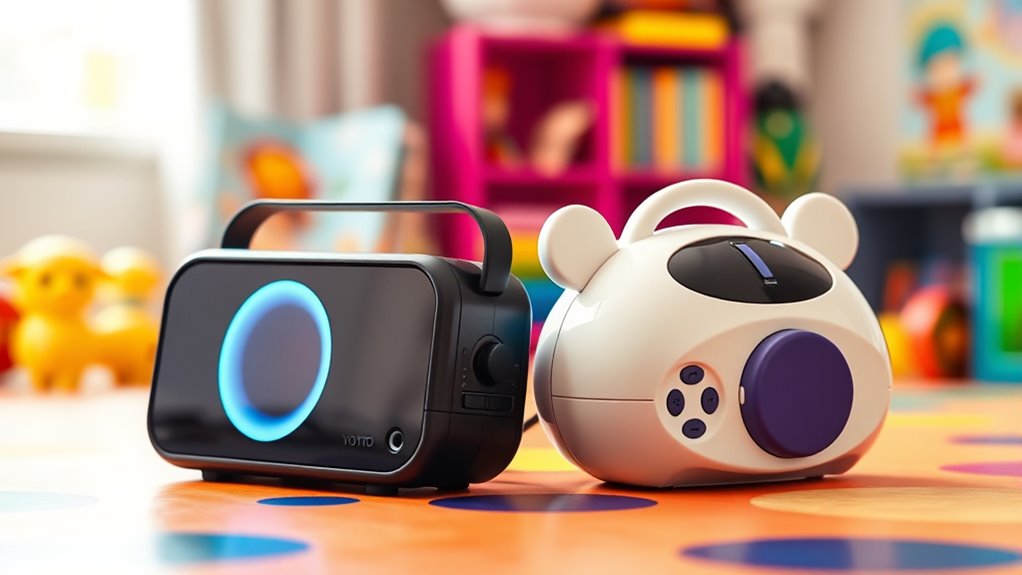

Choosing between a Yoto Player and a Toniebox depends on what you prioritize in a child’s audio device. The Yoto Player (3rd Gen.) + Starter Pack stands out for its extensive content library and parental controls, making it ideal for parents seeking customizable, safe entertainment. Meanwhile, the Toniebox is known for its simple, physical-media approach, which appeals to very young children and those wanting minimal setup. Both have their strengths, but key tradeoffs involve content flexibility versus ease of use, as well as device features versus content ecosystem.

Get kitchen staples and gadgets delivered free — and shop member deals
- Fast, free delivery on millions of items
- Access to Prime Big Deal Days deals on October 6–7
- Prime Video, Amazon Music and more included
Here, I’ll compare five top options—highlighting their differences in content, usability, portability, and price—to help you find the best fit for your child’s age and your parenting style.
Key Takeaways
- The YOTO Player (3rd Gen.) + Starter Pack offers a broad library and parental controls, making it better suited for older children or tech-savvy parents.
- The Toniebox emphasizes simplicity with physical figures, ideal for very young children or parents preferring minimal tech interaction.
- The Yoto Mini (2024 Edition) excels in portability and travel-friendliness, perfect for on-the-go families.
- Content access varies: Yoto devices often require app management and content cards, while Toniebox uses physical figures, making content management a key consideration.
- Pricing and content costs can add up; consider whether you prefer a one-time device purchase or ongoing content purchases.
| YOTO Player (3rd Gen.) + Starter Pack for Little Kids Bundle |  | Best Overall for Customizable Content & Parental Control | Model: 3rd Gen. | Includes: YOTO Player, Starter Pack | Content: Stories, Songs, Podcasts, Radio, Soundscapes | VIEW ON AMAZON | See Our Full Breakdown |
| YOTO Player (3rd Gen.) – Kids Audio Player, Screen-Free, Ages 3-12 |  | Best for Content Variety & Offline Listening | Display: Vivid pixel display | Battery Life: Up to 16 hours | Memory: 32GB internal storage | VIEW ON AMAZON | See Our Full Breakdown |
| Yoto Mini (2024 Edition) Kids Travel Audio Player |  | Best Portable for Travel & Daily Use | Battery Life: Up to 14 hours | Display: Pixel display | Content Compatibility: Over 1000+ cards | VIEW ON AMAZON | See Our Full Breakdown |
| Yoto Mini (2024 Edition) + Starter Pack for Little Kids Bundle |  | Best for Easy Setup & Growing Content Library | Includes: Yoto Mini (2024) and starter pack | Content: Stories, songs, activities | Display: Pixel display | VIEW ON AMAZON | See Our Full Breakdown |
| Yoto Mini (2024 Edition) Disney Pixar Audio Player Bundle |  | Best for Disney Fans & Older Kids | Includes: Mini device, Make Your Own card, 6 stories | Content: Toy Story, Brave, Up, Soul, Monsters Inc., Finding Nemo | Battery Life: Up to 14 hours | VIEW ON AMAZON | See Our Full Breakdown |
| yoto player vs toniebox review | Display | Battery Life | Includes | Content |
|---|---|---|---|---|
| YOTO Player | Pixel display | Up to 16 hours | YOTO Player, Starter Pack | Stories, Songs, Podcasts, Radio, Soundscapes |
| YOTO Player | Vivid pixel display | Up to 16 hours | — | — |
| Yoto Mini | Pixel display | Up to 14 hours | — | — |
| Yoto Mini | Pixel display | Up to 14 hours | Yoto Mini (2024) and starter pack | Stories, songs, activities |
| Yoto Mini | Pixel display | Up to 14 hours | Mini device, Make Your Own card, 6 stories | Toy Story, Brave, Up, Soul, Monsters Inc., Finding Nemo |
More Details on Our Top Picks
YOTO Player (3rd Gen.) + Starter Pack for Little Kids Bundle
The YOTO Player (3rd Gen.) + Starter Pack distinguishes itself with its extensive offline library, parental controls, and multi-use features like nightlight and thermometer. It’s a versatile device suited for children who are old enough to navigate a menu or use app controls, making it a strong choice for parents wanting flexibility. Unlike the Toniebox, which relies solely on physical figures, the Yoto offers a broader array of content including stories, songs, and podcasts via cards and app integration. However, content costs can add up, and the need for physical cards introduces a risk of loss. Still, its customization options and safety features make it the best overall pick for growing children.
Pros:- Extensive offline content library
- Parental controls for safe use
- Multi-purpose features like nightlight and alarm clock
Cons:- Requires purchase of audio cards for content
- Content management depends on app and physical cards
- Battery life may vary with usage
Best for: Parents seeking a highly customizable, content-rich device for children aged 3-12.
Not ideal for: Parents looking for a simple, plug-and-play experience for very young children or minimal setup.
- Model:3rd Gen.
- Includes:YOTO Player, Starter Pack
- Content:Stories, Songs, Podcasts, Radio, Soundscapes
- Display:Pixel display
- Battery Life:Up to 16 hours
- Features:Nightlight, Alarm clock, Thermometer, Bluetooth speaker, Parental controls
Our verdict“Best suited for parents who want control, variety, and are comfortable managing content and costs.”
YOTO Player (3rd Gen.) – Kids Audio Player, Screen-Free, Ages 3-12
This YOTO Player (3rd Gen.) is designed for children who enjoy a vast library of audiobooks, music, and soundscapes without visual distractions. Its large 32GB storage supports over 600 hours of content, making it ideal for long trips or daily routines. The device’s support for the Yoto app allows access to a curated selection of content, but it’s important to recognize that physical Yoto cards are necessary for most content, which can be a drawback if cards are lost. Compared to the Toniebox, which relies solely on figures, this model offers greater flexibility but demands more management from parents. It’s a good fit for tech-savvy families who want extensive offline content.
Pros:- Large content library with offline playback
- Supports multiple content types
- Parental controls and app integration
Cons:- Requires physical cards for most content
- Dependent on app for some features
- No visual or interactive features beyond pixel display
Best for: Parents wanting a large, customizable offline library for children aged 3-12.
Not ideal for: Parents preferring a device that works solely with physical figures without app dependency.
- Display:Vivid pixel display
- Battery Life:Up to 16 hours
- Memory:32GB internal storage
- Content Capacity:600+ hours
- Compatibility:Yoto App
- Charging:USB-C fast charge
Our verdict“A versatile device for families who want extensive offline content and app control.”
Yoto Mini (2024 Edition) Kids Travel Audio Player
The Yoto Mini (2024 Edition) stands out for its portability, making it perfect for travel or busy days. It features a long battery life, a pixel display, and physical cards that provide access to a wide variety of stories, music, and activities. Its small size and child-friendly design make it an easy companion, but the reliance on physical cards means parents need to ensure cards are kept track of, especially during trips. Compared with larger Yoto models, the Mini sacrifices some features but gains in portability. Its simplicity and long battery life make it ideal for on-the-go families.
Pros:- Lightweight and portable
- Long battery life
- Wide variety of content via physical cards
Cons:- Requires physical cards, which can be lost
- Limited to audio content
- Dependent on app for some controls
Best for: Travelers and busy families who need a compact, screen-free device for children 3-12.
Not ideal for: Families seeking a device with a large screen or interactive features beyond audio playback.
- Battery Life:Up to 14 hours
- Display:Pixel display
- Content Compatibility:Over 1000+ cards
- Control Method:Physical cards, app control
- Age Range:3-12+
Our verdict“Excellent for travel and daily use, especially for families wanting portability and long battery life.”
Yoto Mini (2024 Edition) + Starter Pack for Little Kids Bundle
This Yoto Mini (2024 Edition) bundle offers an easy setup process with simple card insertion or app control, making it ideal for parents who want straightforward operation. It includes a starter pack with a variety of stories, songs, and activities suitable for children aged 3 and up. Its versatility as a storyteller, alarm clock, and Bluetooth speaker adds value, but the device’s reliance on physical cards and app management can be a drawback for some. Compared to the Yoto Player, this model emphasizes simplicity and portability, making it a strong choice for families new to screen-free devices.
Pros:- Simple setup with card and app control
- Multiple functions including alarm and Bluetooth
- Expanding content library
Cons:- Limited to audio content
- Additional cards may be needed for full library
- Battery life varies with usage
Best for: Parents seeking an easy-to-use, versatile device for children 3+ with expanding content.
Not ideal for: Parents wanting a device with extensive offline library or advanced features.
- Includes:Yoto Mini (2024) and starter pack
- Content:Stories, songs, activities
- Display:Pixel display
- Battery Life:Up to 14 hours
- Control:Cards or app
Our verdict“Ideal for parents who want an easy, versatile device with a growing content selection.”
Yoto Mini (2024 Edition) Disney Pixar Audio Player Bundle
The Yoto Mini (2024) Disney Pixar Bundle caters to children aged 6 and up who love Disney stories. It features familiar characters and stories, making it highly engaging for fans of the franchise. Setup is straightforward, with parental controls and versatile features like sleep sounds and alarm clock. However, the content is limited to Disney Pixar stories unless additional cards are purchased. Compared with the Toniebox, which also has a strong character appeal, this Yoto model offers more control and content variety, but at a higher ongoing cost for additional cards. It suits families seeking themed content and safe, screen-free entertainment for older kids.
Pros:- Easy setup and use
- Themed Disney Pixar stories
- Parental controls and versatile functions
Cons:- Limited content without extra card purchases
- Requires charging for extended use
- Some features may be overwhelming for very young children
Best for: Parents wanting Disney-themed, safe audio entertainment for children 6+.
Not ideal for: Families seeking a device with a broad variety of non-Disney content without additional purchases.
- Includes:Mini device, Make Your Own card, 6 stories
- Content:Toy Story, Brave, Up, Soul, Monsters Inc., Finding Nemo
- Battery Life:Up to 14 hours
- Display:Pixel display
- Connectivity:Bluetooth, app control
Our verdict“Great for Disney fans and parents wanting themed content for children 6+ willing to invest in additional cards.”

How We Picked
Our selection process focused on devices that balance safety, content flexibility, ease of use, and value for different parenting styles. We prioritized products that are popular, well-reviewed, and designed specifically for children aged 3-12. Devices had to offer screen-free operation to promote safe play, with features that support parental controls and diverse content libraries. We compared hardware robustness, content ecosystems, portability, and price to identify options best suited for different needs—from travel to everyday use. Our goal: present a range of choices that reflect real tradeoffs, helping buyers align their priorities with the right device.
| yoto player vs toniebox review | Includes | Content | Display | Battery Life |
|---|---|---|---|---|
| YOTO Player | YOTO Player, Starter Pack | Stories, Songs, Podcasts, Radio, Soundscapes | Pixel display | Up to 16 hours |
| YOTO Player | — | — | Vivid pixel display | Up to 16 hours |
| Yoto Mini | — | — | Pixel display | Up to 14 hours |
| Yoto Mini | Yoto Mini (2024) and starter pack | Stories, songs, activities | Pixel display | Up to 14 hours |
| Yoto Mini | Mini device, Make Your Own card, 6 stories | Toy Story, Brave, Up, Soul, Monsters Inc., Finding Nemo | Pixel display | Up to 14 hours |
Factors to Consider When Choosing Yoto Player Vs Toniebox Review
When choosing between a Yoto device and a Toniebox, consider how your child interacts with media, your desire for content flexibility, and the ease of use. Yoto devices excel in offering a vast, customizable library with parental controls, but often require managing physical cards or app controls. Toniebox, on the other hand, is generally more straightforward, relying on physical figures to play content, making it ideal for very young children or parents who prefer minimal setup. Your decision should also factor in portability, content variety, and ongoing costs, as well as your child’s age and independence level.
Content Ecosystem & Flexibility
The Yoto ecosystem provides extensive offline content, customizable playlists, and parental controls, making it suitable for children who enjoy selecting and managing their media. Its reliance on physical cards and app controls can be a downside if your child tends to lose cards or if you prefer a simple interface. Conversely, the Toniebox depends on physical figures, which are easy for young children to handle but limit content to what the figures contain. If variety and control are priorities, Yoto wins; for simplicity and minimal management, Toniebox is preferable.
Ease of Use & Setup
Both devices are designed to be child-friendly, but the Toniebox generally requires less setup—just pop in a figure and press a button. The Yoto devices involve inserting audio cards or using an app for content management, which may be more complex but offers greater customization. If your child is very young or you prefer a plug-and-play experience, the Toniebox’s straightforward approach makes it easier. For older children or tech-savvy parents who want control, Yoto’s layered system offers more flexibility at the cost of increased complexity.
Portability & Durability
The Yoto Mini and Toniebox are both portable, designed for travel or daily outings. The Yoto Mini’s compact size and long battery life make it an excellent travel companion, while the Toniebox’s soft, durable design is perfect for younger children. Larger Yoto models offer more features but are less portable. Consider your child’s age and your activity level—if portability is a priority, the Yoto Mini or Toniebox will serve better than larger, more feature-rich devices.
Content Cost & Ongoing Expenses
Yoto devices often require purchasing physical cards or digital content, which can add up over time. The initial device cost might be reasonable, but content expenses are ongoing. The Toniebox requires purchasing figures, which are typically more expensive per piece but do not require ongoing digital purchases. If you prefer predictable costs, consider how much content you’re willing to buy or replace over time. The decision hinges on whether you prioritize a one-time device purchase or ongoing content investments.
Frequently Asked Questions
Are Yoto devices suitable for very young children?
Yes, Yoto devices like the Mini are designed for children as young as 3, with simple controls and durable, child-friendly designs. However, the reliance on physical cards or app controls means some oversight is necessary to keep content organized and ensure cards are not lost. For very young children, Toniebox’s simple figure-based system might be even easier to handle, but Yoto offers more content options and customization as children grow older.
Can I use Yoto and Toniebox together?
While both devices serve similar purposes as screen-free audio players, they operate on different ecosystems and are not directly compatible. Using both is possible if you want a variety of content types or formats, but managing two ecosystems can be cumbersome. Usually, parents choose one or the other based on content preferences and ease of use to avoid confusion and extra costs.
Which device has better battery life?
Both the Yoto Mini and the Toniebox generally offer around 14 hours of playback per charge, making them suitable for travel and daily routines. Larger Yoto models with more features may require more frequent charging, but overall, battery life is comparable between the Mini and Toniebox, emphasizing portability and extended use for active children.
Is content on Yoto devices more customizable than Toniebox?
Yes, Yoto devices excel in content customization. Parents can upload their own audio files, create playlists, and access a large variety of stories and music through the app. Toniebox relies on physical figures, so content customization is limited to purchasing new figures. If flexibility and control over content are priorities, Yoto’s ecosystem offers more options.
What are the main downsides of Yoto devices?
The primary tradeoff with Yoto devices is ongoing content costs and the management of physical cards or app controls. Lost cards can be a concern, and the need to buy new cards for additional content may add up financially. Additionally, the device setup and navigation can be more complex for very young children compared to the simplicity of Toniebox.
Conclusion
If you want a highly customizable device with extensive content options and parental controls, the YOTO Player (3rd Gen.) + Starter Pack is an excellent choice. It’s best for parents comfortable with managing content and seeking flexibility. For very young children or families prioritizing simplicity, the Toniebox offers a straightforward, durable, and easy-to-use alternative. The Yoto Mini models are ideal for travel or on-the-go use, balancing portability with a broad content library. Ultimately, your choice should align with your child’s age, your desire for control versus simplicity, and your willingness to handle ongoing content purchases.
NFL season / tailgating Picks
team gear
As an affiliate, we earn on qualifying purchases.