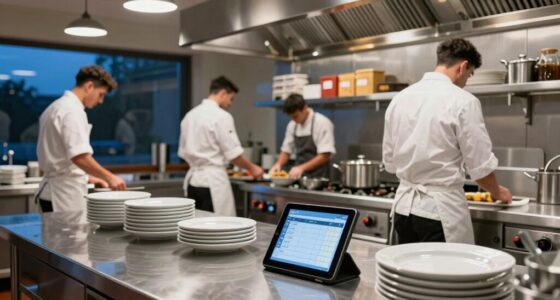

To guarantee a smooth opening, focus on reviewing FOH and BOH essentials like staff training, inventory management, and safety checks. Confirm all equipment is working, supplies are stocked, and tables are clean. Assign clear roles and communicate responsibilities to your team. Reinforce safety and sanitation protocols to create a secure environment. Covering these key areas will set a positive tone for the day. Keep going to discover even more tips for a successful start.

Get kitchen staples and gadgets delivered free — and shop member deals
- Fast, free delivery on millions of items
- Access to Prime Big Deal Days deals on October 6–7
- Prime Video, Amazon Music and more included
Key Takeaways
- Verify staff understanding of roles, safety procedures, and customer service standards through training sessions.
- Check inventory levels and organize storage to ensure accessibility and quality of ingredients and supplies.
- Prepare front and back of house areas by cleaning, arranging, and testing equipment for smooth operations.
- Review opening procedures with the team, assigning duties and ensuring communication and readiness.
- Conduct safety and sanitation checks, including fire safety, cleanliness, and equipment functioning, before opening.
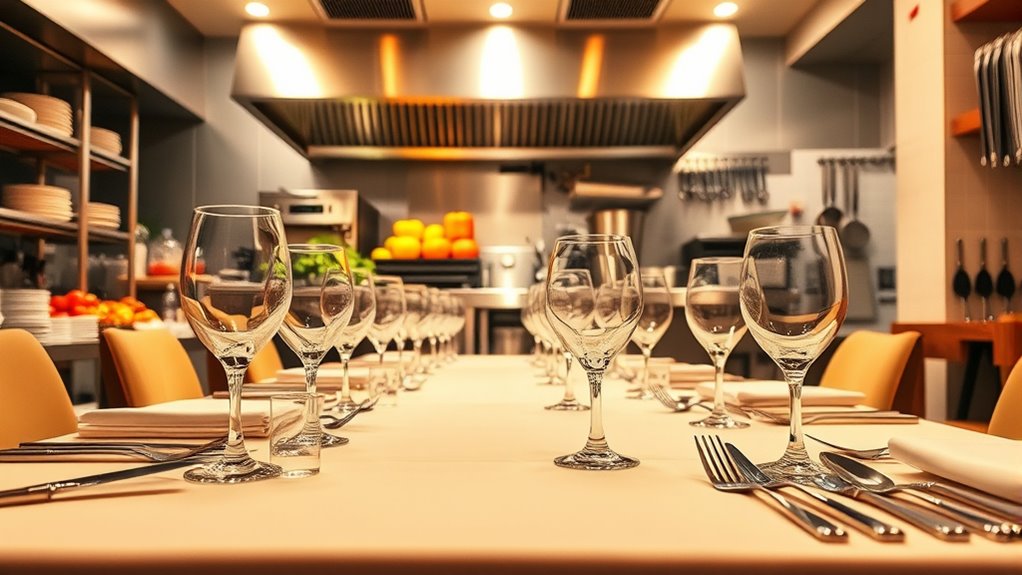
Getting your restaurant ready for the day starts with a thorough opening checklist that covers both the front-of-house (FOH) and back-of-house (BOH) essentials. One of the first steps is guaranteeing your staff is well-prepared through effective staff training. Before opening, you should verify that all team members understand their roles, safety procedures, and customer service standards. Well-trained staff not only delivers a better guest experience but also minimizes mistakes that could disrupt operations. Conduct quick refresher sessions if needed, especially if new protocols or menu items are introduced. Clear communication and confidence among your team set the tone for a smooth day ahead.
Effective staff training ensures smooth operations and excellent guest experiences each day.
Next, focus on inventory management. Start by checking your stock levels for key ingredients, beverages, and supplies. This step helps prevent shortages during service and reduces waste from overstocking. Organize your storage areas to ensure everything is easily accessible and correctly labeled. Double-check expiration dates and quality of perishables to avoid serving spoiled items. Accurate inventory management also involves updating your stock records, so you know what needs to be ordered for the next day. This practice keeps your supply chain smooth and minimizes last-minute scrambling. Additionally, incorporating industry trends into your inventory planning can help you stay competitive and meet customer preferences more effectively.
Once your staff training is on point, and your inventory is accounted for, move on to prepping the front and back of the house. Ensure tables, chairs, and menus are clean and arranged properly. Check that POS systems and payment devices are functioning correctly. For the BOH, verify that your cooking stations are sanitized, equipment is in good working order, and that ingredients are prepped according to your standards. These steps help streamline service and maintain high hygiene standards.
In addition, reviewing your opening procedures with your team helps reinforce consistency. Confirm that everyone knows their tasks, from greeting guests to preparing food, and that communication channels are open. Assign specific responsibilities, such as opening the cash register, setting up stations, and restocking supplies. This clarity minimizes confusion and speeds up the opening process.
Finally, conduct a quick walkthrough to ensure all safety measures are in place, including fire exits, cleaning schedules, and sanitation supplies. When your staff is trained, your inventory is managed properly, and all systems are go, you create a foundation for a successful day. A comprehensive opening checklist like this ensures nothing is overlooked, allowing you to focus on delivering excellent service and satisfying your guests right from the start.
restaurant staff training manual
As an affiliate, we earn on qualifying purchases.
As an affiliate, we earn on qualifying purchases.
Frequently Asked Questions
How Often Should the Opening Checklist Be Reviewed or Updated?
You should review and update your opening checklist regularly, ideally monthly or whenever staff accountability issues arise. This keeps the checklist accurate and guarantees all tasks are current. Frequent updates help prevent outdated procedures, improve efficiency, and reinforce accountability. By staying proactive, you ensure your team follows the correct steps every day, maintaining high standards and reducing errors. Consistent reviews promote a reliable, well-organized opening process for everyone involved.
Who Is Responsible for Completing Each Item on the Checklist?
You are responsible for assigning each checklist item to specific team members, ensuring staff accountability. You should clearly communicate who handles each task to maintain checklist accuracy. Regularly review and confirm that staff complete their assigned duties before opening. By doing so, you create a sense of ownership, minimize errors, and keep the opening process smooth and efficient. Always monitor progress to uphold standards and accountability.
What Are Common Signs of Incomplete or Incorrect Checklist Completion?
You might notice a flickering light or a silent alarm, symbols of neglect. These signs indicate incomplete or incorrect checklist completion, risking quality assurance. When items are missed or rushed, staff accountability suffers, leading to inconsistent service. An unfulfilled checklist becomes a shadow over your operation, signaling that quality and responsibility are slipping away. Stay vigilant, regularly review your checklist, and uphold standards to guarantee flawless execution every day.
How Can Technology Improve the Efficiency of Opening Procedures?
You can boost your opening procedures’ efficiency by leveraging digital tools and automation systems. These technologies streamline checklist completion, reduce errors, and save time, allowing you to focus on guest experience. With digital checklists, you get real-time updates and easy tracking, ensuring nothing’s missed. Automation systems handle repetitive tasks, freeing staff to concentrate on critical responsibilities. Embracing these tools makes your opening smoother, more accurate, and more efficient overall.
What Training Is Recommended for New Staff Regarding the Checklist?
You should implement thorough staff onboarding and training modules for new team members. This guarantees they understand the checklist thoroughly, reducing mistakes and delays. Don’t worry if you’re short on time—interactive modules and hands-on sessions make training efficient and engaging. By emphasizing key tasks and responsibilities early, you’ll boost confidence and performance, setting your team up for smooth, successful openings every day.
Conclusion
By mastering this opening checklist, you set the stage for a smooth day ahead. Think of it as the foundation of a well-tuned symphony—every detail matters. When you’re prepared with FOH and BOH essentials, you create harmony that guests can feel and staff can thrive on. So, embrace these steps confidently, and watch your day unfold seamlessly—because in this game, preparation isn’t just key; it’s the whole door.
NFL season / tailgating Picks
team gear
As an affiliate, we earn on qualifying purchases.