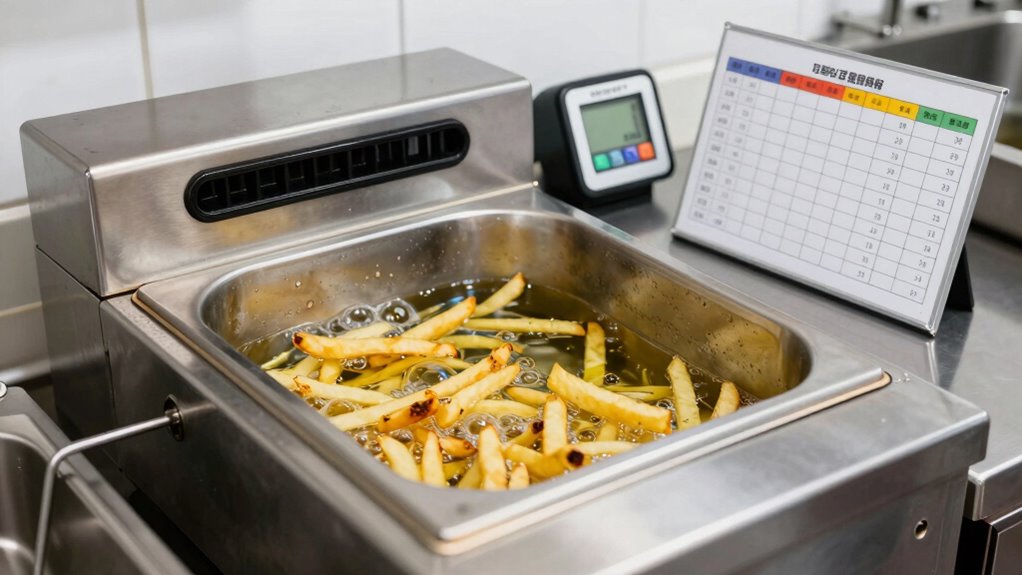

To prevent burnt-oil flavor, follow a simple rule: filter your fryer oil every few batches or at least once daily during busy times. Keep an eye out for darkening, foaming, or burnt smells, and filter immediately if these occur. Regular filtration prevents debris buildup and oil degradation, ensuring your food tastes fresh and avoids off-flavors. Stick to this routine, and you’ll keep your fryer in top condition—discover more tips when you continue exploring.
Key Takeaways
- Filter oil at least once daily or after every few batches during busy periods.
- Immediately filter if the oil darkens, foams excessively, or develops a burnt smell.
- Consistently monitor oil appearance and smell to determine optimal filtration timing.
- Develop a routine based on your operation volume to prevent debris buildup and oil breakdown.
- Regular filtration extends oil life, maintains food quality, and prevents burnt-flavor issues.
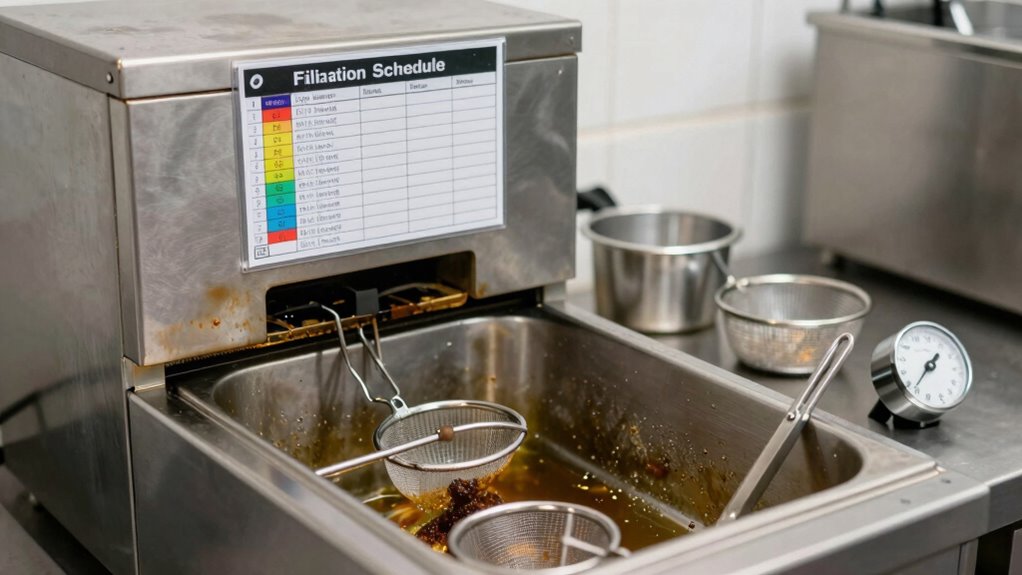
Regularly changing and maintaining your fryer filtration schedule is essential to guarantee food quality and safety. When you stay consistent with your filtration timing, you help preserve the oil quality, ensuring that each batch of food is fresh, flavorful, and safe to eat. Oil in your fryer naturally degrades over time due to exposure to heat, oxygen, and food particles. Without proper filtration, these contaminants build up, leading to off-flavors and a burnt smell that can ruin the taste of your dishes. By sticking to a regular filtration routine, you prevent the accumulation of debris and extend the lifespan of your oil, saving you money in the long run. Implementing a scheduled maintenance plan can help streamline this process and keep your fryer operating efficiently.
Understanding the significance of oil quality is critical. Fresh, clean oil produces better-tasting food, maintains the right texture, and reduces the risk of health issues associated with degraded oil. The key to maintaining oil quality is to implement a consistent filtration schedule. How often you should filter depends on your fryer’s usage, but a good rule of thumb is to filter after every few batches or at least once every day during busy periods. If you notice darkening, foaming, or a burnt smell, it’s a sign that your oil needs filtering immediately. Regular filtration removes food particles, crumbs, and other debris that can accelerate oil breakdown and cause off-flavors.
Filtration timing isn’t just about frequency; it’s about being attentive to the condition of your oil. Waiting too long to filter can lead to buildup that’s difficult to clean and damages your oil’s quality. On the other hand, filtering too often might be unnecessary and wasteful if the oil is still in good condition. A practical approach is to develop a routine based on your operation’s volume. For example, if you’re running a busy restaurant, filtering after every few batches ensures the oil stays clean without overdoing it. In smaller operations, daily filtering might suffice to keep the oil in top shape. Always monitor the oil’s appearance, smell, and performance, and adjust your filtration timing accordingly.
Frequently Asked Questions
How Often Should I Replace My Fryer Oil Completely?
You should replace your fryer oil completely every 6 to 8 weeks, depending on usage. Regular fryer maintenance and monitoring oil degradation help prevent a burnt‑oil flavor. Signs like darkening, foaming, or off‑odors indicate it’s time for a fresh batch. Consistently changing the oil guarantees ideal food quality and safety, while also extending your fryer’s lifespan. Stay attentive to these cues to keep your fryer running smoothly and your food tasting great.
Can I Reuse Oil Filtered Multiple Times Without Quality Loss?
Yes, you can reuse oil filtered multiple times without quality loss if you maintain proper filtration effectiveness. Regularly filtering removes food particles and reduces oil absorption, preventing flavor transfer and extending oil life. Just guarantee you change the oil when it shows signs of degradation, such as off smells or dark color. Proper filtration keeps the oil fresh, maintaining quality and taste for multiple uses.
What Type of Filter Is Best for My Fryer?
You should choose oil filter types designed specifically for fryer filtration, such as mesh filters, paper filters, or reusable filter baskets. Mesh filters are great for catching large debris, while paper filters help remove finer particles. Reusable baskets are eco-friendly and cost-effective if cleaned regularly. Select a filter type compatible with your fryer to guarantee ideal filtration, prolong oil life, and prevent burnt-oil flavors.
Does Oil Filtration Impact Food Taste?
Yes, oil filtration impacts food taste by preserving oil freshness and flavor retention. When you filter your oil regularly, it removes debris and burnt particles, preventing off-flavors and ensuring your fried foods taste their best. Think of it as giving your oil a fresh start with each batch. This simple step keeps your food flavorful, crispy, and delicious, making a noticeable difference in every bite.
Are There Specific Signs Indicating the Oil Needs Changing?
You’ll notice signs of oil needing changing through oil degradation and contamination indicators like a foul smell, excessive foaming, or dark discoloration. If the oil looks cloudy, has particles, or emits an off-putting odor, it’s time to replace it. Regularly monitoring these contamination indicators helps prevent burnt-flavor and maintains food quality. Trust your senses—if anything seems off, changing the oil is the best move.
Conclusion
By following a regular fryer filtration schedule, you prevent burnt-oil flavors and extend your oil’s life. For example, imagine running a busy restaurant where neglecting filtration led to off-tastes and wasted oil. After implementing a simple schedule—filtering every few hours—you notice better-tasting food and cost savings. Consistency is key; a small daily effort maintains your fryer in top shape and guarantees your customers always enjoy fresh, delicious meals.