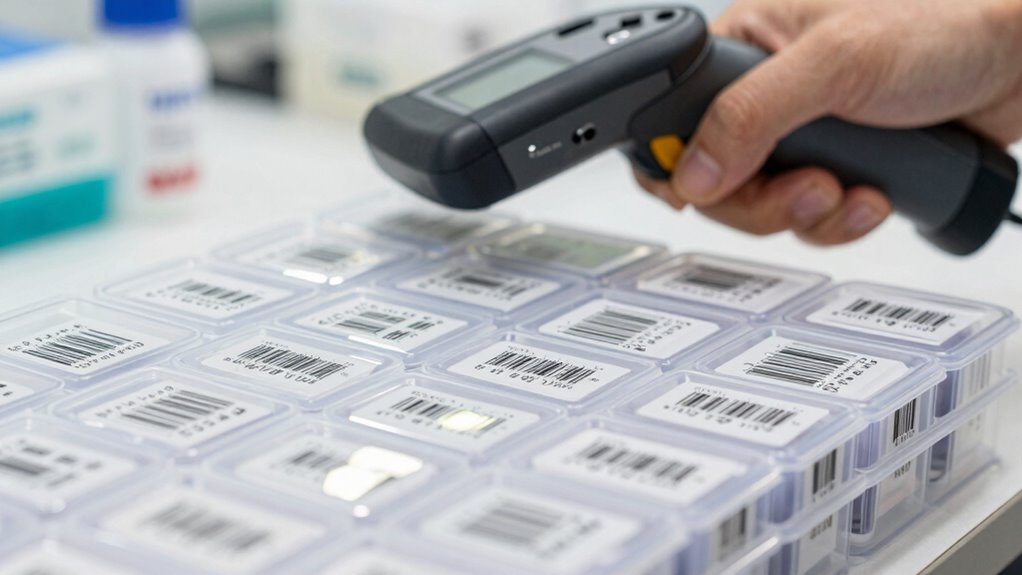

Implementing robust lot codes and traceability systems allows you to create a clear paper trail that builds customer trust quickly. By tracking products throughout the supply chain, you can verify origins, guarantee safety, and meet regulatory standards efficiently. This transparency helps you respond swiftly to issues like recalls while showing your commitment to quality. Keep exploring to discover how integrating these systems can boost your reputation and streamline your operations even further.
Key Takeaways
- Lot codes enable precise product tracking, ensuring transparency and quick identification of issues throughout the supply chain.
- They support regulatory compliance by documenting every production step, facilitating audits and safety verifications.
- Effective traceability allows rapid recalls, minimizing financial impact and safeguarding consumer trust.
- Digital integration of lot codes enhances data accuracy, streamlines operations, and accelerates response times in critical situations.
- Transparent traceability systems demonstrate commitment to quality and safety, strengthening brand reputation and customer confidence.
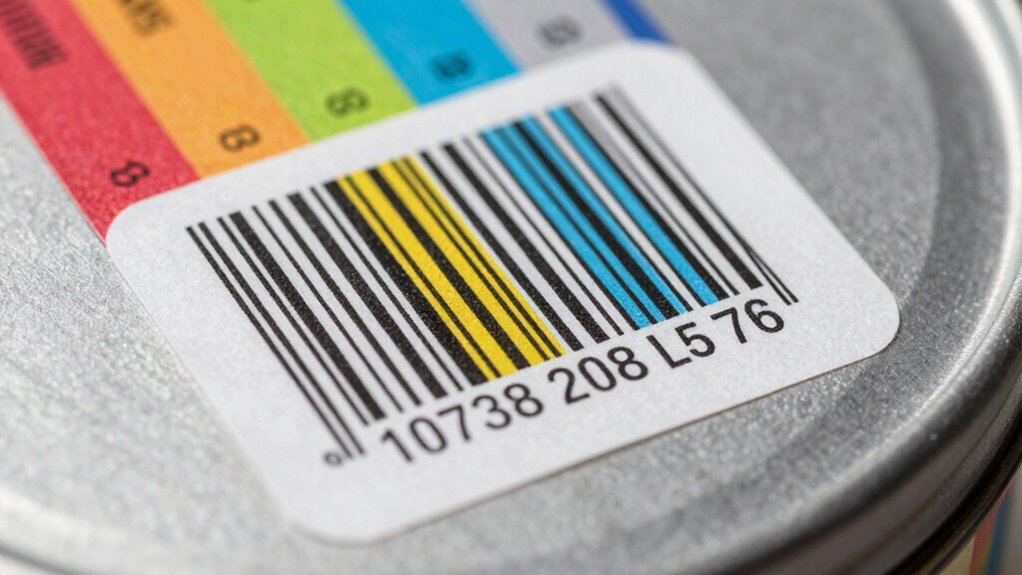
Traceability and lot codes are essential tools that help you track and identify products throughout the supply chain. By implementing these systems, you not only streamline operations but also strengthen your ability to guarantee quality and meet regulatory standards. When you have clear, accurate lot codes, it becomes easier to verify the origins of each product, identify potential issues, and respond swiftly to any concerns. This transparency is crucial for maintaining quality assurance, as it allows you to pinpoint exactly where a problem may have occurred, whether during manufacturing, packaging, or distribution. It also supports compliance with industry regulations, which often mandate detailed records for product recalls, safety audits, and traceability requirements.
In today’s complex supply chains, regulatory compliance isn’t just a legal obligation; it’s a core component of building trust with your customers and partners. When you assign unique lot codes to batches of products, you’re creating a paper trail that documents every step of the production process. This traceability demonstrates that you follow best practices and adhere to safety standards, reducing the risk of non-compliance penalties. Additionally, in the event of a product recall, lot codes enable you to quickly identify affected batches, isolate them from inventory, and notify consumers or retailers efficiently. This swift action not only minimizes financial losses but also preserves your reputation by showing your commitment to safety and transparency.
Furthermore, lot codes serve as a foundation for quality assurance programs. When you systematically record lot information, you can analyze patterns over time, identify recurring issues, and implement process improvements. This proactive approach helps prevent defects and ensures consistent product quality. It also simplifies audits and inspections, as you’ll have thorough documentation to verify that your production and distribution processes meet regulatory standards. In turn, this enhances your credibility and fosters trust among clients, suppliers, and regulatory bodies.
Another critical aspect is that traceability systems can facilitate the integration of digital data management tools, which improve accuracy and efficiency in record-keeping. Ultimately, integrating lot codes and traceability into your supply chain isn’t just about compliance or quality; it’s about establishing a reliable, transparent system that customers and partners can trust. When you prioritize accurate labeling and detailed record-keeping, you create a robust framework that supports regulatory adherence, improves product quality, and accelerates response times in critical situations. This paper trail isn’t just a bureaucratic requirement—it’s a strategic asset that builds confidence in your brand and ensures you stay ahead in a competitive marketplace.

Medical Terminology & Anatomy for Coding
As an affiliate, we earn on qualifying purchases.
As an affiliate, we earn on qualifying purchases.
Frequently Asked Questions
How Do Lot Codes Vary Across Different Industries?
You’ll notice lot codes vary across industries based on industry standards and labeling practices. For example, food and pharmaceutical sectors often use detailed codes to guarantee traceability and safety, while electronics might use simpler alphanumeric codes for inventory management. These differences help meet regulatory requirements, improve product recalls, and build customer trust. Adapting lot codes to each industry’s standards assures effective traceability and compliance, giving your business a reliable paper trail.
What Are the Costs Associated With Implementing Traceability Systems?
Implementing traceability systems involves costs like initial investment in technology integration and ongoing maintenance. You should conduct a detailed cost analysis to understand expenses related to hardware, software, and staff training. While upfront costs can be significant, they often lead to long-term savings by improving efficiency and compliance. Balancing these expenses guarantees your traceability system enhances trust without overextending your budget.
How Often Should Traceability Records Be Updated?
You should update traceability records regularly, ideally in real time, to guarantee data accuracy and immediate insight. Real-time updates prevent discrepancies and data delays, keeping your system trustworthy and transparent. Frequent updates, especially during critical processes like production, packaging, or shipping, help you catch issues early and build confidence with stakeholders. Consistent, timely record-keeping fosters fast, reliable traceability, strengthening your supply chain’s integrity and trustworthiness.
What Are Common Challenges in Establishing Effective Lot Codes?
You face challenges in establishing effective lot codes, especially with maintaining consistent barcode standards and seamless data integration. Ensuring codes are unique and scannable across systems can be tricky, leading to errors or delays. You must also align your lot coding with existing standards to prevent confusion. Overcoming these hurdles requires careful planning, regular audits, and investing in compatible technology to keep your traceability system reliable and trustworthy.
How Can Small Businesses Adopt Traceability Practices Efficiently?
You can adopt traceability practices efficiently by integrating simple inventory management systems that track lot codes from the start. Focus on maintaining accurate records for quality assurance, ensuring each product’s history is clear. Utilize affordable software or labels to streamline processes, and train staff to follow consistent procedures. This approach minimizes errors, builds trust with customers, and keeps your operations compliant without overwhelming your small business.
![MixPad Free Multitrack Recording Studio and Music Mixing Software [Download]](https://m.media-amazon.com/images/I/71ltIxIuz1L._SL500_.jpg)
MixPad Free Multitrack Recording Studio and Music Mixing Software [Download]
Create a mix using audio, music and voice tracks and recordings.
As an affiliate, we earn on qualifying purchases.
As an affiliate, we earn on qualifying purchases.
Conclusion
By understanding and implementing proper lot codes and traceability, you create a safety net that catches mistakes before they reach your customers. Think of it as building a sturdy bridge of trust—every link reinforced with accurate data and transparency. When you prioritize traceability, you’re not just tracking products; you’re cultivating confidence and loyalty. It’s the paper trail that turns your brand into a beacon of reliability, guiding your customers home to your integrity every single time.
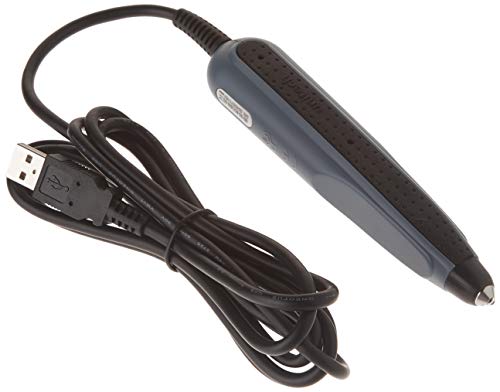
Unitech MS100-NUCB00-SG Pen Scanner, 1D Barcodes, USB
Country Of Origin: Taiwan, Province Of China
As an affiliate, we earn on qualifying purchases.
As an affiliate, we earn on qualifying purchases.

Blockchain Solutions for Rural Development
As an affiliate, we earn on qualifying purchases.
As an affiliate, we earn on qualifying purchases.