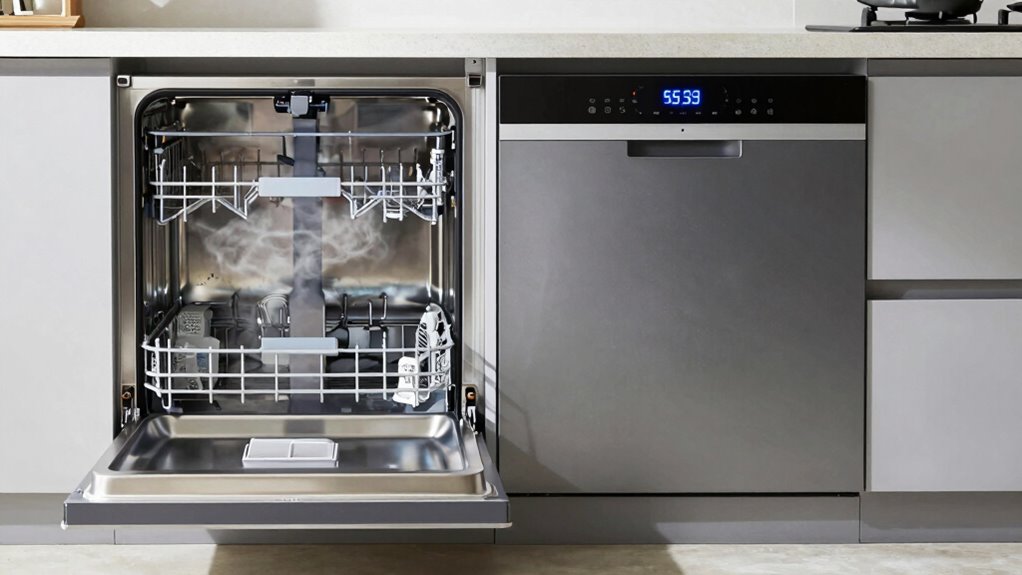

Choosing between high‑temp and low‑temp dishwashers affects cleaning results, energy use, and how long your appliance lasts. High-temp models offer thorough sanitation but consume more energy and may wear out faster. Low‑temp options save energy and are gentler on your dishwasher, but might not clean heavily soiled dishes as effectively. Consider your cleaning needs and energy goals—exploring more can help you make the best setup for your home.

Get kitchen staples and gadgets delivered free with Prime
- Fast, free delivery on millions of items
- Prime Video, Amazon Music and more included
- Member-only deals all year
Key Takeaways
- High-temp dishwashers provide better sanitation and stain removal but consume more energy and cause more wear on internal parts.
- Low-temp dishwashers save energy, reduce maintenance, and are gentler on delicate items like plastics.
- Choosing high-temp cycles is ideal for heavily soiled or germ-laden dishes, while low-temp is suited for everyday, delicate cleaning.
- Balancing cleaning effectiveness with energy efficiency influences long-term appliance durability and utility costs.
- Your decision impacts not just cleanliness but overall appliance longevity, maintenance needs, and household energy consumption.
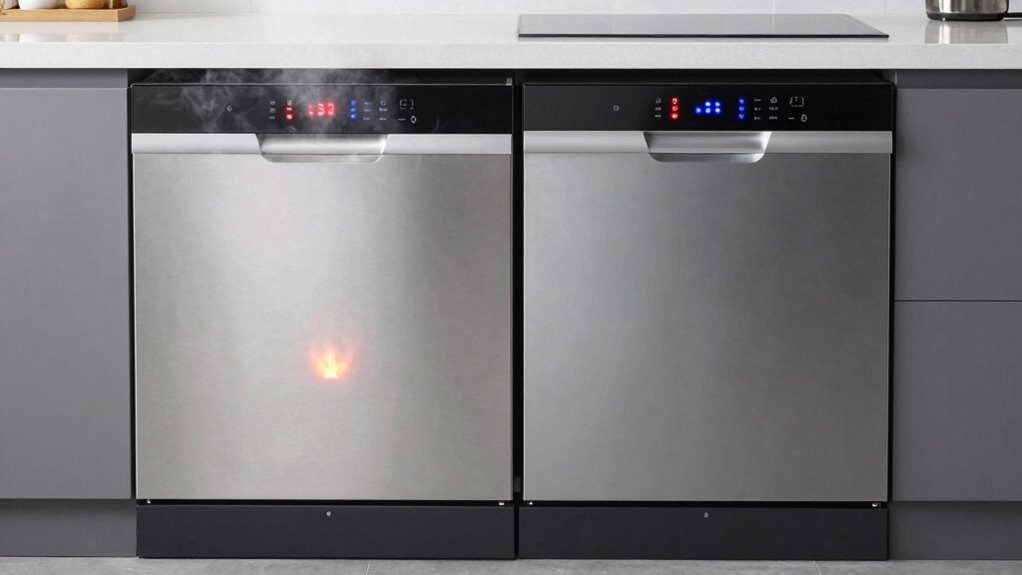
When choosing a dishwasher cycle, understanding the difference between high-temp and low-temp settings is essential. Your decision impacts not only how clean your dishes come out but also how much energy you use and how much maintenance your dishwasher needs over time. High-temp cycles heat water to higher temperatures, typically around 140°F or more, ensuring thorough cleaning and better sanitation. These cycles are ideal for heavily soiled pots, pans, and utensils, especially when you want to eliminate germs and bacteria. On the other hand, low-temp cycles operate at lower temperatures, often around 120°F or less, which can be gentler on delicate dishes and plasticware. They typically consume less energy since heating water to lower temperatures requires less power. Choosing the right cycle depends on your priorities; if you’re aiming for energy efficiency and lower utility bills, a low-temp cycle might be more suitable. However, if sanitation and deep cleaning are your top concerns, high-temp cycles deliver superior results. Additionally, the type of dishwasher you have can influence which cycle is more effective, as some models are optimized for specific temperature ranges. Your choice also influences the maintenance requirements of your dishwasher. High-temp cycles generate more heat, which can cause wear and tear on internal components over time, especially seals and gaskets. This means your dishwasher might need more frequent checks and replacements if you frequently run high-temp cycles. Additionally, higher heat settings can lead to mineral buildup in certain areas, requiring regular descaling to prevent clogs and maintain ideal performance. Conversely, low-temp cycles tend to be gentler on your appliance, reducing the strain on internal parts and potentially extending its lifespan. They also generate less steam and condensation, which can minimize the buildup of mold or mildew inside the machine. However, since low-temp cycles may not thoroughly eliminate bacteria or stubborn residue, you might need to run occasional maintenance cycles or use specialized cleaning products to keep everything in top shape. To help protect your dishwasher and ensure optimal performance, consider regular maintenance routines tailored to your cycle choices. Ultimately, balancing energy efficiency with maintenance requirements guides your decision. If you run your dishwasher multiple times a day or have energy-saving goals, a low-temp cycle can save you money and reduce wear on your machine. But if sanitation and deep cleaning are paramount, investing in high-temp cycles might be worth the extra energy consumption and maintenance considerations. Remember, the cycle you choose influences more than just cleanliness; it affects your dishwasher’s longevity and your utility bills. Making an informed decision helps you maximize performance, extend your appliance’s life, and keep your dishes sparkling clean with less hassle.
As an affiliate, we earn on qualifying purchases.
Frequently Asked Questions
How Do High-Temp Dishwashers Affect Energy Consumption?
High-temp dishwashers tend to use more energy, which can increase your operational costs. However, they often offer better energy efficiency because they clean more thoroughly in less time, reducing the need for extra cycles. If you’re aiming to balance cleaning power and energy use, consider how high-temp models can optimize your workflow while still saving you money on energy bills.
Are Low-Temp Dishwashers Suitable for Sanitizing Baby Bottles?
You might think low-temp dishwashers are enough for bottle sterilization, but only high-temp models guarantee proper baby bottle safety. About 80% of bacteria are eliminated at higher temperatures, making them more reliable for sterilizing. Low-temp dishwashers don’t reach the necessary temperature thresholds, so they’re less effective. For peace of mind and your baby’s health, choose a high-temp dishwasher for safe and thorough bottle sterilization.
What Are the Maintenance Differences Between High- and Low-Temp Models?
You’ll find that high-temp dishwashers require more frequent filter maintenance due to their intense cleaning cycles, while low-temp models generally need less attention. Both types need compatible detergents; high-temp models often use harsher chemicals, so check your detergent’s compatibility. Regularly clean filters on both to prevent clogs, but high-temp units may need more frequent filter checks to guarantee peak performance and sanitation.
Can Low-Temp Dishwashers Clean Heavily Soiled Dishes Effectively?
Yes, low-temp dishwashers can clean heavily soiled dishes effectively, especially if you use the right detergent. Their cleaning performance depends on water pressure and detergent efficiency, which break down tough grime. However, drying performance might be less ideal compared to high-temp models, so you may need to air-dry or use a drying cycle. Overall, with proper detergent and settings, low-temp dishwashers handle heavy soil well.
How Do Initial Costs Compare for High- Versus Low-Temp Dishwashers?
You might think high-temp dishwashers cost more upfront, but the truth is, the cost comparison varies. High-temp models often have a higher initial investment due to advanced heating elements and durability, while low-temp dishwashers tend to be cheaper initially. However, consider long-term savings, maintenance, and energy use. Your choice depends on balancing these factors to find the best fit for your needs and budget.
Conclusion
Choosing between high-temp and low-temp dishwashers is like selecting the heart of your kitchen’s rhythm. The high-temp model symbolizes strength and thoroughness, ensuring every dish is spotless and sanitized. The low-temp version whispers of efficiency and gentleness, protecting delicate items and saving energy. Your decision shapes not just your setup, but the harmony of your daily routine. Trust your instincts—let this choice be the steady beat guiding your kitchen’s symphony.
NFL season / tailgating Picks
team gear
As an affiliate, we earn on qualifying purchases.