
Menu Engineering 101 shows you how to design and organize your menu to boost sales and profitability. You’ll learn to place high-margin items strategically, use appealing descriptions, and leverage visual cues to guide customer choices. Analyzing item performance helps you make data-driven adjustments, while smart categorization and pricing maximize revenue. Incorporating technology and testing different layouts refine the experience. Keep exploring these principles to master how your menu can work harder for your business.

Get kitchen staples and gadgets delivered free with Prime
- Fast, free delivery on millions of items
- Prime Video, Amazon Music and more included
- Member-only deals all year
Key Takeaways
- Use menu psychology principles like strategic placement and descriptive language to influence customer choices and highlight high-margin items.
- Analyze sales data and customer preferences regularly to optimize menu offerings and improve profitability.
- Organize menu categories logically and position best-sellers in prime spots to guide selections and upsell effectively.
- Design appealing layouts with vivid descriptions and strategic pricing to increase item desirability and revenue.
- Leverage technology such as digital menus and data analytics to continually refine and enhance menu performance.
digital menu boards for restaurants
As an affiliate, we earn on qualifying purchases.
As an affiliate, we earn on qualifying purchases.
Understanding the Principles of Menu Psychology
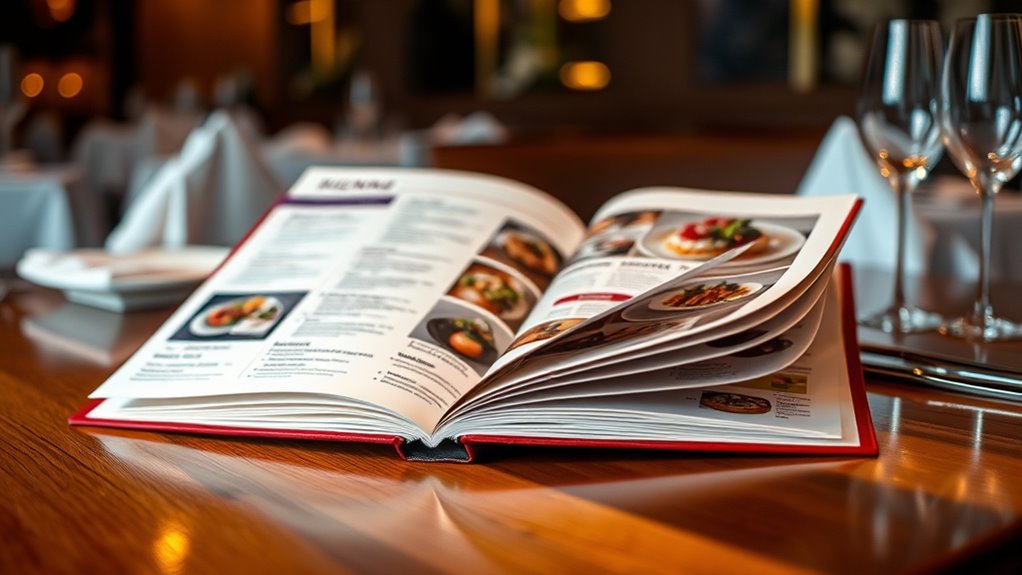
Understanding the principles of menu psychology is essential for designing menus that influence customer choices and increase sales. You need to know how visual cues and placement impact what customers notice first. For example, placing high-profit items at the top right corner draws eyes naturally, as most people scan menus in an F-shape pattern. Using descriptive, appealing language makes dishes more tempting, encouraging impulse buys. Color also plays a role; warm tones like red and orange stimulate appetite, while cooler colors may suppress it. Grouping similar items or creating sections guides customers smoothly through options. Keep menus uncluttered, so choices aren’t overwhelming. Additionally, understanding menu psychology can help you leverage subconscious cues to subtly steer customer decisions. When you understand these psychological triggers, you can strategically craft menus that subtly steer customers toward profitable selections.
Analyzing Menu Item Performance and Data

To optimize your menu, analyzing item performance through data is essential. You need to track sales volume, profit margins, and customer preferences for each dish. Use your POS system to gather detailed sales reports, noting which items are popular and which underperform. Look for patterns, such as seasonal trends or time-based fluctuations, to identify opportunities for menu adjustments. Pay attention to high-selling items that yield low margins—these may need reworking or strategic placement. Conversely, identify high-margin dishes that aren’t selling enough; consider promotions or repositioning. Regularly reviewing this data helps you make informed decisions, ensuring your menu aligns with customer demand and profitability goals. Data-driven analysis keeps your menu dynamic, relevant, and optimized for success.
Strategic Placement of High-Margin Items
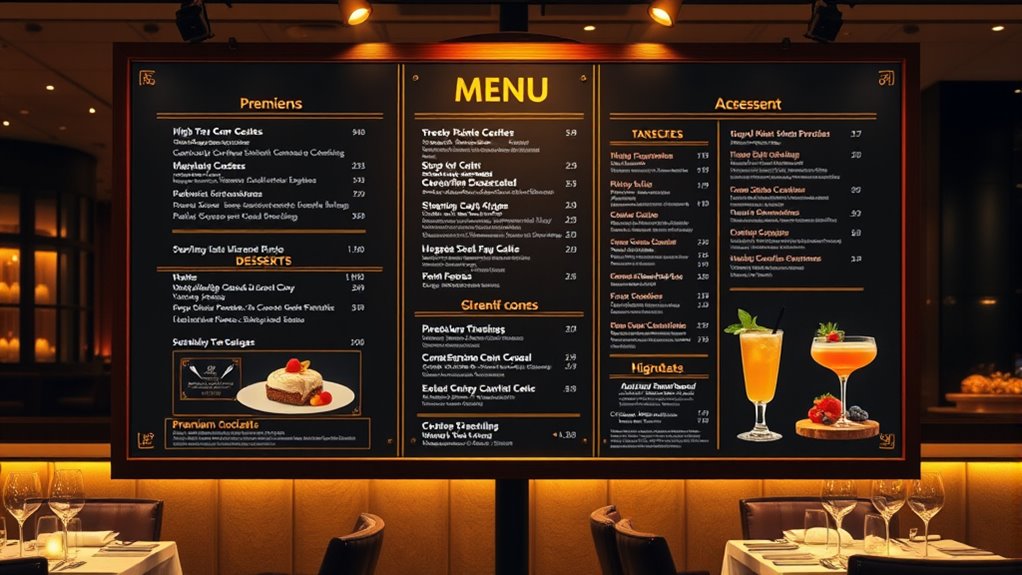
Have you considered how the placement of high-margin items can influence your menu’s profitability? Strategically positioning these items in prominent spots, like the top right corner or near the center, catches customers’ eyes first. Use prime locations such as the “sweet spot,” where attention naturally falls. Group high-margin items with popular choices or in sections that draw more traffic. Avoid hiding profitable options at the bottom or in less noticeable areas. Consider the flow of your menu—place high-margin items where customers’ eyes naturally land during their decision-making process. Effective placement encourages impulse choices and increases sales of profitable items. Remember, even the best dish won’t sell if it’s tucked away where customers don’t see it. Proper positioning makes all the difference in boosting your menu’s overall profitability. Additionally, understanding customer behavior and menu engineering principles can help optimize item placement for maximum profitability.
Designing Visual Cues to Influence Choices
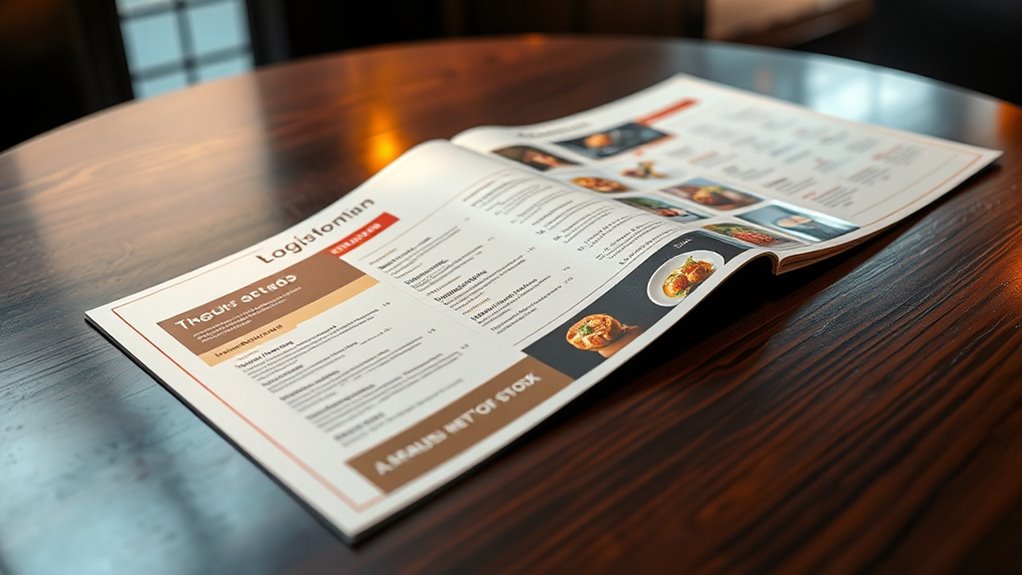
You can guide customers’ choices by using strategic placement techniques that highlight high-margin items. Colors and fonts also play a vital role in drawing attention and creating visual cues. By combining these elements effectively, you influence decisions without overtly pushing certain options. Additionally, incorporating visual cues can enhance the overall effectiveness of menu design, making it easier for customers to focus on preferred selections.
Strategic Placement Techniques
Ever wondered why some menu items seem to jump out at you? That’s no coincidence. Strategic placement guides your eyes toward specific dishes, increasing their appeal. Placing high-profit items at the top right corner, where your gaze naturally lands first, makes them more likely to be chosen. The middle of the menu also draws attention, so placing featured or popular items there boosts sales. Avoid crowding items together; give key dishes enough space to stand out. Use white space to create visual hierarchy, subtly directing your focus. Position specials or recommendations near the beginning or end of the menu—these spots get noticed first and last, leaving a lasting impression. Incorporating visual hierarchy techniques helps to effectively guide customer choices without overtly pushing your offerings.
Color and Font Impact
Strategic placement of menu items sets the foundation for guiding customer choices, but the visual cues you use—specifically color and font—amplify that influence. Colors evoke emotions and can steer customers toward certain selections; for example, red can stimulate appetite, while green suggests freshness. Use contrasting colors to make popular or high-margin items stand out. Fonts also matter: bold, clear fonts draw attention to specials or premium options, while softer, elegant fonts create a refined feel for upscale dishes. Consistency in font style enhances readability and brand cohesion. Avoid cluttered or overly decorative fonts that confuse or slow down decision-making. By carefully choosing colors and fonts, you create visual signals that subtly nudge customers toward your desired choices, increasing sales and improving their overall experience. Additionally, understanding narcissistic tendencies in customer behavior—such as the desire for recognition or exclusivity—can help tailor visual cues to appeal to their need for status and validation.
Categorizing and Grouping Menu Offerings Effectively
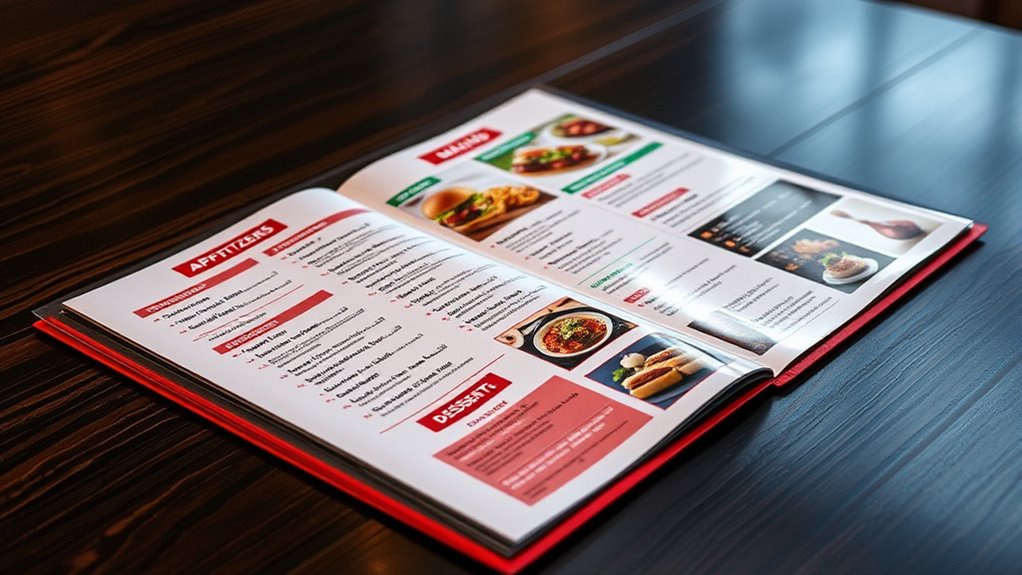
Grouping menu items by popularity helps guide customers toward what’s best for both them and your business. Using clear and effective categories makes it easier for guests to find what they want quickly. When done right, this strategy boosts sales and enhances the overall dining experience. Incorporating visual appeal through thoughtful presentation and decor can further attract customers and improve their satisfaction.
Grouping by Popularity
Have you ever wondered how restaurants decide which items to highlight or organize first on their menus? Grouping by popularity helps you do just that. By analyzing sales data, you can identify your most and least popular dishes. Place your best-sellers in prime positions, like the top of categories or the center of the menu, where customers’ eyes naturally fall. This guides diners toward choices that are proven favorites, increasing satisfaction and sales. Less popular items can be grouped together or placed in less prominent spots, reducing clutter and focusing attention on what sells best. This approach also simplifies decision-making for customers, making their dining experience smoother. Grouping by popularity ensures your menu highlights your top performers while maintaining a logical, customer-friendly layout.
Using Effective Categories
Organizing your menu into clear, logical categories helps customers navigate their options effortlessly. By grouping similar items together, you make it easier for diners to find what they want and encourage upselling. Use categories that reflect how customers think about your offerings, such as appetizers, mains, desserts, beverages, and specials. Consider the flow of the menu, placing popular or profitable sections prominently. Effective categories also reduce confusion and enhance the dining experience. To elevate your menu’s sophistication, think about incorporating:
- Distinct sections for dietary preferences (vegan, gluten-free)
- Premium or signature items highlighted in separate groups
- Seasonal or limited-time offerings grouped together
- Price-based categories (value, mid-range, premium)
- Themed groupings (e.g., shareables, comfort foods)
Clear categories guide your customers and improve their overall ordering experience. Additionally, applying principles from category organization in menu engineering can optimize the way you group items for maximum appeal.
Pricing Strategies to Maximize Profitability
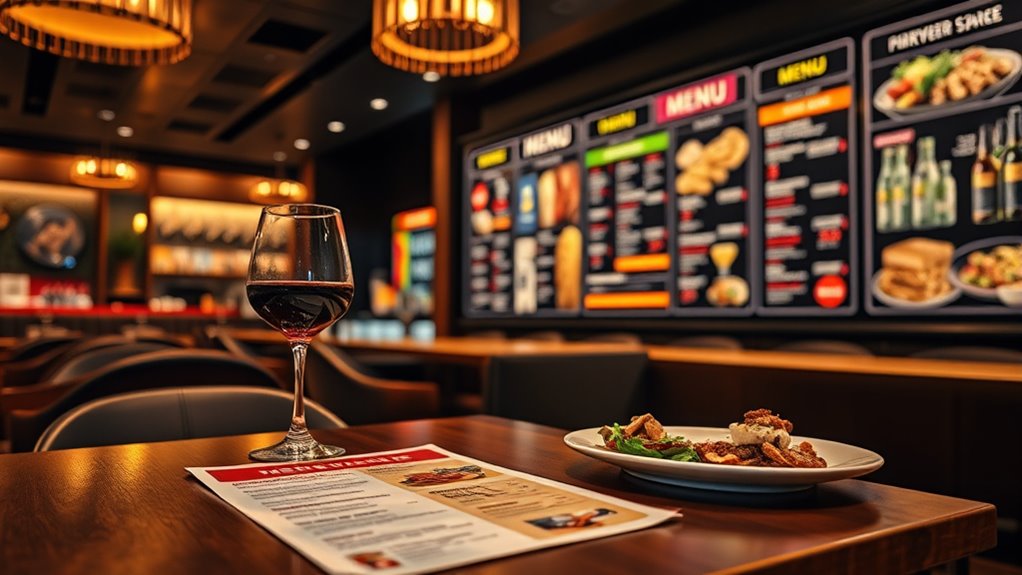
Effective pricing strategies are essential for maximizing your restaurant’s profitability. You need to understand your costs and set prices that cover expenses while remaining attractive to customers. Consider using a keystone markup—doubling your food costs—to guarantee a healthy profit margin. Experiment with price points; sometimes, a small increase can considerably boost revenue without deterring guests. Offering tiered pricing allows you to appeal to different customer segments and maximize sales. Don’t forget to analyze sales data regularly to identify which items generate the most profit. Additionally, strategic pricing of high-margin items can improve overall profitability. Remember, your goal is to strike a balance—prices should reflect value, cover costs, and encourage repeat business. Incorporating pricing strategies from various industries can also provide insights to optimize your restaurant’s revenue. Properly implemented, these strategies can dramatically increase your restaurant’s bottom line.
Using Descriptive Language to Boost Appeal

Using descriptive language on your menu can considerably enhance its appeal and influence customer choices. When you craft vivid, enticing descriptions, you make dishes more irresistible. Focus on sensory details that evoke taste, aroma, texture, and presentation to spark desire. Use compelling adjectives and specific ingredients to paint a clear picture. This approach helps customers imagine enjoying the dish, increasing the likelihood of a purchase. To elevate your descriptions, consider these techniques:
- Highlight unique ingredients or preparation methods
- Use sensory words that evoke taste and smell
- Create a narrative around the dish’s origin or inspiration
- Emphasize freshness, quality, or exclusivity
- Keep descriptions concise yet evocative
- Incorporate visual appeal by describing the dish’s presentation to attract more customers
Engaging language makes your menu memorable, guiding customers toward more premium selections.
Testing and Refining Your Menu Layout

Testing and refining your menu layout is essential to guarantee it guides customers smoothly toward your most profitable and popular dishes. Start by observing how customers interact with your menu—note which items they notice first and order most often. Experiment with placement, highlighting key dishes through strategic positioning or visual cues like boxes and icons. Gather feedback from staff and customers to identify areas of confusion or hesitation. Make small, incremental adjustments and track any changes in sales patterns. Continuously analyze this data to see what works best. Remember, your goal is to create a layout that’s intuitive, enticing, and efficient. Regular testing and refinement ensure your menu remains optimized, helping maximize sales and enhance the dining experience. Incorporating customer preferences into your testing process can further improve the effectiveness of your menu layout.
Leveraging Technology for Menu Optimization

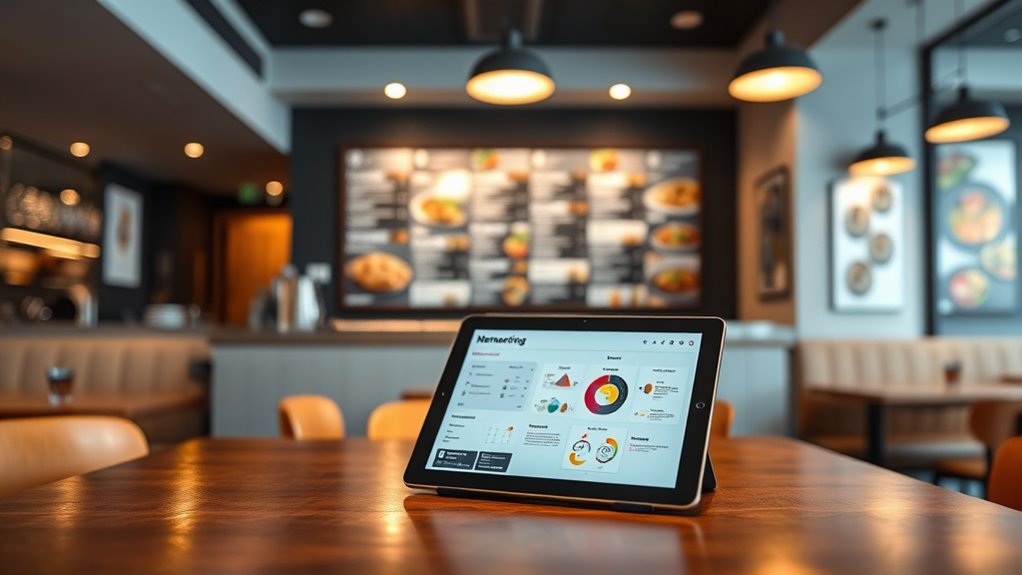
In today’s digital age, technology offers powerful tools to optimize your menu and boost sales. With data analytics, you can identify top-selling items and adjust pricing or placement accordingly. Digital menu boards allow you to highlight specials and seasonal items instantly, capturing customer attention. Menu engineering software provides insights into item performance, helping you make informed decisions. Using online ordering platforms, you can analyze customer preferences and streamline menu offerings. Additionally, heat maps show which sections of your menu attract the most focus.
- Data analytics for sales patterns
- Digital menu boards for dynamic updates
- Menu engineering software for insights
- Online ordering data analysis
- Heat maps for customer interaction
Frequently Asked Questions
How Often Should I Update My Menu Based on Customer Feedback?
You should update your menu based on customer feedback regularly to keep offerings fresh and meet evolving preferences. Aim for at least quarterly reviews, but be flexible if you notice trends or recurring complaints. Listening to your customers helps you identify popular items, remove underperformers, and introduce new options that boost satisfaction and sales. Staying attentive guarantees your menu stays relevant and appealing, ultimately driving more business.
What Are Common Mistakes to Avoid in Menu Engineering?
Thinking about common mistakes to avoid is like steering a ship; small errors can lead to big problems. You might overcomplicate your menu, making it hard for customers to choose, or misprice items, hurting your profits. Ignoring sales data or customer preferences can also hurt your sales. Stay focused, keep your menu simple and balanced, and regularly review performance to avoid these pitfalls and guarantee your menu remains effective.
How Can I Balance Variety and Simplicity on My Menu?
Balancing variety and simplicity on your menu keeps customers happy and reduces overwhelm. Focus on offering a curated selection of popular, high-margin items to guarantee quality and efficiency. Use clear categories and concise descriptions to make choices easy. Avoid clutter by limiting options in each category, and consider rotating seasonal offerings to keep the menu fresh without overcomplicating it. This balance helps you serve diverse tastes while maintaining operational simplicity.
What Training Is Needed for Staff on Menu Presentation?
You should train your staff on effective menu presentation techniques. This includes teaching them how to highlight popular or high-margin items, use appealing descriptions, and guide customers through the menu confidently. Make sure they understand the visual layout, so they can assist guests in making selections. Regular practice and feedback help them become more knowledgeable and comfortable, ultimately enhancing the dining experience and increasing sales.
How Does Seasonality Affect Menu Engineering Strategies?
Ever wonder how seasonality impacts your menu? It’s a game-changer. As seasons shift, you must adapt your offerings to match ingredient availability and customer preferences. This keeps your menu fresh, exciting, and profitable. You’ll need to rethink your strategy, highlight seasonal dishes, and adjust pricing accordingly. By doing so, you attract more customers, reduce waste, and boost your overall menu performance, turning seasonal changes into your secret weapon.
Conclusion
Think of your menu as a map guiding customers to their favorite treasures. Just like a seasoned guide highlights the best sights, strategic placement and design draw attention to your high-margin items. When you test and refine, it’s like polishing a jewel—making it shine even brighter. By applying these principles, you’ll turn your menu into a powerful tool that not only attracts but also maximizes profit, guiding every guest to find their perfect dish.
Halloween Picks
halloween
As an affiliate, we earn on qualifying purchases.