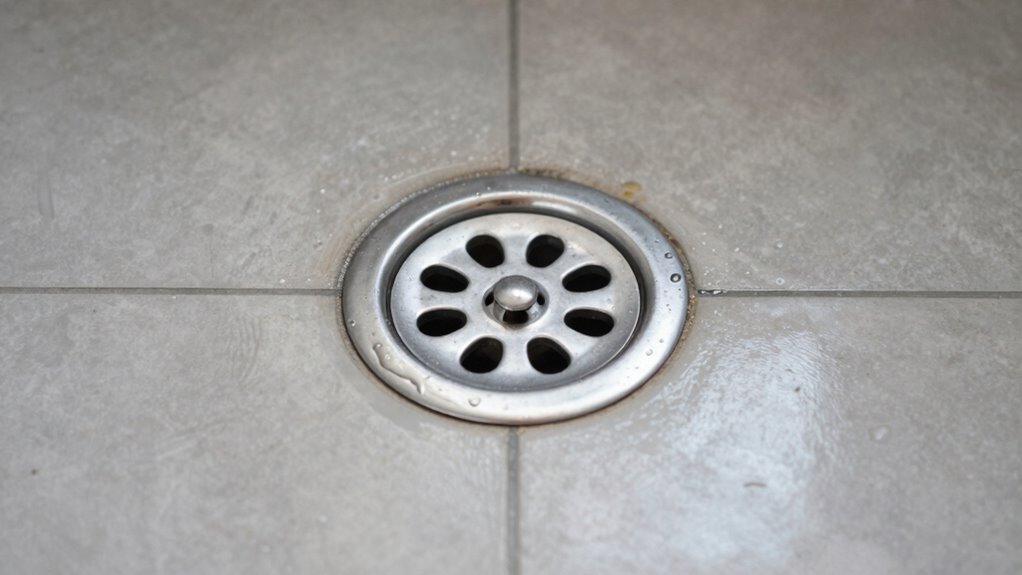

Many floor drain odors aren’t caused by old plumbing but by simple issues like dry traps, debris buildup, or damaged seals. To fix this, first confirm the trap is filled with water—pour in some to restore the seal. Clean out any debris or gunk around the drain and inspect for damaged seals or cracks. Addressing these common problems can often eliminate odors quickly, so there’s no need to jump to costly repairs if you know what to check first.

Get kitchen staples and gadgets delivered free with Prime
- Fast, free delivery on millions of items
- Prime Video, Amazon Music and more included
- Member-only deals all year
Key Takeaways
- Check and refill the trap water regularly to prevent evaporation and block sewer gases.
- Clean the drain with baking soda, vinegar, and hot water to remove buildup and odors.
- Inspect for cracks or leaks in the drain or cover, repairing any damage promptly.
- Ensure the drain cover fits snugly to prevent debris entry and odor escape.
- Use drain augers or call a professional if odors persist despite basic maintenance.
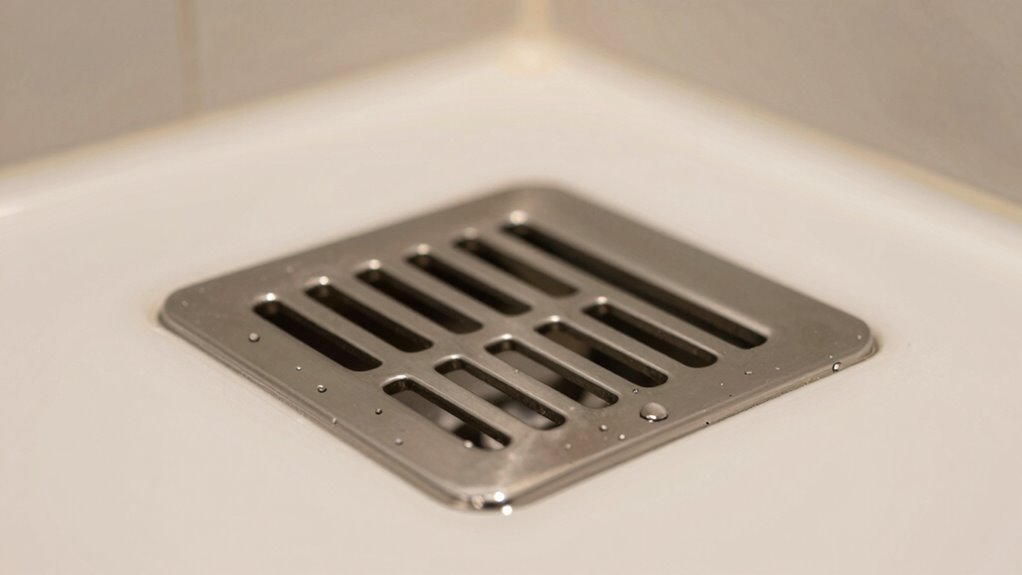
Floor drain odors can quickly become a nuisance, making your space unpleasant and sometimes even indicating underlying plumbing issues. While it’s tempting to assume old or faulty plumbing is to blame, often the problem is simpler and easier to fix. One common cause of persistent odors is a neglected trap, which requires regular trap maintenance to function properly. The trap acts as a barrier, holding water that prevents sewer gases from escaping into your space. If this water evaporates or the trap dries out, foul smells can seep through the drain. To prevent this, you should periodically check the trap and add water if it’s low or empty. Keeping the trap water level consistent ensures that sewer gases stay where they belong—out of your living or working area. Proper trap maintenance is essential for effective odor control.
Another key step in eliminating floor drain odors is drain cleaning. Over time, debris, hair, soap scum, and grease can accumulate in the drain, creating a breeding ground for bacteria and mold that produce unpleasant smells. Regular drain cleaning, either by using a drain cleaning solution or a simple homemade remedy like baking soda and vinegar, can break down buildup and restore proper drainage. Pouring hot water down the drain after cleaning can also help flush out residual debris, reducing the chances of odors returning. If you notice slow drainage or persistent smells even after cleaning, it might be time to use a drain auger or call in a professional plumber to clear out any stubborn clogs deep within the pipe system.
Additionally, check for any cracks or damage in the drain itself. Sometimes, small leaks or gaps can allow sewer gases to escape, especially if the trap is intact but the drain is compromised. Ensuring the drain cover or grate fits snugly also helps prevent odors from escaping and keeps debris from falling in. If you notice that odors persist despite these measures, it’s worth inspecting the entire drain assembly for leaks or deterioration. Replacing or repairing damaged parts can make a significant difference.
floor drain trap water refill kit
As an affiliate, we earn on qualifying purchases.
As an affiliate, we earn on qualifying purchases.
Frequently Asked Questions
Can a Clogged Vent Cause Floor Drain Odors?
Yes, a clogged vent can cause floor drain odors. When vent blockages occur, air circulation is restricted, preventing proper drainage and allowing foul smells to escape through the drain. You might notice unpleasant odors more when using the sink or shower. To fix this, check and clear any blockages in your vent pipe, ensuring proper air flow and preventing odors from lingering around your floor drain.
How Often Should I Clean My Floor Drain Trap?
You should clean your floor drain trap at least once a month to maintain proper drain maintenance and prevent odors. Regular cleaning removes debris, buildup, and potential odor-causing bacteria. If you notice persistent smells, increase the frequency of trap cleaning. Using a mixture of baking soda and vinegar can help with odor prevention. Staying consistent with trap cleaning keeps your drain fresh and reduces the need for more extensive plumbing fixes later.
Do Chemical Drain Cleaners Worsen Odor Problems?
Chemical drain cleaners can sometimes worsen odor problems because they create harsh chemical reactions that may damage your pipes or trap seals, leading to lingering smells. Instead, consider enzyme treatments, which gently break down organic buildup and neutralize odors naturally. These eco-friendly options work with your plumbing’s natural processes, providing a safer, more effective way to keep your floor drain fresh without the risks associated with strong chemical reactions.
Can Humidity Increase Floor Drain Odors?
Yes, humidity buildup can increase floor drain odors because excess moisture creates the perfect environment for mold growth and bacteria. When humidity levels rise, these microorganisms thrive, producing unpleasant smells. To fix this, you should improve ventilation to reduce humidity, regularly clean the drain area, and keep the space dry. Addressing humidity issues helps prevent mold growth and keeps your floor drain odor-free.
Are There Natural Remedies to Eliminate Drain Smells?
Imagine walking into your home and noticing a strange smell from the floor drain. You can try natural remedies like herbal remedies or baking soda to eliminate drain smells. Pouring baking soda followed by vinegar creates a fizzy reaction that helps break down odor-causing buildup. Herbal remedies like tea tree or eucalyptus oil can also freshen the drain naturally. These simple solutions often do the trick without harsh chemicals.
Conclusion
Don’t rush to blame your old plumbing just yet. Sometimes, a simple fix like pouring in some baking soda or checking the trap can eliminate those stubborn odors. But what if the problem runs deeper than you think? The truth might be hiding right beneath your nose, waiting to be uncovered. Before you call in the pros, take a moment to explore these easy solutions—you might just discover something more surprising than you expected.
Halloween Picks
halloween
As an affiliate, we earn on qualifying purchases.