To clean bloodborne pathogens in FOH and BOH areas, you should wear disposable gloves, goggles, and gowns to protect yourself, then contain and absorb the spill with disposable materials. Use EPA-approved disinfectants, following manufacturer instructions for proper contact time and thorough coverage of all surfaces, including cracks. Dispose of contaminated items safely, wash your hands afterward, and regularly review safety procedures. Continuing will help you master the essential steps for safe, effective cleanup and contamination prevention.
Key Takeaways
- Wear appropriate PPE such as gloves, goggles, and gowns to prevent contact with contaminated materials.
- Use EPA-approved disinfectants with proper contact time to effectively neutralize bloodborne pathogens.
- Contain and carefully clean contaminated areas, starting from outside edges inward, to prevent spreading the infection.
- Dispose of contaminated materials and safety gear in biohazard containers following local regulations.
- Wash hands thoroughly after cleanup, even if gloves were worn, and review safety protocols regularly for compliance.
Bloodborne pathogen cleanup is a critical process that guarantees the safe and effective removal of potentially infectious materials. When dealing with blood, bodily fluids, or other contaminated substances, following proper procedures is essential to protect yourself and others. Your first priority should be understanding and implementing disinfection protocols, which are designed to eliminate any lingering pathogens. These protocols involve using EPA-approved disinfectants that are effective against bloodborne viruses like HIV and hepatitis B and C. Always read the manufacturer’s instructions for proper dilution and contact time, ensuring the disinfectant remains on surfaces long enough to neutralize threats completely.
Before beginning cleanup, it’s vital to equip yourself with the right safety equipment. This includes disposable gloves, ideally made of latex or nitrile, to prevent direct contact with contaminated materials. A face shield or goggles are necessary to protect your eyes from splashes, while a gown or apron shields your clothing and skin from exposure. Using proper safety equipment minimizes the risk of accidental contamination and helps maintain a safe working environment. Keep all your gear within easy reach, and make sure it’s in good condition before starting the cleanup process. Never compromise on safety equipment; it’s your first line of defense against infection.
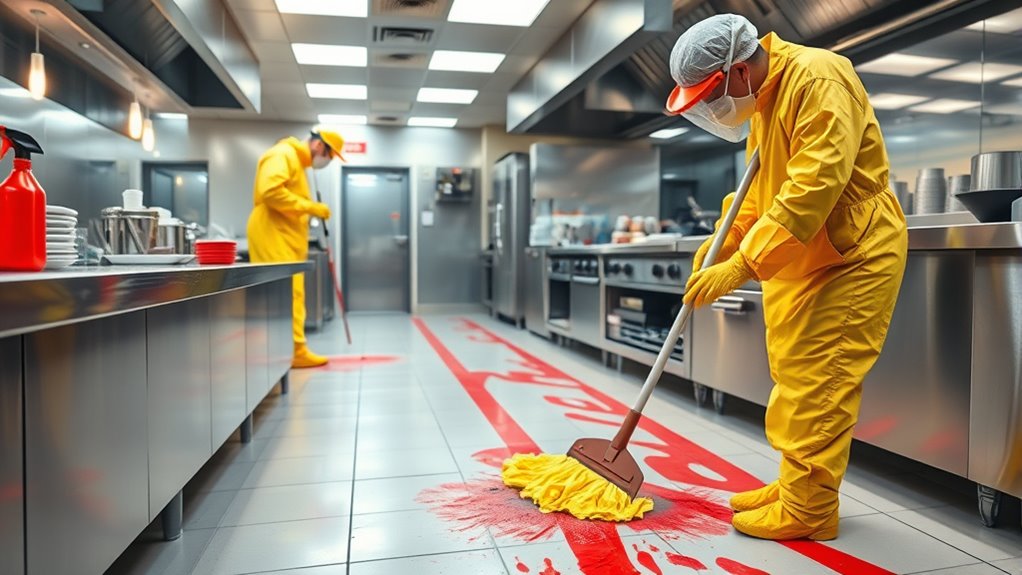
Once you’re suited up, carefully contain the contaminated material to prevent spread. Use disposable absorbent materials like paper towels or disposable cloths to soak up fluids, being mindful not to agitate the material unnecessarily. Place contaminated items in designated biohazard bags or containers for proper disposal. When cleaning surfaces, start from the outside edges of the spill and work inward to prevent spreading contaminants across clean areas. Apply your disinfectant thoroughly, ensuring all surfaces, including cracks and crevices, are covered. Allow the disinfectant to sit for the recommended contact time before wiping or rinsing. This step is crucial to guarantee pathogens are effectively neutralized. Additionally, using UV filters in shampoos for highlighted hair can help protect hair color from sun damage during outdoor cleanup or activities.
After completing the cleanup, properly dispose of all contaminated materials and safety equipment according to local regulations. Thoroughly wash your hands with soap and water, even if you wore gloves, to remove any residual contaminants. Regularly review and update your disinfection protocols to stay compliant with health codes and best practices. Proper training and adherence to safety procedures are non-negotiable—they protect you, your coworkers, and your customers. Bloodborne pathogen cleanup isn’t just about following rules; it’s about maintaining a safe and hygienic environment, whether you’re working in front of house or behind the scenes.

Supmedic Soft Max Medical Nitrile Exam Gloves Powder-Free Blue 100 Pcs (L)
- Material: Medical-grade 3.5 mil nitrile
- Thickness: 40% thicker than standard food gloves
- Allergy-Free: Powder-free and latex-free
As an affiliate, we earn on qualifying purchases.
As an affiliate, we earn on qualifying purchases.
Frequently Asked Questions
What Are the Legal Requirements for Bloodborne Pathogen Cleanup?
You must follow legal compliance standards and OSHA regulations for bloodborne pathogen cleanup. Guarantee proper training, use personal protective equipment, and follow specific disposal procedures to minimize liability concerns. Document all cleanup activities thoroughly, and use approved disinfectants. Failure to meet these legal requirements can result in fines, legal action, and increased liability. Staying informed and adhering to mandated protocols helps protect your business and staff from potential legal and health risks.
How Often Should Foh/Boh Staff Receive Training on Cleanup Procedures?
You should train your FOH/BOH staff on cleanup procedures at least once a year to stay ahead of the game. Regular training frequency and refresher courses guarantee everyone’s knowledge stays sharp and up-to-date with safety standards. Don’t wait until there’s a spill to brush up; ongoing education acts as a safety net, reducing risks and keeping your team prepared for any situation that comes their way.
What Personal Protective Equipment Is Essential During Cleanup?
You should always wear protective gloves and face shields during cleanup to safeguard yourself from bloodborne pathogens. Gloves protect your hands from direct contact with contaminated materials, while face shields prevent splashes from reaching your eyes, nose, or mouth. Make sure your PPE fits properly and is in good condition before starting. Using this equipment consistently guarantees your safety and helps prevent infection transmission during cleanup.
How Should Contaminated Materials Be Disposed of Properly?
Think of contaminated materials as hazardous treasure you must safely lock away. You should use proper disposal methods by sealing contaminated materials in puncture-proof, leak-proof containers labeled with biohazard symbols. Make certain you follow your facility’s protocols and local regulations to prevent any risk of exposure. Once secured, hand off the properly contained materials to authorized disposal services. This keeps everyone safe and prevents the spread of pathogens.
Are There Specific Cleaning Agents Recommended for Pathogen Decontamination?
You should use proper cleaning agents like hospital-grade disinfectants that are proven effective against bloodborne pathogens. Look for disinfectants with EPA approval for use against HIV, HBV, and HCV. These effective disinfectants help guarantee thorough pathogen decontamination. Always follow the manufacturer’s instructions for proper application and contact time, and wear personal protective equipment to stay safe during the cleaning process. Proper disinfectants are essential for effective pathogen control.
Conclusion
Just like heroes face their darkest moments, you step in with courage and caution. Remember, every cleanup is a battle won, a proof to your vigilance. As the night guards the dawn, your efforts protect others from unseen dangers. Stay vigilant, follow protocols, and trust your training—your actions echo the silent strength of those who stand guard when it matters most. In this fight, you’re the true guardian, turning chaos into safety with each careful step.