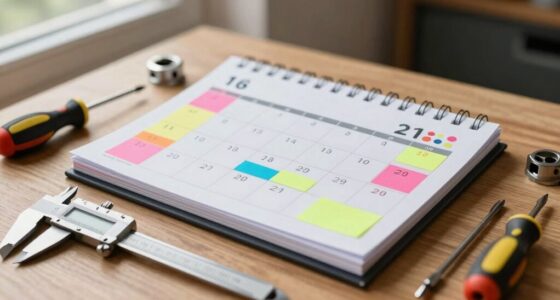
Implementing a preventive maintenance calendar helps you schedule routine inspections, cleaning, and part replacements to catch wear early. This proactive approach reduces unexpected breakdowns, minimizes downtime, and lowers repair costs. By tracking maintenance tasks systematically, you can optimize equipment lifespan and improve efficiency. Creating a well-organized plan adaptable to your operations guarantees maintenance happens at the right time. Keep exploring to learn how a tailored schedule can keep your equipment running smoothly longer.

Get kitchen staples and gadgets delivered free — and shop member deals
- Fast, free delivery on millions of items
- Access to Prime Big Deal Days deals on October 6–7
- Prime Video, Amazon Music and more included
Key Takeaways
- A preventive maintenance calendar schedules routine inspections and tasks to identify wear early and prevent unexpected equipment failures.
- Regularly updating the calendar ensures maintenance aligns with equipment usage patterns and manufacturer recommendations.
- Digital tools and reminders help track completed tasks, improving adherence and accountability.
- Consistent maintenance reduces downtime, boosts efficiency, and extends machinery lifespan.
- An organized schedule minimizes costly emergency repairs, saving long-term operational costs.

Have you ever wondered how to keep your equipment running smoothly and avoid costly repairs? A well-planned preventive maintenance calendar is your best tool for achieving that. When you stay ahead of potential issues, you extend your equipment’s lifespan and save money in the long run. But to do so effectively, you need to understand the importance of a clear schedule and how it influences your overall cost analysis. Regular maintenance isn’t just about fixing things when they break; it’s about preventing breakdowns before they happen, which can be costly and disruptive.
A proactive maintenance schedule extends equipment life and cuts long-term costs.
By establishing a preventive maintenance calendar, you create a routine that ensures key components are inspected, cleaned, lubricated, and replaced at the right intervals. This proactive approach helps you identify wear and tear early, stopping small problems from escalating into major failures. When you track your maintenance tasks over time, you gain valuable insights into the true cost of keeping your equipment operational. This cost analysis allows you to compare the expenses of routine upkeep versus emergency repairs, often revealing that consistent maintenance is more economical overall. It also helps you allocate budgets more accurately, avoiding unexpected expenses that can strain your finances.
Incorporating a maintenance calendar into your daily operations might seem like extra work initially, but it pays off by reducing downtime and extending the equipment’s service life. When you stick to scheduled tasks, you minimize the risk of sudden breakdowns, which can cause production delays and loss of revenue. Plus, regular servicing boosts equipment efficiency, leading to lower energy consumption and higher productivity. Over time, these benefits compound, making your investment in a maintenance schedule worthwhile. You’ll also find that a detailed calendar helps you prioritize tasks based on usage patterns and manufacturer recommendations, ensuring that each piece of equipment receives the appropriate attention at the right time.
Additionally, understanding the importance of a clear schedule can help you better manage your resources and reduce unexpected costs. To make this process seamless, utilize digital tools or maintenance management software that can send reminders and help you record completed tasks. This way, you keep an organized log that supports ongoing analysis of your maintenance routines and costs. As you refine your schedule, you’ll notice patterns emerging—certain components may need more frequent attention, or specific machinery might have predictable failure points. Adjusting your calendar based on these insights maximizes your equipment’s lifespan and keeps your operational costs in check. Ultimately, a well-structured preventive maintenance calendar isn’t just about avoiding surprises; it’s about creating a sustainable, cost-effective system that keeps your equipment performing at its best for years to come.
preventive maintenance scheduling software
As an affiliate, we earn on qualifying purchases.
As an affiliate, we earn on qualifying purchases.
Frequently Asked Questions
How Often Should Equipment Be Inspected for Optimal Maintenance?
You should schedule equipment inspections based on its usage and manufacturer recommendations for ideal maintenance timing. Typically, inspecting machinery every few weeks or monthly ensures you catch issues early and prevent breakdowns. Adjust inspection frequency if equipment operates in harsh conditions or shows signs of wear. Regular inspections help you maintain efficiency, extend equipment lifespan, and avoid costly repairs, making your preventive maintenance calendar a crucial tool for smooth operations.
What Tools Are Essential for Implementing a Preventive Maintenance Schedule?
You’ll need essential tools like maintenance checklists and a well-organized spare parts inventory. Maintenance checklists help you stay on track with routine inspections and tasks, ensuring nothing gets overlooked. A spare parts inventory allows you to quickly replace worn or broken components, minimizing downtime. Together, these tools make implementing your schedule seamless, keeping equipment running smoothly and preventing unexpected failures before they happen.
How to Prioritize Maintenance Tasks Within the Calendar?
You should start by reviewing your maintenance checklist and identifying tasks based on urgency and impact. Use task prioritization to focus on critical equipment first, like safety systems or machinery with high downtime costs. Schedule routine inspections and preventative tasks ahead of less critical ones, ensuring essential assets are always operational. This approach minimizes unexpected breakdowns and keeps your preventive maintenance calendar efficient and effective.
What Are Common Mistakes to Avoid in Preventive Maintenance Planning?
Missing maintenance myths and scheduling pitfalls can turn your plan into a ticking time bomb. Avoid common mistakes like neglecting regular updates, ignoring manufacturer recommendations, or overloading your calendar with unrealistic tasks. Don’t assume one-size-fits-all schedules work; customize based on equipment usage. Overlooking these pitfalls leads to costly breakdowns. Stay vigilant, keep your calendar flexible, and regularly review your plan to prevent surprises before they strike.
How Can Technology Improve the Effectiveness of Maintenance Scheduling?
Technology can substantially boost your maintenance scheduling by leveraging IoT integration and predictive analytics. IoT devices monitor equipment in real-time, providing instant data on performance and potential issues. Predictive analytics analyze this data to forecast failures before they happen. This proactive approach helps you schedule maintenance more accurately, reduces downtime, and extends asset lifespan, ensuring your operations run smoothly without unexpected breakdowns.
Conclusion
By sticking to your preventive maintenance calendar, you stay one step ahead of unexpected breakdowns. Every scheduled check, every routine inspection keeps your equipment running smoothly and avoids costly surprises. But what if a critical component slips through the cracks? Stay vigilant, follow your schedule diligently, and always look ahead—because in the world of maintenance, the smallest oversight can lead to the biggest failure. Will you be ready when that moment finally arrives?
Evergreen bestsellers Picks
bestsellers
As an affiliate, we earn on qualifying purchases.