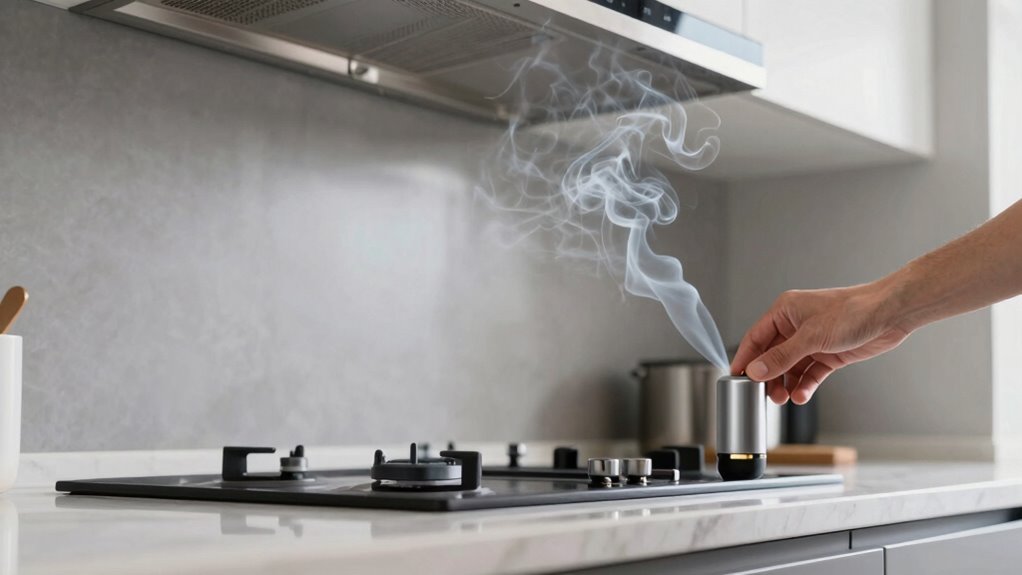

To diagnose bad kitchen airflow quickly, light an incense, candle, or smoke pencil near your stove or sink and watch how the smoke moves. Good airflow pulls the smoke toward vents or outside, while poor circulation causes swirling, lingering, or smoke escaping into other rooms. Notice if smoke pools or doesn’t reach vents—these signs point to ventilation issues. For simple tips to interpret these clues and improve airflow, keep going.

Get kitchen staples and gadgets delivered free with Prime
- Fast, free delivery on millions of items
- Prime Video, Amazon Music and more included
- Member-only deals all year
Key Takeaways
- Use steady smoke sources like incense or a smoke pencil near key areas to observe airflow patterns quickly.
- Watch if smoke smoothly drifts toward vents or exhaust; swirling or lingering indicates ventilation issues.
- Check if smoke escapes into other rooms, signaling leaks, pressure imbalances, or weak seals.
- Confirm proper airflow by ensuring smoke is drawn into vents or exhaust fans efficiently.
- Identify blockages or leaks and take corrective actions such as sealing gaps or cleaning vents for improved airflow.
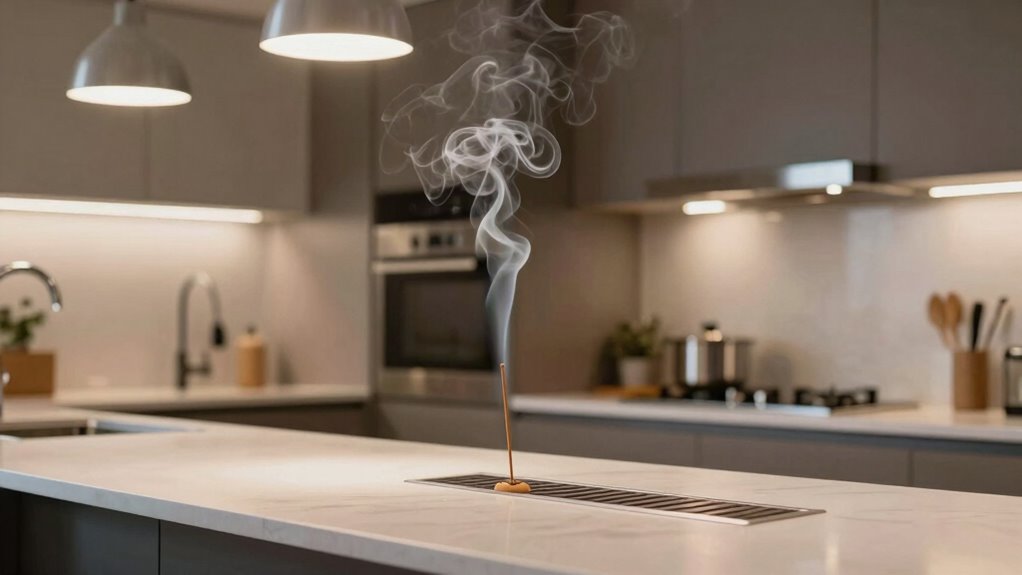
If you suspect your kitchen’s airflow isn’t working properly, performing a smoke test can quickly identify the problem areas. This simple method allows you to observe how air moves through your space, revealing issues with airflow patterns and the effectiveness of your ventilation systems. To start, light a stick of incense, a candle, or use a smoke pencil—whatever produces a steady, visible plume. Place the smoke near the stove, sink, or other key areas where airflow problems might occur. As you watch, pay close attention to how the smoke moves. Does it drift smoothly toward the exhaust fan or vent, or does it linger, swirl, or get trapped in corners? These observations can tell you a lot about the efficiency of your ventilation systems and whether they’re pulling air out properly.
Next, move the smoke around the kitchen, especially near windows, doors, and vents. Proper airflow patterns should direct the smoke toward the exhaust or open spaces, indicating that fresh air is entering and stale air is leaving as it should. If the smoke seems to rise vertically and then disperse evenly, your ventilation system is likely functioning well. However, if it pools in certain areas, moves erratically, or escapes into other rooms, it suggests a problem with airflow. You might notice that the smoke doesn’t reach your exhaust vents or that it’s drawn back into the room, signaling a weak or blocked ventilation system. These signs point to the need for cleaning or repairing your exhaust fans, range hoods, or ductwork.
Proper airflow directs smoke toward vents; erratic movement indicates ventilation issues needing repair or cleaning.
Performing this quick smoke test also helps you identify potential drafts or pressure imbalances. For example, if you see smoke being pulled into a crack around a window or door, it indicates negative pressure that can hinder airflow. Conversely, if smoke escapes through gaps or around seals, it suggests leaks that compromise your ventilation’s effectiveness. Recognizing these issues allows you to take targeted action—like sealing leaks, adjusting vents, or upgrading your ventilation system—to improve airflow. Proper airflow is essential not just for removing cooking odors and smoke but also for maintaining good indoor air quality and preventing moisture buildup that can lead to mold.
Additionally, integrating smart ventilation controls can optimize airflow based on real-time conditions, further enhancing your kitchen’s air quality. In just a few minutes, you gain valuable insight into how air flows through your kitchen. A simple smoke test can serve as a quick diagnostic tool to pinpoint airflow problems, helping you ensure your ventilation systems are working efficiently. Addressing these issues promptly keeps your kitchen safer, cleaner, and more comfortable, with fresh air circulating as it should.
smoke pencil for ventilation testing
As an affiliate, we earn on qualifying purchases.
As an affiliate, we earn on qualifying purchases.
Frequently Asked Questions
Can the Smoke Test Be Used for Bathroom or Laundry Exhaust Systems?
Yes, you can use a smoke test for bathroom ventilation and laundry exhaust systems. When you perform the test, hold the smoke near the exhaust fan or vent opening to see if the airflow pulls the smoke outward effectively. If the smoke lingers or doesn’t move, it indicates a problem with airflow. This quick method helps identify blockages or leaks in your bathroom ventilation and laundry exhaust systems.
What Safety Precautions Should I Take During the Smoke Test?
You should wear safety gear like goggles and a mask to protect your eyes and lungs during the smoke test. Make certain proper ventilation precautions by opening windows and doors to avoid smoke buildup. Keep a fire extinguisher nearby in case of emergencies, and work in a well-ventilated area to prevent inhaling excess smoke. Always follow safety guidelines to protect yourself while accurately diagnosing airflow issues.
How Often Should I Perform a Smoke Test on My Kitchen Ventilation?
About 60% of kitchen ventilation issues go unnoticed until they cause problems. You should incorporate a smoke test into your maintenance schedule at least quarterly to make certain proper airflow. Testing frequency depends on your kitchen’s usage and past issues, but regular checks help catch airflow problems early. Performing these tests consistently keeps your ventilation system efficient, safe, and compliant, preventing costly repairs and health hazards down the line.
Are There Specific Types of Smoke Recommended for the Test?
You should use smoke that produces a clear, visible smoke density and consistent color, like smoke pencils or smoke sticks, for your test. Avoid thick or colored smoke, which can obscure airflow patterns. The goal is to observe how the smoke moves, so choose a smoke with good visibility and minimal dispersion. This permits you to accurately identify airflow issues and ensure your kitchen ventilation works effectively.
What Are Common Signs Indicating Poor Airflow Before Testing?
You’ll notice airflow indicators like lingering smoke or smoke that doesn’t move smoothly toward vents. If the smoke stalls or disperses unevenly, it signals ventilation issues. Poor airflow might also cause lingering odors, inconsistent exhaust, or visible stagnation near appliances. Recognizing these signs helps you identify ventilation issues early, so you can perform the smoke test to confirm airflow problems and guarantee your kitchen’s ventilation system works effectively.
Conclusion
Now that you know how to perform a quick smoke test, you can identify airflow issues swiftly, confidently, and accurately. By observing, analyzing, and adjusting, you’ll improve your kitchen’s ventilation, enhance air quality, and prevent future problems. With this simple method, you save time, reduce stress, and guarantee a healthier environment. Remember, a clear airflow leads to a happier, safer kitchen—so don’t wait; test, troubleshoot, and breathe easy every time.
Halloween Picks
halloween
As an affiliate, we earn on qualifying purchases.