
Well-planned food runner routes are essential for delivering hot, fresh meals quickly, which directly boosts customer satisfaction. Efficient routes help you avoid delays, reduce mistakes, and keep the flow smooth during busy times. Proper routing also minimizes staff stress and improves overall teamwork. Many managers overlook how important these routes are, but optimizing them can dramatically improve service speed and quality. Stay with us to discover how small adjustments can make a big difference.
Key Takeaways
- Well-planned routes ensure food arrives hot, fresh, and in perfect condition, directly impacting customer satisfaction.
- Efficient routing minimizes delays, reduces mistakes, and boosts operational productivity for staff.
- Optimized routes enhance guest experience, leading to positive reviews and increased repeat business.
- Clear routes reduce staff stress, improve confidence, and promote smoother teamwork during busy periods.
- Small routing adjustments can significantly improve service speed, giving a competitive edge in restaurant operations.
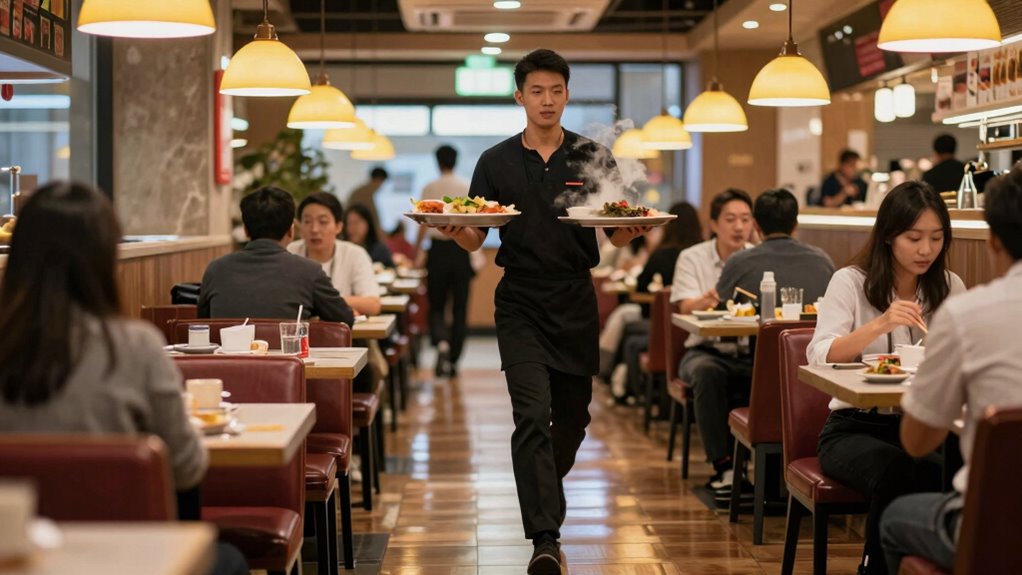
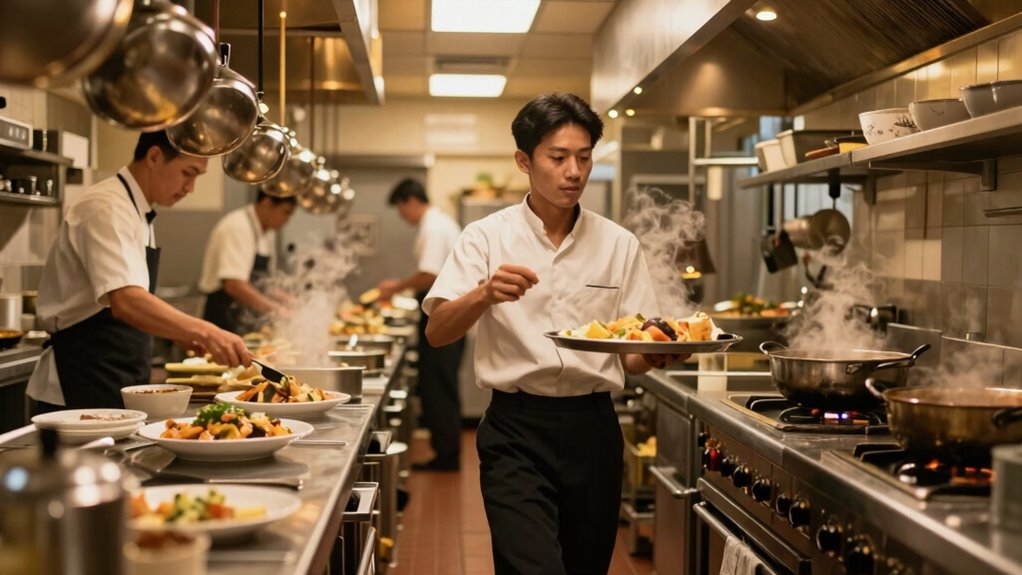
Food runner paths are essential for guaranteeing timely delivery of orders from the kitchen to your table. When these paths are well-planned, they directly impact the overall dining experience, often more than most managers realize. Efficient routes mean your food reaches you hot, fresh, and in perfect condition, which greatly boosts customer satisfaction. If the routes are poorly managed or chaotic, orders can get delayed, and the quality of your meal may suffer, leading to disappointment and negative reviews. That’s why understanding and optimizing food runner routes isn’t just about logistics—it’s about creating an experience that keeps guests happy and enthusiastic to return.
By focusing on the route paths, you can streamline the delivery process, cutting down on unnecessary steps and minimizing the chances of mistakes or delays. When runners know the most direct and efficient routes, they spend less time maneuvering through crowded hallways or backtracking, freeing up their time to serve multiple tables faster. This efficiency improvement not only benefits the restaurant’s overall workflow but also ensures that each guest gets their order promptly. When food arrives quickly and in prime condition, customers feel valued, which boosts their satisfaction and encourages positive feedback.
Most managers overlook how critical route planning is to operational flow. They often focus on staffing levels or menu quality, assuming that the physical logistics will resolve themselves. But in reality, poorly managed routes lead to bottlenecks, missed orders, and unhappy customers. When runners are forced to take longer or confusing paths, the time between kitchen and table stretches unnecessarily, increasing the risk of food getting cold or ingredients losing their freshness. This not only hampers the customer experience but also hampers efficiency improvement efforts. When routes are optimized, your team can serve more tables in less time, improving throughput without sacrificing quality. Additionally, proper route planning can help prevent congestion and confusion in busy settings, further enhancing overall service. Moreover, incorporating route optimization techniques can lead to measurable improvements in delivery times, which directly impact customer reviews and repeat business. Recognizing the importance of physical logistics can help managers develop more effective strategies for managing their service flow.
Furthermore, good route planning can help your staff feel less stressed and more confident. When runners know exactly where to go and how to get there quickly, they work more smoothly and with fewer mistakes. This clarity reduces confusion and increases overall efficiency, which benefits everyone—your staff, your customers, and your bottom line. Ultimately, the routes your food runners take are a crucial link between kitchen excellence and guest satisfaction. Most managers don’t realize that a small tweak in routing can lead to considerable improvements in service speed and quality, making a real difference in the competitive restaurant industry.
food runner route planning tools
As an affiliate, we earn on qualifying purchases.
As an affiliate, we earn on qualifying purchases.
Frequently Asked Questions
How Do Weather Conditions Impact Food Runner Routes?
Weather conditions substantially impact your food runner routes by causing weather disruptions, making routes more challenging and potentially slower. You need to stay alert and adapt quickly, adjusting your path or timing as needed. Route adaptability is vital to guarantee timely deliveries despite rain, snow, or wind. By planning ahead and remaining flexible, you can maintain efficiency and customer satisfaction, even when weather throws unexpected obstacles your way.
What Technology Can Optimize Route Efficiency?
You might find it surprising, but route optimization and real-time tracking technology can drastically improve your efficiency. Using GPS-enabled apps, you can plan the fastest routes and adjust on the fly, especially when unexpected delays occur. These tools help food runners avoid traffic, manage their time better, and guarantee timely deliveries. Embracing such technology not only boosts performance but also enhances customer satisfaction through quicker, more reliable service.
How Do Route Changes Affect Customer Satisfaction?
Route changes directly impact customer satisfaction by shaping their experience and meeting their expectations. When you adapt routes efficiently, you guarantee timely deliveries, which aligns with customer expectations for freshness and promptness. However, inflexible routes can cause delays, frustration, and lower satisfaction. By prioritizing route adaptability, you can respond quickly to unforeseen issues, maintaining high service standards and keeping customers happy with reliable, consistent delivery experiences.
What Training Is Needed for Effective Route Planning?
You need to focus on route optimization and follow clear training protocols to plan effectively. Start with training that covers map reading, time management, and real-time navigation tools. Practice regularly to improve your familiarity with the layout and efficient routes. By mastering these skills, you’ll minimize delivery times, boost customer satisfaction, and guarantee smooth operations. Consistent training and adapting to new tools are key to maintaining effective route planning.
How Do Route Lengths Influence Delivery Times?
Imagine you’re running a delivery route through a busy city. Longer routes can increase the risk of route congestion and traffic delays, which slow down your delivery times. Shorter, optimized routes help you avoid congested areas, ensuring timely arrivals. When routes are too long, traffic delays become inevitable, ultimately extending delivery times and risking customer satisfaction. Proper route length management is crucial to maintain efficiency and meet delivery expectations.
Conclusion
Think of food runner routes as the veins that keep the restaurant heartbeat strong. When you optimize each path, you guarantee the flow of service remains smooth and steady, avoiding bottlenecks and delays. It’s not just about getting food from point A to B — it’s about creating an invisible rhythm that keeps everything moving in harmony. Pay attention to these routes, and you’ll turn chaos into a well-orchestrated dance, serving up success with every meal.