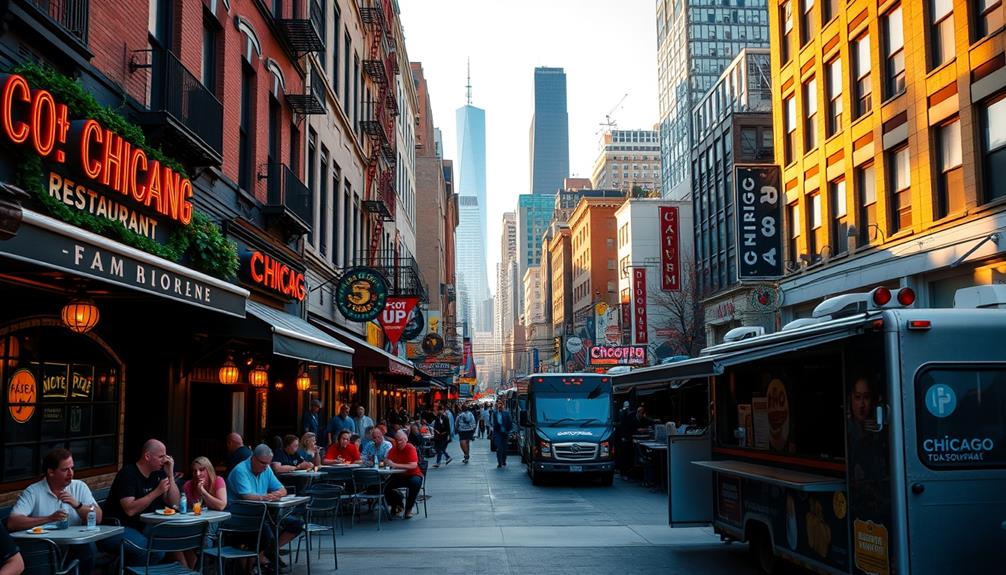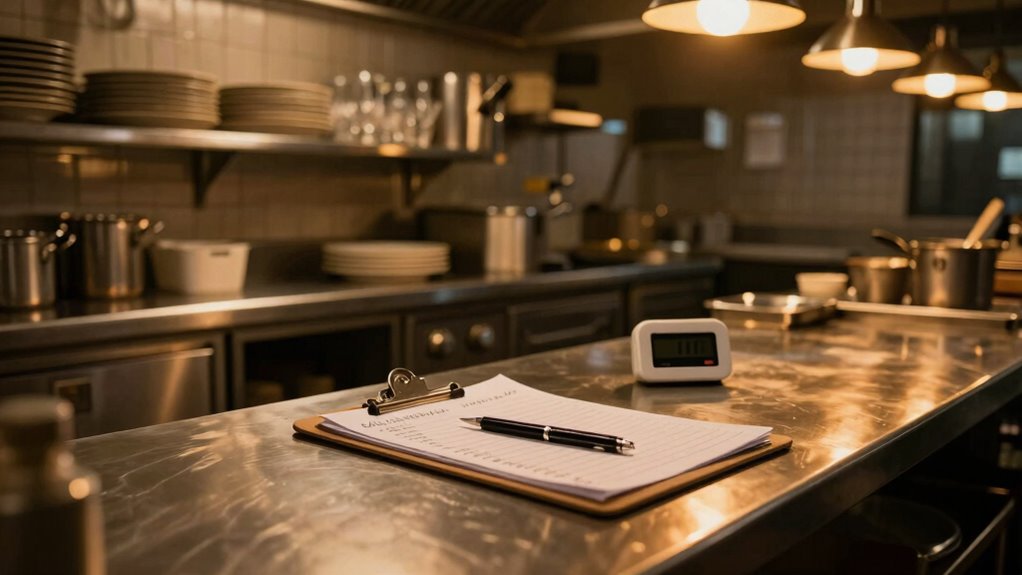

At the end of each night, you should log staff safety incidents, including any hazards reported or injuries, along with immediate corrective actions. You also need to record cleaning activities, including areas cleaned, cleaning agents used, and sanitation procedures. Track maintenance issues, noting equipment problems and scheduled repairs. Additionally, update inventory levels, noting reorders and usage. Finally, document overall operations and compliance to guarantee safety, hygiene, and smooth handoffs, helping you improve continuously—discover more ways to optimize your nightly logs.
Listen free for 30 days with Audible
Thousands of audiobooks and originals — cancel anytime.
As an affiliate, we earn on qualifying purchases.
Key Takeaways
- Document staff safety incidents, including hazards reported and corrective actions taken.
- Record cleaning procedures, including areas cleaned, agents used, and sanitation steps.
- Log maintenance issues, repairs scheduled, and completion status of equipment.
- Track inventory usage, reordering needs, and stock adjustments to prevent shortages.
- Maintain compliance records to demonstrate adherence to health and safety standards.
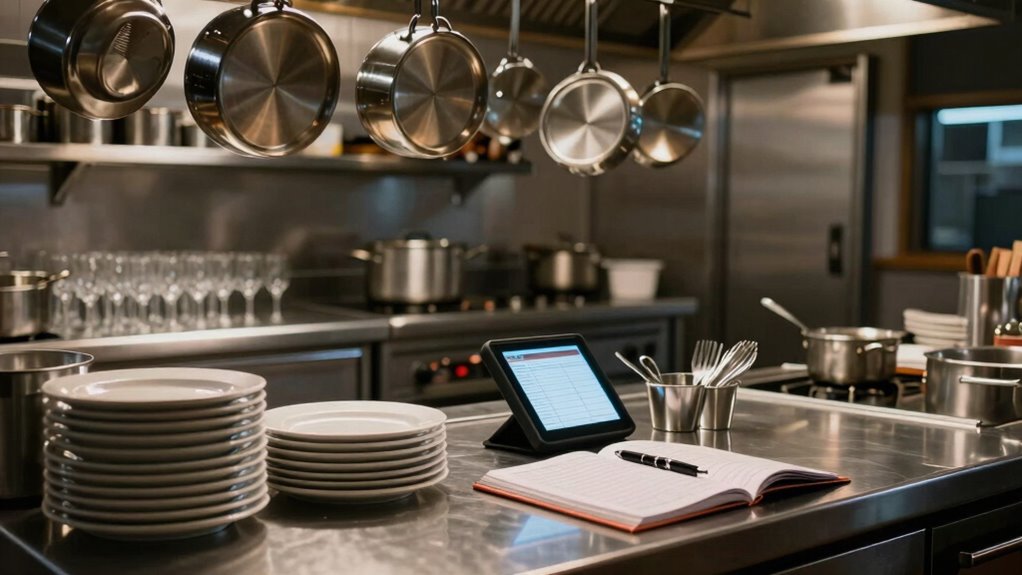
Have you ever wondered what goes on in restaurants after the doors close for the night? It’s a busy, organized process designed to keep everything running smoothly for the next day. One essential part of this process is what staff logs at the end of each shift. Proper logging isn’t just about keeping records; it’s about guaranteeing staff safety and maintaining strict cleaning protocols. When you manage a restaurant, you know how indispensable it is to document these activities accurately.
Nightly logs ensure restaurant safety, cleanliness, and smooth operations for the next day.
First, you want to record any incidents involving staff safety. If a staff member sustains an injury or reports a hazard, it’s necessary to log the details immediately. This creates a record that helps prevent future accidents and makes certain that safety protocols are followed. For example, if someone slips on a wet floor, noting the incident, the time, and the corrective measures taken can be critical for legal reasons and for improving safety standards. Consistent documentation shows that safety isn’t just an afterthought but a priority, and it helps create a safer environment for everyone.
Next, cleaning protocols are a pivotal part of the nightly log. After hours, the restaurant undergoes deep cleaning to meet health standards and prepare for the next day. You should record what areas were cleaned, what cleaning agents were used, and who performed the cleaning. This not only demonstrates compliance with health regulations but also helps identify any areas that might need extra attention in the future. For example, if a particular kitchen corner consistently requires extra cleaning, noting this allows management to address potential issues proactively. It’s also important to document the disposal of trash and any special cleaning procedures, such as sanitizing food prep surfaces or cleaning refrigeration units, to guarantee thoroughness. Additionally, understanding the importance of proper sanitation practices is crucial for maintaining health standards and preventing contamination. Incorporating training records for staff on cleaning procedures can further enhance compliance and safety. Regular review of these logs can also help identify recurring issues and improve overall sanitation practices.
Additionally, you should log any maintenance issues discovered during closing. If a refrigerator isn’t cooling properly or a dishwasher is malfunctioning, documenting these problems ensures they’re addressed promptly. This helps prevent equipment failures that could compromise food safety or disrupt service. It’s also a good idea to note when maintenance was scheduled or completed, creating a clear record for future reference. Properly maintained equipment is vital for food safety and operational efficiency.
Finally, record any stock counts or inventory updates. This includes noting what was used during the day and what needs to be reordered. Keeping meticulous logs of inventory helps avoid shortages and overstocking, which can impact both costs and customer satisfaction.
In the end, what you log at night isn’t just administrative paperwork; it’s a fundamental part of running a safe, efficient, and compliant restaurant. By carefully documenting staff safety incidents, cleaning protocols, maintenance issues, and inventory updates, you help secure a smooth operation that’s prepared for the next day’s challenges.
restaurant safety incident log book
As an affiliate, we earn on qualifying purchases.
As an affiliate, we earn on qualifying purchases.
Frequently Asked Questions
How Long Should Restaurant Logs Be Kept Before Review?
You should review restaurant logs within 24 to 48 hours to guarantee effective inventory management and staff accountability. Prompt review helps catch discrepancies early, prevent theft, and maintain accurate inventory records. It also encourages staff accountability by addressing issues quickly. Regular, timely reviews keep your operations smooth and compliant with safety standards, ensuring any problems are resolved promptly and new procedures are effectively implemented.
Who Is Responsible for Completing the Nightly Log?
You are responsible for completing the nightly log, like a captain steering a ship through calm waters. Staff accountability guarantees accurate logging, preventing issues from slipping through the cracks. When you log diligently, it’s like leaving a trail of breadcrumbs, guiding the team’s accountability and maintaining operational clarity. Your attention to logging accuracy safeguards the restaurant’s success, making sure everyone stays on course and issues are caught early.
What Digital Tools Can Automate Nightly Logging?
You can automate nightly logging with digital tools like restaurant management software that integrates inventory management and staff scheduling. These platforms automatically track inventory levels, sales, and employee shifts, reducing manual entry errors. By setting up alerts and reports, you guarantee consistent updates without extra effort. This streamlines your nightly routines, saves time, and maintains accurate records, allowing you to focus more on customer service and overall operations.
How Are Log Discrepancies Typically Handled?
When you encounter log discrepancies, you should start with discrepancy investigation to pinpoint the cause, whether it’s human error or system malfunction. Document the issue clearly and follow your corrective action protocols to address it promptly. This process guarantees transparency, maintains data integrity, and prevents recurring mistakes. Regularly reviewing discrepancies helps improve your logging system, guaranteeing accurate records and smoother operations at the end of each night.
Should Logs Include Customer Feedback or Complaints?
Yes, logs should include customer feedback or complaints. Tracking customer satisfaction helps you identify areas for improvement, while documenting complaints supports effective complaint management. By recording these details nightly, you can analyze trends, respond promptly, and enhance overall service quality. This proactive approach guarantees you address issues quickly, boost customer retention, and maintain a positive reputation for your restaurant.
Conclusion
By logging your restaurant’s nightly details, you stay one step ahead of potential issues. These records act as your safety net, catching problems before they grow out of hand. Remember, a stitch in time saves nine, so don’t wait until tomorrow to record today’s events. Consistent nightly logs keep your operation smooth and prepared for anything that comes your way—making sure you’re always ready to face whatever the night throws at you.
Flea & tick season Picks
flea and tick prevention
As an affiliate, we earn on qualifying purchases.