
To create an opening checklist that gets used, involve your team in selecting relevant tasks and keep it simple, clear, and practical. Use checkboxes or step-by-step instructions for easy follow-through. Train staff on how to use it daily and emphasize its importance for smooth operations, safety, and maintenance. Regularly update the checklist to stay current and effective. Want to know how to make yours truly stick? Keep going for proven strategies.

Get kitchen staples and gadgets delivered free with Prime
- Fast, free delivery on millions of items
- Prime Video, Amazon Music and more included
- Member-only deals all year
Key Takeaways
- Involve staff in creating the checklist to ensure relevance and buy-in.
- Keep the checklist simple, clear, and easy to follow with checkboxes or step-by-step instructions.
- Train staff thoroughly on checklist usage and emphasize its importance for daily operations.
- Regularly review and update the checklist to reflect new equipment, procedures, or safety protocols.
- Incorporate safety and maintenance tasks, highlighting their role in operational efficiency and safety.
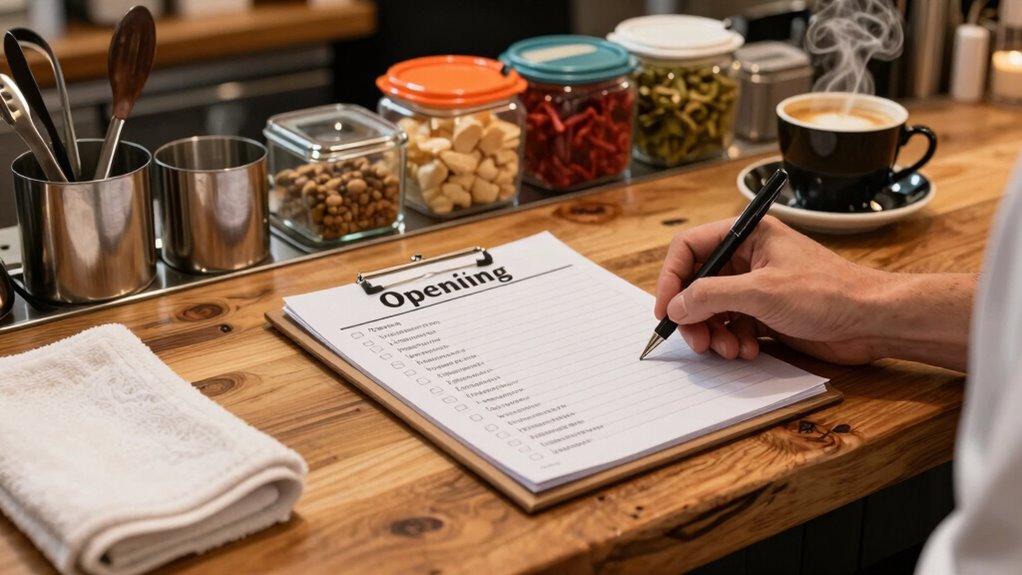
Have you ever wondered how successful restaurants guarantee a smooth opening every day? It all starts with a well-crafted opening checklist that gets everyone on the same page and guarantees nothing gets overlooked. When you develop a checklist that’s practical and easy to follow, it becomes an essential tool for your team. To make sure it’s effective, you need to focus on key areas like staff training and equipment maintenance. These elements are the backbone of a seamless start to each shift. Incorporating biodiversity concepts, such as eco-friendly practices, into your routines can also promote sustainable living within your restaurant operations. Staff training is crucial for the checklist to be truly useful. If your team isn’t confident in their roles, even the most detailed checklist won’t prevent mistakes. You have to guarantee your staff understands each task, from opening procedures to safety protocols. Incorporating quick training sessions into your prep, so everyone knows what to do and why it matters, can boost operational efficiency. When staff is well-trained, they’re more likely to follow the checklist thoroughly, reducing errors and delays. This also creates a sense of accountability, as team members recognize the importance of their responsibilities. Equipment maintenance is another critical component. Before opening, you need to verify that all equipment is in proper working order. This includes checking kitchen appliances, refrigeration units, POS systems, and small tools. A checklist that includes specific maintenance tasks helps prevent unexpected breakdowns during busy hours. Regularly scheduled maintenance tasks should be part of your routine, and your checklist should remind staff to perform these checks. When equipment is properly maintained, it runs efficiently, and your team avoids costly delays or safety hazards. Including troubleshooting tips on your checklist can also help staff quickly address minor issues without needing immediate technical support. Additionally, allocating time for equipment inspections can help identify potential problems before they impact daily operations. Ensuring that your team understands the importance of preventive maintenance can greatly extend the lifespan of your equipment. It’s also beneficial to incorporate safety protocols into your checklist to ensure a safe environment for both staff and customers. To make your opening checklist effective, you should keep it simple, clear, and practical. Use checkboxes or step-by-step instructions so staff can easily follow along. Involve your team when creating it, gathering input on what tasks are most critical. When everyone contributes, the checklist becomes more detailed and more likely to be used consistently. Once finalized, train your staff on how to utilize it daily, emphasizing the importance of adherence for smooth operations. Regularly review and update your checklist to reflect changing needs or new equipment, keeping it relevant and useful.
restaurant opening checklist template
As an affiliate, we earn on qualifying purchases.
As an affiliate, we earn on qualifying purchases.
Frequently Asked Questions
How Often Should the Opening Checklist Be Reviewed and Updated?
You should review and update your opening checklist at least quarterly to guarantee checklist accuracy and accommodate any operational changes. Regular updates help identify gaps and improve staff training, making sure everyone knows their responsibilities. Involving staff in reviews ensures their insights are incorporated, boosting adherence. Consistent updates foster a culture of accountability and efficiency, keeping your restaurant running smoothly and preventing overlooked tasks during opening procedures.
Who Should Be Responsible for Creating the Checklist?
You should be the one creating the checklist, of course—because who better understands your restaurant’s quirks? You’ll want to incorporate training protocols and equipment maintenance to guarantee everything runs smoothly. Don’t delegate this crucial task to someone who’s never set foot in the kitchen; otherwise, your opening checklist might end up as useful as a screen door on a submarine. Take charge and make it all-inclusive!
How Can Staff Be Motivated to Follow the Checklist Consistently?
You can motivate staff to follow the checklist consistently by emphasizing staff accountability through regular check-ins and clear expectations. Implement incentive programs that reward adherence and performance, making staff feel recognized and motivated. When staff see their efforts lead to rewards, they’re more likely to stick to the checklist. Creating a culture of accountability and positive reinforcement encourages consistent use, ensuring all tasks are completed efficiently and correctly every day.
What Tools or Software Can Assist in Checklist Management?
You can use tools like Trello, Asana, or Google Keep for checklist management, which excel in digital integration and mobile accessibility. These apps let you create, assign, and track tasks seamlessly across devices, ensuring your staff stays informed and accountable. With real-time updates and easy access, your team can follow the opening checklist consistently, reducing errors and improving efficiency from any location.
How Do You Handle Last-Minute Changes or Emergencies in the Checklist?
When last-minute changes or emergencies occur, you should rely on clear emergency protocols and contingency planning. Quickly assess the situation, activate your emergency procedures, and communicate promptly with your team. Keep your checklist flexible enough to adapt, and guarantee everyone knows their roles in emergencies. Regular training and updates help your team respond efficiently, minimizing disruptions and maintaining safety. This proactive approach keeps your restaurant prepared for unexpected challenges.
Conclusion
Just like a seasoned captain trusts their compass, trust your opening checklist to steer your restaurant smoothly each day. When you craft it with purpose and keep it simple, it becomes more than just a list—it becomes your secret weapon for success. Remember, even in the chaos of a busy morning, a well-used checklist keeps everything on course, ensuring you’re always ready to greet your guests with confidence, much like a ship sailing steady through calm and storm.
Columbus Day / Indigenous Peoples' Day Picks
long weekend sales
As an affiliate, we earn on qualifying purchases.