
Maintaining precise calibration on bakery sheeters and laminators is essential for reducing waste and improving labor efficiency. When you guarantee consistent dough thickness, it minimizes rework and uneven products, saving time and materials. Proper calibration also streamlines your workflow and prevents equipment issues, leading to faster production and higher quality baked goods. If you maintain these standards, you’ll better control costs and ensure customer satisfaction—keep exploring to see how precise calibration can transform your bakery.
Key Takeaways
- Precise calibration ensures uniform dough sheets, reducing rework and minimizing labor time spent on adjustments.
- Consistent dough thickness prevents uneven baking, decreasing waste from rejected or overprocessed products.
- Accurate machine settings streamline downstream processes like cutting and layering, boosting overall efficiency.
- Proper calibration minimizes dough waste, lowering material costs and environmental impact.
- Maintaining equipment precision enhances product quality, customer satisfaction, and long-term bakery profitability.
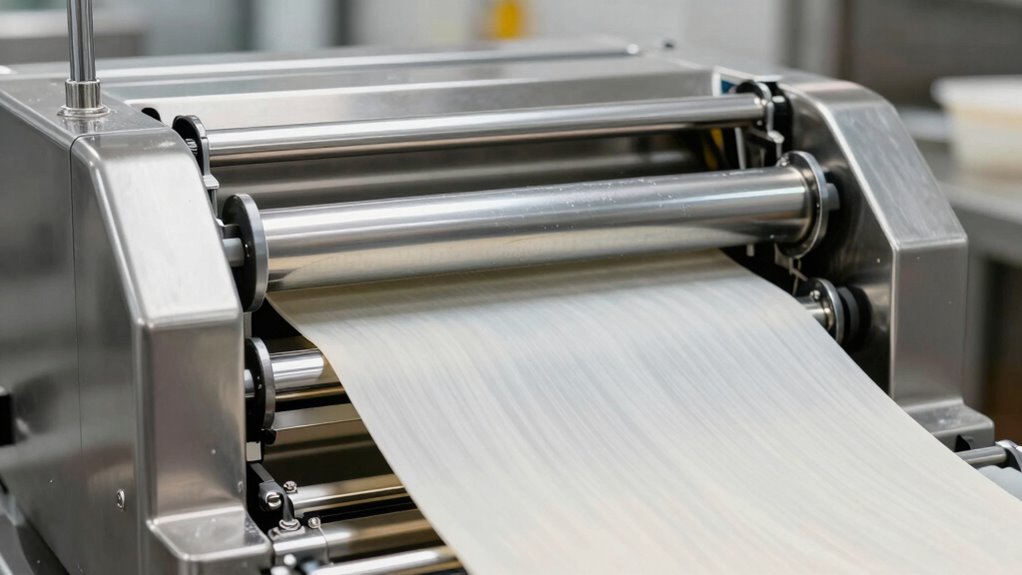
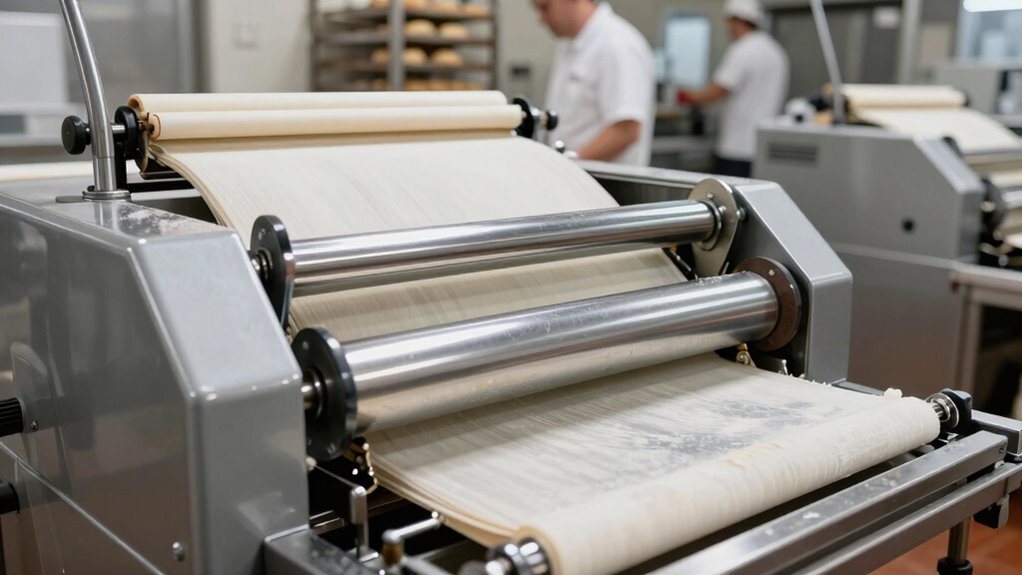
Bakery sheeters and laminators are essential tools that streamline the pastry-making process, helping you produce consistent, high-quality doughs and baked goods with ease. When you work with these machines, maintaining proper dough consistency is crucial. If the dough isn’t rolled out evenly, your final products can turn out uneven, affecting both appearance and texture. That’s why precise control over dough thickness is vital—your sheeter’s ability to produce uniform sheets directly impacts your product consistency. To achieve this, you need to pay close attention to equipment calibration. Regularly checking and adjusting your sheeter’s settings ensures it produces the exact thickness required for each recipe. Proper calibration prevents variations that could lead to waste, rework, or compromised quality.
Inconsistent dough thickness can result from a machine that’s out of calibration or worn parts. When your equipment isn’t properly calibrated, you might notice that some dough sheets are thinner or thicker than intended, which messes with baking times and final texture. Over time, calibration drifts, especially with frequent use, so establishing a routine check helps you catch and correct discrepancies early. This not only guarantees dough uniformity but also minimizes waste, as you’ll avoid reprocessing dough or discarding imperfect sheets. Proper calibration also extends the lifespan of your equipment, reducing maintenance costs and downtime. Consistent dough quality is essential for maintaining customer satisfaction and ensuring your bakery’s reputation. Additionally, understanding how equipment calibration affects your production can help you make informed adjustments and optimize your workflow. A well-calibrated machine also contributes to labour efficiency, ensuring that your staff can work smoothly without frequent interruptions to fix issues. Implementing a regular maintenance schedule can further enhance machine performance and longevity, leading to more reliable operation. Proper diagnostics and troubleshooting techniques are also vital for quickly identifying and fixing calibration issues before they impact production.
Labor efficiency is another aspect tied closely to equipment calibration and dough consistency. When your sheeter is correctly calibrated, you spend less time adjusting settings or fixing mistakes. This means quicker turnarounds and more consistent output, enabling you to meet demand without sacrificing quality. Consistency in dough thickness also simplifies downstream processes like cutting, filling, or layering, because you don’t have to compensate for uneven dough. This improves your workflow, reduces errors, and ultimately results in less waste. Less waste means lower costs, and that directly impacts your bottom line in a positive way.
Ultimately, precision in using bakery sheeters and laminators isn’t just about making beautiful pastries—it’s about controlling every aspect of your production process. Proper equipment calibration ensures dough consistency, reduces waste, and boosts labor efficiency. When you invest time in maintaining and calibrating your machines, you create a more streamlined operation, delivering high-quality baked goods consistently. This attention to detail not only enhances your product but also makes your bakery more profitable and sustainable in the long run.
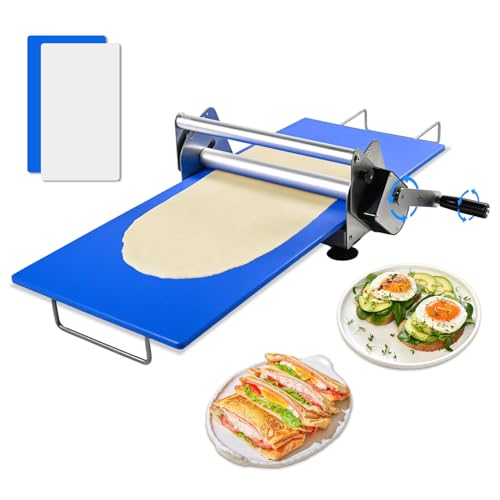
Folding Dough Rolling Machine,Manual Dough Sheeter ,Compact Dough Sheeter Machine For Bakery Pizza,Dough Machine With Adjustable Thickness, Stainless Steel(2 Rolling Boards)
- Includes Two Rolling Boards: Rough and smooth PE boards for versatile use
- Multi-Purpose Applicability: Suitable for pastries, cookies, pasta, and more
- Adjustable Thickness Settings: Range from 0 to 17.5 mm
As an affiliate, we earn on qualifying purchases.
As an affiliate, we earn on qualifying purchases.
Frequently Asked Questions
How Do Bakery Sheeters Impact Overall Production Speed?
Bakery sheeters substantially boost your overall production speed by ensuring consistent dough thickness and quality. When you maintain proper dough consistency and keep the machine calibrated, it reduces the need for rework and minimizes downtime. This precision allows you to process more dough efficiently, resulting in faster throughput. Ultimately, well-calibrated sheeters help you meet demand quickly while reducing waste, keeping your bakery running smoothly and profitably.
What Safety Features Are Essential in Bakery Laminators?
Did you know that proper safety features can reduce workplace accidents by up to 50%? In bakery laminators, essential safety features include safety sensors that detect any obstruction or irregularity, stopping the machine instantly. Emergency stops are vital, allowing you to quickly shut down equipment during emergencies. These features protect you from injury, guarantee smooth operation, and maintain a safe working environment for everyone involved.
Can Sheeters Handle Gluten-Free or Specialty Doughs?
Yes, sheeters can handle gluten-free or specialty doughs, but you need models with good gluten free handling and specialty dough adaptability. Look for machines with adjustable pressure and speed controls to accommodate delicate or sticky doughs. Properly calibrated sheeters prevent tearing or sticking, ensuring smooth operation. Choosing equipment designed for specialty doughs helps maintain consistent quality and reduces waste, making your baking process more efficient and precise.
How Often Should Maintenance Be Performed on These Machines?
Did you know that regular maintenance can reduce machine downtime by up to 30%? You should perform maintenance on your bakery sheeters and laminators every 50 to 100 hours of operation, depending on usage. Consistent machine calibration and proper maintenance scheduling ensure maximum performance, minimize waste, and extend equipment lifespan. By sticking to a routine, you keep your production running smoothly and maintain high-quality products.
What Are the Environmental Considerations for Bakery Sheeters?
You should consider environmental factors when operating bakery sheeters by choosing eco-friendly materials and focusing on waste reduction. Use sustainable supplies whenever possible, and regularly monitor waste output to identify areas for improvement. Proper maintenance helps guarantee efficient operation, reducing excess waste. Adopting eco-conscious practices not only benefits the environment but also improves your bakery’s overall efficiency, minimizing costs and promoting a greener operation.
Conclusion
In the world of baking, precision in your bakery sheeters and laminators isn’t just a detail—it’s the backbone of consistent quality and efficiency. Think of these machines as the silent conductors of your bakery symphony, where every perfect sheet or layer sets the stage for success. By investing in accuracy, you’ll minimize waste and maximize labor, turning your bakery into a finely tuned masterpiece where every element works in harmony for delicious results.