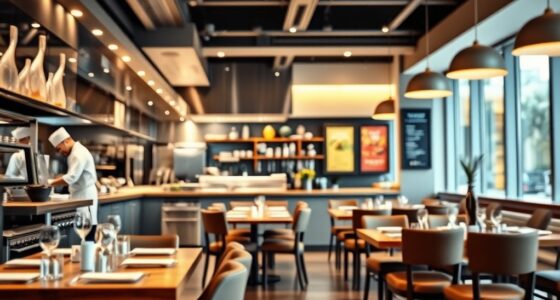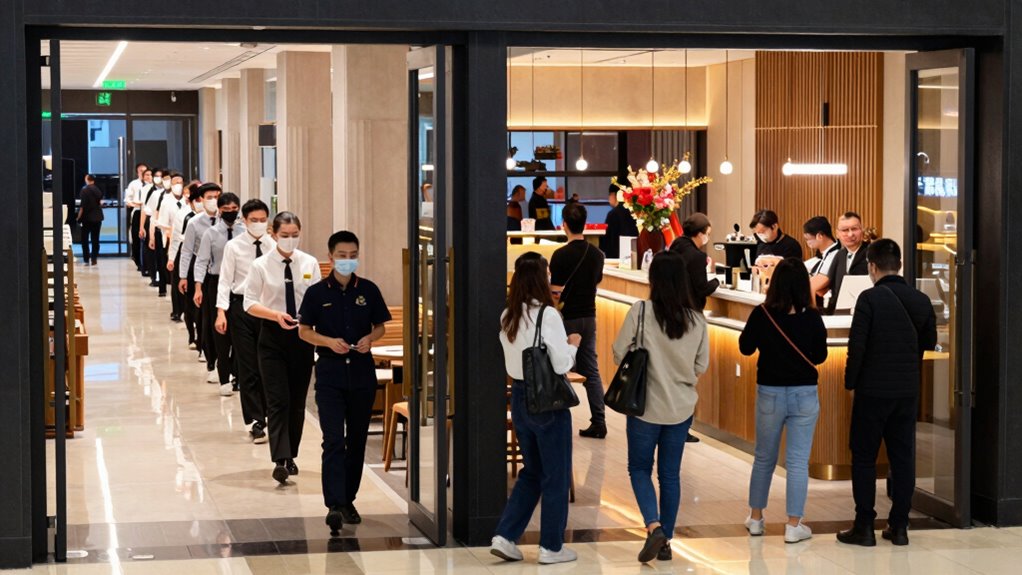

Service flow focuses on how efficiently your staff performs tasks like taking orders and delivering items, ensuring smooth operations. Guest flow, on the other hand, deals with how customers move through your space, aiming to reduce congestion and create a comfortable environment. Both are connected but serve different purposes: one streamlines staff actions, the other guides customer movement. Understanding the key distinction helps you create a space that’s both efficient and welcoming—discover more about how they work together.

Get kitchen staples and gadgets delivered free — and shop member deals
- Fast, free delivery on millions of items
- Access to Prime Big Deal Days deals on October 6–7
- Prime Video, Amazon Music and more included
Key Takeaways
- Service flow focuses on staff efficiency and task execution, while guest flow concentrates on customer movement and space navigation.
- Efficient service flow ensures smooth interactions; optimized guest flow reduces wait times and congestion.
- Service flow involves staff training and process streamlining; guest flow relies on space layout and signage.
- Both are interconnected but target different aspects: operational performance versus customer experience.
- Balancing both flows creates a seamless, welcoming environment that enhances overall satisfaction.
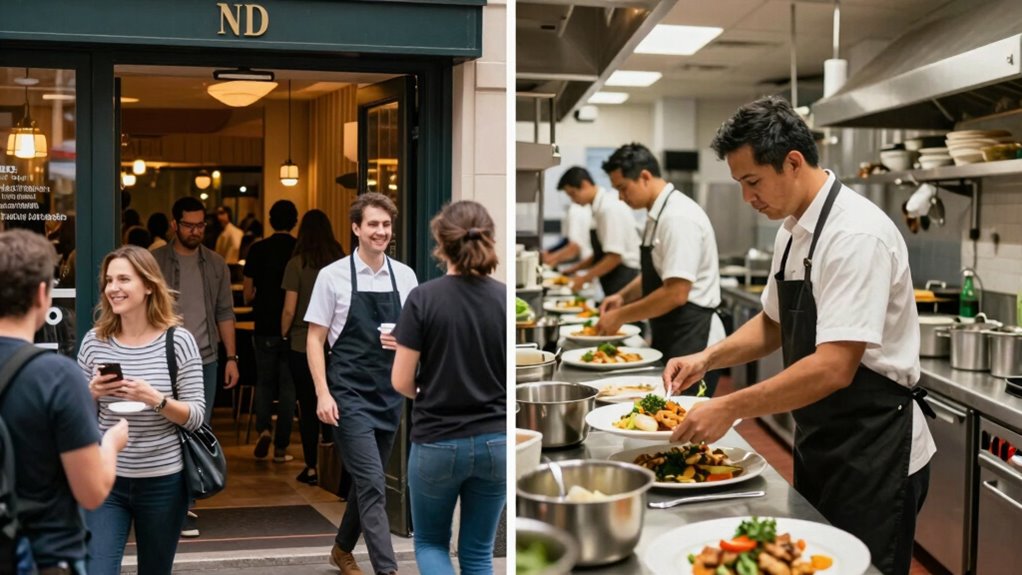
Understanding the difference between service flow and guest flow is vital for anyone aiming to optimize operations in hospitality or retail environments. These two concepts are interconnected but serve distinct roles in delivering a seamless customer journey. When you focus on service flow, you’re concentrating on how efficiently your staff can perform their tasks—from taking orders to delivering food or handling transactions. Proper staff training guarantees your team knows their roles and can move smoothly through each step of the service process. This smoothness directly impacts the customer experience, making it feel effortless and enjoyable. If your service flow is disorganized, even the happiest guests might feel frustrated, which can tarnish their overall perception of your establishment.
Understanding service flow and guest flow is essential for creating a smooth, enjoyable customer experience.
On the other hand, guest flow refers to the movement patterns of your customers within your space. It involves understanding how guests enter, navigate, and exit your venue. Managing guest flow isn’t just about avoiding congestion; it’s about creating an environment where customers feel comfortable and welcomed. When you optimize guest flow, you help reduce wait times, prevent bottlenecks, and make sure guests can easily access the areas they need. This directly enhances the customer experience because a well-managed space allows guests to relax and enjoy their visit without unnecessary stress or confusion. You might use signage, layout adjustments, or staff placement to guide guest movement more effectively, guaranteeing a natural and intuitive flow. Additionally, understanding caffeine science can help you optimize product placement, such as positioning popular drinks to streamline customer choices and reduce congestion.
While both service flow and guest flow are vital, they require different strategies. Improving service flow depends heavily on staff training, guaranteeing your team understands their responsibilities and can work efficiently. This leads to quicker service times, fewer errors, and a more positive customer experience. Conversely, managing guest flow involves physical space planning and strategic placement of staff to guide movement subtly but effectively. Both need to work in harmony; a well-trained staff can better manage guest movement, and a thoughtfully designed space can support your team’s efforts. Enhancing space design with thoughtful layouts can significantly improve both aspects by naturally guiding movement and streamlining service.
Ultimately, understanding these differences helps you create a cohesive environment where operations run smoothly and customers feel valued. When you pay attention to both service flow and guest flow, you elevate the entire customer experience, encouraging repeat visits and positive reviews. Your staff becomes more confident and capable, and your guests enjoy their time more. By balancing these elements, you set the stage for a successful, efficient, and welcoming space that leaves a lasting impression.
As an affiliate, we earn on qualifying purchases.
Frequently Asked Questions
How Do Service Flow and Guest Flow Impact Staff Workload?
Service flow and guest flow directly impact your staff’s workload by influencing how quickly and smoothly tasks are completed. When these flows are well-coordinated, your team can adapt more easily through effective staff adaptability and clear communication strategies. Conversely, disorganized flows increase stress, requiring staff to juggle multiple tasks, often leading to burnout. Maintaining balanced flows helps your staff stay efficient and responsive, ensuring a better experience for guests and easier workload management.
Can Service Flow and Guest Flow Be Optimized Simultaneously?
Yes, you can optimize service flow and guest flow simultaneously through service synchronization. By aligning staff schedules, streamlining processes, and designing layouts that guide guests smoothly, you enhance the guest experience while improving operational efficiency. Focus on balancing the movement of guests with staff responsiveness, ensuring both flows support each other. When done effectively, this approach creates a seamless environment that delights guests and reduces staff workload.
What Tools Are Best for Analyzing Flow Differences?
Imagine walking through a bustling restaurant where automation tools and data visualization paint a clear picture of flow differences. The best tools for analyzing these are platforms like Tableau or Power BI, which turn raw data into vivid visual insights. They help you spot bottlenecks and optimize both service and guest flow seamlessly. By harnessing these tools, you make data-driven decisions that elevate your operational efficiency and guest experience.
How Do Flow Differences Affect Customer Satisfaction?
Flow differences directly impact customer satisfaction by creating service bottlenecks and confusing guest pathways. When your service flow isn’t smooth, customers wait longer, feel frustrated, and may leave without completing their visit. Clear guest pathways help guide visitors effortlessly through your space, ensuring they experience less congestion and quicker service. By optimizing these flows, you improve overall satisfaction, foster loyalty, and boost your reputation.
Are There Industry-Specific Variations in Flow Management?
Think of flow management like a dance; every industry has its own rhythm. In hospitality, industry standards focus on smooth guest movement, while retail emphasizes quick service. Regional practices may influence timing and layout, like a salsa dance differing from a waltz. You’ll find variations tailored to customer expectations and operational needs, ensuring the flow aligns with industry norms and regional preferences for peak efficiency and satisfaction.
Conclusion
Understanding the difference between service flow and guest flow helps you streamline operations, enhance guest experiences, and boost efficiency. Service flow guides your team’s actions, ensuring smooth, consistent delivery. Guest flow manages the movement of your guests, creating comfort and accessibility. By balancing these flows, you create a seamless environment where service and guest experiences harmonize, flow effortlessly, and leave a lasting impression. When both flows align, your business thrives, your guests feel valued, and success becomes inevitable.
Fall Picks
fall essentials
As an affiliate, we earn on qualifying purchases.