
Using thermal label printers in your kitchen helps you create durable, clear labels for ingredients and storage containers, reducing mistakes and contamination risks. Accurate labeling with labels that withstand moisture and cleaning keeps food fresh and safe, making compliance easier. Investing in quality labels saves money by decreasing waste and preventing safety violations. With better labels, you improve overall safety and efficiency—if you keep going, you’ll discover how these tools truly transform your kitchen’s operations.

Get kitchen staples and gadgets delivered free with Prime
- Fast, free delivery on millions of items
- Prime Video, Amazon Music and more included
- Member-only deals all year
Key Takeaways
- Durable labels withstand moisture and cleaning, ensuring safety information remains legible and reliable.
- Clear labeling of expiration dates prevents the use of expired or unsafe food items.
- Automated printing reduces human errors, enhancing compliance with food safety regulations.
- Labels displaying safety warnings and handling instructions promote proper food storage and hygiene.
- High-quality labels support traceability, aiding quick response during safety recalls or contamination issues.
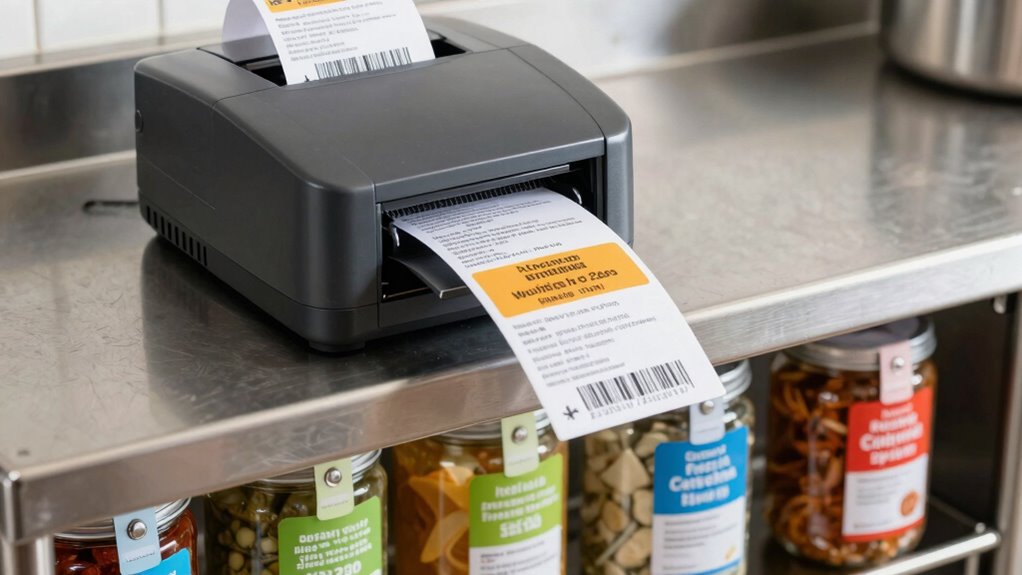
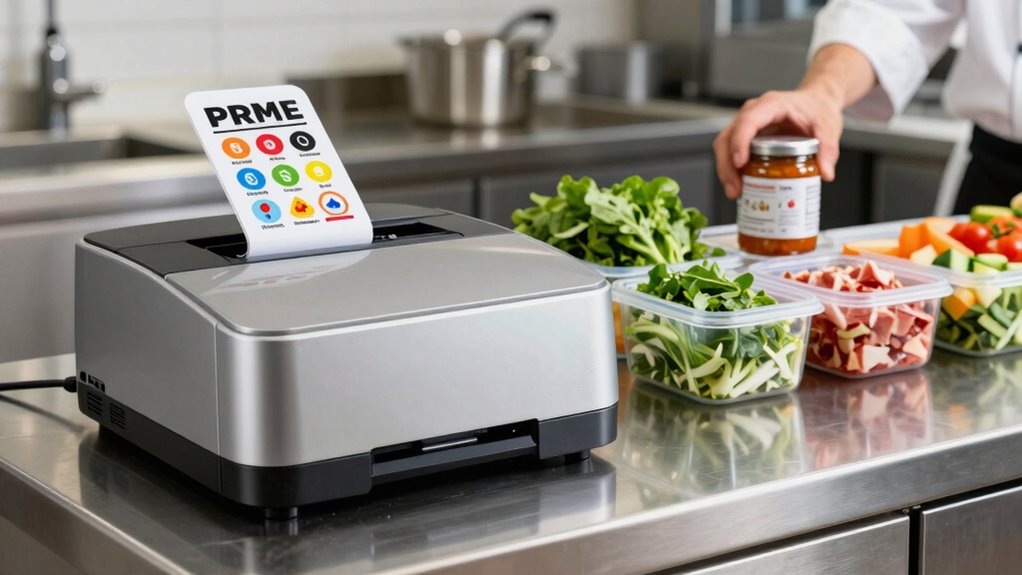
In busy kitchens, staying organized and maintaining food safety is essential, and thermal label printers play a key role in achieving that. These printers streamline the process of labeling ingredients, prepared dishes, and storage containers, ensuring that everything is clearly marked and easy to identify. When you use high-quality thermal labels, you reduce the risk of mix-ups, cross-contamination, and expired food slipping through the cracks. This is especially important when managing multiple ingredients and dishes simultaneously. The automation efficiency that thermal label printers offer means you can quickly produce labels for every item, saving you time and minimizing human error. Instead of manually writing or printing labels with traditional methods, you simply set up your printer once, and it handles the rest, allowing your staff to focus on more critical tasks.
Thermal label printers enhance kitchen organization, safety, and efficiency with durable, accurate labels for all food items.
Moreover, investing in better labels and printers can markedly impact your cost analysis. While upfront costs for quality thermal printers may seem higher initially, they pay off in the long run. They reduce waste by helping you track expiration dates accurately, preventing unnecessary discard of safe-to-eat food. Additionally, reliable labels decrease the likelihood of mistakes that could lead to food safety violations or costly recalls. Over time, the durability of thermal labels means fewer replacements and less ongoing expense, making your overall operations more economical. By cutting down on manual labeling efforts and reducing errors, you also improve productivity, which translates into better resource allocation and cost savings. Proper labeling practices are fundamental in fostering a safe and efficient kitchen environment.
The clarity and durability of thermal labels also enhance food safety by ensuring labels stay intact and legible even in moist or cold environments. This durability is essential in kitchens where spills, refrigeration, and cleaning are routine. When labels remain clear and securely attached, you can easily identify ingredients, storage dates, and safety warnings, minimizing the risk of using expired or unsafe food. Proper labeling supports compliance with health regulations and gives your team confidence that proper procedures are being followed. Integrating biodiversity and sustainability practices into your kitchen operations can also promote environmentally responsible choices, such as using eco-friendly labels and materials.
thermal label printer for kitchen
As an affiliate, we earn on qualifying purchases.
As an affiliate, we earn on qualifying purchases.
Frequently Asked Questions
How Long Do Thermal Labels Typically Last in a Kitchen Environment?
You can expect thermal labels in a kitchen environment to last anywhere from several months to a year, depending on conditions. Label durability and ink longevity are key factors, with durable labels resisting moisture, heat, and handling. Properly printed thermal labels maintain their readability longer, ensuring food safety and accurate inventory management. Regularly checking and replacing labels as needed helps prevent confusion and keeps your kitchen compliant with safety standards.
Are Thermal Label Printers Suitable for High-Volume Food Labeling?
You’re likely to find thermal label printers suitable for high-volume food labeling because they excel in printing speed and label durability. In fact, many models can produce hundreds of labels per hour, ensuring efficiency. Their impressive label durability withstands kitchen conditions, reducing re-labeling. So, if you need fast, reliable labeling for large quantities, thermal printers are a smart choice to keep your kitchen running smoothly.
What Are the Best Label Materials for Moisture-Prone Kitchen Areas?
For moisture-prone kitchen areas, you should choose labels made from heat-proof materials with water-resistant adhesives. These labels withstand steam, spills, and refrigeration without peeling or fading. Look for options like synthetic polypropylene or polyester, which offer durability and moisture resistance. Using these materials guarantees your labels stay intact, clear, and legible, helping maintain food safety and compliance even in challenging kitchen environments.
Can Thermal Labels Be Customized With Nutritional Information?
Did you know that 68% of consumers check labels for nutritional info before buying? Yes, thermal labels can be customized with nutritional information, helping you guarantee nutritional accuracy. You can also easily incorporate label design customization to match your kitchen’s branding or specific needs. This flexibility allows you to provide clear, accurate details for food safety and compliance, improving customer trust and reducing errors in food handling.
How Do Thermal Printers Handle Labels for Frozen or Cold Storage?
Thermal printers handle labels for frozen or cold storage by producing temperature-resistant labels with strong adhesion. You need labels designed for low temperatures, ensuring they won’t peel or smudge when exposed to cold or moisture. These labels are built with special adhesives and materials that withstand temperature fluctuations, maintaining clarity and adhesion over time. This way, your food safety standards stay intact even in cold environments.
Conclusion
By using thermal label printers in your kitchen, you guarantee clear, durable labels that boost food safety and reduce waste. Some might think labels are just a small detail, but imagine a busy kitchen where properly labeled ingredients prevent cross-contamination and spoilage—saving time, money, and health. When you prioritize accurate labeling, you’re not just organizing—you’re creating a safer, more efficient environment. It’s a simple step that makes a big difference in your kitchen’s overall safety.
NFL season / tailgating Picks
team gear
As an affiliate, we earn on qualifying purchases.