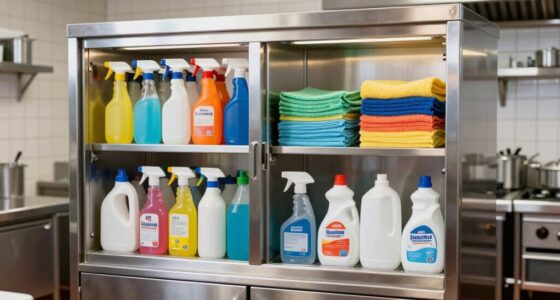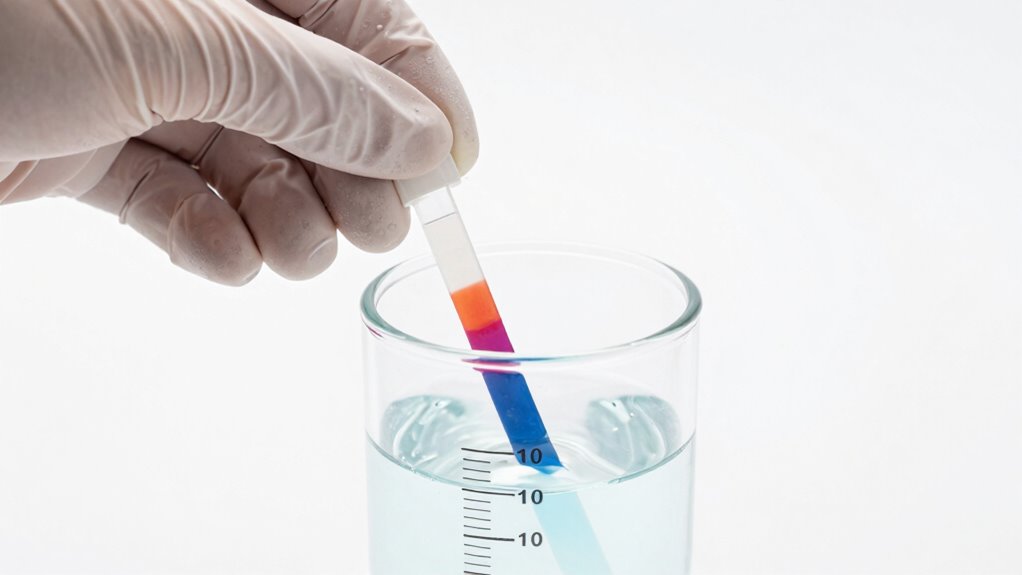

To check sanitizer concentration daily, start by using test strips or digital testers to guarantee the solution meets the recommended 60-70% alcohol level for effectiveness. Dip test strips into the sanitizer, compare the color to the chart, and record your results regularly. Conduct tests at the beginning of each shift and as needed to catch any changes quickly. Keeping accurate logs helps maintain hygiene standards and protects everyone—keep going to discover more tips to stay compliant.

Get kitchen staples and gadgets delivered free — and shop member deals
- Fast, free delivery on millions of items
- Access to Prime Big Deal Days deals on October 6–7
- Prime Video, Amazon Music and more included
Key Takeaways
- Use test strips or digital devices to accurately measure sanitizer concentration regularly.
- Perform tests at the start of each shift and periodically throughout the day.
- Compare test results to manufacturer’s guidelines to ensure proper disinfectant levels.
- Record all test results consistently to monitor trends and identify when re-dilution is needed.
- Adjust or replace sanitizer solutions promptly to maintain effective germ-killing concentrations.
Maintaining the correct sanitizer concentration is essential for effective daily operations, especially in environments where hygiene is critical. When it comes to hand hygiene, using the right amount of disinfectant ensures your hands are properly sanitized without wasting resources or risking ineffective cleaning. If your sanitizer is too diluted, it won’t effectively kill germs, leaving surfaces and hands vulnerable to contamination. Conversely, if the solution is overly concentrated, it can cause skin irritation and unnecessary chemical exposure. That’s why regularly checking sanitizer concentration is a vital part of maintaining a safe and hygienic environment.
Proper sanitizer concentration is key for effective hygiene and safety. Regular checks prevent contamination and skin irritation.
To accurately check your sanitizer’s concentration, you need to use the proper testing methods. Dip a test strip into the sanitizer solution, and then compare the color change to the chart provided with the test kit. This quick step gives you a clear indication of whether your sanitizer is within the recommended concentration range. You should perform this test at the start of each shift, and periodically throughout the day, especially if your solution is used heavily or if environmental conditions change. Consistent testing helps guarantee disinfectant effectiveness remains high, preventing the spread of germs and bacteria.
It’s important to understand the manufacturer’s guidelines for your specific sanitizer product, as recommended concentration levels can vary. For most alcohol-based hand sanitizers, the ideal concentration is around 60-70%, which balances rapid germ kill with skin tolerability. For other disinfectants, such as quaternary ammonium compounds or chlorine-based solutions, the required concentration might differ, but the principle remains the same: maintaining that perfect level guarantees disinfectant effectiveness. Always follow the manufacturer’s instructions for dilution and reconstitution, and never guess or rely on visual cues alone—testing is your only dependable method.
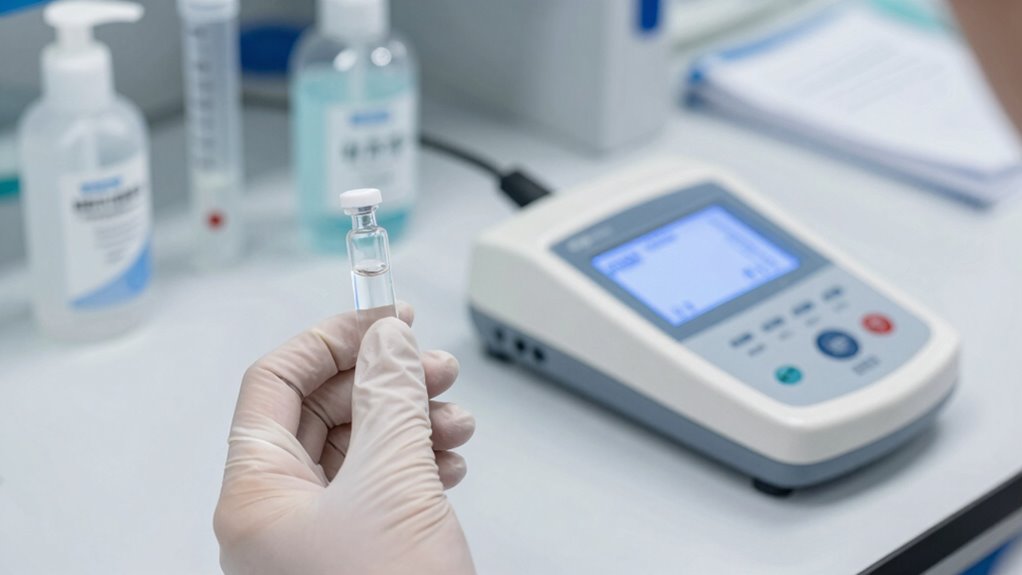
In addition to using test strips, some facilities invest in digital testing devices that provide more precise readings. These tools can be especially useful in high-volume settings or where strict compliance is necessary. Whichever method you choose, it’s indispensable to record test results regularly, creating a log that helps you track changes over time and identify when solutions need replacement or re-dilution. This record-keeping not only supports compliance but also contributes to continuous improvement in hygiene practices.
Ultimately, checking sanitizer concentration isn’t just a routine task; it’s a proactive measure to ensure your hand hygiene protocols are effective and that disinfectant effectiveness is maximized. When you stay vigilant with testing, you protect yourself, your colleagues, and everyone who relies on your commitment to cleanliness. Consistent verification fosters confidence that your environment remains safe, germ-free, and ready for daily operations. Remember that testing methods are a key component of maintaining optimal sanitizer levels, ensuring the safety and health of everyone involved.
As an affiliate, we earn on qualifying purchases.
Frequently Asked Questions
How Often Should Sanitizer Concentration Be Tested Daily?
You should test sanitizer concentration daily, ideally before each shift begins, to guarantee concentration accuracy. Frequent testing helps you catch any deviations early, maintaining effective sanitation. If your operation involves high traffic or sensitive environments, consider testing more often. Consistent testing frequency ensures the sanitizer remains within the proper range, reducing contamination risks. Always follow manufacturer guidelines and your facility’s protocols to keep your sanitation process reliable and effective.
What Types of Testing Kits Are Most Reliable?
For reliable testing, opt for digital or test strip kits, as they’re known for better testing accuracy and ease of use. Digital kits provide precise readings quickly, while test strips are cost-effective and straightforward. When selecting a kit, consider accuracy, ease of interpretation, and consistency. This thoughtful choice guarantees your sanitizer concentration remains effective, helping you maintain high safety standards effortlessly.
Can Improper Concentration Affect Sanitizer Effectiveness?
Yes, improper sanitizer concentration can greatly diminish its effectiveness, risking contamination. If your sanitizer isn’t properly calibrated, it may be too weak to kill germs or too strong, which can damage surfaces and waste resources. Regular sanitizer calibration ensures the right concentration, maintaining ideal disinfection and contamination prevention. Always verify sanitizer levels with reliable testing kits to keep your operations safe and compliant.
Are There Differences in Concentration Requirements for Different Sanitizer Types?
Think of sanitizer formulations like recipes; each type demands specific concentration standards for ideal results. For instance, alcohol-based sanitizers typically need 60-70% alcohol, while quaternary ammonium compounds require different levels. These variations guarantee effectiveness against microbes. Always follow manufacturer guidelines to meet these concentration standards, because if you ignore the differences, your sanitizer might fall short, risking contamination or ineffective cleaning.
How Should Sanitizer Solutions Be Stored to Maintain Proper Concentration?
You should store sanitizer solutions in clearly labeled, airtight containers to prevent contamination and evaporation. Follow storage guidelines by keeping solutions away from heat, direct sunlight, and incompatible chemicals. Proper container labeling is essential, indicating the sanitizer type, concentration, and date prepared. Regularly check storage conditions to guarantee the sanitizer remains effective, and replace solutions if they show signs of degradation or if storage guidelines aren’t being followed.
Conclusion
Just as the lighthouse guides ships safely to shore, regularly checking your sanitizer guarantees your team stays protected and your operations run smoothly. Don’t let complacency be your uncharted waters—stay vigilant with consistent concentration checks. Remember, even the strongest armor is only as good as the shield it provides. By maintaining proper sanitizer levels daily, you’re steering your safety protocols with the wisdom of those who’ve charted these waters before. Stay sharp, stay safe.
Fall Picks
fall essentials
As an affiliate, we earn on qualifying purchases.