Bakery rack ovens are designed to handle multiple trays at once, making them ideal for high-volume baking. They provide even heat distribution for consistent results across full racks, reducing waste and batch times. They’re easier to load, operate, and control, which speeds up your workflow. Plus, their energy-efficient systems lower operational costs. If you want to learn more about how rack ovens can boost your bakery’s productivity and quality, keep exploring these advantages.

Get kitchen staples and gadgets delivered free with Prime
- Fast, free delivery on millions of items
- Prime Video, Amazon Music and more included
- Member-only deals all year
Key Takeaways
- Rack ovens handle multiple trays simultaneously, ideal for high-volume, continuous baking, unlike deck ovens which typically bake one batch at a time.
- They provide uniform heat distribution across entire racks, ensuring consistent product quality, whereas deck ovens may have uneven baking zones.
- Rack ovens are designed for ease of loading, unloading, and quick adjustments, promoting efficient large-scale production, unlike the more manual deck ovens.
- They offer better energy efficiency through advanced insulation and heating systems, reducing operational costs compared to traditional deck ovens.
- Rack ovens are more suitable for industrial bakery environments, handling full racks at once, while deck ovens are generally used for smaller or artisanal baking.
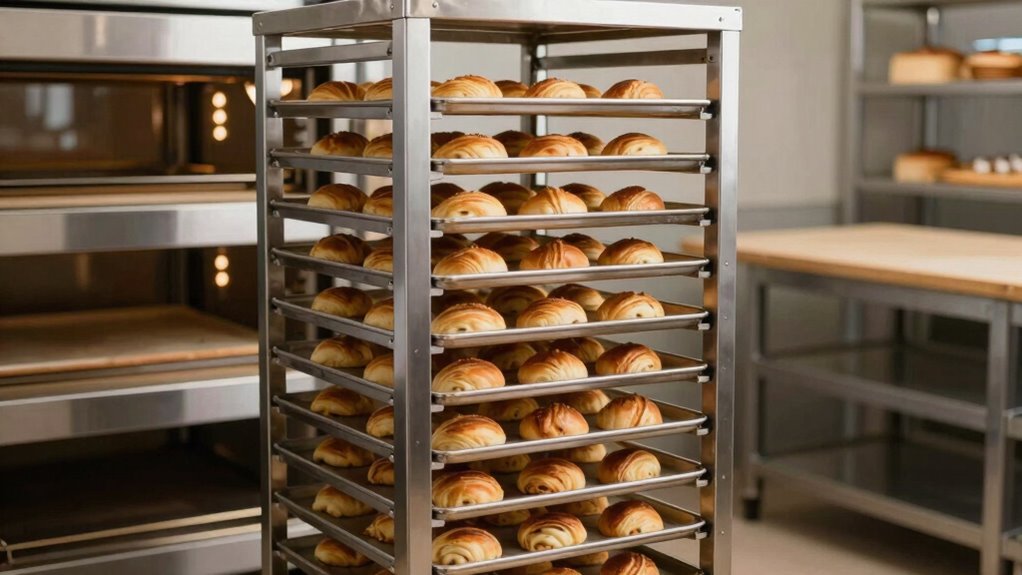
Bakery rack ovens are vital for commercial bakeries that need to produce large quantities of baked goods efficiently. Unlike traditional deck ovens, rack ovens are designed to handle multiple trays or racks simultaneously, making them ideal for high-volume production. This setup considerably improves your baking efficiency because you can bake more items in less time, which is essential when meeting tight deadlines or expanding your product range. The design allows you to load entire racks at once, reducing the need for multiple batches and minimizing downtime between baking cycles.
One of the main advantages of bakery rack ovens is their ability to deliver consistent results across all products. Since you load full racks into the oven, the heat distribution is evenly maintained throughout the baking process. This uniformity guarantees that every loaf, pastry, or cookie comes out perfectly baked, reducing waste and increasing your overall productivity. Additionally, many rack ovens come with advanced controls, allowing you to fine-tune temperature and humidity levels for different recipes. This precision enhances baking efficiency by optimizing conditions for each product, saving you time and effort in adjustments and re-baking. Moreover, the heat transfer efficiency of rack ovens plays a significant role in ensuring uniform baking and energy savings. The design of these ovens also facilitates easier loading and unloading, further streamlining your bakery operations.
Energy consumption is another vital factor where rack ovens stand out compared to deck ovens. Because they are designed to maximize heat transfer and retain warmth more effectively, rack ovens tend to be more energy-efficient. They often feature insulated chambers and sophisticated heating systems that reduce the amount of energy needed to maintain consistent baking temperatures. This efficiency not only lowers your operational costs but also makes your bakery more environmentally friendly. With rising energy prices, choosing an oven that minimizes energy use can greatly impact your bottom line while supporting sustainable practices. Additionally, their energy-efficient design ensures that your bakery operates sustainably and cost-effectively.
As an affiliate, we earn on qualifying purchases.
Frequently Asked Questions
How Energy-Efficient Are Bakery Rack Ovens Compared to Deck Ovens?
Bakery rack ovens are generally more energy-efficient than deck ovens, thanks to their better heat distribution and insulation, which reduce energy consumption. You’ll notice a lower environmental impact since they use less power and produce fewer emissions. Their design allows for continuous baking, saving you time and energy, making them a smarter choice if you’re aiming to cut costs and minimize your bakery’s carbon footprint.
What Is the Typical Lifespan of a Bakery Rack Oven?
Think of your bakery rack oven as a reliable old friend that keeps baking day after day. Its typical lifespan ranges from 10 to 15 years with proper oven maintenance. Regular cleaning, checking heating elements, and ensuring proper airflow help extend its baking capacity and longevity. When well cared for, your oven will continue to produce quality baked goods, making it a valuable investment for years to come.
Are Bakery Rack Ovens Suitable for Small-Scale Bakeries?
Yes, bakery rack ovens are suitable for small-scale bakeries because they offer flexibility and efficient space use. Regular rack oven maintenance and rack oven cleaning keep them running smoothly and extend their lifespan. They handle smaller batches well, allowing you to bake a variety of goods without the need for large deck ovens. Plus, their design makes them easy to operate, perfect for bakery owners looking to optimize production.
How Much Space Do Bakery Rack Ovens Require?
Bakery rack ovens typically need about 10-12 square feet of space per oven, depending on size. With a shelf capacity of up to 60 racks, they’re highly efficient. You’ll also want to consider installation requirements, like proper ventilation and electrical connections. Notably, their compact footprint allows for high-volume baking without taking up excessive space, making them ideal for bakeries aiming to maximize production in limited areas.
Can Bakery Rack Ovens Be Customized for Specific Baking Needs?
Yes, bakery rack ovens can be customized to meet your specific baking needs. You can choose from various customization options like adjustable shelves, specialized heating elements, and tailored control systems. These ovens also offer scalable baking capacity, allowing you to increase or decrease the number of racks based on your production demands. This flexibility helps you optimize baking efficiency and quality, making them a versatile choice for different bakery sizes and specialties.
Conclusion
Think of bakery rack ovens as the steady heartbeat of your bakery, pulsing with the rhythm of consistent heat and efficiency. Unlike deck ovens, which are like individual brushstrokes, rack ovens paint a broader picture—uniform baking across multiple trays. Embrace this symbol of harmony and flow, and your baked goods will rise to meet the expectations of every enthusiastic customer. In the end, choosing the right oven is choosing the soul of your bakery’s artistry.
Halloween Picks
halloween
As an affiliate, we earn on qualifying purchases.