
To maximize batch efficiency with pressure and rice cookers, you need to focus on proper ingredient prep, like uniform chopping and accurate measuring, which speeds up cooking and guarantees quality. Regularly maintain your equipment by cleaning, checking gaskets, and following manufacturer guidelines to prevent breakdowns. Understanding how to operate each appliance correctly and maintaining safety protocols helps you cook consistently and reduces waste. Keep these practices in mind, and you’ll discover how to streamline your kitchen further.

Get kitchen staples and gadgets delivered free — and shop member deals
- Fast, free delivery on millions of items
- Access to Prime Big Deal Days deals on October 6–7
- Prime Video, Amazon Music and more included
Key Takeaways
- Proper ingredient prep and accurate measuring ensure uniform cooking and prevent overfilling pressure and rice cookers.
- Regular cleaning and maintenance of equipment extend lifespan and prevent safety hazards.
- Understanding appliance settings and operation optimizes cooking times and batch consistency.
- Implementing safety protocols and routine checks reduces risks and ensures reliable performance.
- Consistent processes in prep, operation, and maintenance improve kitchen efficiency and meal quality.
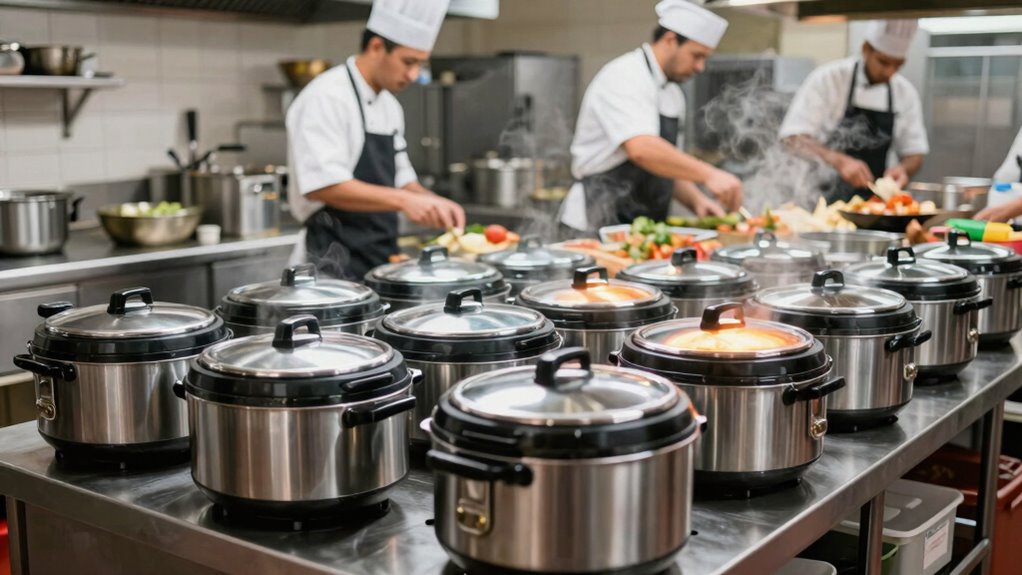
Batch cooking with pressure and rice cookers is a game-changer for anyone looking to save time and streamline meal prep. In a busy commercial kitchen, these appliances help you cook large quantities quickly, guaranteeing consistency and efficiency. To get the most out of your pressure and rice cookers, focusing on proper ingredient preparation is essential. Before you start, wash and chop ingredients uniformly to promote even cooking. Measure ingredients accurately to avoid overfilling the cookers, which can compromise safety and performance. When preparing grains, vegetables, or meats, consider pre-seasoning in advance, so flavors meld during cooking, reducing prep time during service hours. Proper ingredient prep not only speeds up the process but also assures that each batch meets quality standards.
Batch cooking with pressure and rice cookers boosts efficiency and ensures consistent, high-quality results in busy kitchens.
Equally important is equipment maintenance. Regularly cleaning your pressure and rice cookers prevents residue buildup, which can affect taste and safety. Follow the manufacturer’s instructions for cleaning, paying particular attention to seals, valves, and inner pots. Check for wear and tear on gaskets and safety valves; replacing worn parts promptly keeps your appliances operating safely and efficiently. Maintaining a routine schedule for descaling your pressure cooker, especially if you use hard water, to prevent mineral buildup that can hinder performance. Keeping your equipment in top shape reduces the risk of breakdowns, minimizes downtime, and extends the lifespan of your appliances. Additionally, understanding each appliance’s operating nuances ensures you can troubleshoot issues quickly and maintain consistent results. Being familiar with equipment specifications can help you optimize cooking parameters and improve overall efficiency. Regular performance checks can also help identify potential issues before they become major problems.
Batch cooking with these cookers relies heavily on consistent operation, so understanding each appliance’s nuances is indispensable. When loading your cookers, avoid overfilling; leave enough space for steam circulation, which is essential for even cooking. Use appropriate pressure settings and cooking times based on ingredient types to achieve uniform results. Developing a routine for equipment calibration can further enhance consistency and prevent errors during busy hours. Having a clear system for ingredient prep and equipment maintenance ensures each batch turns out perfect, saving you from redoing dishes or wasting ingredients. Incorporating proper safety protocols is also vital to prevent accidents and ensure a safe working environment.
In a commercial setting, the combination of well-prepared ingredients and properly maintained equipment translates into faster service and higher quality meals. It also reduces waste and lowers operational costs. Over time, you’ll develop a rhythm that balances prep, cooking, and cleanup, making batch cooking with pressure and rice cookers a core part of your kitchen’s efficiency. Staying disciplined with ingredient prep and equipment upkeep empowers you to deliver consistent, delicious dishes while keeping your kitchen running smoothly.
As an affiliate, we earn on qualifying purchases.
Frequently Asked Questions
How Do I Prevent Overcooking Rice in a Pressure Cooker?
To prevent overcooking rice in a pressure cooker, you should carefully monitor the cooking duration and adjust the time based on your rice type. Use the correct pressure setting and avoid opening the lid prematurely. Keep an eye on the rice texture—if it becomes too soft, reduce the cooking time next batch. Proper timing guarantees fluffy rice with the right texture, preventing overcooking and maintaining consistency.
What Safety Features Should I Look for in Commercial Pressure Cookers?
Safety features in commercial pressure cookers are like the guardrails on a busy road—essential for safe operation. Look for safety valves that release excess pressure, locking lids to prevent accidental openings, and automatic shut-offs. Make certain your kitchen has proper ventilation to prevent heat buildup and fumes. Following safety protocols, these features protect your staff and ensure smooth, safe cooking processes in a bustling commercial kitchen.
Can Different Types of Rice Be Cooked Together in One Batch?
Yes, you can cook different types of rice together, but it affects rice texture and cooking versatility. For example, combining jasmine and brown rice might result in uneven textures, as their cooking times differ. To guarantee consistent results, choose rice varieties with similar cooking times and water needs. This way, you maximize batch efficiency without compromising rice quality, making your kitchen operation more streamlined.
How Do I Maintain Consistent Cooking Times Across Batches?
You maintain consistent cooking times across batches by monitoring and adjusting your equipment regularly. Use reliable timers to guarantee batch timing accuracy and set them precisely each time. Keep the temperature consistent and avoid opening the lid prematurely, which disrupts cooking time. Record each batch’s cooking duration to identify patterns and fine-tune your process. Consistent practices help you achieve reliable cooking time consistency, ensuring high-quality results every time.
Are There Energy Efficiency Tips for Batch Cooking With These Appliances?
Like a savvy modern cook, you can save energy with pressure and rice cookers by practicing appliance optimization. Use energy-saving techniques like pre-soaking grains, filling appliances to capacity without overloading, and ensuring proper sealing to minimize heat loss. Additionally, keep appliances clean and maintained to operate efficiently. These small steps help you cut costs and reduce your kitchen’s carbon footprint, making your batch cooking both eco-friendly and economical.
Conclusion
By mastering pressure and rice cookers in your commercial kitchen, you’ll transform your batch cooking game from ordinary to legendary. Imagine slashing hours off your prep time, serving perfect rice and hearty dishes in a flash, and impressing every customer with lightning-fast efficiency. These appliances aren’t just tools—they’re your secret weapons for unstoppable kitchen performance. Embrace them, and watch your kitchen become a powerhouse of productivity that leaves competitors in the dust!
Halloween Picks
halloween
As an affiliate, we earn on qualifying purchases.