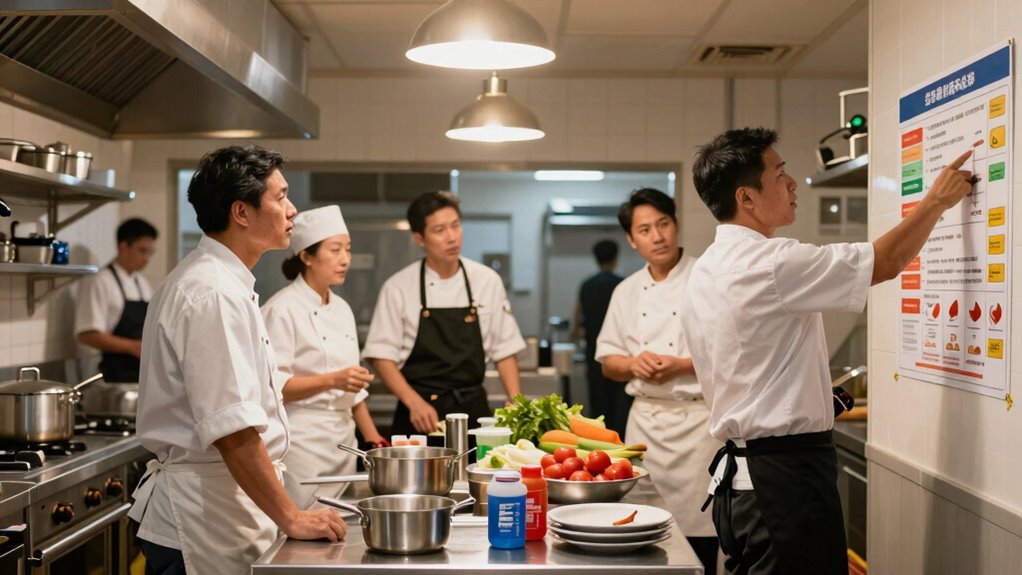

To run an effective daily safety huddle in your restaurant, keep it short—under 10 minutes—to stay focused and engaged. Start by reviewing recent safety concerns, emergency procedures, and any updates to policies. Encourage open communication, ask questions, and recognize staff for safety practices. End on a positive note to reinforce shared responsibility and boost team confidence. If you want practical tips to make your huddles more impactful, just keep exploring this essential topic.

Get kitchen staples and gadgets delivered free — and shop member deals
- Fast, free delivery on millions of items
- Access to Prime Big Deal Days deals on October 6–7
- Prime Video, Amazon Music and more included
Key Takeaways
- Keep the huddle brief, under 10 minutes, focusing on critical safety updates and emergency procedures.
- Review recent incidents, prevention strategies, and reinforce safety protocols to maintain awareness.
- Encourage open communication, questions, and staff input to foster engagement and shared responsibility.
- Highlight emergency locations, responsibilities, and conduct quick drills to ensure readiness.
- End on a positive note by recognizing safety efforts and reinforcing ongoing safety communication.
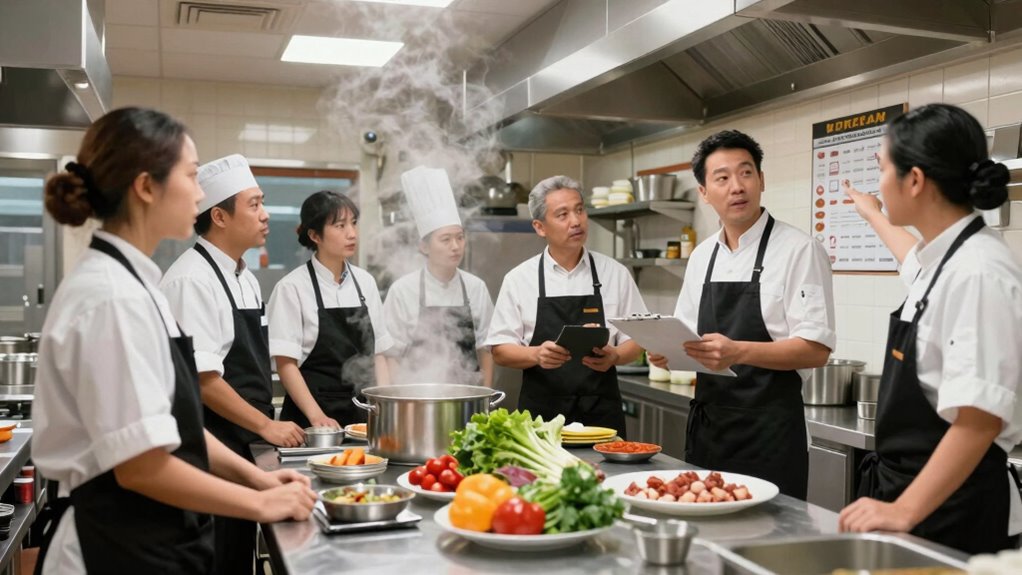
Starting your day with a quick, focused safety huddle is essential for maintaining a safe and efficient restaurant environment. It’s your chance to set the tone for the day, ensuring everyone is on the same page when it comes to safety and emergency procedures. When you actively engage your staff during these brief meetings, you foster a culture of awareness and accountability. Staff engagement is key; when team members feel involved and informed, they’re more likely to follow safety protocols and speak up about potential hazards. Use the huddle to encourage open dialogue—ask questions, listen to concerns, and recognize good safety practices. This not only boosts morale but also reinforces the importance of everyone’s role in maintaining a safe workspace.
Starting each day with a safety huddle fosters awareness, accountability, and a confident, prepared team.
Focusing on emergency procedures during your safety huddle keeps safety top of mind. Clearly review the steps to take in case of fires, medical emergencies, or other urgent incidents. Reinforce the locations of fire extinguishers, first aid kits, and emergency exits. Make sure everyone understands their specific responsibilities during an emergency. You can even run quick drills to help staff stay prepared, but keep these exercises brief and relevant to avoid disrupting the flow of the day. The goal is to make emergency procedures second nature, so if an incident occurs, your team can respond swiftly and confidently. Incorporating safety culture into daily routines helps embed these practices more effectively and builds a resilient team mindset. Recognizing the importance of consistent communication can further strengthen your safety efforts and ensure everyone remains vigilant.
To run an effective safety huddle, keep it concise—ideally under 10 minutes—so it doesn’t eat into busy service hours but still covers critical points. Use this time to share any recent safety concerns or incidents, and discuss how to prevent similar issues in the future. Highlight any updates to safety policies or procedures, and remind staff to report hazards immediately. When staff feels heard and understands their safety responsibilities, they’re more likely to stay vigilant. Additionally, fostering a safety-conscious environment encourages ongoing commitment from all team members.
Finally, end the huddle on a positive note. Recognize staff members who demonstrate excellent safety practices and encourage ongoing communication. When safety becomes a shared priority, staff engagement naturally increases, and emergency procedures become ingrained in your team’s daily routine. Remember, a well-run safety huddle isn’t just a checklist—it’s an opportunity to build a safer, more confident team ready to handle whatever comes next.
restaurant safety huddle checklist
As an affiliate, we earn on qualifying purchases.
As an affiliate, we earn on qualifying purchases.
Frequently Asked Questions
How Long Should a Daily Safety Huddle Typically Last?
A daily safety huddle should last about 10 to 15 minutes. This duration keeps employee engagement high while ensuring you cover essential safety compliance topics efficiently. Staying concise helps prevent fatigue and maintains focus, so team members stay attentive and participative. By keeping it brief but impactful, you foster a safety-first culture, where everyone understands their role in maintaining a safe restaurant environment.
Who Should Lead the Safety Huddle Each Day?
Picture a conductor guiding an orchestra—your safety leader sets the tone. You should lead the safety huddle, fostering team engagement and emphasizing shared responsibility. As a leader, you’ll facilitate open communication, ensuring everyone contributes and understands safety priorities. By taking charge daily, you empower your team, boost morale, and create a safety-focused culture. Your leadership role is essential in making safety a seamless part of your restaurant’s rhythm.
How Can Remote or Multi-Location Teams Participate Effectively?
To guarantee remote engagement and effective virtual participation, you should use reliable video conferencing tools and encourage everyone to turn on their cameras. Keep the huddle interactive by asking questions and inviting input from remote team members. Share visual aids or safety materials on-screen, and establish clear communication protocols. This approach helps remote or multi-location teams stay connected, engaged, and informed, fostering a strong safety culture across all locations.
What Are Common Challenges in Maintaining Huddle Consistency?
Maintaining huddle consistency can be challenging, especially when team engagement wanes or communication strategies falter. You might face distractions or conflicting schedules, making it hard to keep everyone aligned. Yet, by fostering open dialogue and using engaging communication techniques, you can overcome these hurdles. Regularly emphasizing the importance of safety, creating a routine, and encouraging participation turn these challenges into opportunities for stronger teamwork and better safety compliance.
How to Measure the Effectiveness of Safety Huddles?
You can measure the effectiveness of safety huddles by tracking employee engagement and safety metrics. Observe if team members actively participate and share concerns, indicating high engagement. Review safety metrics like incident reports, near-misses, and safety violations before and after huddles to identify improvements. Regular feedback sessions also help gauge whether staff finds the huddles valuable, ensuring continuous enhancement of safety practices.
Conclusion
By sticking to a regular safety huddle, you set the stage for a safer, more confident team. Keep it quick, focused, and engaging, and your staff will see it as an essential part of their day—not just another task. Remember, a chain is only as strong as its weakest link, so use these meetings to strengthen your team’s safety game. When everyone’s on the same page, you’ll keep your restaurant running smoothly and safely.
Halloween Picks
halloween
As an affiliate, we earn on qualifying purchases.