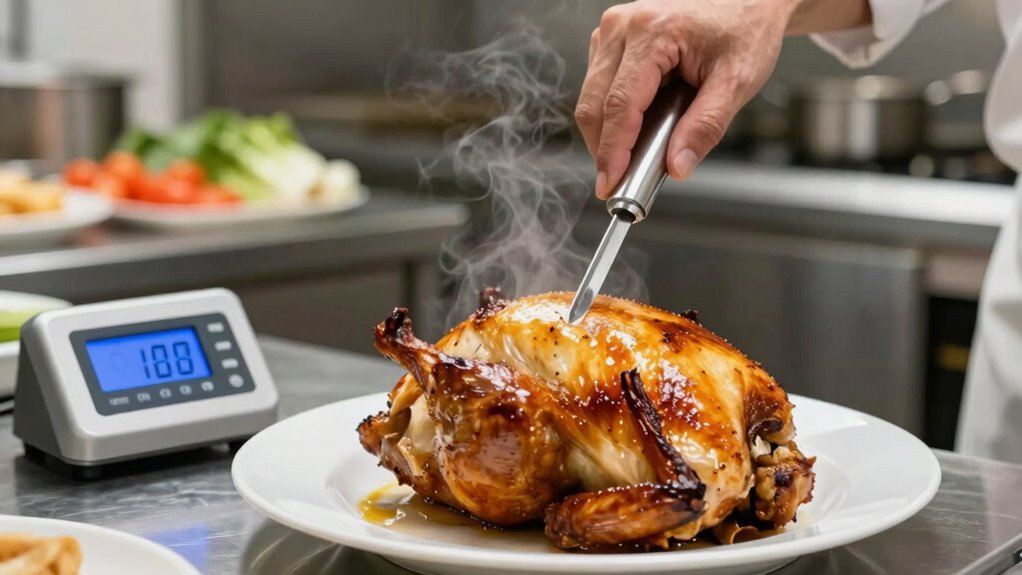

To standardize food thermometer use, you should develop clear procedures, train staff regularly, and enforce consistent calibration and hygiene practices. Use visual aids and checklists to support proper techniques, guaranteeing thermometers are calibrated daily with ice and boiling water. Incorporate routine checks into your workflow and recognize compliance. Consistent monitoring and feedback create a strong culture of safety. Keep exploring these strategies to ensure your team maintains reliable, safe food temperatures every time.

Get kitchen staples and gadgets delivered free with Prime
- Fast, free delivery on millions of items
- Prime Video, Amazon Music and more included
- Member-only deals all year
Key Takeaways
- Implement comprehensive employee training on proper thermometer use, calibration, and hygiene practices.
- Establish standardized procedures and checklists for routine temperature measurements during food prep.
- Conduct daily calibration checks with ice water and boiling water, documenting results for accountability.
- Use visual cues and prompts to ensure consistent adherence to target temperatures for different foods.
- Perform regular audits, provide feedback, and recognize compliance to foster a culture of safety and accountability.
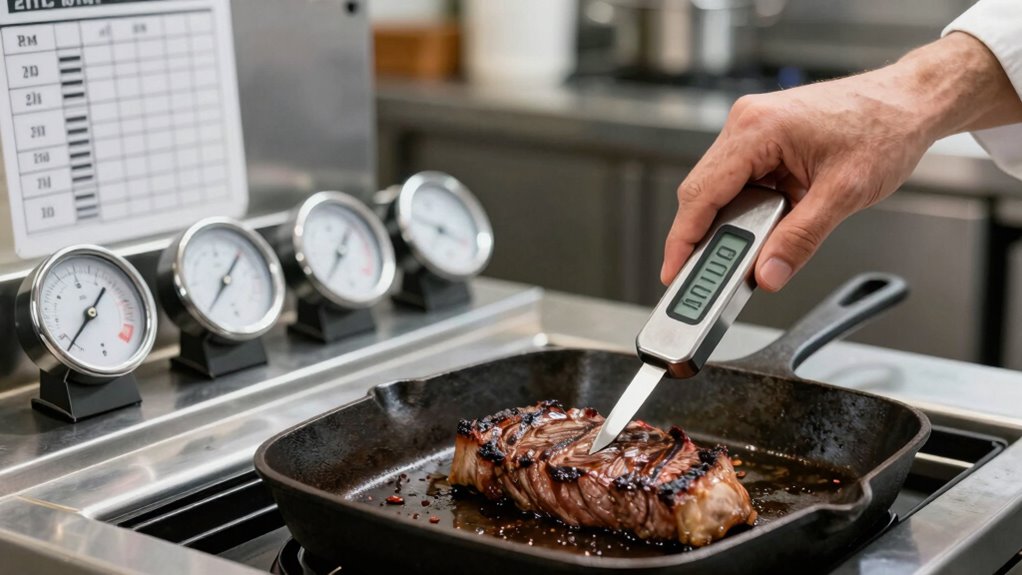
Using a food thermometer in restaurants is essential for ensuring food safety and maintaining customer trust. When you prioritize accurate temperature readings, you reduce the risk of foodborne illnesses and demonstrate your commitment to quality. To make this process effective, standardizing food thermometer use across your staff is crucial. Consistency helps ensure every dish leaving your kitchen meets safety standards, and it simplifies training for new employees. Implementing clear procedures for thermometer use not only bolsters cooking safety but also fosters a culture of accountability among your team.
The foundation of standardization begins with thorough employee training. Every staff member should understand why using a food thermometer is indispensable, how to calibrate it properly, and the correct techniques for measuring different foods. Regular training sessions reinforce these practices, especially when new staff members join. You might also consider visual aids or quick reference guides kept in the kitchen to remind employees of critical steps. When everyone is on the same page, the likelihood of mistakes drops, and food safety becomes ingrained in your daily routine. Incorporating standardized procedures helps establish consistent practices throughout your team and reduces variability in food safety measures. Additionally, emphasizing the importance of proper hygiene during training helps prevent cross-contamination and maintains sanitation standards. Consistent documentation of calibration checks also supports ongoing quality control.
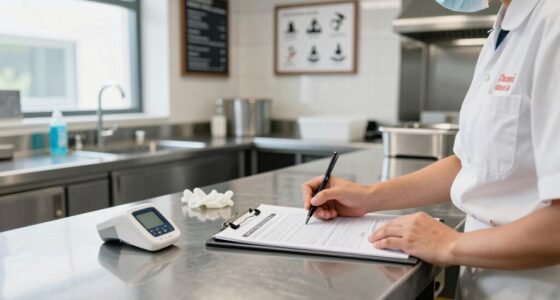
Consistent use of a calibrated thermometer is key. You should establish a routine where employees check the calibration of their thermometers daily, using ice water for low temperatures and boiling water for high temperatures. Documenting calibration results ensures accountability and helps identify any equipment issues early. Encourage employees to always insert the thermometer into the thickest part of the food, avoiding bone or fat, to get an accurate reading. Emphasize the importance of cleanliness—wiping the thermometer probe after each use prevents cross-contamination and maintains hygiene standards. Additionally, utilizing accurate measurement techniques ensures reliable temperature readings every time. Implementing temperature verification checks during peak hours can further enhance safety.
Standardized procedures should also specify target temperatures for various foods. For example, poultry must reach at least 165°F, while ground beef should hit 160°F. When employees know these benchmarks, they can confidently determine whether the food is safe to serve. Incorporate routine checks into your kitchen’s workflow, making measuring temperature a non-negotiable step before plating or serving. This habit not only ensures safety but also boosts efficiency, as staff quickly recognize when food has been properly cooked. Reinforcing these benchmarks through visual cues or checklists can further support consistent adherence. Regular audits and feedback sessions help ensure that these standards are maintained over time.
Finally, reinforcing a culture of safety involves ongoing monitoring and feedback. Regular audits can verify that employees are following procedures consistently. Recognize and reward those who adhere strictly to protocols, and offer refresher courses if needed. When you make food thermometer use a standard part of your staff’s responsibilities through proper training and clear procedures, you build a dependable system that promotes cooking safety and enhances your restaurant’s reputation for quality and safety.
digital food thermometer for restaurants
As an affiliate, we earn on qualifying purchases.
As an affiliate, we earn on qualifying purchases.
Frequently Asked Questions
How Often Should Food Thermometers Be Calibrated?
You should calibrate your food thermometers regularly to guarantee thermometer accuracy. A good calibration schedule is at least once a month, and anytime the thermometer is dropped or shows inconsistent readings. Regular calibration helps you maintain precise temperature measurements, reducing the risk of food safety issues. Keep in mind that consistently checking and adjusting your thermometers ensures reliable readings, which is essential for meeting safety standards and delivering quality food.
What Types of Food Require Temperature Monitoring?
Imagine a chef trusting a thermometer that’s slightly off—risks are high. You need to monitor the temperature of all perishable foods, like poultry, seafood, ground meats, and leftovers, to guarantee food safety. Accurate temperature readings prevent bacteria growth and protect your customers. Maintaining temperature accuracy across these foods is essential for compliance and safety. Regular calibration and proper use help you stay confident in your thermometer’s readings and food safety standards.
How to Train Staff on Proper Thermometer Use?
You should conduct staff training that emphasizes proper thermometer use to guarantee accuracy. Show your team how to calibrate thermometers regularly, use the correct technique for different foods, and clean the equipment properly. Reinforce the importance of checking thermometer accuracy before each use, and provide hands-on practice. Consistent training helps staff understand the critical role accurate readings play in food safety, reducing the risk of contamination or undercooked food.
What Are Common Thermometer Errors to Avoid?
Avoid common thermometer errors by regularly calibrating your thermometers to guarantee temperature accuracy. Check calibration frequency based on manufacturer recommendations or if you notice inconsistent readings. Never ignore temperature inaccuracies, as they can compromise food safety. Avoid using damaged or dirty thermometers, and always insert them properly into food or storage units. Consistent calibration and careful handling help maintain reliable readings, preventing foodborne illness risks.
How to Record and Document Temperature Readings Effectively?
Recording temperature readings is like keeping a detailed map of your food safety journey. You should log each reading immediately, noting the date, time, and location. Use a standardized form or digital system to guarantee consistency. Regularly review these records to identify trends or issues. Proper documentation supports equipment maintenance and demonstrates compliance, helping you maintain high food safety standards and prevent potential hazards.
Conclusion
By prioritizing proper protocols and persistent practice, you can perfect your food thermometer use. Consistent calibration, clear communication, and careful checks create a culture of culinary caution. When you commit to constant calibration and conscientious checks, you cultivate confidence and cleanliness in every kitchen task. Remember, meticulous measurements mean more than just meeting standards—they make your restaurant reliable, reputable, and safe. Stay steadfast, stay systematic, and serve safely—success will follow in your steady, vigilant vigilance.
Halloween Picks
halloween
As an affiliate, we earn on qualifying purchases.