To prevent espresso grinder waste during rushes, regularly calibrate your grinder for consistent grind size and inspect burrs to keep it running smoothly. Only grind what’s needed for each shot, avoiding pre-grinding large batches that lose freshness. Store beans properly to maintain quality and adjust grind settings based on bean age. Streamlining your workflow and keeping calibration tools nearby help you make quick adjustments, minimizing waste. Continue exploring these tips to master efficient, waste-free grinding during busy hours.

Get kitchen staples and gadgets delivered free — and shop member deals
- Fast, free delivery on millions of items
- Access to Prime Big Deal Days deals on October 6–7
- Prime Video, Amazon Music and more included
Key Takeaways
- Regularly calibrate the grinder before busy periods to ensure accurate grind size and reduce waste.
- Grind only the necessary amount for each shot to maintain freshness and prevent excess waste.
- Use quick adjustment features to fine-tune grind settings efficiently during rushes.
- Keep calibration tools nearby for rapid corrections without disrupting workflow.
- Perform routine maintenance and inspections to ensure consistent grind quality and reduce errors.
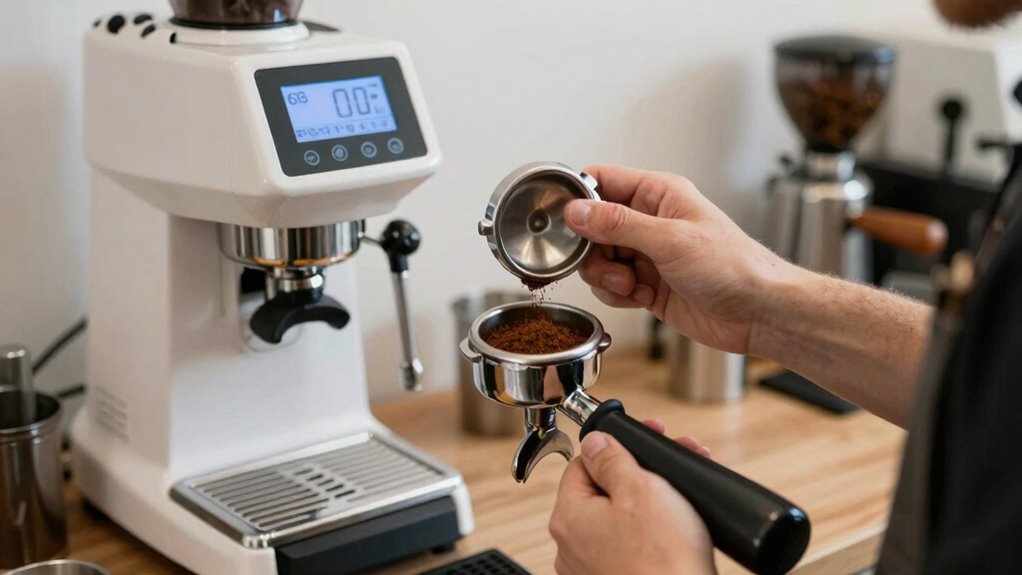
If you want to save money and guarantee consistent espresso quality, preventing waste in your grinder is crucial. During rushes, it’s easy to get sloppy and end up overusing beans or grinding too much, which leads to waste and impacts your bottom line. To avoid this, start with proper grinder calibration. Regularly checking and adjusting your grinder ensures that you’re hitting the correct grind size for your espresso. When your grinder is calibrated correctly, you’ll produce consistent grounds every time, reducing the need for regrinding or discarding excess coffee. Proper calibration also helps maintain uniform extraction, resulting in better-tasting espresso and less tossed-out beans.
Another critical factor is bean freshness. Fresh beans grind more uniformly and produce better crema, but they can also be more sensitive to grinder settings. If your beans are too fresh, they might require a slightly coarser grind to prevent clogging or over-extraction, especially during busy periods. Conversely, older beans tend to be drier and might need a finer setting. Knowing your beans’ freshness allows you to adjust your grinder quickly and accurately, which minimizes waste. Always keep an eye on your beans’ age and store them properly to preserve freshness. Pre-grinding large batches and storing them for extended periods can degrade bean quality and lead to inconsistent results, increasing waste during rushes. Additionally, understanding grind consistency helps you identify when your grinder needs adjustment to prevent waste and ensure optimal extraction. Regularly inspecting your grinder’s burrs and parts can also contribute significantly to maintaining consistent grind quality.
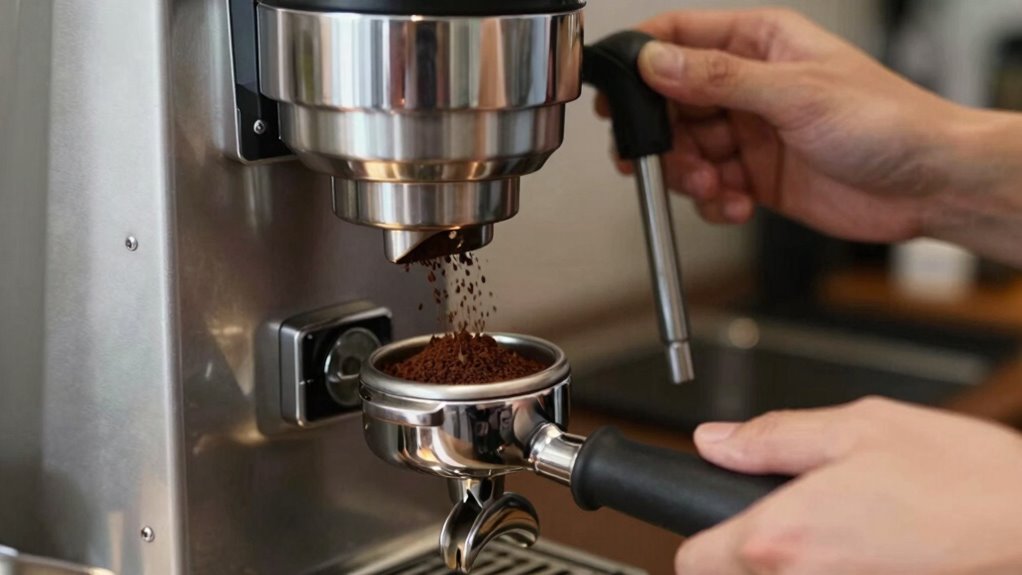
Timing your grind is also essential. During busy times, grind only what you need for each shot, instead of pre-grinding large quantities. This practice ensures you’re working with the freshest grounds possible, reducing the chances of stale or unevenly ground coffee that results in waste. Additionally, consider investing in a grinder with quick, easy calibration adjustments. This allows you to fine-tune your settings rapidly before each rush, keeping your grind consistent without wasting beans or risking poor extraction. To further support this, using a calibration schedule can help you stay proactive about grinder maintenance and adjustments, especially during high-demand periods. It’s also helpful to develop a routine for calibrating your grinder at the start of each shift to maintain consistency. Being familiar with your grinder’s settings range can greatly improve your speed and accuracy during busy hours.
Finally, pay attention to your workflow. When you’re rushing, it’s tempting to rush through calibration checks or ignore minor adjustments. But taking a moment to verify your grind size and calibration before the rush begins can save you considerable waste and rework later. Keep a small toolkit or calibration guide nearby so you can make quick adjustments on the fly. By integrating these practices—regular grinder calibration, monitoring bean freshness, and managing your workflow—you can drastically reduce waste during busy periods, ensuring you serve top-quality espresso efficiently and economically.
espresso grinder calibration tools
As an affiliate, we earn on qualifying purchases.
As an affiliate, we earn on qualifying purchases.
Frequently Asked Questions
What Are Common Signs of Grinder Clogging?
You’ll notice signs of grinder clogging if your espresso shots are uneven, slow to extract, or taste bitter. Regularly following a cleaning schedule and grinder maintenance helps prevent these issues. When clogs occur, you might see grounds stuck or difficulty in grinding consistently. Addressing these signs promptly ensures your machine runs smoothly, reduces waste, and keeps your coffee flavor ideal. Staying proactive with maintenance is key to avoiding grinder downtime.
How Often Should I Calibrate My Grinder?
Think of your grinder as a finely tuned orchestra—regular calibration keeps it in harmony. You should calibrate your grinder every 1-2 weeks, especially during busy rushes. Use adjustment techniques like tweaking grind size and dose to maintain consistency. A steady calibration schedule guarantees your shots stay perfect, preventing waste and delivering that rich, balanced espresso every time. Consistent calibration is your secret to smooth, efficient service.
Can Grinder Waste Affect Coffee Flavor?
Yes, grinder waste can affect coffee flavor through flavor contamination, especially if old grounds mix with fresh coffee. This can compromise taste consistency and quality. To prevent this, focus on waste reduction by regularly cleaning your grinder and minimizing excess grounds. Doing so guarantees your coffee’s flavor remains pure and vibrant, and it also helps you avoid wasting valuable coffee beans, maintaining both quality and efficiency during busy times.
What Tools Help Reduce Waste During Rushes?
Ever wondered what tools can save your rush-hour chaos? Regular cleaning routines and diligent tool maintenance are your secret weapons. Use a calibrated dose grinder or a tamping station to control portions precisely. These tools, combined with quick-access brushes and programmable grinders, keep waste at bay. When you stay proactive with maintenance, you reduce messes and guarantee consistently fresh coffee, even during the busiest moments.
How Does Grind Size Impact Waste Levels?
Adjusting your grind size impacts waste levels considerably. If your grind size isn’t consistent, dosing accuracy suffers, leading to over- or under-extracted espresso and unnecessary waste. Fine-tuning the grind size ensures uniform particle size, which enhances dosing precision. This consistency minimizes waste during rushes because you get predictable extraction times and shot quality, reducing the need to discard poorly extracted or overfilled shots.
Conclusion
To keep your espresso grinder waste in check during rushes, stay proactive with precise dosing, regular tamping, and timely cleaning. Think of your grinder as a well-tuned orchestra—each part must play its role perfectly to avoid unnecessary noise and waste. By staying attentive and disciplined, you’ll turn chaos into a harmonious dance, ensuring every bean counts and your workflow remains smooth. Remember, a little preparation today prevents a mountain of waste tomorrow.
Halloween Picks
halloween
As an affiliate, we earn on qualifying purchases.