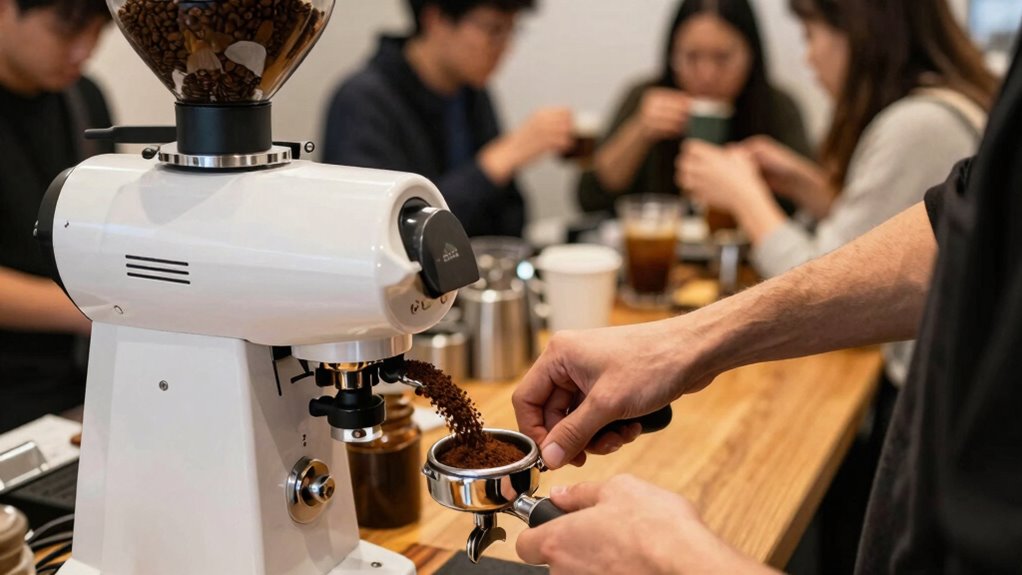

Grinder retention impacts your shop’s efficiency and consistency by causing uneven dosing and flavor extraction. Regular calibration and proper cleaning prevent stale grounds from blending with fresh beans, preserving flavor quality and bean freshness. Maintenance also prolongs your grinder’s lifespan and avoids buildup that can slow your workflow. Keeping your equipment in top shape guarantees distinct flavor profiles and minimizes cross-contamination. To keep your operation running smoothly, understanding how retention affects your coffee—more details await if you keep exploring.
Key Takeaways
- Grinder retention leads to inconsistent dosing, affecting flavor and overall coffee quality.
- Residual grounds can cause flavor contamination between different beans or roasts.
- Regular cleaning and calibration extend equipment lifespan and maintain optimal performance.
- Accumulated grounds diminish bean freshness, resulting in stale, muddled flavors.
- Proper maintenance ensures efficient workflow and consistent, high-quality brews in busy environments.
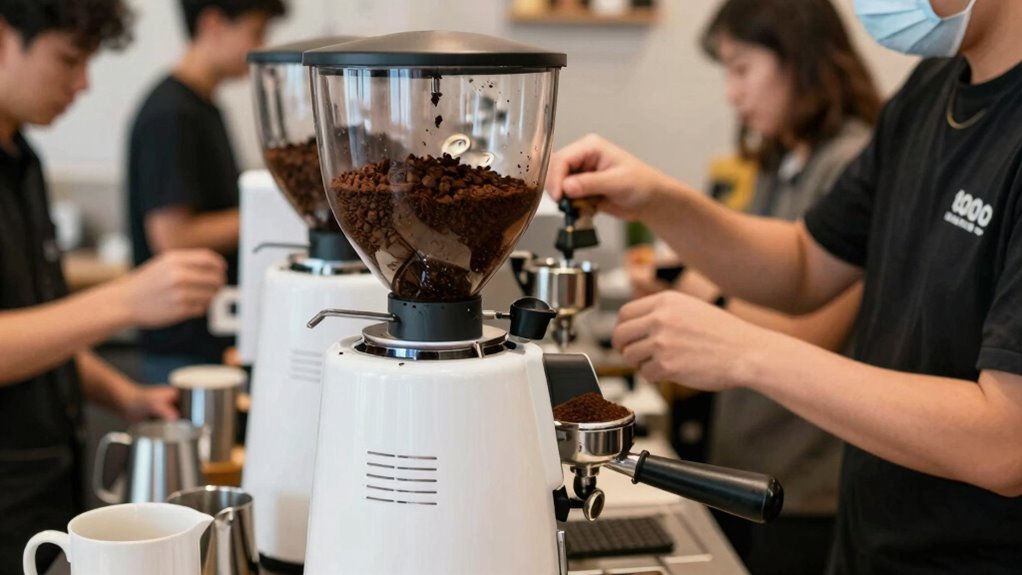
In busy coffee shops, grinder retention isn’t just a minor detail—it directly impacts your efficiency and the quality of every cup you serve. When leftover coffee grounds build up inside the grinder, they can cause inconsistent dosing, leading to uneven extraction and compromised flavor. That’s why regular grinder calibration is essential; it ensures your grinder dispenses the right amount of coffee every time, maintaining consistent strength and taste. Over time, residual grounds from previous grinds can accumulate, affecting the grind size and, consequently, the extraction process. If you don’t clear out the grinder regularly, you risk blending old grounds with fresh beans, which diminishes bean freshness and results in stale, muddled flavors. Proper grinder maintenance helps prevent these issues and prolongs the life of your equipment. Additionally, maintaining a clean grinder reduces the risk of cross-contamination between different beans or roasts, preserving the integrity of each brew. Regular cleaning also helps prevent the buildup of oils and residues that can negatively impact flavor. Implementing routine calibration techniques and routine cleaning supports efficient workflow and maintains high-quality brews.
commercial coffee grinder cleaning kit
As an affiliate, we earn on qualifying purchases.
As an affiliate, we earn on qualifying purchases.
Frequently Asked Questions
How Often Should Grinder Retention Be Checked or Cleaned?
You should check and clean your grinder retention daily or after each busy shift to maintain ideal performance. Implement a regular cleaning schedule, ideally weekly, for thorough maintenance. The maintenance frequency depends on your coffee shop’s volume; high-traffic shops require more frequent cleaning. Regularly removing leftover grounds prevents clogging and flavor transfer, ensuring consistent quality. Staying consistent with your cleaning schedule keeps your grinder running smoothly and preserves the freshness of every brew.
Does Grinder Retention Impact Coffee Flavor Quality?
Think of grinder retention as the silent guardian of flavor consistency. When you overlook it, old coffee remnants linger like shadows, dulling grind freshness and muting vibrant flavors. Regular cleaning guarantees each grind remains pure, allowing the true essence of your beans to shine through. By maintaining low retention, you preserve the delicate balance that delivers the rich, fresh-tasting coffee your customers crave, elevating their experience every time.
What Are the Best Methods to Reduce Grinder Retention?
To reduce grinder retention, start by regularly adjusting your grinder to ensure consistent particle size. Clean your grinder thoroughly after each use to prevent buildup. Experiment with different coffee bean types, as some may produce less residue. Also, consider using a grinder with a tapered design, which helps minimize leftover grounds. These methods keep your grinder efficient, guaranteeing fresh coffee flavor and reducing waste.
Can Grinder Retention Affect Grinder Lifespan?
Yes, grinder retention can affect grinder lifespan. When retention builds up, it strains the grinder’s motor, reducing its durability over time. Regular maintenance frequency helps prevent this buildup, guaranteeing parts stay clean and functioning efficiently. By keeping your grinder well-maintained and addressing retention issues promptly, you extend its durability, avoid costly repairs, and ensure consistent coffee quality during busy hours.
Is There a Difference in Retention Between Different Grinder Models?
Different grinder models do show variation in retention, especially due to design differences. For example, a hypothetical shop switches from a model with high retention to one with better retention consistency, noticing less leftover grounds and cleaner operation. With grinder model diversity, some grinders naturally retain more grounds, but choosing a model with consistent retention helps streamline your workflow and reduces waste. Always compare retention specs when selecting a grinder.
Conclusion
Imagine the aroma of freshly ground coffee lingering in the air, welcoming your customers with every sip. When you prioritize grinder retention, you’re not just keeping equipment clean—you’re creating a seamless, inviting experience that keeps your shop running smoothly. As the beans stay fresher and the grind sharper, your busy mornings feel less chaotic, more flavorful. It’s the small detail that makes every cup exceptional, turning your coffee shop into a haven where every sip tells a story.