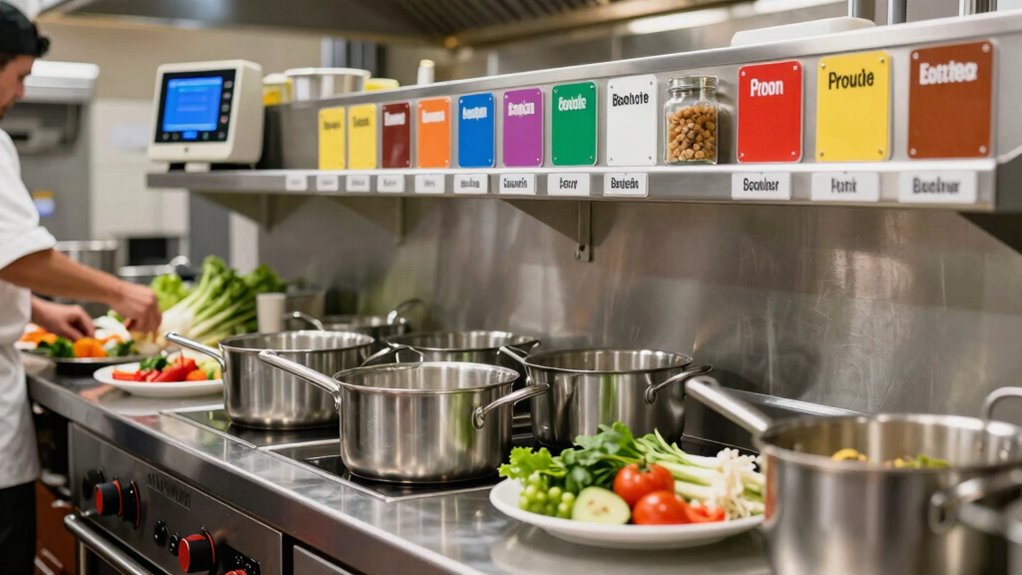

You need better back-of-house labeling systems to improve efficiency, safety, and compliance in your restaurant. Clear, standardized labels help your staff find ingredients quickly, manage inventory accurately, and reduce waste. They also prevent accidents by highlighting hazards and handling instructions. Organized labeling guarantees smooth workflows during busy times and makes inspections easier. If you want to discover how to implement these systems effectively, there’s more essential information you won’t want to miss.
Key Takeaways
- Improves inventory accuracy, reducing waste and preventing overstocking or shortages.
- Enhances staff efficiency by enabling quick identification and retrieval of ingredients and equipment.
- Ensures compliance with safety regulations through clear labeling of hazards and allergens.
- Promotes consistency across staff, minimizing errors during busy periods.
- Supports better safety protocols and hygiene standards, protecting staff and customers.
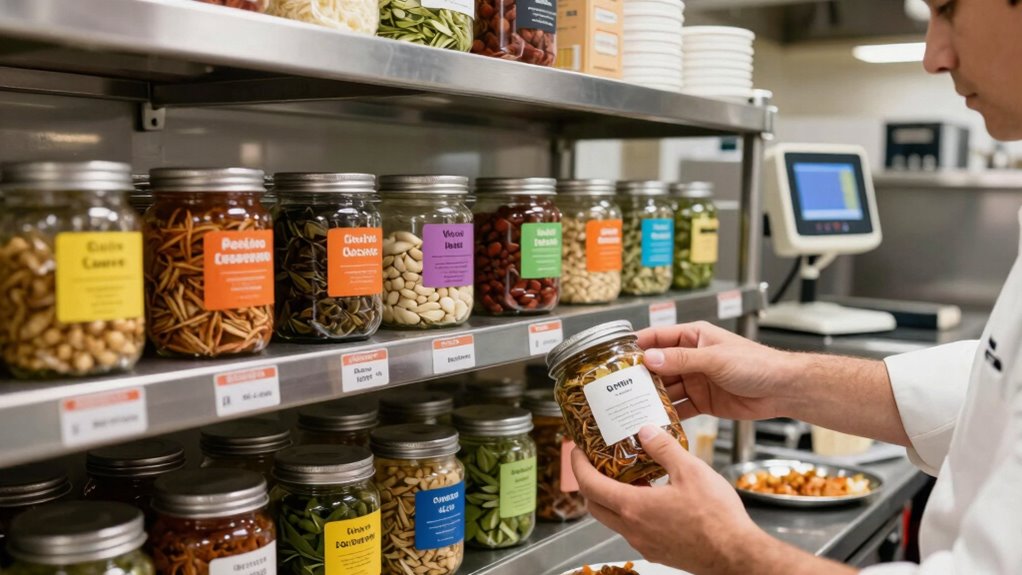
Implementing effective back-of-house labeling systems is essential for maintaining organization and safety in restaurants. When you streamline how ingredients, tools, and supplies are labeled, you create a more efficient environment that benefits everyone—from the kitchen staff to management. Proper labeling directly impacts inventory management, helping you keep track of stock levels, expiration dates, and storage locations. When items are clearly labeled, your team spends less time searching for ingredients or equipment, which reduces waste and prevents costly mistakes. It also guarantees that everything is used in the correct order, minimizing spoilage and maintaining food quality. Clear labels enable you to conduct regular inventory checks more accurately, giving you a real-time overview of what’s available and what needs restocking. This systematic approach prevents overstocking or running out of critical ingredients, ultimately saving money and improving workflow. Additionally, integrating labeling standards into your system ensures consistency and clarity across all items, further enhancing efficiency. Establishing standardized labeling practices promotes better communication and reduces confusion during busy hours.
Staff training plays a crucial role in maximizing the effectiveness of your labeling system. When you educate your team on the importance of proper labeling procedures, they become more consistent and attentive to detail. Training ensures everyone understands how to properly label items—using standardized formats for dates, categories, and storage instructions—so that the system remains reliable over time. Well-trained staff are more likely to follow protocols, which reduces errors and confusion, especially during busy hours when quick decisions are essential. As new team members join, ongoing training helps them adapt quickly, maintaining the integrity of your labeling system. Developing a comprehensive training program also emphasizes the importance of consistent labeling practices, which contributes to a more organized and efficient kitchen environment. This consistency makes it easier to identify items at a glance, speeding up prep times and reducing the risk of cross-contamination or mishandling.
In addition, a robust back-of-house labeling system supports safety protocols. Clearly labeled ingredients and chemicals help prevent accidents, such as mixing allergens with non-allergenic items or mishandling hazardous substances. When labels include safety warnings or handling instructions, your staff can respond swiftly and correctly to potential hazards. This focus on safety not only protects your team but also enhances the overall reputation of your restaurant. Furthermore, a well-organized, labeled environment simplifies compliance with health regulations, audits, and inspections. When everything is labeled properly, you can easily demonstrate that you follow safety and hygiene standards, avoiding fines or shutdowns.
back-of-house labeling system for restaurants
As an affiliate, we earn on qualifying purchases.
As an affiliate, we earn on qualifying purchases.
Frequently Asked Questions
How Do Labeling Systems Improve Food Safety in Restaurants?
Labeling systems improve food safety by helping you manage inventory accurately, reducing the risk of using expired or contaminated ingredients. You can quickly identify food items, ensuring proper storage and preventing cross-contamination. Better labeling also minimizes waste, as you track expiration dates more effectively. This streamlined process keeps your kitchen organized, promotes safer food handling, and ultimately protects your customers from foodborne illnesses.
What Are the Costs Associated With Implementing Advanced Labeling Systems?
Implementing advanced labeling systems involves costs like purchasing new technology, training staff, and ongoing maintenance. A thorough cost analysis helps you understand these expenses and plan your budget accordingly. You might face implementation challenges such as staff resistance or integrating the system with existing processes. While initial costs can be significant, the long-term benefits—improved food safety and efficiency—often outweigh these challenges, making it a worthwhile investment.
How Do Labeling Systems Impact Staff Training and Efficiency?
Labeling systems act like a guiding star, illuminating staff communication and streamlining inventory management. With clear labels, you reduce confusion, making training smoother and more efficient. Staff quickly grasp procedures, saving time and avoiding mistakes. As a result, your team works like a well-oiled machine, enhancing overall kitchen efficiency. Better labeling transforms chaos into clarity, empowering your staff to operate confidently and swiftly.
Are There Industry Standards or Regulations for Back-Of-House Labeling?
Yes, industry standards and regulations guide back-of-house labeling, especially for inventory management and waste reduction. You need to follow food safety laws, like those from the FDA or local health departments, which specify labeling requirements for allergens, expiration dates, and storage. These standards help guarantee accurate inventory tracking, minimize waste, and enhance safety, making your operations more efficient and compliant with legal obligations.
How Can Labeling Systems Accommodate Dietary Restrictions and Allergies?
You can improve allergy management and dietary accommodations by implementing clear, detailed labeling systems that highlight allergens and dietary options. Use color-coding or symbols to quickly identify ingredients for allergy sufferers and those with specific dietary needs. Regular staff training guarantees everyone understands labels, reducing cross-contact risks. By making labeling transparent and accessible, you create a safer environment, showing your commitment to accommodating all guests’ health requirements efficiently.
Conclusion
Implementing better back-of-house labeling systems is like giving your restaurant a well-organized engine, where every part runs smoothly and efficiently. When you streamline labels for ingredients, allergens, and prep stations, you’re reducing chaos and increasing safety. This clarity helps your team work seamlessly, like a finely tuned machine. Investing in clear labeling isn’t just about rules—it’s about creating a smooth, reliable rhythm that keeps your restaurant running at its best.