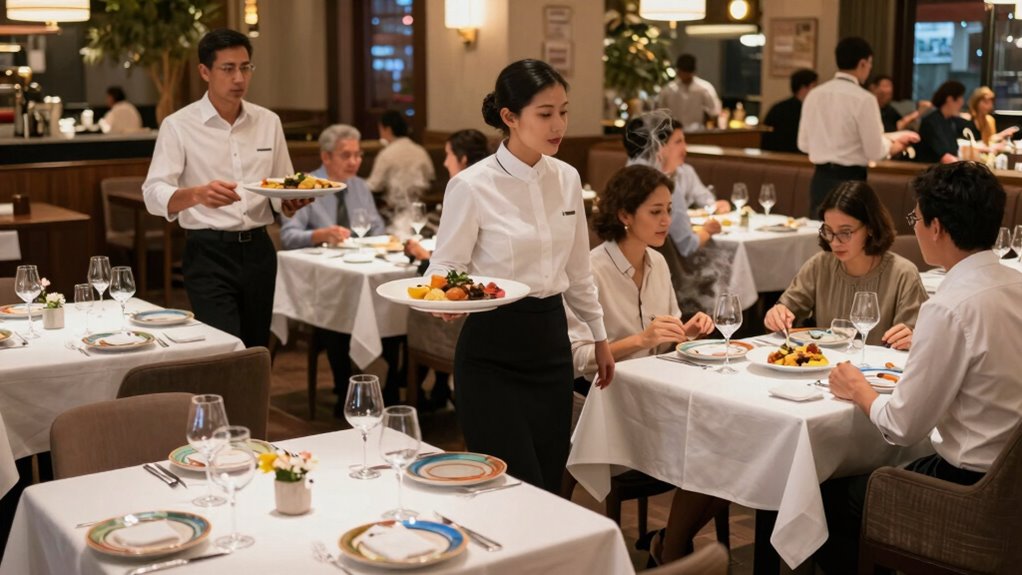
To handle large party timing effectively, use reservation management systems to schedule and confirm arrivals, then stagger guest arrivals to prevent bottlenecks. Assign dedicated staff to large groups and communicate clearly with your team using digital tools. Encourage guests to arrive within specific windows and plan staffing accordingly. Continuously monitor flow and gather feedback to fine-tune your approach. Keep optimizing these strategies to guarantee smooth service—there’s more to master for seamless large-party handling.

Get kitchen staples and gadgets delivered free with Prime
- Fast, free delivery on millions of items
- Prime Video, Amazon Music and more included
- Member-only deals all year
Key Takeaways
- Implement dedicated reservation systems to allocate specific time slots for large parties and prevent overbooking.
- Stagger guest arrivals and set clear arrival windows to manage flow and reduce congestion.
- Assign staff specifically for large parties and conduct pre-shift briefings for efficient coordination.
- Use real-time communication tools to update staff on delays, changes, or special requests promptly.
- Continuously monitor, gather feedback, and adjust procedures to optimize large-party handling and service quality.
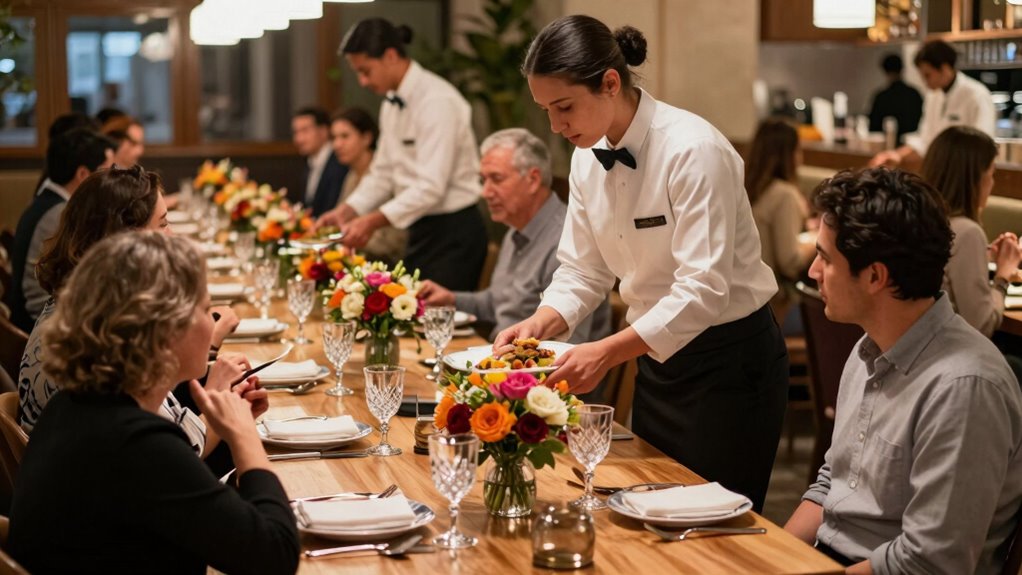
Managing large party timings in restaurants can be challenging, but with proper planning, you can guarantee a smooth experience for both your guests and staff. The key to success lies in effective reservation management and seamless staff coordination. When reservations are managed well, you prevent overbooking and ensure each group receives the attention they deserve. Use a reliable reservation system that clearly records guest details, special requests, and estimated arrival times. This allows you to predict peak periods, allocate resources accordingly, and avoid last-minute surprises. Additionally, confirming reservations ahead of time helps you prepare and minimizes no-shows, which can disrupt your flow.
Effective reservation management prevents overbooking and ensures personalized attention for large parties.
Staff coordination is equally essential. Make sure your team is aware of upcoming large parties and their specific needs. Assign dedicated staff members or a team to handle the larger groups, so they’re not just lumped into the regular service flow. Clear communication is crucial—hold pre-shift meetings to brief everyone on the reservation schedule, special requests, and timing expectations. When your staff understands the layout of the reservation schedule, they can better anticipate service demands and adapt accordingly. Incorporating real-time updates can further improve responsiveness and service quality.
Having a contingency plan for unexpected issues, such as last-minute cancellations or delays, can also help maintain a smooth flow during busy periods. Timing is everything. When managing large parties, stagger arrivals whenever possible. Encourage guests to arrive within a specific window to prevent overcrowding at the entrance or dining area. If you automatically allocate certain time slots for large groups, it helps spread out the demand across your operating hours, reducing bottlenecks. Also, be prepared for delays; large parties often take longer to dine, so plan your staffing and table turnover with this in mind. Reservation management is a crucial component in maintaining efficiency during busy periods. Utilizing technology tools can further streamline this process and enhance communication.
Efficient communication between the front and back of house is critical. Use walkie-talkies or digital tools to keep everyone updated on delays or changes in reservation timing. This ensures your team can adjust service pace as needed, maintaining a high standard despite the busy flow. Implementing a system for quick updates helps prevent confusion and keeps the dining experience smooth for your guests. Additionally, tracking guest feedback can provide valuable insights into how well your large-party handling strategies are working and where improvements are needed.
Lastly, monitor and evaluate your process regularly. Gather feedback from your staff and guests, and analyze how well your reservation management and staff coordination efforts are working. Adjust your procedures as needed to streamline large-party handling further. Staying proactive with continuous improvement can help you adapt to changing demands and enhance overall efficiency. When you stay proactive and organized, managing large party timings becomes less of a challenge, letting you focus on providing excellent service and creating memorable experiences for every guest.
reservation management system for restaurants
As an affiliate, we earn on qualifying purchases.
As an affiliate, we earn on qualifying purchases.
Frequently Asked Questions
How Far in Advance Should I Reserve a Large Party?
You should reserve a large party at least two weeks in advance to guarantee availability, especially during busy times. Check the restaurant’s reservation policies to understand deposit requirements or time limits. Also, familiarize yourself with cancellation procedures in case plans change. Making your reservation early helps the restaurant prepare for your group, and knowing cancellation policies ensures you can adjust plans without penalties if needed.
What Is the Average Wait Time for Large Parties?
Oh, the thrill of waiting for a large party—it’s like waiting for a unicorn! Typically, you’ll wait around 30 to 60 minutes, but it all depends on reservation policies and seating arrangements. If you didn’t reserve, brace yourself for longer delays. To avoid the chaos, book ahead or arrive early, so you don’t end up in the infamous “waiting forever” club. Patience, young diner!
Are There Specific Menu Options for Big Groups?
Yes, many restaurants offer special menus tailored for large groups, featuring a selection of popular dishes designed for sharing. You can also inquire about group discounts, which can make dining more affordable for big parties. These options streamline ordering and guarantee everyone gets a satisfying meal. Always call ahead to confirm availability of a special menu and any discounts, making your group dining experience smooth and enjoyable.
How Do I Handle Last-Minute Large Party Bookings?
When handling last-minute large party bookings, you should stay flexible by offering menu customization options to accommodate their needs. Quickly assess your seating arrangements to optimize space and guarantee comfort. Communicate clearly with the team to coordinate service efficiently. By adapting your menu and seating, you create a positive experience, even on short notice, and demonstrate your ability to handle unexpected large groups smoothly.
What Amenities Can Enhance Large Group Dining Experiences?
To enhance large group dining experiences, focus on providing comfortable group seating that accommodates everyone easily. Incorporate entertainment options like live music, games, or a dedicated TV area to keep guests engaged. Offering customizable menus or shared platters also adds a special touch. These amenities create a lively, enjoyable atmosphere, encouraging repeat visits and positive reviews. Your thoughtful amenities make large groups feel welcomed and valued.
Conclusion
Handling large party timing in restaurants might feel like trying to keep a flock of pigeons from chaos, but with the right planning, it becomes manageable. Stick to your reservation system, communicate clearly, and stay flexible—think of it as steering a ship through a storm, not a runaway chariot. By staying organized and calm, you’ll turn potential chaos into a smooth, memorable experience, much like a well-coordinated dance in a bustling speakeasy.
NFL season / tailgating Picks
team gear
As an affiliate, we earn on qualifying purchases.