🔍 Read the full analysis: Sarde In Saor: Sweet-Sour Sardines For The Venetian Antipasto Board on Mad Tasting

Get kitchen staples and gadgets delivered free with Prime
- Fast, free delivery on millions of items
- Prime Video, Amazon Music and more included
- Member-only deals all year
TL;DR
Mad Tasting describes sarde in saor as a traditional Venetian dish of fried sardines layered with onions cooked in vinegar, often with raisins and pine nuts. Its guide recommends refrigerating the covered dish overnight and serving it cool or at room temperature, while noting that vinegar does not replace safe refrigeration.
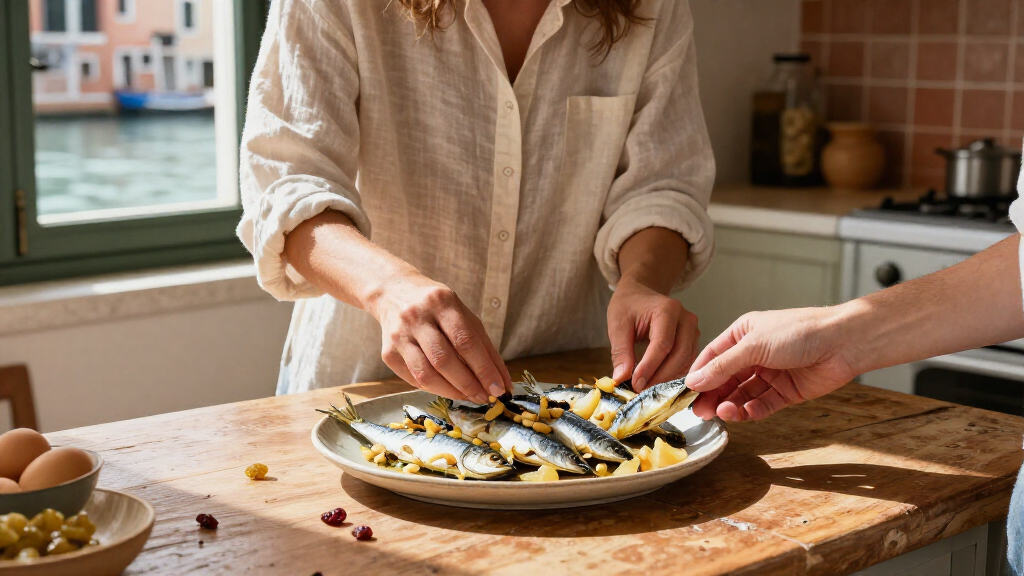
Mad Tasting has published a recipe guide to sarde in saor, a traditional Venetian antipasto made by layering fried sardines with onions cooked in vinegar, often with raisins and pine nuts. The guide recommends making the dish a day ahead, keeping it refrigerated overnight and serving it cool or at room temperature—a method that gives the flavors time to combine and makes the fish practical to serve on an antipasto board.
The dish’s core ingredients are sardines, onions and vinegar. Mad Tasting says the onions should be cooked gently in olive oil until soft, then seasoned with vinegar before they are layered with the fried fish. Raisins and pine nuts are common additions, but recipes differ; the source presents them as optional rather than essential. The onions should taste distinctly tangy without becoming so sharp that they overwhelm the fish.
The guide describes two ways to prepare the sardines: use cleaned, butterflied whole fish for a traditional presentation, or use fillets for easier serving. If the chosen recipe calls for flour, the fish can be lightly dusted before frying. The source advises handling fillets gently during frying and assembly, since they are more delicate. It gives no fixed cooking time or temperature, so cooks should follow a tested recipe and cook the fish through.
After assembly, the sardines and onion mixture should be placed in a covered container and refrigerated overnight. Mad Tasting recommends serving the dish cool or at room temperature, with polenta or crusty bread. It also says to cool the finished dish promptly before covering and refrigerating it. The source does not provide a storage duration; vinegar adds flavor but does not make cooked fish safe to leave unrefrigerated.
Sarde in Saor Sweet-Sour Sardines
Fried sardines layered with vinegar-seasoned onions make a make-ahead Venetian antipasto. Rest the covered dish overnight in the refrigerator, then serve it cool or at room temperature.
The essential balance
Saor is the onion mixture: tangy enough to lift the fish, but not so sharp it overwhelms it.
Sardines, onions, vinegar
Gently soften onions in olive oil, season with vinegar, then layer them with fried sardines.
Raisins and pine nuts
Common additions bring extra sweetness and texture, but recipes do not require them.
Choose your fish
Both preparations work; fillets need a gentler touch during frying and assembly.
- Clean and butterfly the fish.
- Traditional presentation.
- Easier to serve on a board.
- Handle carefully; fillets are delicate.
Make ahead, keep chilled
The overnight rest lets the flavors combine and makes the dish practical to prepare before guests arrive.
Combine fried sardines with the vinegar-seasoned onions.
Cool the finished dish promptly, then place it in a covered container.
Keep it chilled during the rest; serve cool or at room temperature.
Serve on the antipasto board
Pair the sardines with crusty bread or polenta. The source gives no storage duration, so follow established food-safety advice for cooked fish.
A Make-Ahead Venetian Antipasto
The guide frames sarde in saor as a way to make a small fish the centerpiece of an antipasto board, with the onions supplying sweetness and acidity alongside the sardines’ savory richness. Bread or polenta adds a contrasting texture, while raisins and pine nuts can bring chewy and soft, buttery notes. Since the dish is prepared in advance and served cool, it can be assembled before guests arrive rather than cooked at the table.
That convenience comes with a practical food-safety limit: the overnight rest is a period in the refrigerator, not at room temperature. The source stresses that vinegar is not a substitute for chilling cooked fish. For readers following the recipe, the preparation method and safe storage matter as much as the balance of sweet, sour and savory flavors.
Products Worth Considering

Ninja MultiPot XL 12-in-1 Multicooker, Cyberspace, MZ1001BL1

Vitamix 5-Speed Immersion Blender, 625-Watt, Stainless Steel/Black

Breville Bambino Espresso Machine, Brushed Stainless Steel (BES450BSS)
As an affiliate, we earn on qualifying purchases.
Saor and Venetian Food Tradition
Mad Tasting explains that saor refers to the seasoned onion mixture that defines the dish. It cautions against treating the name as a promise of candy-like sweetness or pickle-brine sharpness: the intended effect is a balance in which the vinegar lifts the oily fish and the onions soften its acidity. Raisins and pine nuts appear in many versions, though the recipe is not fixed to those additions.
The source connects the preparation with Venice’s seafaring history and the city’s bacari, informal wine bars where small plates are served with a glass of wine. It says vinegar is often associated with preserving food before refrigeration and describes the dish as an example of cucina povera, or making humble ingredients satisfying. It also cautions that the precise origin of every ingredient or variation is difficult to establish; the broad historical account does not prove that a particular trader or event created the recipe.
““Vinegar gives flavor, but it does not replace safe refrigeration for cooked fish.””
— Mad Tasting
Recipe Variations and Safe Storage
The source does not give a single standardized recipe, ingredient quantities, cooking times, or a recommended storage limit. Raisins and pine nuts are described as common but optional, and preparation can use whole sardines or fillets. The guide also does not identify a specific seafood-sustainability advisory or set out detailed temperature rules. Readers should follow current local seafood guidance and established food-safety advice for cooked fish rather than assume vinegar extends its safe storage life.
The historical account is presented as context, not a documented origin story. Mad Tasting says the exact origins of particular versions are hard to pin down; it does not identify a verified inventor or date for the dish.
Prepare, Chill and Serve
The next step for cooks is to choose fresh sardines, prepare them according to a tested recipe, cook the onions gently and taste the vinegar mixture before layering. Once assembled, the dish should be cooled promptly, covered and refrigerated overnight. It can then be served cool or brought toward room temperature for the meal, alongside crusty bread or polenta.
Mad Tasting’s guide offers no announced follow-up, publication schedule or additional testing. The practical points it leaves readers with are to adjust the optional additions to taste, keep the fish refrigerated and consult current local advice when choosing seafood.
Key Questions
What is sarde in saor?
It is a Venetian sardine preparation made with fried sardines layered with onions cooked in vinegar. Raisins and pine nuts are common additions, but they are optional and recipes vary.
Why should it rest overnight?
Mad Tasting says the rest gives the vinegar-seasoned onions time to flavor the fried fish and helps the separate flavors come together. The dish should rest covered in the refrigerator.
Can sarde in saor be served warm?
The guide recommends serving it cool or at room temperature. After refrigeration, bring it toward room temperature for serving rather than leaving it out for an extended period.
Are raisins and pine nuts required?
No. They are frequent but optional additions. Sardines, onions and vinegar form the dish’s core; the extras can be adjusted to taste.
How should the finished fish be stored?
Cool it promptly, place it in a covered container and refrigerate it. The source does not give a storage duration, and vinegar does not replace refrigeration for cooked fish.
Source: Mad Tasting