
🔍 Read the full analysis: Barolo Vs Barbaresco: Same Grape, Different Souls on Mad Tasting

Get kitchen staples and gadgets delivered free with Prime
- Fast, free delivery on millions of items
- Prime Video, Amazon Music and more included
- Member-only deals all year
TL;DR
According to the Mad Tasting guide, Barolo and Barbaresco are neighboring Piedmont appellations made from Nebbiolo, but their minimum aging rules differ: 38 months for Barolo and 26 months for Barbaresco. Those rules shape expectations, not a guarantee of taste; site, producer, vintage and bottle age also affect what is in the glass.
A Mad Tasting guide compares Barolo and Barbaresco, two neighboring Langhe appellations in Piedmont made from Nebbiolo, and explains how their aging rules and vineyard conditions shape expectations without dictating a wine’s exact character. The guide states that Barolo requires at least 38 months of aging, including 18 in wood; Barbaresco requires at least 26 months, including nine in wood.
The Mad Tasting guide says both wines can show Nebbiolo’s high acidity and tannin alongside aromas such as rose, red cherry, herbs and earthy notes. With age, wines may develop leather, dried flowers and spice. The guide cautions against treating the familiar contrast—Barolo as powerful, Barbaresco as delicate—as a dependable rule for every bottle.
According to the guide, commune, vineyard, producer, vintage and bottle age all contribute to a wine’s structure and aroma. Slope, elevation, exposure, local weather and cellar choices can affect ripeness, extraction, tannin and freshness. As a result, individual wines from either appellation can differ from the style their reputation might suggest.
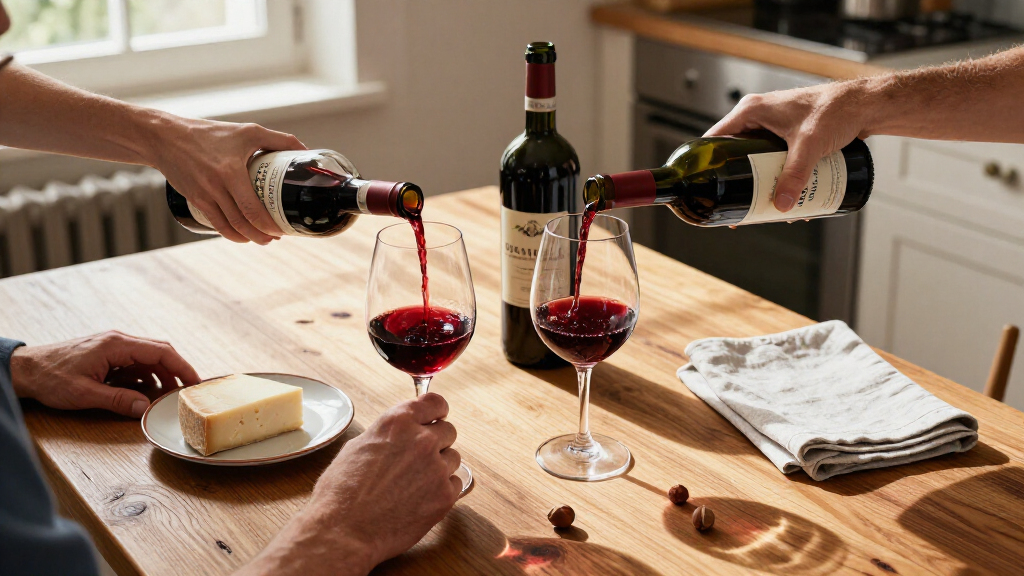
The guide recommends comparing bottles from the same producer and vintage, if available, and serving them at a similar temperature with some air. The comparison is not a controlled test—vineyards and cellar methods may differ—but holding the maker and season closer to constant can help a taster notice what differs between the two appellations.
Piedmont · Nebbiolo · A side-by-side guide
Barolo Vs Barbaresco:
Same Grape, Different Souls
Two neighboring Langhe appellations share Nebbiolo, yet their rules, vineyard settings and cellar choices shape different possibilities. Use the names as a guide—not a guarantee of what any single bottle will taste like.
A guide to expectations, not predictions01 / Aging rules
Minimums set a frame
The longer minimum for Barolo and shorter minimum for Barbaresco are useful distinctions for buyers. They do not prove that one wine is inherently better, more complex or more powerful.
Barolo
Minimum required38 months total
At least 18 months in wood. Actual time in wood and bottle varies by wine; the guide gives the minimum requirement.
Barbaresco
Minimum required26 months total
At least 9 months in wood. A shorter minimum does not dictate a lighter style or less capacity to age.
Read the rule carefully: Aging periods shape expectations, but a wine’s final profile also reflects its site, producer, vintage and bottle age.
02 / Place & scale
Two Langhe zones, one grape
Both appellations lie in northwestern Italy’s Piedmont region. Neither is uniform: slope, elevation, exposure and local weather can vary from vineyard to vineyard.
Barolo covers a larger zone with more communes and settings to explore, including Barolo, La Morra, Castiglione Falletto, Serralunga d’Alba and Monforte d’Alba.
Barbaresco occupies a more compact area around Barbaresco, Neive and Treiso, as well as part of Alba. Its village and vineyard names may be easier to follow on a smaller map.
The guide notes that Nebbiolo is often linked to nebbia, the Italian word for fog, though the name’s origin remains debated.
At a glance · appellation footprint
Larger area · Barolo, La Morra, Castiglione Falletto, Serralunga d’Alba, Monforte d’Alba
More compact area · Barbaresco, Neive, Treiso and part of Alba
Area size and place names describe geography; they do not, on their own, predict quality or power.
03 / What shapes the glass
Reputation is only a starting point
“Barolo is powerful; Barbaresco is delicate” is a familiar shorthand, not a dependable rule for every bottle.
Site & conditions
Slope, elevation, exposure and local weather can influence ripeness, freshness and tannin.
Producer choices
Winemaking and aging decisions affect extraction, structure and how aromas come forward.
Vintage & bottle age
Rose, red cherry, herbs and earth may evolve toward leather, dried flowers and spice as wines age.
04 / Put the comparison to work
Taste side by side
A close comparison can make differences in texture, fruit and openness easier to notice while revealing how much the wines share.
Match the maker
Choose the same producer when possible.
Match the vintage
Keep the season close to constant if bottles are available.
Serve alike
Use a similar temperature and give both wines some air.
Notice & compare
Track aroma, tannin, texture and how each responds with food.
This is not a controlled test: vineyard sites and cellar methods may differ. Compare more bottles by commune, vineyard or vintage to see whether an impression recurs. The source names no upcoming rule, release or event.
05 / Key questions
Quick answers for curious tasters
The guide offers general direction, not verified predictions for every wine carrying either appellation.
Are both wines made from the same grape?
Yes. The guide identifies Nebbiolo as the grape used for both, with high acidity and tannin.
How do their minimums differ?
Barolo: 38 months total, including 18 in wood. Barbaresco: 26 months total, including 9 in wood.
Is Barolo always more powerful?
No. The shorthand is not a promise; site, producer, vintage and bottle age all contribute to style and structure.
What can’t this guide establish?
It gives no publication date, named producers, prices, specific vintages or independent tasting results. It also cannot isolate appellation as the sole cause of a difference.
How Aging Rules Shape Expectations
The different minimum aging periods cited in the Mad Tasting guide are a practical point of distinction for buyers, but they do not establish that one wine is inherently better, more complex or more powerful. They set minimum requirements, while the wine’s final profile also reflects its site, vintage and producer. The guide’s central point is that appellation names offer a starting framework, not a tasting guarantee.
That distinction matters when choosing a bottle for a meal or deciding whether to age it. A wine with firm tannin may feel more balanced alongside rich, protein-rich food; a more open, aromatic bottle may be easier to enjoy without a substantial meal. But aroma alone does not determine structure, and either appellation can produce wines with both fragrance and aging capacity.
For readers learning the region, comparing specific bottles can be more useful than relying on a simple power-versus-finesse contrast. Tasting the wines side by side may reveal differences in texture, fruit and openness while showing how much the two appellations share.
As an affiliate, we earn on qualifying purchases.
Two Langhe Appellations, One Grape
The Mad Tasting guide places Barolo and Barbaresco in the Langhe hills of Piedmont in northwestern Italy and identifies Nebbiolo as their shared grape. It describes Barolo as covering a larger zone, including communes such as Barolo, La Morra, Castiglione Falletto, Serralunga d’Alba and Monforte d’Alba. Barbaresco occupies a more compact area around the villages of Barbaresco, Neive and Treiso, along with part of Alba.
The guide emphasizes that neither appellation is uniform. Differences in slope, aspect, elevation and local climate can affect vineyards even when they are close together. It presents the larger Barolo area as offering more communes and settings to explore, while the smaller Barbaresco zone may make its village and vineyard names easier to follow. Those map distinctions do not, by themselves, determine quality or power.
The guide also notes that Nebbiolo’s name is often linked to the Italian word for fog, “nebbia,” but says the origin of the name remains debated. That etymology is not needed to distinguish the wines: the more direct comparison comes from tasting how Nebbiolo expresses itself across sites, vintages and producers.
What the Appellation Cannot Predict
The source is a Mad Tasting guide, not a report of a newly announced rule or change. It supplies no publication date, named wine producers, bottle prices, specific vintages or independent tasting results. Its descriptions should be read as general guidance, not as verified predictions for every wine carrying either appellation.
It is also not possible to isolate appellation as the sole cause of a difference in a side-by-side tasting: the wines may come from different vineyards and may have been made or aged differently. The source gives minimum aging periods but does not specify a particular wine’s actual time in wood or bottle. The precise profile and readiness of any bottle remain dependent on its producer, site, vintage and age.
Compare Bottles Side by Side
The Mad Tasting guide’s suggested next step is a tasting rather than a prediction: choose Barolo and Barbaresco from the same producer and vintage where possible, pour them at a similar temperature and allow them some air. Notice both aroma and texture, including how the tannins feel and how the wines respond with food.
Readers can then compare additional bottles by commune, vineyard or vintage to see whether an impression recurs. The source does not identify any upcoming regulatory decision, release or event; what comes next for an individual wine depends on its producer and vintage, and no further development is specified.
Key Questions
Are Barolo and Barbaresco made from the same grape?
Yes. The Mad Tasting guide identifies Nebbiolo as the grape used for both wines. It is a high-acid, high-tannin grape grown in Piedmont’s Langhe hills.
How do their minimum aging requirements differ?
According to the Mad Tasting guide, Barolo requires at least 38 months of aging, including 18 months in wood. Barbaresco requires at least 26 months, including nine months in wood.
Is Barolo always more powerful than Barbaresco?
No. The power-versus-finesse shorthand discussed in the guide can be a starting point, but it is not a promise. Vineyard, producer, vintage and bottle age can all affect a wine’s style and structure.
What is a useful way to compare the two wines?
The guide suggests trying bottles from the same producer and vintage, served at a similar temperature with some air. The comparison can help reveal differences, though separate vineyard sites and cellar choices mean it is not a controlled test.
Source: Mad Tasting
NFL season / tailgating Picks
team gear
As an affiliate, we earn on qualifying purchases.