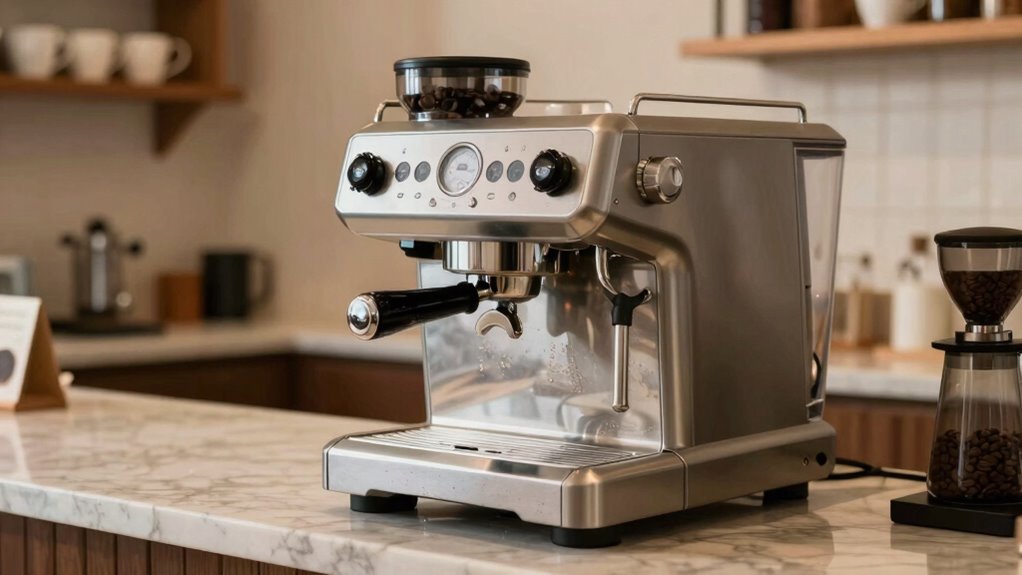

To keep your espresso machine in top shape, manage its idle time carefully. Turning it off during long pauses prevents unnecessary wear and conserves energy, reducing costs and extending the machine’s lifespan. Regular maintenance, cleaning, and inspection during idle periods help prevent buildup and corrosion. Using energy-saving modes when possible also cuts costs. Staying mindful of these practices ensures reliability and quality in every shot. Keep going to discover how to optimize your machine’s performance even further.
Listen free for 30 days with Audible
Thousands of audiobooks and originals — cancel anytime.
As an affiliate, we earn on qualifying purchases.
Key Takeaways
- Regularly turn off or put the espresso machine in energy-saving mode during long idle periods to reduce energy costs.
- Perform routine maintenance like cleaning and descaling before and after idle times to prevent buildup and corrosion.
- Avoid leaving the machine on continuously to prevent unnecessary wear and heat-related damage.
- Monitor energy consumption during idle periods to optimize usage and extend equipment lifespan.
- Schedule startup and shutdown routines to maintain optimal performance and prolong the machine’s longevity.

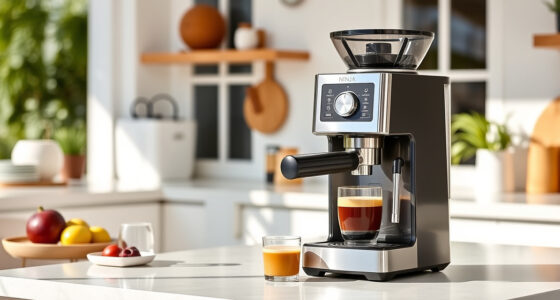
Cafes often face the challenge of managing espresso machine idle time, which can impact both quality and efficiency. When your machine sits unused for extended periods, it’s easy to overlook how this downtime affects its performance and your energy costs. Proper maintenance routines become essential in these moments, guaranteeing that your espresso machine remains in top condition despite periods of inactivity. Regular cleaning, descaling, and inspection prevent buildup and corrosion, which can occur when machines aren’t in use regularly. By sticking to a consistent maintenance schedule, you reduce the risk of mechanical issues that could arise from prolonged idle periods, ultimately saving you time and money on repairs or replacements.
Idle time also influences energy consumption. When your espresso machine is left on but not actively brewing, it continues to draw power, contributing to unnecessary energy costs. Many modern machines come equipped with standby or sleep modes designed to cut down on energy use during inactivity. If you’re not utilizing these features, you might be wasting significant electricity, which adds up over days, weeks, and months. Managing your machine’s power settings is a simple yet effective way to control energy consumption during idle periods. Turning off or properly setting your machine’s standby mode during non-peak hours can lead to noticeable savings, and it’s an environmentally friendly practice that aligns with sustainable business operations. Additionally, understanding the energy efficiency features of your equipment can help you make smarter decisions about when and how to use your machine.
Using standby or sleep modes reduces energy costs and supports sustainable café operations during machine inactivity.
Understanding how to optimize your espresso machine’s idle time requires a strategic approach. For instance, scheduling regular startup and shutdown routines ensures that your equipment stays in good working order. When you turn your machine off at night or during long pauses, you protect it from unnecessary wear and tear caused by continuous operation or heat exposure. Additionally, being mindful of your machine’s warm-up time can prevent unnecessary energy use; warming up your machine only when needed rather than leaving it idling for hours is a practical habit to develop. Incorporating energy-efficient practices into your daily routine can further enhance the longevity and performance of your equipment. Moreover, familiarizing yourself with your machine’s manual and recommended settings can help you maximize its energy-saving capabilities, ensuring optimal operation during idle periods. Recognizing the importance of regular maintenance routines can also extend the lifespan of your espresso machine and improve its overall efficiency. Being aware of your equipment’s energy consumption patterns can lead to more informed decisions about usage and maintenance, ultimately optimizing your café’s operational costs.
espresso machine energy-saving mode
As an affiliate, we earn on qualifying purchases.
As an affiliate, we earn on qualifying purchases.
Frequently Asked Questions
How Does Idle Time Affect Espresso Machine Warranty?
Idle time can impact your espresso machine warranty, as excessive inactivity might lead to warranty implications if it causes damage or malfunctions. If you leave the machine idle for long periods without proper maintenance, it could shorten the machine’s lifespan and potentially void your warranty. To protect your investment, guarantee regular maintenance during idle times and follow the manufacturer’s guidelines to avoid warranty issues.
What’s the Optimal Temperature During Idle Periods?
Many believe that keeping your espresso machine at a high temperature during idle times guarantees better calibration and temperature stability. In reality, maintaining a temperature around 200°F (93°C) during idle periods helps prevent unnecessary wear and energy waste. This ideal temperature balances machine calibration needs while avoiding overheating, making sure your espresso machine remains in top condition and ready for quality brewing without risking damage from excessive heat.
Can Excessive Idle Time Cause Build-Up or Clogging?
Excessive idle time can lead to build-up or clogging in your espresso machine, especially if water mineralization isn’t managed properly. Mineral deposits can accumulate, causing blockages, and inconsistent machine calibration during long breaks can affect performance. To prevent this, regularly descale your machine, monitor water quality, and perform calibration checks. Maintaining these in check ensures smooth operation and prevents issues caused by extended idle periods.
How Often Should Maintenance Be Performed During Long Idle Periods?
Imagine your espresso machine resting quietly, like a dormant engine waiting to roar back to life. During long idle periods, you should perform maintenance every week, focusing on cleaning routines and calibration procedures. Regularly wiping down surfaces, descaling components, and checking calibration guarantees peak performance. This proactive care prevents issues from building up, keeps your machine in top shape, and guarantees consistently excellent coffee when you’re ready to brew again.
Are There Energy-Saving Benefits to Reducing Idle Time?
Reducing idle time offers significant energy efficiency and power conservation benefits. When you minimize the machine’s idle periods, you cut down on unnecessary power consumption, lowering your energy bills. Implementing automatic shut-off features or scheduling rest periods guarantees your espresso machine only uses power when needed. This practice not only helps the environment but also extends the machine’s lifespan by reducing wear and tear caused by prolonged idle states.
Conclusion
By understanding and managing your espresso machine’s idle time, you guarantee consistent quality and extend its lifespan. While some might worry about the extra effort, implementing simple routines can save you money and prevent costly repairs down the line. Remember, a well-maintained machine isn’t just about convenience—it’s about delivering the best coffee experience to your customers. Investing in proper idle time management truly pays off, solidifying your cafe’s reputation for excellence.
Fall Picks
fall essentials
As an affiliate, we earn on qualifying purchases.