As a restaurant buyer, you should always check for certification marks like NSF and ETL on equipment to guarantee it meets safety and health standards. These marks show that the product has undergone rigorous testing for sanitation, electrical safety, and performance. Confirming the presence of these marks helps you avoid future issues and maintains compliance with regulations. If you want to understand what details to verify and why these marks matter, keep exploring further.

Get kitchen staples and gadgets delivered free with Prime
- Fast, free delivery on millions of items
- Prime Video, Amazon Music and more included
- Member-only deals all year
Key Takeaways
- Verify that the certification marks are current and have not expired or been revoked.
- Confirm that the equipment or product is certified for its specific intended use and environment.
- Check that the certification body (NSF or ETL) is recognized and reputable within the industry standards.
- Ensure the certification mark is visibly displayed on the product or packaging for easy verification.
- Review the scope of certification to confirm it covers sanitation, safety, and performance requirements relevant to your needs.
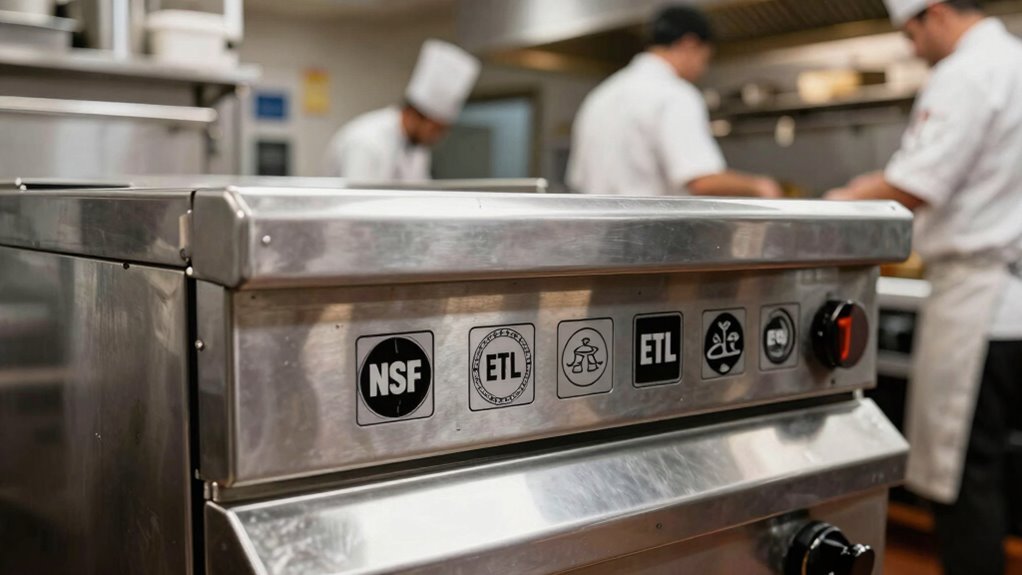
When dining out, you might notice various certification marks displayed at restaurants, but understanding what they mean can be confusing. These marks play a pivotal role in ensuring food safety, but their significance isn’t always clear to consumers. As a restaurant buyer or even a regular diner, recognizing the importance of these certifications helps you make informed decisions about where to eat or what equipment to trust in the kitchen. Certification marks like NSF and ETL serve as visual assurances that certain safety and quality standards have been met, which directly impacts food safety and the overall cleanliness and reliability of restaurant operations.
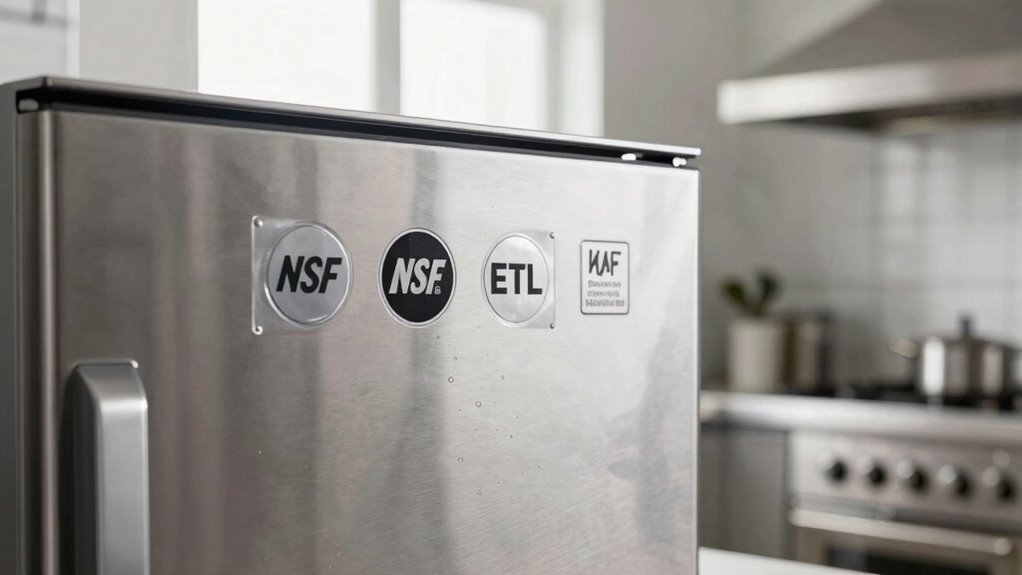
Food safety is at the core of these certification marks. They indicate that a restaurant or equipment has undergone rigorous testing and inspections to meet specific safety standards. For example, NSF International certifies products for sanitation, material safety, and overall health standards. When you see an NSF mark on kitchen equipment or utensils, it means the item complies with strict health regulations, reducing the risk of contamination. Similarly, ETL Certification, issued by Intertek, verifies that appliances and equipment meet established safety and performance standards. This certification helps prevent electrical failures, malfunctions, or hazards that could compromise food safety or cause accidents in the restaurant. Additionally, these certifications are regularly updated to reflect current safety standards, ensuring ongoing compliance.
NSF and ETL certifications ensure kitchen equipment meets strict safety, sanitation, and performance standards, safeguarding food safety and compliance.
The importance of certification cannot be overstated. It provides a level of confidence that the restaurant or equipment has been independently verified, which is especially essential in the food industry. When you’re choosing a restaurant, seeing certification marks reassures you that hygiene and safety protocols are in place. For restaurant buyers, these marks serve as a quick reference to verify that suppliers or equipment meet industry standards. They’re integral in maintaining compliance with health codes and avoiding costly violations that could jeopardize your operation’s reputation.
Understanding these marks also streamlines the decision-making process. Certifications like NSF and ETL shorten the gap between trust and verification. They eliminate guesswork, giving you concrete proof that products or establishments adhere to safety standards. Additionally, awareness of certification marks can guide restaurateurs in selecting equipment that minimizes future maintenance issues or safety hazards. Knowing how certification standards are developed and maintained can help in choosing equipment that truly meets the necessary safety criteria. This is especially important when purchasing new kitchen equipment, as certifications can prevent future problems related to safety or regulatory compliance. Recognizing the significance of these independent verifications can help restaurateurs avoid costly mistakes and ensure long-term safety and reliability. Ultimately, these marks aren’t just symbols—they’re indicators of a restaurant’s commitment to food safety and the certification significance that underpins it.
NSF certified commercial kitchen equipment
As an affiliate, we earn on qualifying purchases.
As an affiliate, we earn on qualifying purchases.
Frequently Asked Questions
How Do Certification Marks Influence Restaurant Equipment Pricing?
Certification marks often influence restaurant equipment pricing because they signal compliance with strict certification standards, ensuring safety and quality. When you see these marks, you’re paying for equipment that meets rigorous safety and performance requirements, which can justify higher costs. While compliance may increase initial expenses, it reduces long-term risks and maintenance costs, making it a worthwhile investment in reliable, compliant equipment that supports your restaurant’s operations.
Are All Certification Marks Equally Important for Restaurant Safety?
Imagine a knight’s shield—some marks are more essential than others in ensuring safety. Not all certification marks carry the same significance; their importance depends on the product and safety standards. Certification mark significance directly influences brand reputation, helping you identify trustworthy equipment. While some marks are fundamental for safety, others may be less critical, so prioritize marks that guarantee compliance with industry safety standards to protect your customers and reputation.
Can Certification Marks Be Forged or Faked?
Yes, certification marks can be forged or faked, posing forgery risks and counterfeit concerns. You need to stay vigilant, as counterfeit marks might look authentic but lack the proper validation. Always verify certification directly with the issuing organization, check for holograms or security features, and confirm the mark is current. By doing so, you protect your restaurant from unsafe, uncertified equipment and maintain safety standards.
How Often Should Restaurants Verify Certification Validity?
You should verify certification validity regularly, ideally every six to twelve months, to guarantee ongoing compliance. Keep an eye on certification renewal dates and validity expiration to avoid using uncertified equipment. Frequent checks help catch any lapses or expired certifications early, reducing risk. By staying vigilant, you ensure your restaurant meets safety standards and maintains trust with customers, avoiding potential fines or disruptions caused by outdated or invalid certifications.
Do Certification Marks Guarantee Long-Term Equipment Durability?
Think of certification marks as the sturdy foundation of a building—they signal quality, but don’t guarantee it will stand the test of time. Certification longevity doesn’t promise your equipment will be forever durable; it mainly indicates compliance at purchase. To protect your investment, check equipment warranties and maintenance options. Relying solely on certification marks is like counting on a sturdy frame without considering the walls—insufficient for long-term durability.
Conclusion
Understanding NSF, ETL, and other certification marks helps you make safer, more informed restaurant choices. These marks aren’t just symbols—they’re guarantees of quality and safety standards. Did you know that over 70% of restaurant equipment recalls are related to non-certified products? By checking for these marks, you reduce risks and protect your customers. So next time you’re inspecting equipment, remember: a quick certification check can save you time, money, and reputation.
Halloween Picks
halloween
As an affiliate, we earn on qualifying purchases.