
Kenyan coffee regions, like Nyeri, Kiambu, and Murang’a, are known for producing vibrant, fruity, and floral flavors. The high-altitude farms, combined with sustainable practices and meticulous wet processing, bring out bright acidity and clean tastes. These regions’ ideal conditions result in beans with complex profiles that excite the palate. To discover how each region’s unique environment shape these flavors, keep exploring what makes Kenyan coffee so distinctive.
Key Takeaways
- Regions like Nyeri, Kiambu, and Murang’a produce high-altitude coffee with bright, fruity, and floral flavor profiles.
- The washed processing method enhances clarity, acidity, and clean, vibrant flavors characteristic of Kenyan coffee.
- Climate and sustainable farming practices contribute to complex, well-balanced beans with unique taste nuances.
- Hand-picking ripe cherries ensures optimal flavor development and consistency across different Kenyan regions.
- Each region’s specific altitude and microclimate influence distinctive flavor notes, from citrus and berry to floral aromas.
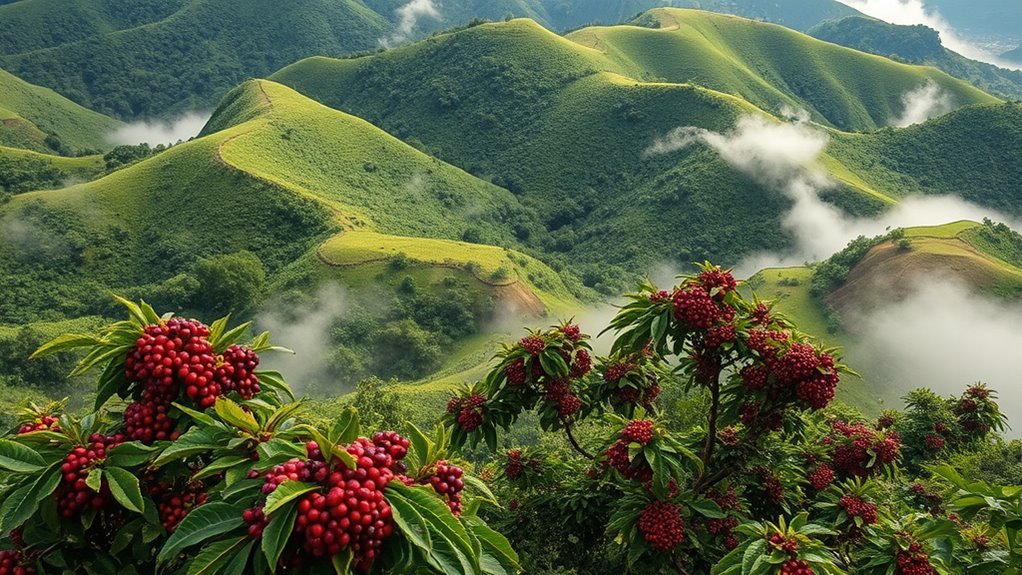
Have you ever wondered what makes Kenyan coffee so renowned worldwide? The answer lies in the unique combination of the country’s climate, altitude, and the meticulous methods used during cultivation and processing. Kenyan coffee farmers prioritize sustainable farming practices, ensuring that their land remains fertile and productive for generations. These practices include careful water management, organic fertilization, and crop rotation, all aimed at maintaining the health of the soil and reducing environmental impact. By adopting sustainable farming, farmers not only protect the land but also enhance the quality of their coffee beans, which is essential for producing the vibrant, complex flavor profiles that Kenyan coffee is famous for.
Kenyan coffee’s vibrant flavors result from sustainable farming, careful processing, and high-altitude, sun-drenched growing regions.
Once the cherries are harvested, the coffee processing techniques employed profoundly influence the final taste. Kenyan farmers typically use the washed or wet processing method, which involves pulping the cherries to remove their outer layers, then fermenting and thoroughly washing the beans. This process emphasizes the beans’ bright acidity, clarity, and clean flavor, qualities highly prized by coffee connoisseurs. The washed process also helps to highlight the fruitiness and floral notes characteristic of Kenyan coffee, giving each cup a crisp, invigorating taste. Consistent processing techniques also ensure the high quality and uniformity of the beans, which is crucial for maintaining the coffee’s distinctive profile. The precision and consistency of these coffee processing techniques are indispensable, as they allow the beans’ inherent qualities to shine through and deliver the exceptional flavor profiles that attract coffee lovers worldwide.
The high-altitude regions of Kenya, such as Nyeri, Kiambu, and Murang’a, provide ideal conditions for growing coffee. The combination of cool temperatures and abundant sunshine allows the beans to develop a rich complexity of flavors. During harvest, farmers often pick only the ripe cherries by hand, ensuring that only the best fruit makes it into the processing phase. This careful selection, combined with sustainable farming practices and refined processing techniques, results in beans that are bright, well-balanced, and bursting with flavor.
In the end, it’s the seamless integration of sustainable farming and sophisticated coffee processing techniques that elevates Kenyan coffee above many others. By respecting the environment and paying close attention to each step of the cultivation and processing process, farmers produce beans that deliver a unique sensory experience. When you sip a cup of Kenyan coffee, you’re tasting the culmination of these dedicated efforts—an intricate dance of nature and craftsmanship that creates the signature vibrant, fruity, and floral notes loved by coffee enthusiasts around the world.
Frequently Asked Questions
How Does Altitude Affect Kenyan Coffee Flavor Profiles?
Altitude impacts Kenyan coffee flavor profiles by enhancing flavor development. When you grow coffee at higher altitudes, the cooler temperatures slow bean maturation, allowing for more complex and vibrant flavors to develop. You’ll notice brighter acidity, nuanced fruity notes, and a cleaner cup. As you move to lower altitudes, the beans mature faster, resulting in a milder, less intricate flavor profile. So, altitude plays a vital role in shaping the coffee’s overall character.
Which Kenyan Regions Produce the Most Acidic Coffees?
Peering into the paradise of Kenyan coffee, you’ll find that the high-altitude regions like Nyeri, Kiambu, and Meru produce the most acidic coffees. These areas generate vibrant, vivid coffees with pronounced acidic notes and intense flavor profiles. The altitude amplifies the brightness, giving you lively, lemony, and fruity flavors. So, if you crave coffee with sharp acidity and bold flavor intensity, explore these regions — your taste buds will thank you!
Are There Specific Processing Methods Unique to Kenyan Coffee Regions?
You’ll find that Kenyan coffee regions often use unique processing techniques, like the traditional washed process, which emphasizes clarity and brightness. Regional distinctions also play a role, with some areas experimenting with different methods such as wet or honey processing to enhance specific flavor notes. These variations in processing techniques contribute to the diverse flavor profiles across Kenyan coffee regions, making each one distinct and exciting for coffee lovers.
How Do Weather Patterns Influence Coffee Quality in Different Regions?
Weather patterns, like microclimate variations and seasonal rainfall, markedly influence coffee quality across regions. You’ll find that consistent microclimates help develop unique flavor profiles, while irregular rainfall can cause stress that enhances bean complexity. In Kenya, these weather factors create distinct growing conditions, affecting acidity and body. By understanding these patterns, you can better appreciate how regional climate influences the vibrant, diverse flavors in Kenyan coffee.
What Are the Best Brewing Methods for Kenyan Coffee Flavors?
For Kenyan coffee, you should try single origin brewing to highlight its bright, fruity flavors. Use pour-over or AeroPress methods to maximize flavor extraction techniques, which bring out the vibrant acidity and complex notes. Avoid over-extraction by adjusting grind size and brew time, ensuring you get the full spectrum of flavors. These methods allow you to enjoy Kenyan coffee’s unique profile at its best.
Conclusion
As you sip the vibrant, sun-kissed Kenyan coffee, imagine lush green slopes whispering stories of fertile soil and mountain breezes. Each cup captures the essence of these treasured regions—bright, bold, and full of life. Let the flavors remind you of Kenya’s rich landscape, where every bean is a journey through vibrant hills and misty mornings. Truly, this coffee isn’t just a drink; it’s a taste of nature’s artistry, waiting to awaken your senses.