🔍 Read the full analysis: Pumpkin Arrives: Tortelli Di Zucca, Mantua's Sweet-Savory Signature on Mad Tasting

Get kitchen staples and gadgets delivered free with Prime
- Fast, free delivery on millions of items
- Prime Video, Amazon Music and more included
- Member-only deals all year
TL;DR
Tortelli di zucca are Mantuan stuffed pasta parcels filled with pumpkin, amaretti biscuits, mostarda and cheese. Their sweet-savory balance and simple butter-and-sage dressing distinguish the dish, which is especially associated with autumn and Christmas Eve. Recipes vary among households and restaurants.
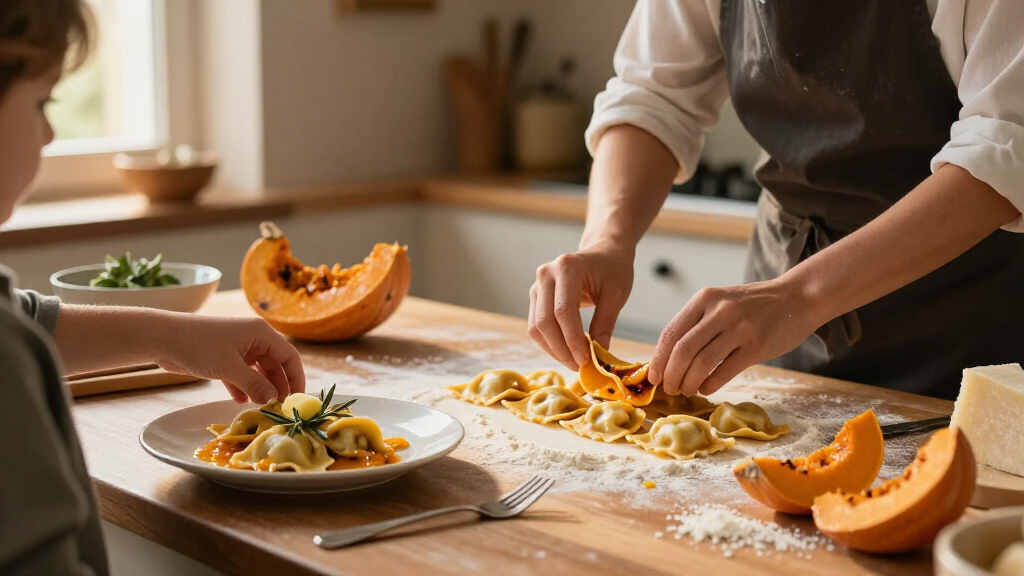
Tortelli di zucca, Mantua’s pumpkin-filled pasta, brings together pumpkin, amaretti, mostarda and cheese in a sweet-savory filling that is especially associated with autumn and Christmas Eve. The culinary reference material describes the fruit-and-mustard sharpness of Mantuan mostarda as a contrast to mellow pumpkin and almond-biscuit sweetness, often complemented by a simple dressing of butter and sage.
The culinary reference material describes a filling built around ingredients with distinct roles. Cooked pumpkin supplies its soft base and natural sweetness; crumbled amaretti, crisp almond biscuits, add fragrance and absorb some moisture. Grated cheese lends a savory counterweight, while chopped mostarda brings pieces of fruit and a pungent mustard note. The reference characterizes the result as a layered main course, not a dessert filling wrapped in pasta.
According to the reference material, Mantuan mostarda is fruit preserved in syrup and flavored with mustard oil; it is not smooth yellow table mustard. Its fruit contributes texture, while its aromatic sharpness cuts through the richness of pumpkin, cheese and butter. The final flavor depends on the ingredients: pumpkin can differ in sweetness and water content, and jars of mostarda vary in fruit and pungency.
The reference describes butter and sage as a common dressing, one that leaves the filling’s contrasts in view rather than masking them with a heavy sauce. Recipes differ by household and restaurant, and the material gives no single ratio that defines every version. Cooks may adjust the amount of amaretti, cheese or mostarda to suit the ingredients and their preferred balance.
A taste of Mantua · Northern Italy
Pumpkin Arrives: Tortelli di Zucca, Mantua’s Sweet-Savory Signature
Soft pumpkin, almond biscuit, cheese and mustard-scented fruit meet inside delicate pasta. A simple butter-and-sage dressing lets every contrast come through.
The defining balance
“Mellow sweetness, savory depth, aromatic sharpness.”A seasonal Mantuan specialty with a filling that reads as a main course, not dessert.
01 / Inside the parcel
Four ingredients, four distinct roles
The filling’s character comes from how its soft, sweet, savory and sharp elements work together.
Pumpkin
Cooked until tender, it brings a mellow sweetness and the filling’s soft foundation.
Amaretti
Crumbled almond biscuits add fragrance and can absorb some moisture from the mash.
Grated cheese
A salty, savory counterweight keeps the pumpkin and biscuit from turning cloying.
Mantuan mostarda
Fruit pieces preserved in syrup with mustard oil add texture and pungent aroma.
Sweet and savory in conversation
The exact impression shifts with the pumpkin’s sweetness and moisture, plus the fruit and pungency of each mostarda.
02 / A seasonal table
From autumn harvest to holiday tradition
Tortelli di zucca belongs to the wider northern Italian stuffed-pasta tradition, with a combination strongly identified with Mantua.
A dish with local identity
Pumpkin brings the harvest season to the table; the rich, distinctive filling is especially associated with Christmas Eve. It also appears on restaurant menus through autumn and winter.
Gonzaga-era influence
The pairing is associated with courtly sweet-and-savory tastes of the Gonzaga era. That context does not establish one exact historical recipe or a single formula for today’s tortelli.
03 / In the kitchen
Build the balance by tasting
Recipes vary by household and restaurant. Add the distinctive ingredients gradually and let the particular pumpkin guide you.
Cook the pumpkin
Make it tender, then mash. If the mixture is very wet, the filling may be loose and harder to seal.
Taste the mostarda
Its fruit and pungency vary, so start with a little and add more to taste.
Layer in the rest
Mix in amaretti and cheese in stages, checking sweetness, savory depth and texture.
Finish simply
Butter and sage are a common dressing that leaves the filling’s contrasts in view.
04 / Quick answers
What to know before the first bite
Look for the interplay of soft sweetness, savory depth and aromatic sharpness—not a fixed ratio.
What is tortelli di zucca?
Filled pasta associated with Mantua, commonly made with cooked pumpkin, crumbled amaretti, chopped mostarda and grated cheese.
Is mostarda the same as yellow mustard?
No. Mantuan mostarda is fruit preserved in syrup and flavored with mustard oil. It brings fruit pieces and a pungent aromatic note.
Is the filling sweet or savory?
Both. Pumpkin and amaretti contribute sweetness, cheese adds savory depth, and mostarda supplies a sharp mustard note.
Are all recipes the same?
No. Household and restaurant versions vary with ingredients and preference; no single proportion defines every version.
A Seasonal Dish With Local Identity
The culinary reference material presents the dish as both a seasonal meal and a marker of Mantuan food culture. It links pumpkin to autumn’s harvest and notes the dish’s association with Christmas Eve. The reference also describes it as a restaurant dish during autumn and winter, extending its presence beyond the holiday itself.
The reference explains the distinctive taste through a combination that may sound unusual to diners unfamiliar with it: sweet pumpkin and almond biscuit alongside savory cheese and mustard-scented fruit. It characterizes the dish as more than sweet pasta, with mostarda’s sharpness providing contrast and helping keep the filling from becoming cloying.
The source material notes that a plate can vary from one kitchen to another without losing its identity. Differences in pumpkin, cheese and mostarda affect sweetness, moisture and pungency. Rather than expecting identical parcels everywhere, diners can look for the characteristic interplay of soft sweetness, savory depth and aromatic sharpness.
As an affiliate, we earn on qualifying purchases.
From Autumn Harvest to Holiday Table
The culinary reference material places tortelli di zucca within the wider northern Italian tradition of stuffed pasta, while identifying the combination of pumpkin, amaretti and mostarda with Mantua, in Lombardy. It connects the dish to autumn through pumpkin’s seasonal availability and describes its rich, distinctive filling as suited to an occasion meal.
The reference associates the dish with Gonzaga-era court cuisine, when sweet-and-savory combinations were fashionable. It presents this as historical context for the pairing of biscuit, fruit and cheese, not as proof of an exact recipe or of a single historical formula behind today’s versions. Family and restaurant recipes remain variable.
Recipes Vary by Kitchen
The culinary reference material describes a tradition rather than a new announcement and supplies no single authoritative recipe, ingredient proportions or standard for the filling. It is therefore not possible to identify one definitive ratio of pumpkin, amaretti, mostarda and cheese. The particular taste also depends on the pumpkin’s moisture and sweetness and on the fruit and pungency of the mostarda.
The reference presents the historical connection to Gonzaga-era cooking as an association, not as evidence for the origin of a precise recipe. Likewise, substitutions may approximate some of the sweet-sharp contrast but will not reproduce mostarda’s exact texture and aroma. The material provides no specific food-safety temperatures or storage period for homemade parcels.
Tasting and Preparing the Tortelli
There is no announced next milestone; the culinary reference material points diners toward autumn and winter menus and Christmas Eve tables. At home, cooks can taste the mostarda before mixing it in and add it gradually, since its pungency varies. Pumpkin should be cooked until tender and mashed; if the mash is too wet, the filling may be loose and the pasta parcels harder to seal.
Adding cheese, amaretti and mostarda in stages allows the cook to judge how the particular pumpkin and preserves are affecting the mixture. The reference suggests chopped candied fruit with a small amount of mustard as an approximation of some sweet-sharp contrast, while noting that it will differ from Mantuan mostarda in texture and aroma. The material provides no specific storage duration, so homemade pasta should be handled and stored according to reliable food-safety guidance.
Key Questions
What is tortelli di zucca?
The culinary reference material describes it as filled pasta associated with Mantua, usually made with cooked pumpkin, crumbled amaretti, chopped mostarda and grated cheese.
What is Mantuan mostarda?
According to the culinary reference material, it is fruit preserved in syrup and flavored with mustard oil. It is not the same as smooth yellow mustard; it adds fruit pieces and a pungent aromatic note to the filling.
Is tortelli di zucca sweet or savory?
The reference describes it as both sweet and savory. Pumpkin and amaretti contribute sweetness, cheese adds savory depth, and mostarda brings a sharp mustard note that balances the filling.
When is tortelli di zucca traditionally eaten?
The culinary reference material associates the dish especially with Christmas Eve and says it is also served during autumn and winter, when pumpkin is in season.
Are all recipes for tortelli di zucca the same?
No. The reference notes that household and restaurant recipes vary, partly because pumpkins and mostarda differ in sweetness, moisture and pungency. It identifies the balance of pumpkin, amaretti, cheese and mostarda—not one fixed proportion—as the defining feature.
Source: Mad Tasting
Halloween Picks
halloween
As an affiliate, we earn on qualifying purchases.


![A Visual Guide To Europe’s Most Popular Olive Oil Varieties, From Koroneiki To Picual [MAP]](https://theuglykitchen.com/wp-content/uploads/2026/10/a-visual-guide-to-europe-s-most-popular-olive-oil-varieties-from-koroneiki-to-pi-featured-560x300.jpg)