
TL;DR

Get kitchen staples and gadgets delivered free with Prime
- Fast, free delivery on millions of items
- Prime Video, Amazon Music and more included
- Member-only deals all year
A Good Housekeeping report featuring pest experts outlines ways to identify and address mice in a home: look for droppings and gnaw marks, locate likely entry points, and place suitable traps near mouse activity. Experts also stress sealing openings and removing food and nesting opportunities; the report warns against glue traps and home use of rodenticides.
A Good Housekeeping report citing pest professionals recommends that homeowners address mice by locating where they are entering, placing traps near signs of activity and closing gaps that could let them back in. The advice matters because, according to the U.S. Centers for Disease Control and Prevention (CDC), rodents can spread disease through contaminated food, waste or air—not only through bites.
Experts interviewed for the report say droppings are often the first sign of a mouse problem. Other clues include gnawed food packaging, furniture or wiring, shredded paper or fabric that may be used for nesting, and noises in walls or ceilings after dark. Kitchens and food-storage areas are among the places to inspect, along with basements, attics, crawlspaces and areas around pipes, wires, windows and doors.
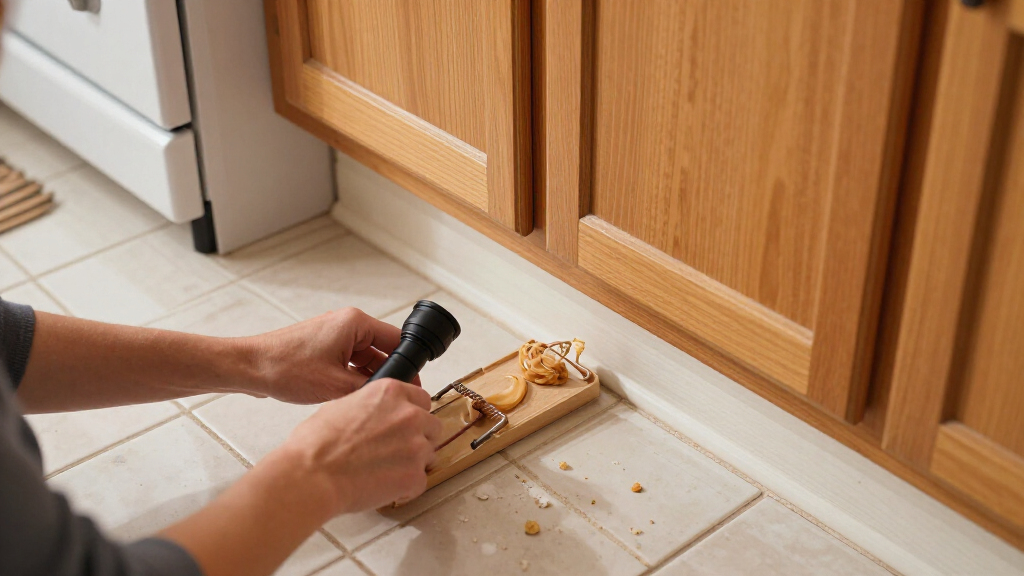
The report advises identifying likely mouse routes before setting traps, rather than placing them randomly. It recommends snap traps and enclosed electric traps, set in vulnerable locations such as along walls and behind trash cans. Peanut butter is described as a commonly used bait; other options listed include nuts, seeds, chocolate, bacon and hot dogs. Follow the trap maker’s directions and keep traps out of reach of children and pets.
Good Housekeeping says it does not recommend glue traps because of the way they capture animals, or rodenticides such as zinc phosphide for use in homes because of accidental-poisoning risks, particularly for children. The supplied report also stresses prevention: look for openings and address them, store food securely, and reduce clutter that could provide nesting material. Mice can squeeze through gaps as small as about a quarter-inch, according to Dan DiClerico of the Good Housekeeping Institute.
Reducing Health and Property Risks
Dealing with mice is not only a matter of discomfort. The CDC information cited in the report says rodents can spread bacterial and viral diseases when people breathe contaminated air, eat contaminated food, or touch rodent waste and then touch their eyes or mouths. That makes careful cleanup and preventing access to food part of the response, not just trapping the animals.
Mice may also chew wires and other household materials. The report notes that rodents entering garages can nest under vehicle hoods and damage wiring. Finding and addressing entry routes can help reduce both repeat activity and the risk of damage, though the advice does not guarantee that an infestation will be eliminated.
As an affiliate, we earn on qualifying purchases.
Signs That Point to Mouse Activity
Mice are generally more active at night, so scratching or movement sounds after dark may be a clue, according to Jim Fredericks, a board-certified entomologist and senior vice president of public affairs at the National Pest Management Association. Droppings, gnaw marks and nesting material can provide other evidence. The report describes mouse droppings as dark, rice-like pieces about a quarter-inch long.
Fredericks cautions that seeing one mouse does not establish how many are present. The report cites the Building Performance Institute for the estimate that a female mouse can have up to eight litters in a year, with as many as 100 young. That figure is background rather than a count of any particular home’s infestation; the report provides no case-specific data.
“Living with mice isn’t just unsettling, it can make your home less healthy.”
— Dan DiClerico, director of the Home Improvement and Outdoor Lab at the Good Housekeeping Institute
What Homeowners Still Need to Check
The source material does not identify a specific home, infestation or verified outcome, and it does not establish that any one trapping method will work in every case. The number of mice, their precise entry points and whether they have contaminated food or other areas depend on the individual home.
The supplied report excerpt ends partway through its prevention advice. It does not provide a full set of instructions for sealing every type of opening or detail when a homeowner should contact a licensed pest professional. Anyone unsure how to handle droppings, a persistent infestation or possible exposure should seek guidance from relevant public-health or pest-management authorities.
Inspect, Trap and Recheck
The practical next step is to inspect for droppings, gnawing and nesting material, then trace possible routes near walls, foundations, utility lines and doors. Set suitable traps where activity is indicated and follow their instructions. After trapping, check those areas again and close accessible openings so new mice have fewer ways inside.
If signs continue or the source of activity is unclear, the report’s advice does not replace a site-specific assessment. A pest-control professional can inspect the home and recommend a response suited to its conditions. The source provides no scheduled follow-up or new research milestone; the outcome will depend on whether the entry points and food or nesting sources are addressed.
Key Questions
What are common signs of mice in a home?
Look for droppings, gnawed packaging or wiring, shredded nesting material and scratching sounds after dark. One sign alone does not reveal how many mice may be present.
Where should mouse traps be placed?
The experts cited recommend first locating likely routes and activity, then placing traps in those areas, such as along walls or behind trash cans. Follow the product instructions and keep traps away from children and pets.
Which traps does the report recommend?
The report recommends snap traps and enclosed electric traps. It advises against glue traps and warns against using rodenticides such as zinc phosphide in homes because of accidental-poisoning risks.
How can mice be kept from returning?
Inspect for small openings and close them where possible, secure food and reduce clutter that could serve as nesting material. The report says mice can pass through gaps about a quarter-inch wide.
Can mice pose a health risk without biting?
Yes. The report cites the CDC’s warning that exposure may happen through contaminated air or food, or by touching rodent waste and then touching the eyes or mouth.
Source: rss
Halloween Picks
halloween
As an affiliate, we earn on qualifying purchases.